Making and creating things with 作
The kanji 作 means create or produce. It appears in words for physical works and works of art. It can also mean to do or perform.
- Grade 2
- JLPT N4 (estimate)
- WaniKani level 5
- 7 strokes
Words with 作
- Creative Works
- 作品 さくひん Work
- 原作 げんさく Original work
- 創作 そうさく Creative work
- Strategy
- Creators
- 作家 さっか Author
- 作者 さくしゃ Creator
- Operations
- Production
- 作成 さくせい Creation
- 製作 せいさく Production
- 試作 しさく Prototype
The bold kana are the part 作 contributes. Words in a dashed box have no manga example yet.
How to Read 作
さく is the usual reading for making a work: 作品, 作者, 作戦. さ is for moving or operating: 作業, 操作, 動作.
The verb is 作る. After another word it voices to づくり, as in 手作り.
Etymology
This kanji is a phono-semantic compound. It joins 亻 (person), the meaning component, with 乍, the sound component.
Making
作る (つくる) (To make)
作る means to create or prepare something.
Example 1 of 14: A day off from cooking with 料理を作る
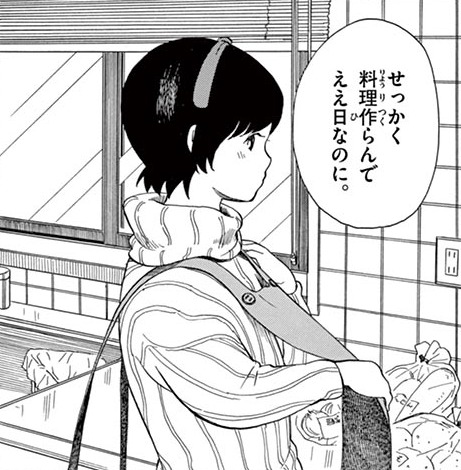
Kiyo has the day off, so she goes to see the house’s former cook.
- おばちゃん:
- 「せっかく料理作らんでええ日なのに。」
- “And on a day you finally don't have to cook, too.”
Example 2 of 14: A lunch for the night shift with 弁当を作る
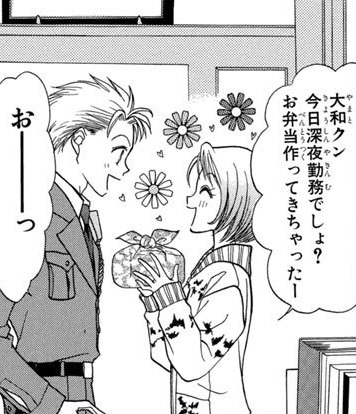
Ran has been hauled into the Shibuya police box, where her older brother Yamato works as an officer, and he has just finished lecturing her. Then Ran’s friend Miyu bursts in with a cheerful greeting.
- 美由:
- 「大和クン 今日深夜勤務でしょ? お弁当作ってきちゃったー」
- “Yamato, you're on the late-night shift today, right? I made you a lunch and brought it over!”
- 大和:
- 「おーっ」
- “Ohh!”
Example 3 of 14: A rare chance to cook for a star with 手料理を振る舞う
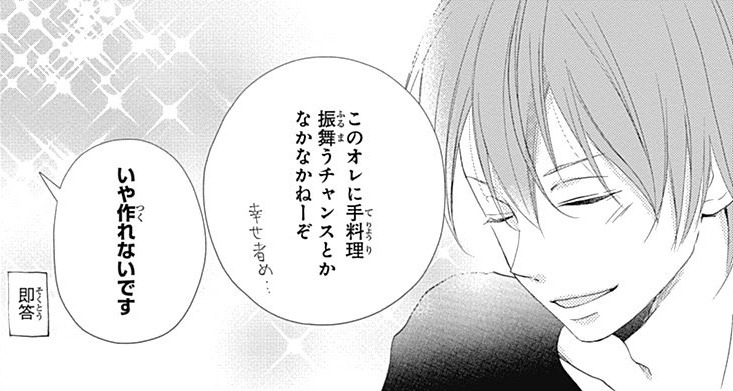
Ayato Kousaka, an actor with a fever, stops at the shop Yusa’s family runs, and her mother lets him rest at their house. Yusa says he should probably eat something before taking his medicine, and Ayato tells her to make him rice porridge or something.
- 絢人:
- 「このオレに手料理振舞うチャンスとかなかなかねーぞ。」
- “You don't often get a chance to treat someone like me to your home cooking.”
- 「幸せ者め…」
- “Lucky girl…”
- 結沙:
- 「いや作れないです。」
- “Um, no. I can't cook.”
- ー:
- 「即答」
- “Instant Answer”
Example 4 of 14: Craftman's efforts making glassware with 職人
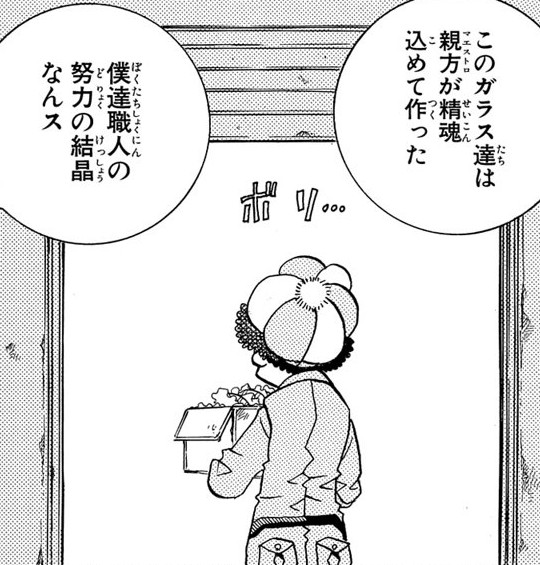
Akari picks up a box containing glassware items for her to transport. One of the employees from the shop making the glassware takes the box from her to place in her gondola. After he does this a second time, Akari says she can help carry the boxes, but he refuses.
- 職人:
- 「このガラス達は親方が精魂込めて作った」
- “These pieces of glass were made with the maestro's heart and soul poured into them.”
- 「僕達職人の努力の結晶なんス」
- “They're the crystallization of our craftsmen's efforts.”
Example 5 of 14: Don't make such a thing with な
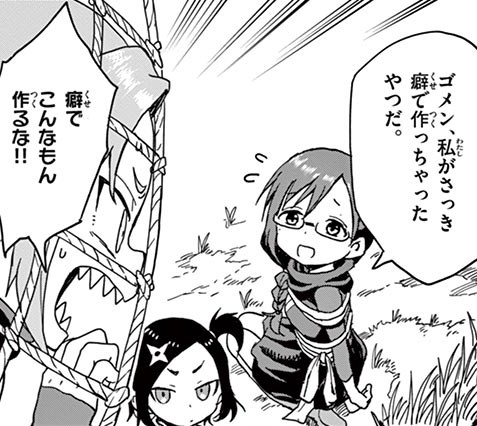
During a competition, Touwata and Mizubashou confront Tsubaki’s group to ask for help. While Touwata lays out her request, Sazanka and Asagao tie the two with ropes, believing their plea to be a trick. Figuring they’ve won, Sazanka and Asagao let down their guard and fall into a trap.
- ミズバショウ:
- 「ゴメン、私がさっき癖で作っちゃったやつだ。」
- “Sorry, I made that out of habit earlier.”
- サザンカ:
- 「癖でこんなもん作るな!!」
- “Don't make these things out of habit!”
Example 6 of 14: Wanting to bake bread again with 〜たい
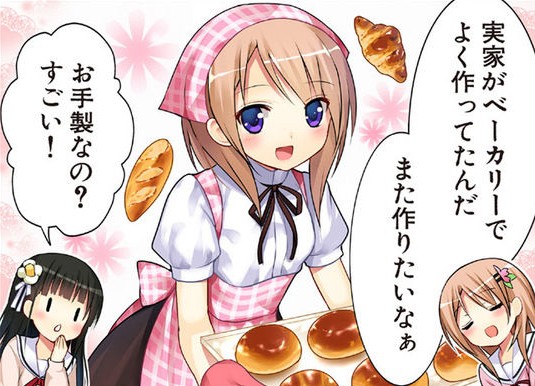
Cocoa and Chiya pass by a bakery. Cocoa stops to admire the bread in the window.
- ココア:
- 「実家がベーカリーでよく作ってたんだ」
- “My family runs a bakery, so I used to bake bread all the time.”
- 「また作りたいなぁ」
- “I want to make it again.”
- 千夜:
- 「お手製なの?すごい!」
- “You made these yourself? Amazing!”
Example 7 of 14: Getting change ready for the jam stall with 釣り銭
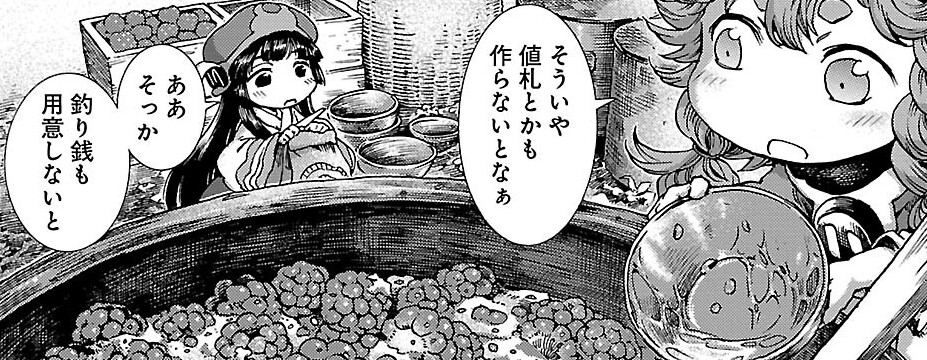
A restaurant has dropped out of tomorrow’s stall festival, so Mikochi takes over its stall to sell fresh raspberry jam with bread. After a long day of buying ingredients, she and Hakumei start on the jam, layering raspberries and sugar in a giant pot.
- ハクメイ:
- 「そういや値札とかも作らないとなぁ」
- “Come to think of it, we've gotta make price tags and stuff, too.”
- ミコチ:
- 「ああ そっか」
- “Oh, right.”
- 「釣り銭も用意しないと」
- “We need to have change ready, too.”
Example 8 of 14: Heating leftover pancakes with チンする
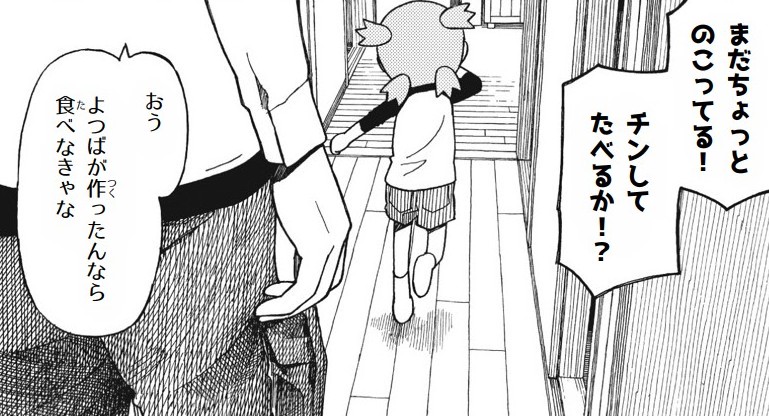
During Jumbo’s visit, Yotsuba tells him she made pancakes earlier.
- よつば:
- 「まだちょっとのこってる!チンしてたべるか!?」
- “There's some left over! Shall I heat it up to up to eat?”
- ジャンボ:
- 「おう。よつばが作ったんなら食べなきゃな」
- “Sure. If you made them, I have to eat some.”
Example 9 of 14: Helpful invention for an investigation with 捜査
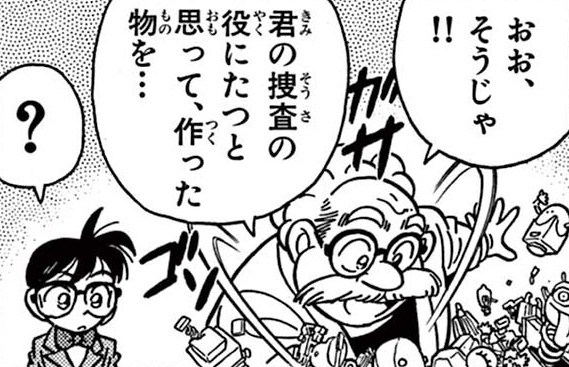
Conan is now staying with Detective Mouri in hopes of finding a case related to the men responsible for his becoming a child. He stops by Professor Agasa’s place to discuss the situation.
- 阿笠:
- 「おお、そうじゃ!!」
- “Oh, that's right!!”
- 「君の捜査の役にたつと思って、作った物を…」
- “I made this thinking it might help with your investigation...”
Example 10 of 14: Never messing up rice balls with おにぎりを握る
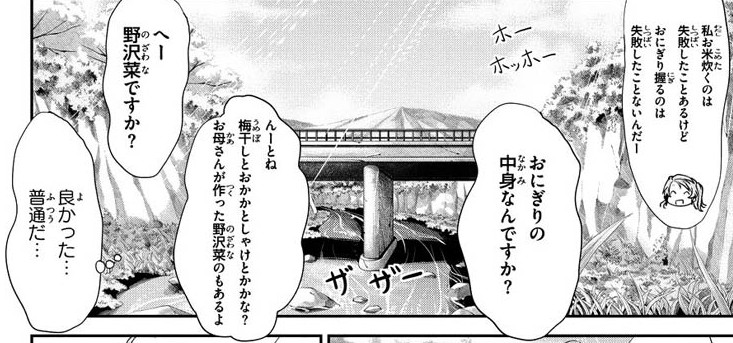
Hotaru and Komari agreed to trade homemade lunches while viewing the cherry blossoms. Komari’s lunch came out badly, with burnt noodles and a hamburger covered in melted chocolate, but Hotaru ate it anyway and insisted it was delicious. Now Komari offers her a rice ball, and Hotaru takes a bite and finds it good.
- 小鞠:
- 「私お米炊くのは失敗したことあるけどおにぎり握るのは失敗したことないんだー」
- “I've messed up cooking rice before, but I've never messed up making rice balls!”
- 蛍:
- 「おにぎりの中身なんですか?」
- “What's in the rice balls?”
- 小鞠:
- 「んーとね 梅干しとおかかとしゃけとかかな? お母さんが作った野沢菜のもあるよ」
- “Let's see... pickled plum, bonito flakes, salmon, that kind of thing? There's also one with the nozawana pickles my mom made.”
- 蛍:
- 「へー 野沢菜ですか?」
- “Oh, nozawana?”
- 「良かった… 普通だ…」
- “Thank goodness... They're normal...”
Example 11 of 14: Oiling the takoyaki plate with 油をひく
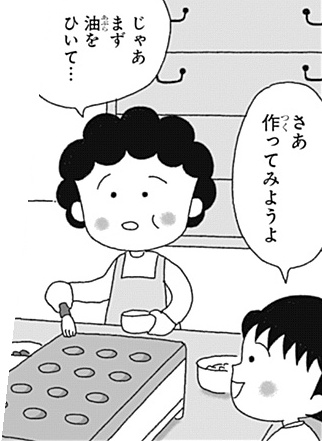
Maruko begged for a takoyaki maker, and Mom said no. Grandpa bought her one anyway, and Maruko talked him into the pricier model with its own burner so they could cook at the table. Mom grumbled, but the two of them pressed her to start making takoyaki right away.
- まる子:
- 「さあ作ってみようよ」
- “Come on, let's try making some!”
- お母さん:
- 「じゃあまず油をひいて…」
- “All right, first you oil the plate…”
Example 12 of 14: Possibility of building a time machine with 可能
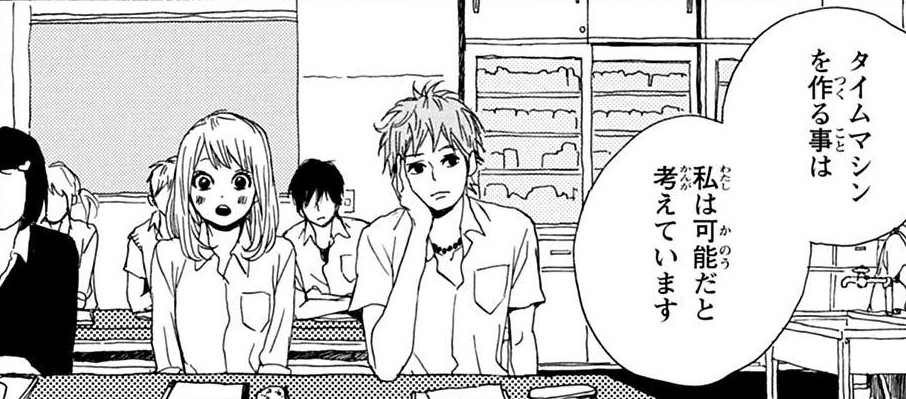
After handing test results to class, the teacher talks about theories of time travel.
- 先生:
- 「タイムマシンを作る事は私は可能だと考えています」
- “I believe it is possible to build a time machine.”
Example 13 of 14: Why must I bring you your lunch with 〜なければならない
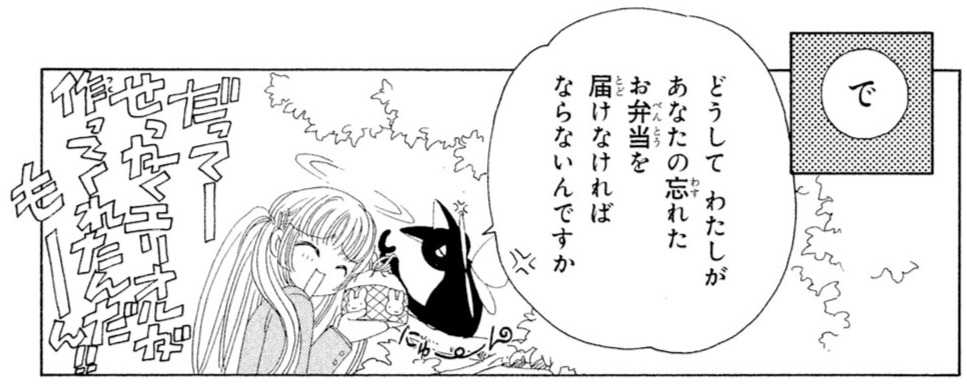
Spinel Sun calls out to Ruby Moon at school. After a brief discussion, Spinel Sun gets to the reason for his appearance there.
- スピネル・サン:
- 「で」
- “So.”
- 「どうして わたしがあなたの忘れたお弁当を届けなければならないんですか」
- “Why do I have to deliver the lunch you forgot?”
- ルビー・ムーン:
- 「だってー せっかくエリオルが作ってくれたんだもーーん!!」
- “Well, because Eriol went to all that trouble to make it for me!!”
Example 14 of 14: Worth making a meal with 〜甲斐がある
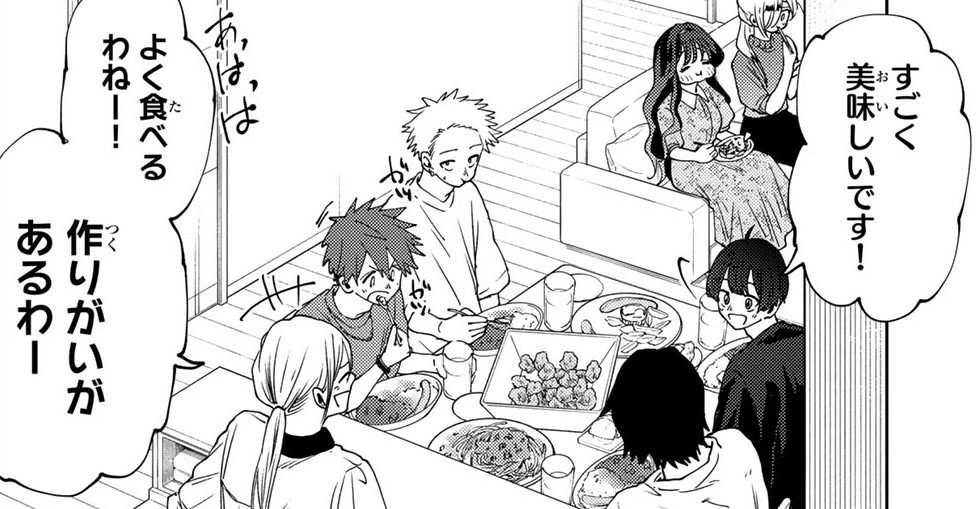
Rintaro’s mother is overjoyed when her son has friends over for the first time in his life. She prepares a large meal for them to eat.
- 絢斗:
- 「すごく美味しいです!」
- “This is incredibly delicious!”
- 杏子:
- 「よく食べるわね! 作りがいがあるわー」
- “You sure do eat a lot! It makes cooking worthwhile!”
作り (つくり) (Making)
作り is the making of something, as in パン作り, bread making. It also means how something is built.
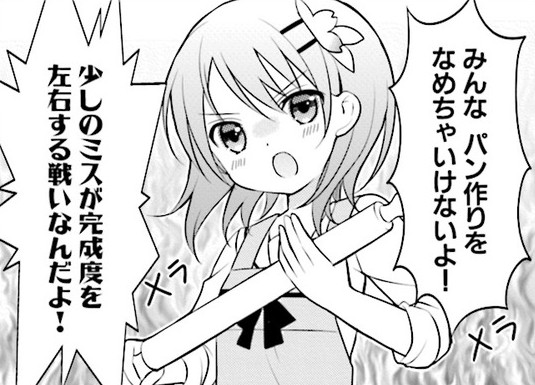
Cocoa prepares to teach her friends how to bake bread.
- ココア:
- 「みんな パン作りをなめちゃいけないよ!」
- “Everyone, don't underestimate bread making!”
- ◯:
- 「少しのミスが完成度を左右する戦いなんだよ!」
- “This is a battle where even a small mistake affects the final result!”
作り方 (つくりかた) (How to make)
作り方 is the way or recipe for making something.
It combines 作り (making) with 方 (way) to show the way of making.
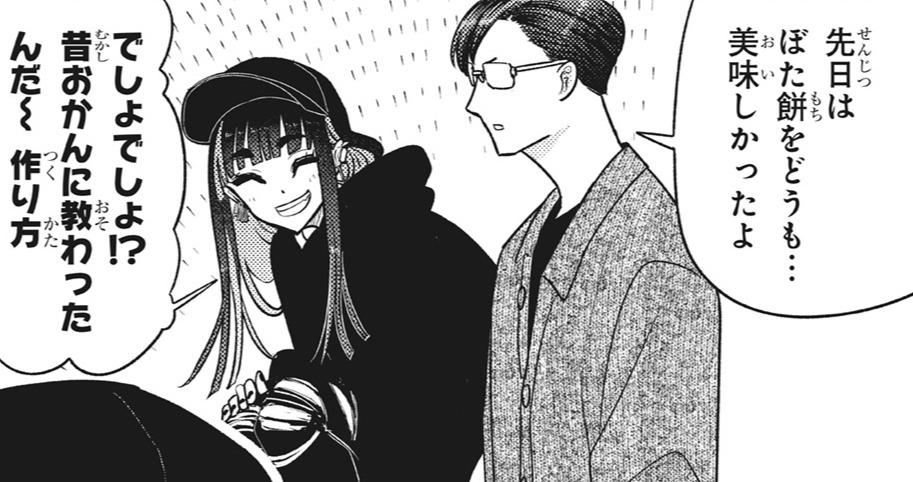
Kumada’s neighbor gave him extra mochi when she made too much. A few days later, he sees her in the park.
- 熊田:
- 「先日はぼた餅をどうも… 美味しかったよ」
- “Thanks for the botamochi the other day... They were really delicious.”
- 隣さん:
- 「でしょでしょ!? 昔おかんに教わったんだ〜 作り方」
- “Right?! I learned how to make them from my mom a long time ago~”
庭作り (にわづくり) (Gardening)
庭作り is creating and tending a garden.
It combines 庭 (garden) with 作り (making) to show making a garden.
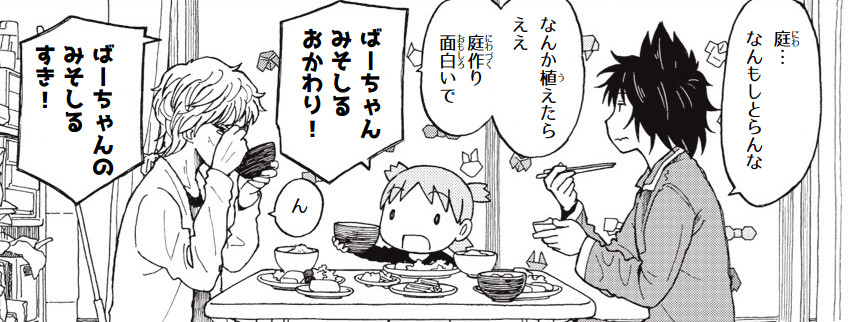
Yotsuba eats breakfast with her father and grandmother. The grown-ups are talking about all the cleaning Grandma is doing around the house, as she says he hasn’t cleaned the yard at all.
- 父さん:
- 「庭…なんもしとらんな」
- “The yard...I haven't done anything.”
- ばあさん:
- 「なんか植えたらええ。庭作り面白いで」
- “You should plant something. Gardening is great.”
- よつば:
- 「ばーちゃんみそしるおかわり!」
- “Gramma, more miso soup!”
- ばあさん:
- 「ん」
- “Mm.”
- よつば:
- 「ばーちゃんのみそしるすき!」
- “I like Gramma's miso soup!”
Strategy
作戦 (さくせん) (Strategy)
作戦 means a plan for carrying out an operation. It often refers to military strategy, but it also works for everyday plans and schemes.
It combines 作 (make) with 戦 (battle) to show a plan made for battle.
Example 1 of 2: Only dodging and never attacking with 〜ばかり
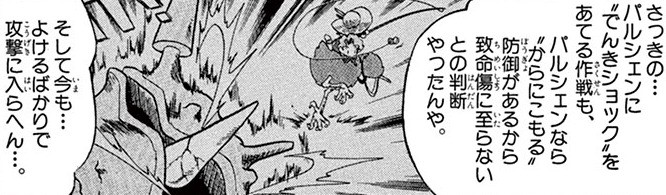
Kanna of the Elite Four has Yellow and Masaki under attack with ice missiles fired by her Cloyster and Dewgong. Yellow hits Cloyster with Thunder Shock, which keeps it from firing, and the two escape on Yellow’s Dodo. When Kanna attacks again, Dodo only dodges. Masaki asks why Yellow won’t fight back, and Yellow says they should run. Masaki then realizes that Yellow is trying not to hurt anyone, friend or enemy.
- マサキ:
- 「さっきの…パルシェンに〝でんきショック〟をあてる作戦も、パルシェンなら〝からにこもる〟防御があるから致命傷に至らないとの判断やったんや。」
- “That plan earlier, hitting Cloyster with Thunder Shock... he'd figured Cloyster could defend itself with Withdraw, so the hit wouldn't be fatal.”
- 「そして今も…よけるばかりで攻撃に入らへん…。」
- “And now too... he's only dodging, and he won't go on the attack...”
Example 2 of 2: Sometimes pretending to be someone else with 〜ことがある
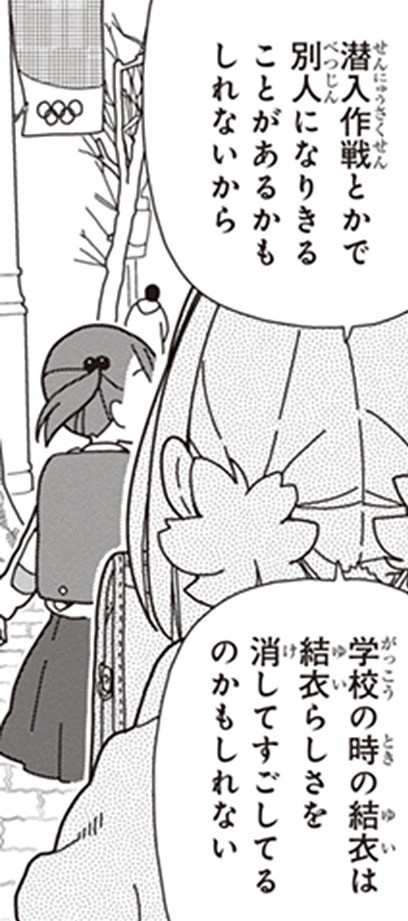
Sacchan and Kotoha notice Yui walking with a couple of her friends from school. The two decide to sneak and follow after them. Sacchan notices Yui doesn’t act quite the same with these friends as she does with Sacchan and Kotoha.
- さっちゃん:
- 「潜入作戦とかで別人になりきることがあるかもしれないから」
- “Maybe it's because she's in an undercover operation or something that she sometimes pretends to be a different person....”
- 「学校の時の結衣は結衣らしさを消してすごしてるのかもしれない」
- “...that Yui at school might be trying to hide her true self.”
Operations
作業 (さぎょう) (Work)
作業 means work, a task, or an operation. It usually refers to practical activity carried out toward a specific result.
It combines 作 (make) with 業 (work) to show productive work.
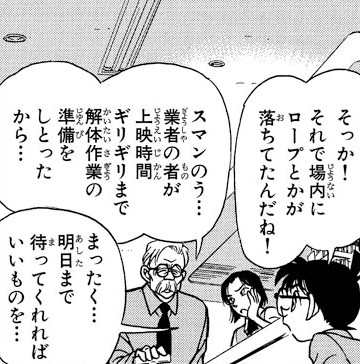
Conan and his friends go to the theater to see a movie. There, they discover this is the last day before the theater closes.
- コナン:
- 「そっか!それで場内にロープとかが落ちてたんだね!」
- “Oh, I see! That's why there were ropes and stuff lying around the venue!”
- オーナー:
- 「スマンのう… 業者の者が上映時間ギリギリまで解体作業の準備をしとったから…」
- “Sorry about that... The contractor's crew was rushing to get the dismantling ready right up until showtime...”
- スタッフ:
- 「まったく… 明日まで待ってくれればいいものを…」
- “Honestly... They could've at least waited until tomorrow...”
操作 (そうさ) (Operation)
操作 means operating or controlling a machine or system, or manipulating information.
It combines 操 (control) with 作 (do) to show doing something through directed control.
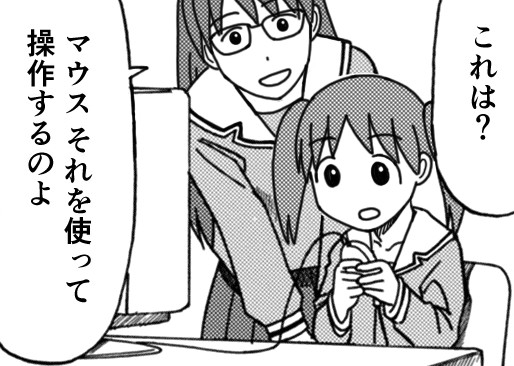
Chiyo is a child prodigy who’s skipped from elementary school to high school.
Chiyo’s new school has a computer class, but she’s never used a computer before.
- ちよ:
- 「これは?」
- “What's this?”
- よみ:
- 「マウス それを使って操作するよ」
- “A mouse. You use that to control it.”
Production
作成 (さくせい) (Creation)
作成 means creating or preparing something (such as a document or data) in a finished, usable form.
It combines 作 (make) with 成 (accomplish) to show making something into a finished form.
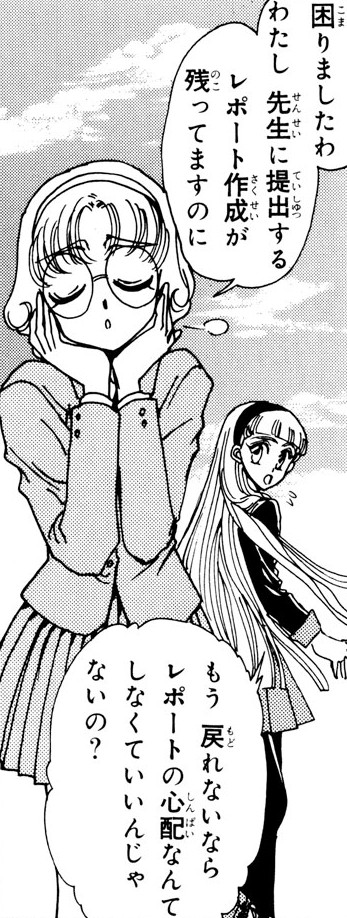
Fuu finds herself spirited away to another world, along with two other girls. A wizard appears before them, saying they cannot return home until they accomplish a specific goal.
- 風:
- 「困りましたわ。 わたし 先生に提出するレポート作成が残ってますのに」
- “Oh dear. I've still got to write that report to hand in to the teacher...”
- 海:
- 「もう 戻れないならレポートの心配なんてしなくていいんじゃないの?」
- “If we can't go back anyway, isn't there no point worrying about the report?”
試作 (しさく) (Prototype)
試作 is making a first version of something to see how it turns out before making it for real.
It combines 試 (trial) with 作 (make) to show something made as a test version.
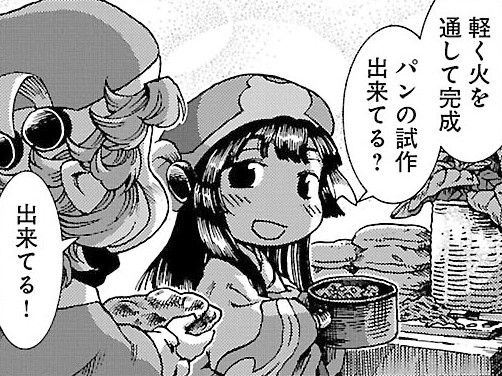
Mikochi wants to sell a jam-and-bread set at the festival, and she and Hakumei have cooked a big pot of raspberry jam through the night. Mikochi had Hakumei fetch a small pot for a test batch, added a splash of rum, then chopped basil leaves fine and put them into the jam.
- ミコチ:
- 「軽く火を通して完成」
- “Heat it through lightly, and it's done.”
- 「パンの試作出来てる?」
- “Is the test bread ready?”
- ハクメイ:
- 「出来てる!」
- “It's ready!”
Building Bigger Words
These patterns come up again and again in manga. Learn the pattern and you can read words you've never seen.
〜作 さく (a work)
- 新作 しんさく a new work
- 名作 めいさく a classic
- 傑作 けっさく masterpiece
- 前作 ぜんさく the previous work
- 自作 じさく made by yourself
作 in manga credits さく (who did which part)
You’ll see these on a volume’s title page and at the back. 原作 above is the story, and 作画 is the drawing.
- 作画 さくが the artwork
- 制作 せいさく production
- 原作者 げんさくしゃ the original author
作 read さ さ (moving or working)
- 動作 どうさ a movement
- 作用 さよう an effect on something
- 作法 さほう proper manners
作〜 さく (making something)
- 作文 さくぶん a school essay
- 作曲 さっきょく composing music
- 大作戦 だいさくせん a grand plan
Check Yourself
What does 作 mean?
Making and creating things.
Read These Without Furigana
作る
作り
作り方
庭作り
作戦
作業
Work Out a New Word
傑 marks something outstanding. Read 傑作 in this line.
「それにしても傑作やったなー。」
Show the answer
傑作, a masterpiece. Said of a blunder, the word means “priceless”. “That really was priceless, though.”
作品 and 作業 both start with 作. Which reads it さく, and which さ?
Show the answer
作品 and 作業.