Matching and appropriateness with 当 当 means hit , match , or be appropriate . It covers hitting a target or guessing right, fitting a rule or standard, and taking on an assigned duty.
As a prefix, it means “this” or “the one in question”, as in 当日, 当店, and 当主.
Etymology This kanji is the simplified form of 當, a phono-semantic compound comprised of 田 (fields) as the semantic component and 尚 as the phonetic component (ショウ).
Etymology Research 當 combines 田, “field,” with 尚 as the sound component. CUHK finds this structure in both bronze and small seal forms. Its quoted 説文解字 entry defines 當 as 田相値也, fields matching each other in value. Duan Yucai’s commentary reads this as two fields holding each other in balance, and derives the wider senses of facing and matching from it. CUHK Multi-function Chinese Character Database, 當 .
Kanjipedia gives the same analysis. It explains that the values of two fields balance, and that the idea extended to hitting and applying. It treats 尚 as the sound component, with an old reading that shifted to the modern トウ. Kanjipedia, 当 .
The bronze use CUHK records, on a spear from 櫟陽, has an unclear meaning. Early texts use 當 for facing, as in the 左伝, and Qin legal texts use it for “should,” the sense behind 当然. Some manuscripts write 當 for the similar-sounding 倘, “if,” and 常, “constant.” CUHK, 當 .
Shirakawa Shizuka’s 字通 also classes 當 as phono-semantic but reads it differently. He takes the top of 尚 as divine spirit descending and 田 as cultivated land, and proposes that the character first belonged to agricultural rites. The CUHK and Kanjipedia accounts do not share this interpretation. Heibonsha, 普及版 字通, 当 .
Kanjipedia identifies the Japanese school form 当 as based on an abbreviated popular form of 當. The Japanese words あたる and あてる are native words assigned to the character as kun-readings, so the character’s history does not explain where those words came from. Kanjipedia, 当 , Agency for Cultural Affairs, 常用漢字表の音訓索引 .
Hitting 当たる (To hit)当( あ ) たる is for something to strike or touch something else, like a ball hitting a window or sunlight falling on a room. It also means for a guess to come true, for someone to win a prize, or for one thing to correspond to another, as in 伯父( おじ ) に当( あ ) たる人( ひと ) .
ご注文はうさぎですか? » Volume 1 » Page 93Rize and Cocoa watch as Chino seems to be telling a customer a fortune. Cocoa asks Rize what it was about.
リゼ: 「コーヒー占( うらな ) いだよ」 “It's coffee fortune-telling.” 「頼( たの ) まれたらやってるけどチノの占( うらな ) いよく当( あ ) たる “I do it when I receive a request to, but Chino's fortunes are usually accurate.” Challenge Yourself Show translation
Challenge
Which interpretation best matches the highlighted line?
リゼ: 「コーヒー占( うらな ) いだよ」 「頼( たの ) まれたら やってるけどチノの占( うらな ) いよく当( あ ) たるんだ」 Clues 頼( たの ) まれたら頼( たの ) まれたら means when someone asks herWhat does the speaker mean? I perform coffee fortune-telling when someone asks, and Chino's fortunes are usually accurate. Rize is the omitted recipient of a request. The person making each request remains unspecified. Rize says she refuses every request for coffee fortune-telling. The highlighted form is 頼( たの ) まれたら. Here 頼( たの ) まれたら means when someone asks her, so this choice does not match the Japanese. Rize says Chino performs fortunes only when Rize asks her. The highlighted form is 頼( たの ) まれたら. Here 頼( たの ) まれたら means when someone asks her, so this choice does not match the Japanese. Rize says the requested fortunes are usually inaccurate. The highlighted form is 頼( たの ) まれたら. Here 頼( たの ) まれたら means when someone asks her, so this choice does not match the Japanese.
頼( たの ) まれたら means when someone asks her. Rize is the omitted recipient of a request. The person making each request remains unspecified.
View Full Example Proper Fit 当たり前 (Natural)当( あ ) たり前( まえ ) describes something obvious and expected. Said alone, it means “of course”.
It began as a native reading of 当前, a substitute spelling of 当然 (natural ), so it carries the sense of what is only natural .
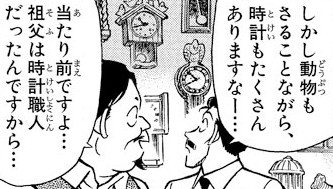
名探偵コナン » Volume 17 » Page 118Having received a letter requesting help solving a mystery, Kogoro finds himself in a house filled with animal designs everywhere, including the doors, the chairs, and the plates. His attention turns to the clocks covering the walls.
小五郎( こごろう ) :「しかし動物( どうぶつ ) もさることながら、時計( とけい ) もたくさんありますなー...」 “But aside from the animals, there are also a lot of clocks, huh...” 男( おとこ ) :「当( あ ) たり前( まえ ) 祖父( そふ ) は時計( とけい ) 職人( しょくにん ) だったんですから...」 “Of course there are... Grandfather was a clock maker, after all...” Challenge Yourself Show translation
Challenge
Why does the house contain so many clocks?
小五郎( こごろう ) :「しかし動物( どうぶつ ) もさることながら、時計( とけい ) もたくさんありますなー...」 男( おとこ ) :「当( あ ) たり前( まえ ) ですよ... 祖父( そふ ) は時計( とけい ) 職人( しょくにん ) Clues 当( あ ) たり前( まえ ) ですよof course 祖父( そふ ) は時計( とけい ) 職人( しょくにん ) だったんですからbecause Grandfather was a clockmaker What does the speaker mean? The grandfather was a clockmaker. だったんですから gives the grandfather's work as the reason the clocks are unsurprising. The grandfather collected clocks but never worked on them. 時計( とけい ) 職人( しょくにん ) identifies his occupation as a skilled clock artisan. Kogoro brought the clocks for the investigation. The clocks were already part of the house because of its former resident. Every animal design in the house hides a clock. The speaker explains the abundance through the grandfather's trade, not a design trick. The house currently operates as a clock shop. The line tells us what the grandfather used to do, not the building's present business. The clocks were gifts from Kogoro's clients. Their source is tied to the grandfather being a clockmaker.
The many clocks are natural to the household because the speaker’s grandfather was a clockmaker. だったんですから supplies that explanatory reason.
View Full Example 適当 (Appropriate)適当( てきとう ) describes something that fits a purpose or situation well. In casual speech it often means the opposite, doing something carelessly or at random.
It combines 適 (suitable ) with 当 (fit ) to show a proper match .
Example 1 of 2: Choosing a menu item with 〜ておく Example 1 of 2
ご注文はうさぎですか? » Volume 1 » Page 63After a misunderstanding brings Rize and her friends to the teahouse where Syaro works, the group stays to have some tea.
リゼ: 「ハーブティーの種類( しゅるい ) ってよく分( わ ) からないな」 “I don't really know the different kinds of herbal tea.” 「適当( てきとう ) 選( えら ) んどくか」 “I'll just pick something for now?” Challenge Yourself Show translation
View Full Example Example 2 of 2: Getting on one's nerves with 気に食わない Example 2 of 2
レンタルおにいちゃん » Volume 2 » Page 28Following the death of their parents, Kanami’s big brother Kazutaka became secluded and abusive. Kanami begins to spend time with Makoto, a “rental big brother” whose advice gives her hope in restoring her brother’s former kindness. Kazutaka rebukes her attempts, suggesting that Makoto’s filling her with nonsense ideas.
一敬( かずたか ) :「気( き ) に食( く ) わないんだよ」 “He gets on my nerves.” 「適当( てきとう ) 甘( あま ) い言葉( ことば ) で金( かね ) を取( と ) り続( つづ ) けるような奴( やつ ) 」 “He's the kind of guy who keeps taking (rental) money while spouting alluring words.” Challenge Yourself Show translation
Challenge
How does Kazutaka characterize Makoto?
一敬( かずたか ) :「気( き ) に食( く ) わない 「適当( てきとう ) な甘( あま ) い言葉( ことば ) で金( かね ) を取( と ) り続( つづ ) けるような奴( やつ ) 」 Clues 気( き ) に食( く ) わないんだよhe rubs me the wrong way, stated as the reason for the speaker's attitude 甘( あま ) い言葉( ことば ) で金( かね ) を取( と ) り続( つづ ) けるような奴( やつ ) the kind of guy who keeps taking money with enticing words What does the speaker mean? An irritating smooth-talker who keeps taking rental money. 気( き ) に食( く ) わない expresses Kazutaka's dislike, and the next line accuses Makoto of using 甘( あま ) い言葉( ことば ) to keep taking money. A dependable adviser who refuses to accept payment. Kazutaka says Makoto takes money and openly states that he dislikes him. A blunt man whose harsh advice makes Kanami angry. 甘( あま ) い言葉( ことば ) describes tempting or pleasing words, not harsh speech. A former rental brother who has stopped charging money. 取( と ) り続( つづ ) ける means to keep taking, so Kazutaka presents the charging as ongoing. A cook whose food does not suit Kazutaka's taste. 気( き ) に食( く ) わない is an idiom for disliking someone or finding them irritating. It is not about food here. A stranger who wants Kazutaka to lend him money. The line accuses Makoto of taking rental money through his words. It does not describe a loan request.
Kazutaka says Makoto rubs him the wrong way and dismisses him as a man who uses tempting words to keep collecting rental money. んだよ makes that accusation his explanation for rejecting Makoto.
View Full Example 相当 (Corresponding)相当( そうとう ) describes something that matches or is worth a given amount or standard. As an adverb, it means to a considerable degree.
It combines 相 (mutual ) with 当 (appropriate ) to show mutually appropriate .
Example 1 of 2: A pretty clean room with 相当 Example 1 of 2
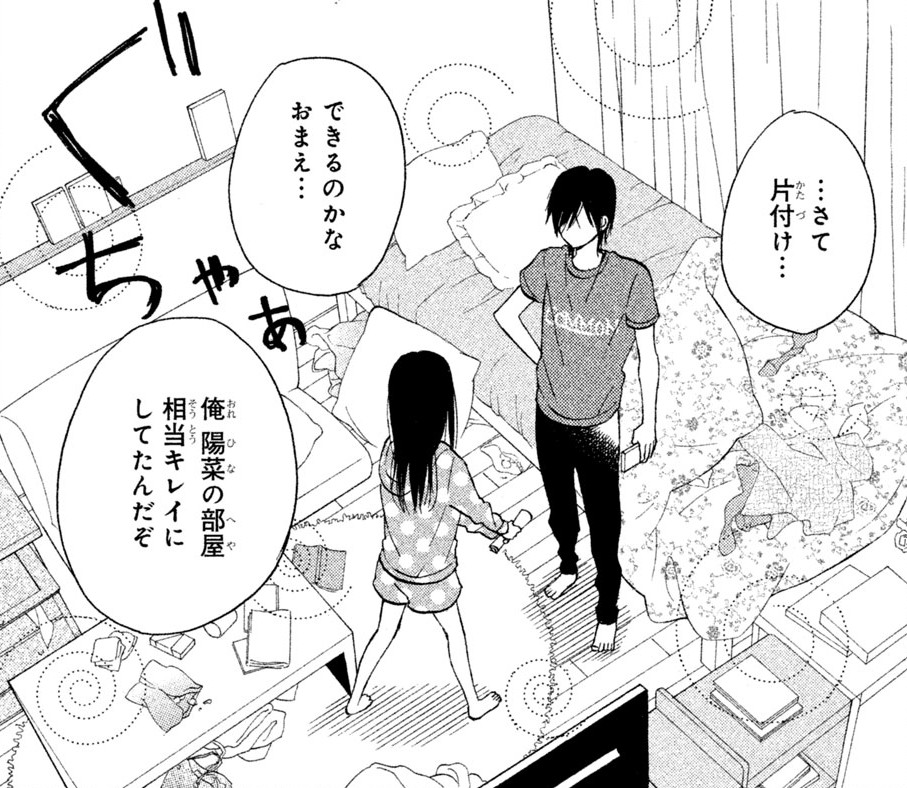
たいようのいえ » Volume 1 » Page 87Hiro lets Mao move into his sister’s bedroom, as Hina is living with relatives. After, he comes up with a list of rules that Mao needs to follow if she’s to keep living there.
基( ひろ ) :「…さて 片付( かたづ ) け…」 “Now then, cleaning...” 「できるのかな おまえ…」 “I wonder if you can do it.” 「俺( おれ ) 陽菜( ひな ) の部屋( へや ) 相当( そうとう ) “I kept Hina's room pretty clean, you know.” Challenge Yourself Show translation
Challenge
What concern does Hiro raise about Mao using Hina's room?
基( ひろ ) :「…さて 片付( かたづ ) け…」 「できるのかな おまえ…」 「俺( おれ ) 陽菜( ひな ) の部屋( へや ) 相当( そうとう ) Clues 片付( かたづ ) け…できるのかな おまえ…Hiro wonders whether Mao will be able to keep things tidy 陽菜( ひな ) の部屋( へや ) 相当( そうとう ) キレイにしてたんだぞ"I kept Hina's room quite clean, you know," stressing the standard he maintained. What does the speaker mean? He doubts whether Mao can keep the room as clean as he did. Hiro questions whether Mao can manage 片付( かたづ ) け, then emphasizes that he kept the room 相当( そうとう ) キレイ. He thinks Mao has already cleaned the room better than he did. Hiro describes his own past care of the room and questions Mao's ability. He does not praise her cleaning. He wants Mao to move into a different room because Hina's is dirty. He says he kept Hina's room quite clean. The concern is whether Mao can maintain it. He wonders whether Mao knows where the cleaning supplies are. The line questions her ability to tidy up generally, not her knowledge of supplies. He plans to clean the room for Mao every day. Hiro points to the standard he maintained before Mao moved in. He does not promise to keep doing the work for her. He believes the room is too clean for anyone to live in. 相当( そうとう ) キレイ describes degree, but Hiro treats cleanliness as a standard to preserve, not a problem.
Hiro wonders whether Mao can handle the cleaning. He then stresses that he had kept Hina’s room 相当( そうとう ) キレイ, quite clean, setting the standard he expects Mao to maintain.
View Full Example Example 2 of 2: Corresponding letters of the alphabet with 相当 Example 2 of 2
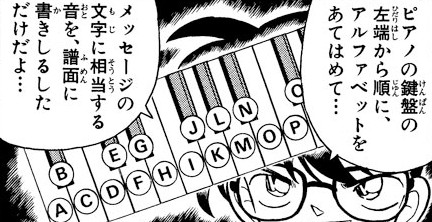
名探偵コナン » Volume 7 » Page 80Following a series of murders, Conan discovers a message hidden in sheet music. He explains it to Ran.
コナン: 「ピアノの鍵盤( けんばん ) の左端( ひだりはし ) から順( じゅん ) に、アルファベットをあてはめて…」 “Starting from the leftmost key on the piano keyboard, I assigned each key a letter...” 「メッセージの文字( もじ ) に相当( そうとう ) 音( おと ) を、譜面( ふめん ) に書( か ) きしるしただけだよ…」 “I simply wrote down the notes corresponding to the letters of the message on the sheet music...” Challenge Yourself Show translation
Challenge
What did Conan write on the musical score?
コナン: 「ピアノの鍵盤( けんばん ) の左端( ひだりはし ) から順( じゅん ) に、アルファベットをあてはめて…」 「メッセージの文字( もじ ) に相当( そうとう ) 音( おと ) を、譜面( ふめん ) に書( か ) きしるしただけだよ…」 Clues メッセージの文字( もじ ) に相当( そうとう ) する音( おと ) the notes corresponding to the message's letters 譜面( ふめん ) に書( か ) きしるしたwrote them down on the score What does the speaker mean? The piano notes corresponding to the message's letters. に相当( そうとう ) する links each message letter to its matching note. The alphabet in its ordinary order with no notes. Conan first maps letters to keys, then records the corresponding sounds as notation. A list of every key on the piano. He writes only the notes needed for the letters in the message. The murderer's spoken confession. The hidden message is encoded through letter-to-note correspondence, not copied speech. Instructions for tuning the piano. The notes carry a message rather than maintenance directions. A melody unrelated to the alphabet. Conan explains that each sound corresponds to a particular letter.
Conan assigned alphabet letters to the piano keys and wrote the notes corresponding to the message’s letters on the score.
View Full Example 当てはめる (To apply)当( あ ) てはめる is to fit something into a rule, pattern, or blank, such as plugging an answer into a formula.
ご注文はうさぎですか? » Volume 1 » Page 88During a library study session, Syaro helps Chino with her homework.
シャロ: 「この問題( もんだい ) はさっきの答( こた ) えをここに当( あ ) てはめて…」 “For this problem, substitute the answer from before here...” チノ: 「すごく分( わ ) かりやすいです!」 “That's very easy to understand!” Challenge Yourself Show translation
Challenge
What does チノ mean in the highlighted line?
シャロ: 「この問題( もんだい ) はさっきの答( こた ) えをここに当( あ ) てはめて…」 チノ: 「すごく分( わ ) かりやすい です!」 Clues 分( わ ) かりやすい分( わ ) かりやすい means easy to understandWhat does the speaker mean? That's very easy to understand! 分( わ ) かる changes to the stem 分( わ ) かり before やすい. Chino says the problem is easy even without Syaro's explanation. The highlighted form is 分( わ ) かりやすい. Here 分( わ ) かりやすい means easy to understand, so this choice does not match the Japanese. Chino says she still cannot understand Syaro's explanation. The highlighted form is 分( わ ) かりやすい. Here 分( わ ) かりやすい means easy to understand, so this choice does not match the Japanese. Chino complains that Syaro made the explanation too simple. The highlighted form is 分( わ ) かりやすい. Here 分( わ ) かりやすい means easy to understand, so this choice does not match the Japanese.
分( わ ) かりやすい means easy to understand. 分( わ ) かる changes to the stem 分( わ ) かり before やすい.
View Full Example Assigned Roles 給食当番 (Lunch duty)給食当番( きゅうしょくとうばん ) is the job of serving school lunch to classmates, done in turns.
It combines 給食 (school lunch ) with 当番 (duty ) to show duty serving school lunch .
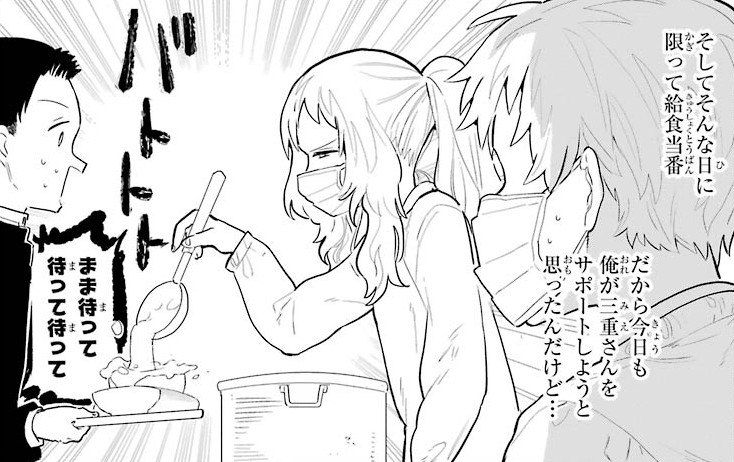
好きな子がめがねを忘れた » Volume 1 » Page 47Komura and Mie have serving duty in the cafeteria. Normally this wouldn’t be an issue, except today Mie accidentally stepped on her glasses and broke them, and can barely see without them.
小村( こむら ) :「そしてそんな日( ひ ) に限( かぎ ) って給食( きゅうしょく ) 当番( とうばん ) “Thus, on a day such as that (of all days), she has lunch duty.” 「だから今日( きょう ) も俺( おれ ) が三重( みえ ) さんをサポートしようと思( おも ) ったんだけど…」 “Therefore, I thought I'd support Mie today as well, but...” 男( おとこ ) の子( こ ) :「まま待( ま ) って待( ま ) って待( ま ) って」 “W-w-wait, wait, wait!” Challenge Yourself Show translation
Challenge
Why does Komura regard the lunch duty as especially badly timed?
小村( こむら ) :「そしてそんな日( ひ ) に限( かぎ ) って 給食( きゅうしょく ) 当番( とうばん ) 」 「だから今日( きょう ) も俺( おれ ) が三重( みえ ) さんをサポートしようと思( おも ) ったんだけど…」 男( おとこ ) の子( こ ) :「まま待( ま ) って待( ま ) って待( ま ) って」 Clues そんな日( ひ ) に限( かぎ ) って on that day of all days 給食( きゅうしょく ) 当番( とうばん ) lunch duty What does the speaker mean? It falls on the day Mie can barely see without her broken glasses. 〜に限( かぎ ) って marks lunch duty on this particular day as an inconvenient coincidence. It falls on the only day Komura is absent. Komura is present and plans to help Mie with the duty. Mie has volunteered to handle the duty alone. Komura expects to support her because seeing is difficult for her. The cafeteria has canceled lunch for the day. The problem is having lunch duty under difficult circumstances, not a canceled meal. Their duty was moved to a day when Mie's glasses are repaired. そんな日( ひ ) points to the current bad day, when her glasses are broken. Komura has forgotten that he shares the duty with Mie. He knows about the shared assignment and is already thinking about helping her.
Mie has lunch duty on the very day her broken glasses leave her unable to see well. 〜に限( かぎ ) って presents that timing as especially inconvenient.
View Full Example Truth 本当 (Truth)本当( ほんとう ) is the truth, as opposed to a lie or a joke. ほんとう? asks “really?”
It combines 本 (true origin ) with 当 (right / fitting ) to show what is truly right .
Example 1 of 3: Chinese history lesson on talismans with 中国 Example 1 of 3
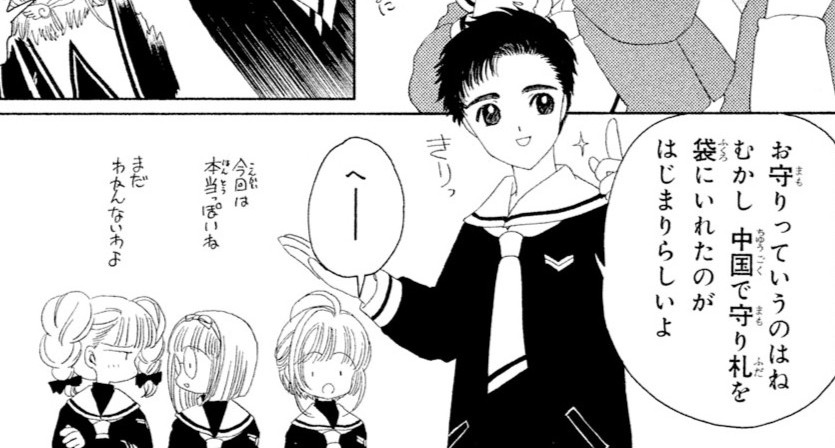
カードキャプターさくら » Volume 3 » Page 158Sakura had to take a detour to get to class. She tells her friends at school about the shrine she saw along the way. Naoko says the talismans from there are popular, as they can grant wishes for things such as exams and romance.
山崎( やまざき ) :「お守( まも ) りっていうのはね むかし 中国( ちゅうごく ) で守( まも ) り札( ふだ ) を袋( ふくろ ) にいれたのがはじまりらしいよ」 “You know, apparently good-luck charms began long ago in China, when people put protective talismans into bags.” 奈緒子( なおこ ) :「今回( こんかい ) は本当( ほんとう ) “This time it sounds true, huh?” 千春( ちはる ) :「まだ わかんないわよ」 “We don't know that yet!” Challenge Yourself Show translation
Challenge
How does Chiharu respond to Naoko's reaction?
山崎( やまざき ) :「お守( まも ) りっていうのはね むかし 中国( ちゅうごく ) 守( まも ) り札( ふだ ) を袋( ふくろ ) にいれたのがはじまりらしいよ」 奈緒子( なおこ ) :「今回( こんかい ) は本当( ほんとう ) っぽいね」 千春( ちはる ) :「まだ わかんないわよ」 Clues まだ with a negative, something is not the case yet わかんない a casual contraction of わからない, meaning do not know What does the speaker mean? She says they still cannot tell whether the story is true. まだわかんない leaves the truth of the story unsettled. She says she knows the story is false. わかんない means she does not know. She has not declared the story false. She agrees that this story is true. The negative わかんない challenges Naoko's reaction instead of agreeing with it.
Naoko says this story sounds true, but Chiharu replies that they do not know yet. She remains skeptical without calling it false.
View Full Example Example 2 of 3: Don't say it with 〜てはだめだ Example 2 of 3
ご注文はうさぎですか? » Volume 1 » Page 54Syaro gives a vague account of her first meeting Rize, as the truth is too embarassing for her. Cocoa listens to Syaro’s words and misunderstands the event.
リゼ: 「ちがうちがう本当( ほんとう ) “No, no. What really happened was...” シャロ: 「あっ言( い ) っちゃだめです!」 “Ah, don't say it!” Challenge Yourself Show translation
Challenge
What does シャロ mean in the highlighted line?
リゼ: 「ちがうちがう本当( ほんとう ) はー」 シャロ: 「あっ言( い ) っちゃだめです !」 Clues 言( い ) っちゃだめです言( い ) っちゃだめです tells Rize not to reveal itWhat does the speaker mean? Ah, don't say it! Syaro tries to stop Rize from giving the embarrassing true account of their first meeting. Syaro asks Rize to tell everyone the true story. The highlighted form is 言( い ) っちゃだめです. Here 言( い ) っちゃだめです tells Rize not to reveal it, so this choice does not match the Japanese. Syaro says Rize has already lied about their first meeting. The highlighted form is 言( い ) っちゃだめです. Here 言( い ) っちゃだめです tells Rize not to reveal it, so this choice does not match the Japanese. Syaro tells Cocoa, rather than Rize, not to speak. The highlighted form is 言( い ) っちゃだめです. Here 言( い ) っちゃだめです tells Rize not to reveal it, so this choice does not match the Japanese.
言( い ) っちゃだめです tells Rize not to reveal it. Syaro tries to stop Rize from giving the embarrassing true account of their first meeting.
View Full Example Example 3 of 3: Keeping my dad company with 相手 Example 3 of 3
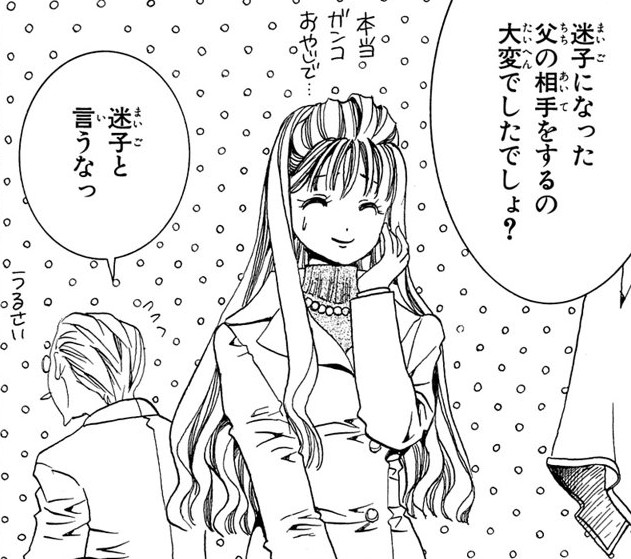
ARIA The MASTERPIECE » Volume 2 » Page 31Akari encounters an older gentleman looking for a police box, so he can report his missing daughter and son-in-law. Akari offers to take him around and see if they can find the couple. Once they are reunited, the daughter thanks Akari for finding her father.
娘( むすめ ) :「迷子( まいご ) になった父( ちち ) の相手( あいて ) をするの大変( たいへん ) でしたでしょ?」 “It must have been tough dealing with my dad when he got lost, right?” 「本当( ほんとう ) “He really is a stubborn old man...” 父( とう ) さん:「迷子( まいご ) と言( い ) うなっ」 “Don't say lost!” 「うるさい」 “Annoying...” View Full Example 本当に (Really)本当( ほんとう ) に stresses that something is truly the case or that a feeling is sincere, as in 本当( ほんとう ) にありがとう.
It combines 本当 (truth ) with に (adverb ending ) to show truly .
Example 1 of 2: Only for a little bit with 〜だけ Example 1 of 2
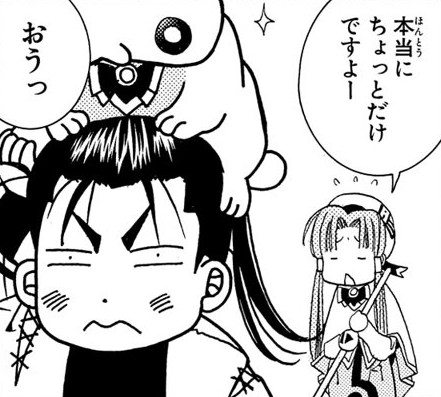
ARIA The MASTERPIECE » Volume 2 » Page 95While waiting for his brother, Akatsuki finds Akari. He decides to pass the time by having Akari give him a tour of the area, but she explains that as a trainee she can’t take on customers by herself. Akatsuki hops into Akari’s gondola, saying it’s okay as long as he’s not a customer; he’s a friend.
灯里( あかり ) :「本当( ほんとう ) に “It's really just a little bit!” View Full Example Example 2 of 2: Thank you for always being by side with 本当にありがとう Example 2 of 2
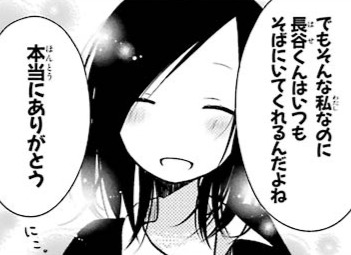
一週間フレンズ。 » Volume 4 » Page 130Due to a condition where she loses all memories of friends every Monday morning, Fujimiya acts cold toward classmates to avoid becoming friends. While eating lunch on the roof with Hase, she remarks how hard it is to act that way. Hase says it’s because she’s naturally a nice person. He recalls when he first tried becoming friends with her, how Fujimiya avoided eye contact with him and gave only brief responses. Fujimiya is shocked to hear how she had treated him.
藤宮( ふじみや ) :「でもそんな私( わたし ) なのに長谷( はせ ) くんはいつもそばにいてくれるんだよね」 “But even though I was like that, Hase-kun, you're always by my side, aren't you?” 「本当( ほんとう ) に “Thank you, really.” Challenge Yourself Show translation
Challenge
Why does Fujimiya thank Hase?
藤宮( ふじみや ) :「でもそんな私( わたし ) なのに長谷( はせ ) くんはいつもそばにいてくれるんだよね」 「本当( ほんとう ) にありがとう Clues そんな私( わたし ) なのに even though I was like that, referring to how coldly she treated him いつもそばにいてくれる he is always by her side, presented as kindness she receives What does the speaker mean? He stayed by her side even when she treated him coldly. そんな私( わたし ) なのに contrasts her past behavior with Hase's choice to remain いつもそばに. He restored every memory she had lost. Fujimiya thanks him for staying close. She does not say that he cured her memory loss. He promised that he would stop trying to speak with her. いつもそばにいてくれる says he continues to stay by her side, not that he will withdraw. He kept her condition secret from every classmate. The line focuses on Hase remaining close despite her behavior. It does not mention secrecy. He brought lunch for her every day on the rooftop. いつも modifies his being by her side. The line does not say he supplied her lunches. He told her that she never needed to change how she treated people. Fujimiya looks back on her cold treatment, but she does not say Hase approved of it.
Fujimiya realizes that Hase kept supporting her even when she avoided him and acted coldly. 〜てくれる frames his staying close as kindness she has received, which leads to her heartfelt thanks.
View Full Example Packed Meals 弁当 (Boxed meal)弁当( べんとう ) is a boxed meal packed to eat at school, work, or away from home.
It combines 弁 (arrange / portion out ) with 当 (appropriate / allotted ) to show food set out in suitable portions .
Example 1 of 2: A meal provided by the school with 給食 Example 1 of 2
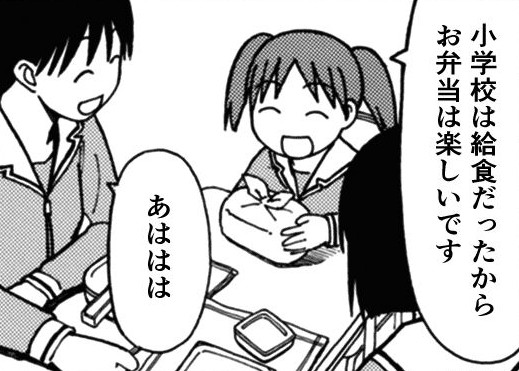
あずまんが大王 » Volume 1年生 » Page 6Chiyo is a child prodigy who’s skipped from elementary school to high school.
During her first day of class, Chiyo is invited by a couple of classmates to join them for lunch.
ちよ: 「小学校( しょうがっこう ) は給食( きゅうしょく ) だったからお弁当( べんとう ) 楽( たの ) しいです」 “Since we were provided lunches in elementary school, a boxed lunch is fun.” Challenge Yourself Show translation
Challenge
Why does Chiyo find bringing a boxed lunch enjoyable?
ちよ: 「小学校( しょうがっこう ) は給食( きゅうしょく ) 弁当( べんとう ) は楽( たの ) しいです」 Clues 小学校( しょうがっこう ) は給食( きゅうしょく ) だったelementary school had provided lunches 〜から because, giving the reason お弁当( べんとう ) は楽( たの ) しい boxed lunches are enjoyable What does the speaker mean? Her elementary school provided lunch, so bringing a boxed lunch feels new and fun. 給食( きゅうしょく ) だったから gives Chiyo's earlier school-lunch experience as the reason お弁当( べんとう ) is enjoyable now. Her elementary school required every student to cook lunch. 給食( きゅうしょく ) means the school provided the meal. It does not mean students cooked it. She thinks boxed lunches taste better than all school lunches. Chiyo says boxed lunches are fun. She does not compare their taste. She is relieved that high school provides free boxed lunches. The contrast is between past 給食( きゅうしょく ) and the boxed lunch she now brings. She disliked eating lunch during elementary school. The line explains why boxed lunches are enjoyable now, but it does not say she disliked her old meals. She plans to return to elementary school for lunch. 給食( きゅうしょく ) だった is past background, not a future destination.
Chiyo used to receive school-provided lunches in elementary school. Because bringing a boxed lunch is a new experience for her, she finds it fun.
View Full Example Example 2 of 2: Thanks for the boxed lunch with サンキュ Example 2 of 2
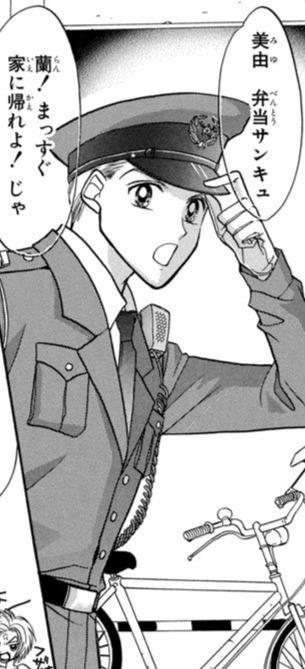
GALS! » Volume 1 » Page 14Miyu visits Yamato at his police box workplace to bring him a packed lunch. She sees her friend, Yamato’s sister Ran, there and stops by to see her next. A call comes in, and Yamato heads to help provide backup.
大和( やまと ) :「美由( みゆ ) 弁当( べんとう ) “Miyu, thanks for the boxed lunch.” 「蘭( らん ) ! まっすぐ 家( いえ ) に帰( かえ ) れよ! じゃ」 “Ran! Head right home! Bye!” Challenge Yourself Show translation
Challenge
What is Yamato doing when he says 美由 弁当サンキュ?
大和( やまと ) :「美由( みゆ ) 弁当( べんとう ) サンキュ 」 「蘭( らん ) ! まっすぐ 家( いえ ) に帰( かえ ) れよ! じゃ」 Clues 美由( みゆ ) Miyu, addressed by name 弁当( べんとう ) packed lunch サンキュ casual thanks, borrowed from English What does the speaker mean? He casually thanks Miyu for bringing him a packed lunch. Yamato addresses Miyu, names the 弁当( べんとう ) , and follows it with the casual loanword サンキュ. He asks Miyu to make him another packed lunch. サンキュ expresses thanks for what Miyu has already brought. The line contains no request or future action. He tells Ran to take the packed lunch home. Yamato addresses 美由( みゆ ) in this line. His command to Ran comes afterward and concerns going home, not taking the lunch. He apologizes to Miyu for forgetting her packed lunch. サンキュ is thanks, not an apology. There is also no verb for forgetting in the line. He says that the packed lunch belongs to Miyu. Placing 弁当( べんとう ) before サンキュ identifies what he is thanking her for. It does not mark ownership. He compliments Miyu on how the packed lunch tastes. The line thanks Miyu for the lunch but does not describe its taste or say that Yamato has eaten it.
Yamato compresses the exchange to Miyu’s name, the thing she brought, and サンキュ. The borrowed word makes his thanks brief and casual.
View Full Example お弁当 (Boxed lunch)お弁当( べんとう ) is the polite, everyday way to say 弁当( べんとう ) , a meal packed in a box to eat away from home.
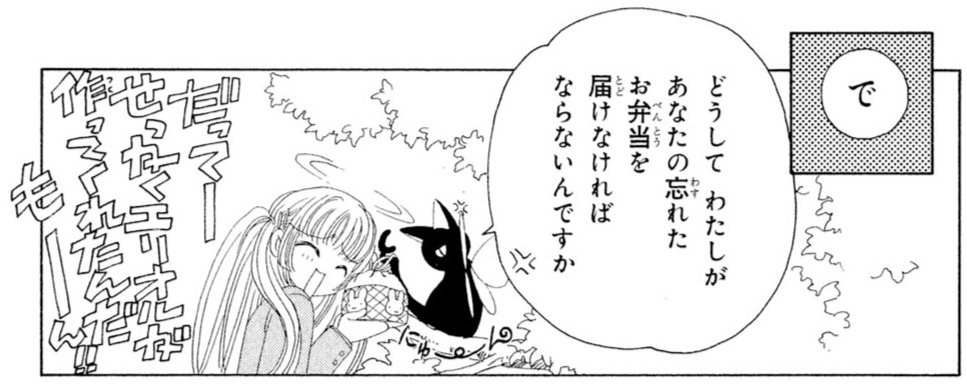
カードキャプターさくら » Volume 8 » Page 93Spinel Sun calls out to Ruby Moon at school. After a brief discussion, Spinel Sun gets to the reason for his appearance there.
スピネル・サン: 「で」 “So.” 「どうして わたしがあなたの忘( わす ) れたお弁当( べんとう ) を届( とど ) けなければならないんですか」 “Why do I have to deliver the lunch you forgot?” ルビー・ムーン: 「だってー せっかくエリオルが作( つく ) ってくれたんだもーーん!!」 “Well, because Eriol went to all that trouble to make it for me!!” Challenge Yourself Show translation
Challenge
What is Spinel Sun questioning?
スピネル・サン: 「で」 「どうして わたしがあなたの忘( わす ) れたお弁当( べんとう ) を届( とど ) けなければならない んですか」 ルビー・ムーン: 「だってー せっかくエリオルが作( つく ) ってくれたんだもーーん!!」 Clues どうして why あなたの忘( わす ) れたお弁当( べんとう ) the lunch that Ruby Moon forgot 届( とど ) けなければならないんですかwhy must I deliver it, phrased as a pointed request for an explanation What does the speaker mean? Why he must deliver the lunch that Ruby Moon forgot. どうして asks for the reason, while 届( とど ) けなければならない says Spinel is required to deliver Ruby Moon's forgotten lunch. Why Ruby Moon made a lunch for Eriol. Ruby Moon forgot the lunch, and Eriol made it. Spinel is questioning his own delivery duty. Whether Ruby Moon has already eaten her lunch. The lunch was forgotten and still needs to be delivered. The line does not ask whether it was eaten. Where he should buy a replacement lunch. 届( とど ) ける means to deliver the existing lunch. No purchase or replacement appears in the exchange. Why Eriol asked Ruby Moon to bring him lunch. The forgotten lunch belongs to Ruby Moon, and Spinel is bringing it to her. Whether he is allowed to leave the lunch at home. 〜なければならない expresses an obligation to deliver it, not a request for permission to leave it behind.
Spinel objects to being made responsible for Ruby Moon’s mistake. He asks why he has to deliver the lunch she forgot, and んですか gives the complaint the form of a polite request for a reason.
View Full Example 弁当代 (Lunch money)弁当代( べんとうだい ) means lunch money or the price of a boxed meal.
It combines 弁 (arrange / portion out ) with 当 (allotted meal ) and 代 (cost / charge ) to show the money for a boxed meal .
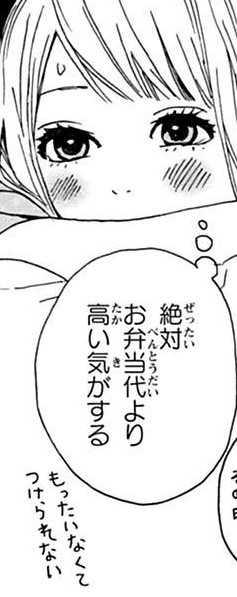
orange » Volume 2 » Page 22As thanks for Naho making him lunches, Kakeru gives her a jewel-encrusted hair clip. In her room later, Naho looks over the piece.
菜穂( なほ ) :「絶対( ぜったい ) お弁当代( べんとうだい ) 高( たか ) い気( き ) がする」 “I think it definitely cost more than lunch.” Challenge Yourself Show translation
Challenge
What impression does Naho have about the hair clip?
菜穂( なほ ) :「絶対( ぜったい ) お弁当代( べんとうだい ) より高( たか ) い気( き ) がする Clues 絶対( ぜったい ) definitely お弁当代( べんとうだい ) より than the cost of the lunches 高( たか ) いexpensive 気( き ) がするto have the feeling or impression that What does the speaker mean? She feels sure that the hair clip cost more than the lunches. お弁当代( べんとうだい ) より sets the lunch cost as the comparison point, and 高( たか ) い says the hair clip is more expensive. She thinks the lunches cost more than the hair clip. The item before より is the comparison point. The unstated hair clip is what Naho describes as 高( たか ) い. She thinks the two gifts cost exactly the same amount. より with 高( たか ) い makes an unequal comparison. The line says the hair clip seems more expensive. She knows the hair clip's exact price because Kakeru told her. 気( き ) がする marks a personal impression. Naho sounds convinced, but she is not reporting a known price. She expects the lunch costs to become higher later. The line compares the hair clip with the existing lunch cost. It does not predict a future price change. She thinks Kakeru should spend less on future lunches. Naho is judging the value of the hair clip he gave her. The line contains no advice about future spending.
Naho treats the lunch cost as the baseline with より and describes the hair clip as more expensive. 気( き ) がする keeps it as her impression, while 絶対( ぜったい ) shows how strongly she believes it.
View Full Example