Matters and events with 事
The kanji 事 refers to things, events, work, or abstract concepts.
- Grade 3
- JLPT N4 (estimate)
- WaniKani level 9
- 8 strokes
Words with 事
- Work
- 仕事 しごと Work
- 事務所 じむしょ Office
- 事務 じむ Office work
- Things
- Significance
- 大事 だいじ Important
- 無事 ぶじ Safety
- 刑事 けいじ Detective
- 悪事 あくじ Evil deed
- Circumstances
- Facts
- 事実 じじつ Fact
The bold kana are the part 事 contributes. Words in a dashed box have no manga example yet.
How to Read 事
じ in compounds. Alone it is こと, a thing or a matter. Manga print that word in kana far more often than as 事. A count across more than 11,000 volumes finds こと nearly four times as often.
After another native word, こと voices to ごと, as in 仕事, 出来事, and 見事.
Etymology
This kanji is an ancient pictogram associated with a hand carrying out a task with a tool, with a focuses on doing or handling something rather than on an object itself.
Work
仕事 (しごと) (Work)
仕事 is work done for a living, or a particular task one has to do.
It combines 仕 (do) with 事 (matter) to show a task one performs.
Example 1 of 2: Was she really worried about me with 〜の事心配
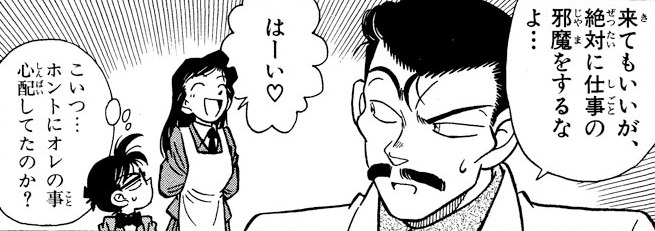
Conan recently learned from Professor Agasa that Ran had come to him in tears because Shin’ichi had disappeared. Now the idol Yoko Okino has hired Kogoro to look into a stalker, and Ran begs to come along so she can see what an idol’s apartment looks like.
- 小五郎:
- 「来てもいいが、絶対に仕事の邪魔をするなよ…」
- “You can come, but don't you dare get in the way of my work...”
- 蘭:
- 「はーい♡」
- “Okaaay ♡”
- コナン:
- 「こいつ…ホントにオレの事心配してたのか?」
- “Was she... really worried about me?”
Example 2 of 2: Scheduled to work outside at night with 〜ことになる
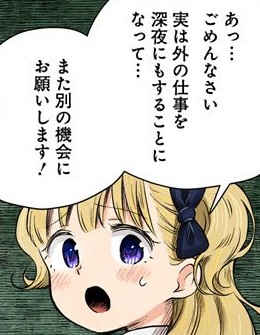
Kate says she wants to study together with Emiriko before bedtime.
- エミリコ:
- 「あっ… ごめんなさい。実は外の仕事を深夜にもすることになって…」
- “Ah, I'm sorry. The truth is, I'm scheduled to do late-night work outside...”
- 「また別の機会にお願いします!」
- “Please ask again another time!”
事務 (じむ) (Office work)
事務 is office work, such as handling documents, data, phone calls, and visitors, that keeps a company or office running.
It combines 事 (matter) with 務 (duty) to show duties dealing with practical matters.
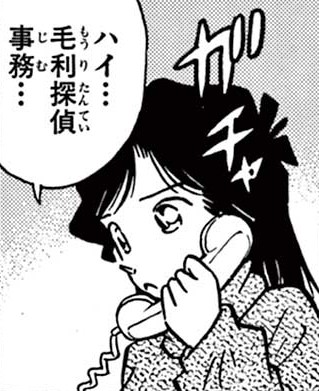
After returning home from a case, Kogoro celebrates by drinking himself to sleep. Ran sits alone, pondering Shin’ichi’s whereabouts, as she hasn’t heard from him since the day he mysteriously vanished. The phone rings. With her father asleep, Ran answers it.
- 蘭:
- 「ハイ… 毛利探偵事務…」
- “Hello... Mouri Detective Agenc--”
Things
事 (こと) (Thing)
事 is an abstract thing, matter, or fact. It also turns a verb phrase into a noun, as in 見た事がある. It is often written こと.
Example 1 of 7: According to Nostradamus with 〜によれば
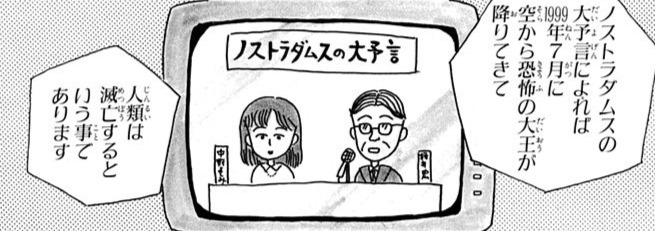
Maruko learns about Nostradamus and his predictions from a classmate. She tells her family about it, leading to them watching a TV show about it that night.
- アナウンサー:
- 「ノストラダムスの大予言によれば1999年7月に空から恐怖の大王が降りてきて」
- “According to Nostradamus's great prophecy, in July 1999 a great king of terror will descend from the sky...”
- 「人類は滅亡するという事であります」
- “...and humanity will perish.”
Example 2 of 7: Merely by shaking hands with 握手
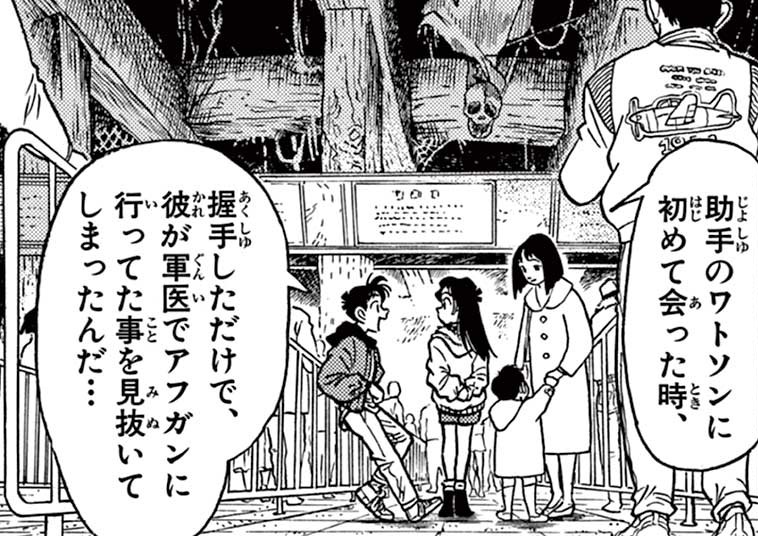
Shin’ichi treats Ran to a day at Tropical Land as a reward for winning the city karate tournament. As they wait in line for a ride on the roller coaster, Shin’ichi explains all the reasons why Sherlock Holmes was the greatest detective.
- 新一:
- 「助手のワトソンに初めて会った時、握手しただけで、彼が軍医でアフガンに行ってた事を見抜いてしまったんだ…」
- “The first time he met his assistant Watson, Holmes could tell just from a handshake that he was a military doctor who had been stationed in Afghanistan...”
Example 3 of 7: Call me Hinagiku with 〜の事は〜って呼ぶ
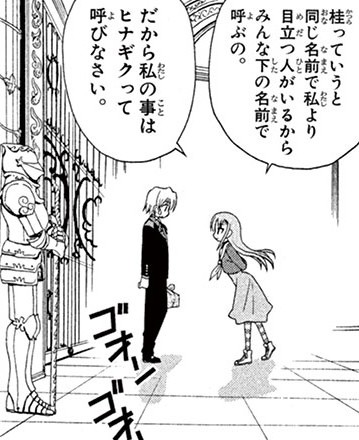
Hayate helped Hinagiku, the student council president, rescue a baby bird. As thanks, she took him to the top of the clock tower, where the council room is. When he politely brushed off her hint that he’d be back, calling her “Katsura-san”, she told him to call her Hinagiku instead, which left him puzzled.
- ヒナギク:
- 「桂っていうと同じ名前で私より目立つ人がいるから みんな下の名前で呼ぶの。」
- “There's someone else named Katsura who stands out more than I do, so everyone calls me by my first name.”
- 「だから私の事はヒナギクって呼びなさい。」
- “So call me Hinagiku.”
Example 4 of 7: Experience with sleepovers with 〜た+ことがある
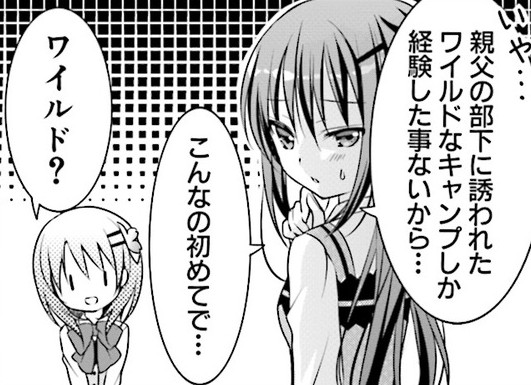
Cocoa thinks Rize is nervous about staying overnight with her and Chino.
- リゼ:
- 「いや… 親父の部下に誘われたワイルドなキャンプしか経験した事ないから…」
- “Well... I've only had the experience of those wild camping trips my dad's subordinates invited me on...”
- 「こんなの初めてで…」
- “I've never done anything like this before...”
- ココア:
- 「ワイルド?」
- “Wild?”
Example 5 of 7: Kept waiting countless times with 〜される
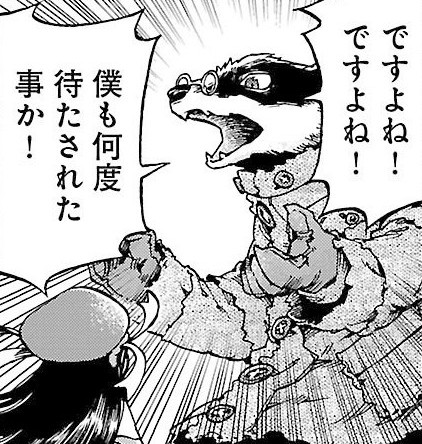
Hakumei and Mikochi visit Kate, a badger who makes canelés deep in the forest, hoping to sell them at the shop where Mikochi works. Kate turns them down when he learns the shop belongs to Suzumi, but offers to show them how he makes canelés. He warns that the work is hard for anyone who’s bad at waiting, and Mikochi says she’s good at it, since her manager often keeps her waiting.
- ケイト:
- 「ですよね! ですよね! 僕も何度待たされた事か!」
- “Right?! Right?! I can't tell you how many times I've been kept waiting too!”
Example 6 of 7: Possibility of building a time machine with 可能
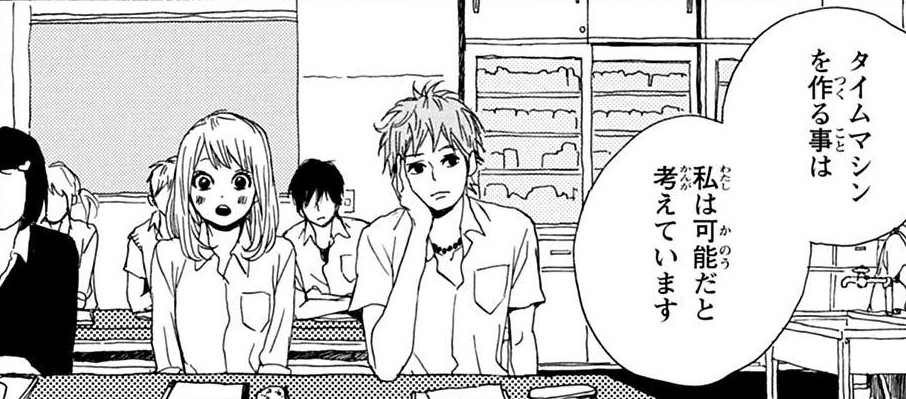
After handing test results to class, the teacher talks about theories of time travel.
- 先生:
- 「タイムマシンを作る事は私は可能だと考えています」
- “I believe it is possible to build a time machine.”
Example 7 of 7: Thank you very much for bringing my daughter back with どうもありがとう
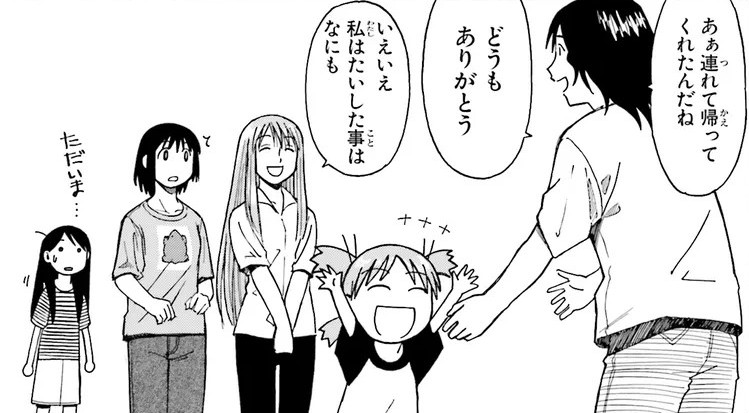
Yousuke’s daughter Yotsuba wanders off while he’s moving things into their new home. One of his new neighbors offers to keep an eye out for her. Later, he finds Yotsuba outside with the neighbors.
- 葉介:
- 「あぁ連れて帰ってくれたんだね」
- “Ah, so you brought her back home.”
- 「どうもありがとう」
- “Thank you so much.”
- あさぎ:
- 「いえいえ 私はたいした事はなにも」
- “No, no, it was nothing at all.”
- 恵那:
- 「ただいま…」
- “I'm home...”
Significance
無事 (ぶじ) (Safety)
無事 describes being safe and unhurt, with nothing going wrong.
It combines 無 (without) with 事 (incident) to show being without incident.
Example 1 of 2: Furthermore, it's just a bonus item with それに〜
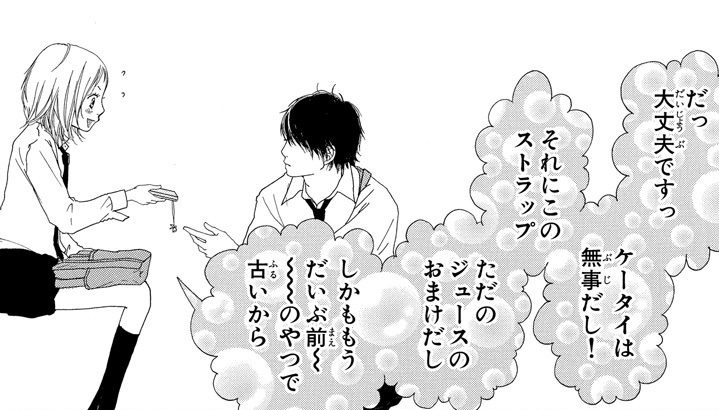
After school, Ninako notices Ren sleeping a few seats away on the train. When Ren wakes and rushes for his stop, he knocks Ninako’s phone from her hand. The phone hits the floor, and the strap charm breaks. Ren misses his exit while apologizing and offers to replace the charm.
- 仁奈子:
- 「だっ 大丈夫ですっ」
- “I—it's all right.”
- 「ケータイは無事だし!」
- “Since my cell phone is safe!”
- 「それにこのストラップただのジュースのおまけだし」
- “Furthermore, this strap was just a freebie that came with some juice.”
- 「しかももうだいぶ前〜〜〜〜のやつで古いから」
- “Plus, it's from way back when, so it's old.”
Example 2 of 2: Reelected class representative with 当選
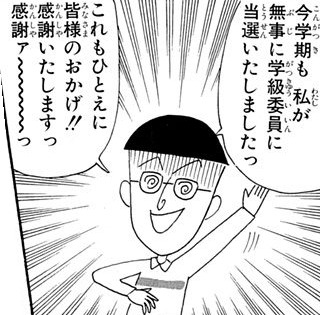
The second term has just begun at Maruko’s school, and her class has held its vote for class representative. Maruo held the post last term and loves the job.
- 丸尾くん:
- 「今学期も 私が 無事に学級委員に 当選いたしましたっ」
- “This term, too, I have been duly elected class representative!”
- 「これもひとえに 皆様のおかげ!! 感謝いたしますっ 感謝ァ〜〜〜っ」
- “I owe it all to you, everyone!! I thank you! Thaaank youuu!”
刑事 (けいじ) (Detective)
刑事 means a police detective who investigates crimes and arrests suspects.
It combines 刑 (criminal law) with 事 (matter) to show someone who deals with criminal matters.
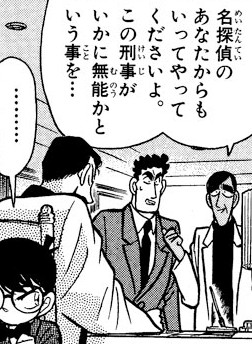
Police detective Yokomizo isn’t about to let Sasai, his prime murder suspect, leave. Sasai reminds the officer that he has photographic proof that he wasn’t near the victim at the time of the murder. He calls for Detective Mouri to back him up.
- 笹井:
- 「名探偵のあなたからもいってやってくださいよ。 この刑事がいかに無能かという事を…」
- “You, the great detective, should tell him yourself. Just how incompetent this police detective is...”
Events
事件 (じけん) (Incident)
事件 means an incident or event that attracts public attention.
It combines 事 (matter) with 件 (case) to show a distinct case or incident.
Example 1 of 3: Keeping a museum from shutting down with 事件
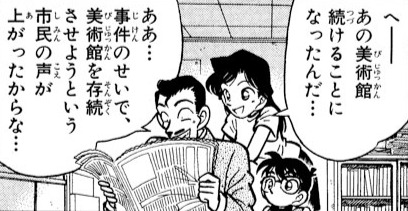
Following the solving of a murder case, Detective Mouri reads an article about the museum where the murder took place.
- 蘭:
- 「へーーー あの美術館続けることになったんだ…」
- “Wow... So they decided to keep the art museum open after all...”
- 毛利:
- 「ああ… 事件のせいで美術館を存続させようという市民の声が上がったからな…」
- “Yeah... Because of the incident, there was a public outcry to keep the art museum open...”
Example 2 of 3: Resolving the case with 解決
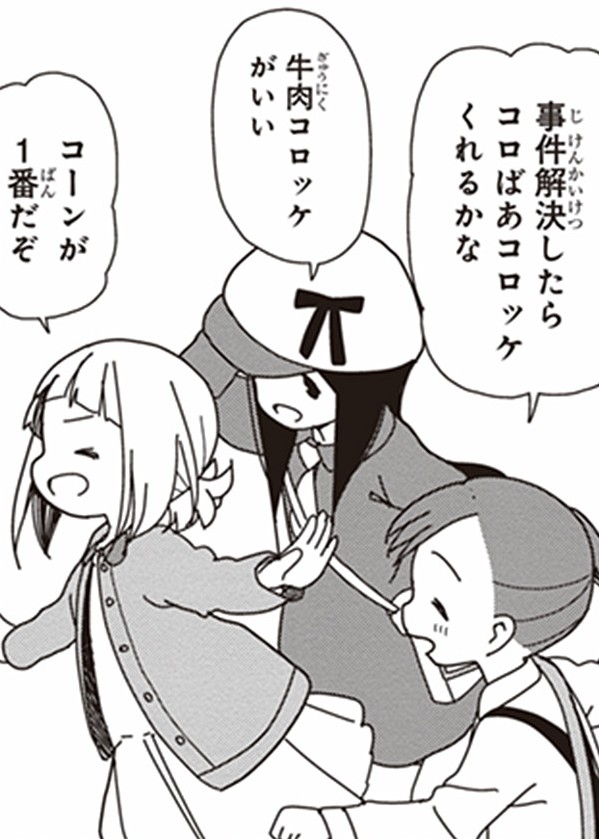
Kotoha brings news that the old woman who runs the croquette shop has a case for Colors. The trio heads out to the shop to get the details.
- 結衣:
- 「事件解決したらコロばあコロッケくれるかな」
- “If we resolve the case, will she give us croquettes?”
- 琴葉:
- 「牛肉コロッケがいい」
- “Beef croquette would be nice.”
- さっちゃん:
- 「コーンが1番だぞ」
- “Corn is best!”
Example 3 of 3: Strange incidents on after another in Tokyo with 続出
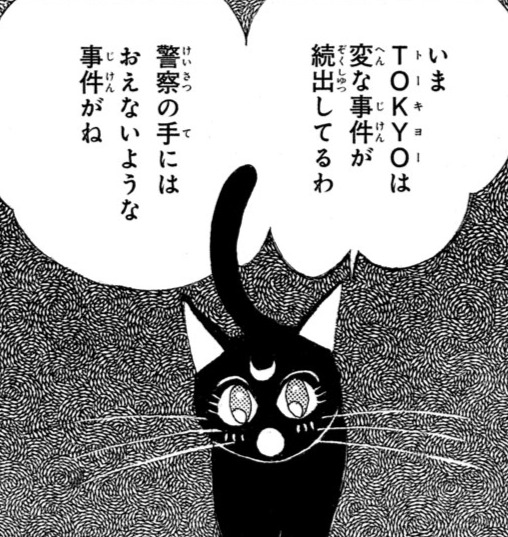
Luna introduces herself to Usagi, but Usagi thinks she’s dreaming if a cat is speaking to her. Luna gives Usagi a special brooch, then proceeds to explain the dire situation that has brought them together.
- ルナ:
- 「いまTOKYOは変な事件が続出してるわ」
- “Strange incidents are popping up all over Tokyo these days.”
- 「警察の手にはおえないような事件がね」
- “Incidents that seem beyond the police's control, you know.”
食事 (しょくじ) (Meal)
食事 is a meal, or the act of eating one.
It combines 食 (eat) with 事 (matter) to show the matter of eating.
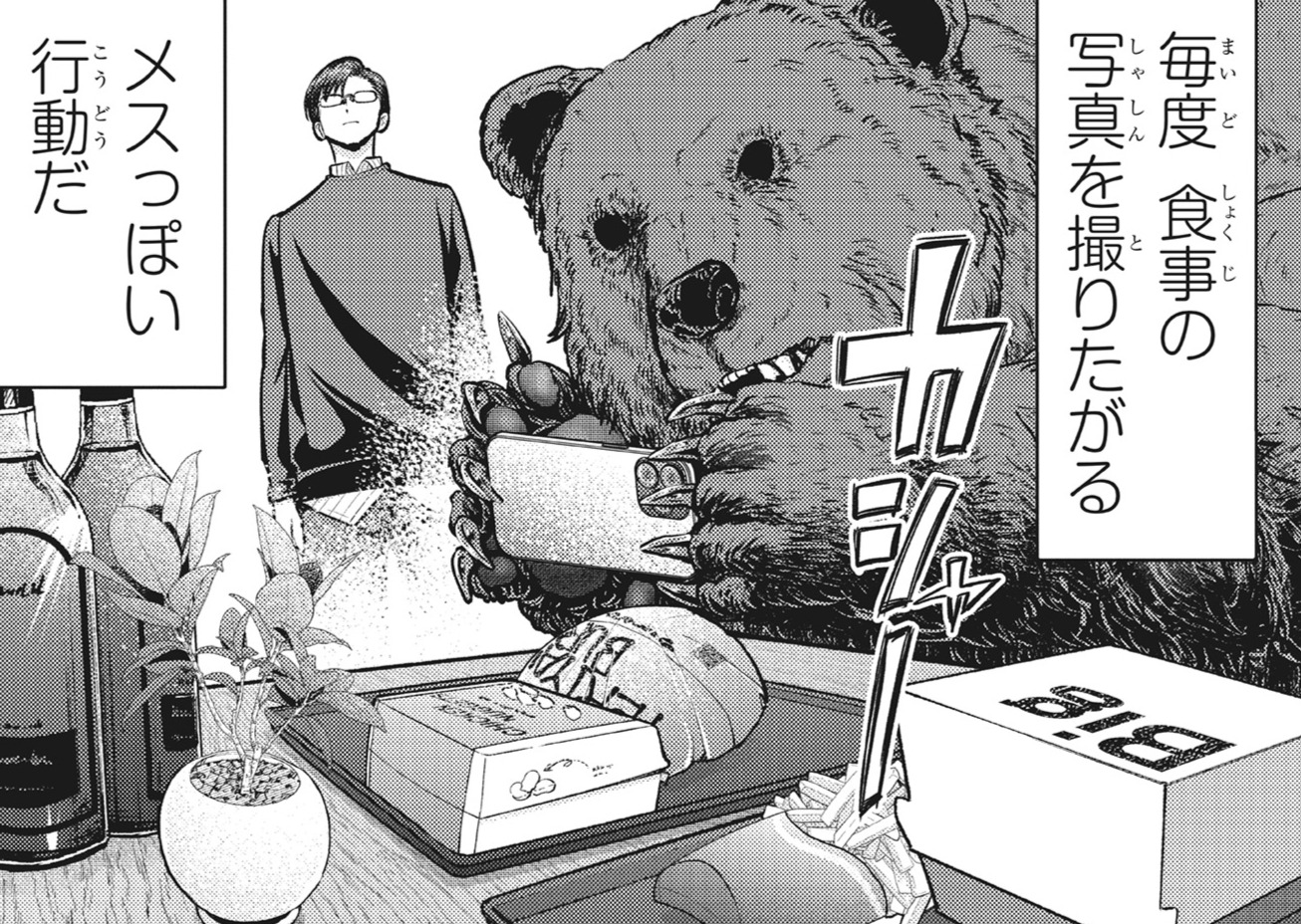
Kumada observes the bear that’s been living in his apartment for a while now, trying to determine from its personality traits whether it’s male or female.
- (熊田):
- 「毎度 食事の写真を撮りたがる」
- “It always wants to take photos of its meals.”
- 「メスっぽい行動だ」
- “That's female-like behavior.”
事故 (じこ) (Accident)
事故 is something going wrong by accident and causing harm, such as a car crash or a fall.
It combines 事 (matter / event) with 故 (cause / happening) to show an event that has occurred as a mishap.
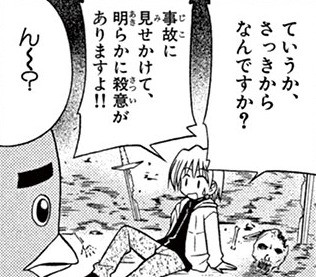
At an amusement park, Nagi is too scared to go into the haunted house, so she sends Hayate in alone to see whether it’s scary. The costumed staff, who rehearsed hard for the attraction, decide he is an easy target. Inside, they attack him with real weapons, and Hayate dodges one close call after another.
- ハヤテ:
- 「ていうか、さっきからなんですか?」
- “More to the point, what is with you guys?”
- 「事故に見せかけて、明らかに殺意がありますよ!!」
- “You're making it look like accidents, but you're obviously trying to kill me!!”
- ニワトリ:
- 「ん〜っ?」
- “Hmm?”
出来事 (できごと) (Event)
出来事 is something that happened, an event or incident.
It combines 出来 (coming about) with 事 (thing) to show something that happened.
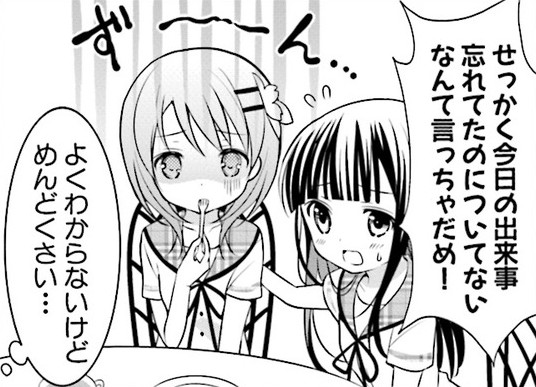
After Cocoa has a string of bad luck throughout the day, Chiya takes her to the tea shop where Syaro works to get her mind off everything that happened.
Just as Cocoa’s finally cheered up, Syaro comments to herself about her own bad luck, returning Cocoa to gloom.
- 千夜:
- 「せっかく今日の出来事忘れてたのについてないなんて言っちゃだめ!」
- “We went through the trouble to forget about today, so don't say bad luck!”
- シャロ:
- 「よくわからないけどめんどくさい…」
- “I don't really understand, but this is a pain...”
誘拐事件 (ゆうかいじけん) (Kidnapping case)
誘拐事件 is a case in which someone has been kidnapped.
It combines 誘拐 (abduction) with 事件 (incident) to show an incident involving kidnapping.
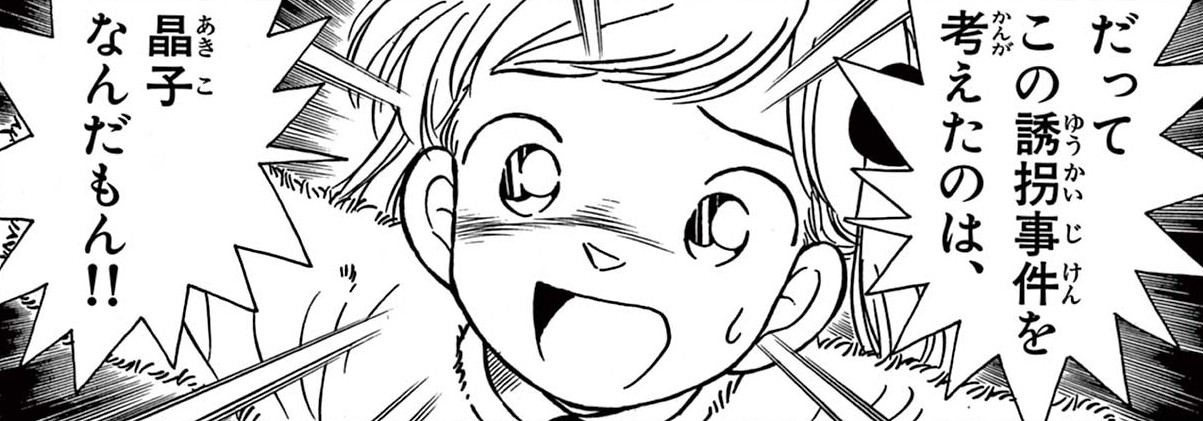
A fake kidnapping ploy turns into an actual kidnapping. After the kidnapped child is safe, her father goes after their butler for concocting the scheme. The daughter, Akiko, protects the butler, saying she’s the bad one.
- 晶子:
- 「だってこの誘拐事件を考えたのは、晶子なんだもん!!」
- “I say that because I'm the one who thought up the kidnapping plot!”
Circumstances
事情 (じじょう) (Circumstances)
事情 means the circumstances of a situation, including what led to it and why.
It combines 事 (matter) with 情 (real condition) to show the circumstances of a matter.
Example 1 of 3: Nothing to do with Ayumu's situation with 知ったことか
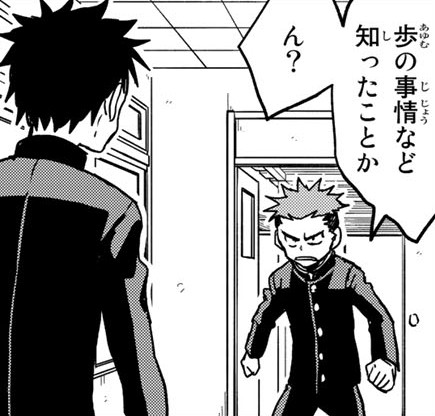
Sakurako tells Takeru not to go to the shogi club as he’ll get in the way of Ayumu being with Urushi. However, as a new member of shogi club, and as a man, Takeru feels it’s his duty to show up.
- タケル:
- 「歩の事情など知ったことか」
- “This has nothing to do with Ayumu's situation.”
Example 2 of 3: Testing one's detective ability with 能力
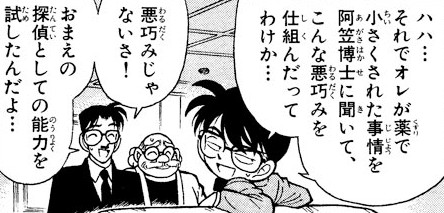
Conan finds himself in the clutches of a dangerous pair, only to discover it’s his parents in disguise.
- コナン:
- 「ハハ… それでオレが薬で小さくされた事情を阿笠博士に聞いて、こんな悪巧みを仕組んだってわけか…」
- “So you heard from Dr. Agasa about how I was shrunk by a drug and cooked up this evil scheme, huh...”
- 父さん:
- 「悪巧みじゃないさ! おまえの探偵としての能力を試したんだよ…」
- “It's not an evil scheme! I was just testing your abilities as a detective...”
Example 3 of 3: Want you to let me explain with 〜させてほしい
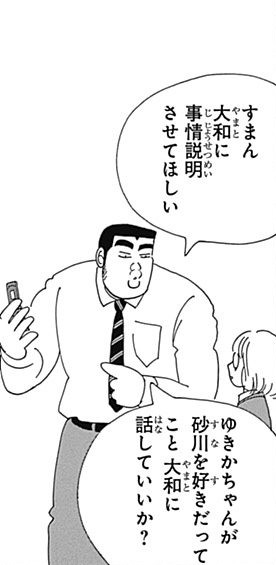
Takeo tries helping the girl who likes his friend Sunakawa. When Takeo receives a call from his own girlfriend, he realizes he’s alone with another girl.
- 猛男:
- 「すまん大和に事情説明させてほしい」
- “Sorry, I'd like you to let me explain the situation to Yamato.”
- 「ゆきかちゃんが砂川を好きだってこと大和に話していいか?」
- “Is it all right if I tell Yamato you like Suna?”
Building Bigger Words
These patterns come up again and again in manga. Learn the pattern and you can read words you've never seen.
〜事 じ (a matter or an event)
- 返事 へんじ a reply
- 用事 ようじ something you need to do
- 記事 きじ an article
- 火事 かじ a fire
- 工事 こうじ construction work
〜事 ごと (a matter, in native words)
- 見事 みごと splendid
- 何事 なにごと what on earth
事〜 じ (of the matter)
- 事態 じたい the situation
- 事前 じぜん beforehand
- 事業 じぎょう a business undertaking
Page words with a piece added
- 殺人事件 さつじんじけん murder case
- 交通事故 こうつうじこ traffic accident
- 仕事中 しごとちゅう at work
Where 事 Breaks the Pattern
The meaning above carries you through most words. These are the ones where it won't, or where the reading is a surprise.
- 大事 (だいじ) important
One spelling, two words. 大事 is “important” or “precious”. 大事 is a serious matter, as in 大事になる, to turn into a big deal.
- 執事 (しつじ) butler
No “matter” here. 事 can also mean to serve, and a 執事 runs a household for its master.
Check Yourself
What does 事 mean?
Matters and events.
Read These Without Furigana
仕事
事務
事
無事
刑事
事件
Work Out a New Word
用 is use or business. Read 用事 in this line. Why is the speaker leaving?
「じゃあオレ用事があるからそろそろ…」
Show the answer
用事, something to do. “Well, I’ve got things to take care of, so I should be going…”
食事 and 仕事 both end in 事. Which reads it じ, and which ごと?
Show the answer
食事 and 仕事.