Mutuality and appearance with 相
相 is a kanji meaning to observe or look closely in Japanese.
From the idea of carefully looking and judging what you see, 相 extends to appearance and aspect (the “way something looks”). In compounds, it is also widely used for mutual relationships (like “with each other”) and for ministers or high officials.
- Grade 3
- JLPT N3 (estimate)
- WaniKani level 9
- 9 strokes
Words with 相
- Interaction
- 相手 あいて Partner
- 相談 そうだん Consultation
- 相棒 あいぼう Partner
- 相談にのる そうだんにのる To give advice
- Aspects
- 真相 しんそう Truth
- 手相 てそう Palm lines
- 人相 にんそう Facial features
- Offices
- 宰相 さいしょう Chancellor
- 首相 しゅしょう Prime minister
- Markets
- 相場 そうば Market rate
- Succession
- 相続 そうぞく Inheritance
- Cancellation
- 相殺 そうさい Offset
The bold kana are the part 相 contributes. Words in a dashed box have no manga example yet.
How to Read 相
- 宰相 (さいしょう)
- 首相 (しゅしょう)
Three readings divide the work. あい, the native one, means “each other” or “together”: 相手, 相性, 相棒.
そう covers looks and matching: 相談, 真相, 相当. しょう is a minister of state, as in 首相.
Etymology
This kanji is an ideogrammic compound comprised of 木 (tree) and 目 (eye).
Interaction
相手 (あいて) (Partner)
相手 means the other party in an interaction, such as a partner, opponent, listener, or spouse.
It combines 相 (other party) with 手 (hand) to show the person you deal with.
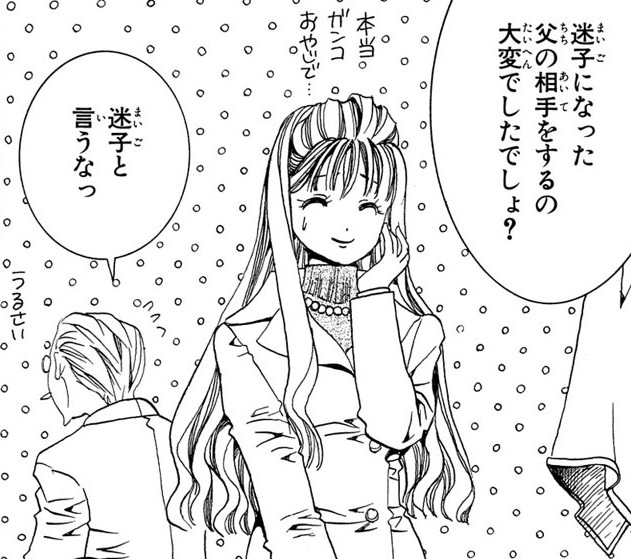
Akari encounters an older gentleman looking for a police box, so he can report his missing daughter and son-in-law. Akari offers to take him around and see if they can find the couple. Once they are reunited, the daughter thanks Akari for finding her father.
- 娘:
- 「迷子になった父の相手をするの大変でしたでしょ?」
- “It must have been tough dealing with my dad when he got lost, right?”
- 「本当ガンコおやじで…」
- “He really is a stubborn old man...”
- 父さん:
- 「迷子と言うなっ」
- “Don't say lost!”
- 「うるさい」
- “Annoying...”
相談 (そうだん) (Consultation)
相談 means consulting someone or discussing a problem to seek advice and decide what to do.
It combines 相 (mutual) with 談 (talk) to show talking something over together.
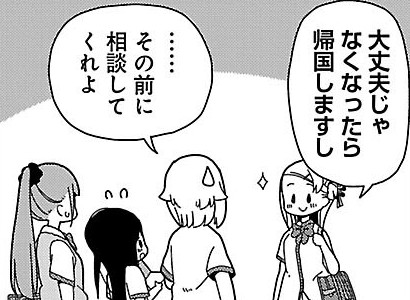
While staying in Japan, Sotoka lives alone in the apartment building her parents own. Aru asks if Sotoka isn’t lonely living alone, but Sotoka says it’s all right.
- ソトカ:
- 「大丈夫じゃなくなったら帰国しますし」
- “If it gets bad, I'll return to my home country.”
- なこ:
- 「……その前に相談してくれよ」
- “Before that, consult us first!”
相談にのる (そうだんにのる) (To give advice)
相談にのる means to hear out someone’s problem and offer advice or help. It is also written 相談に乗る.
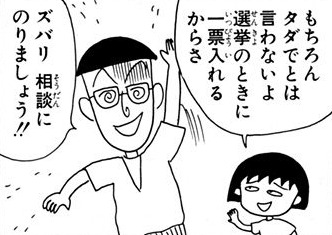
A rumor that Maruko and Hamaji are a couple has spread through the class, and their classmates won’t stop teasing them. They have even passed around a mock newspaper about it. Maruko asks Maruo, the class representative, to save her from the rumor, and he is delighted that she came to him for a favor.
- まる子:
- 「もちろん タダでとは言わないよ 選挙のときに一票入れるからさ」
- “Of course, I'm not asking you to do it for free. I'll give you my vote at election time.”
- 丸尾くん:
- 「ズバリ 相談にのりましょう!!」
- “Precisely! I shall take up your case!!”
Alignment
相変わらず (あいかわらず) (As usual)
相変わらず describes something unchanged, the same as always.
It combines 相 (mutual) with 変わらず (unchanging) to show still the same.
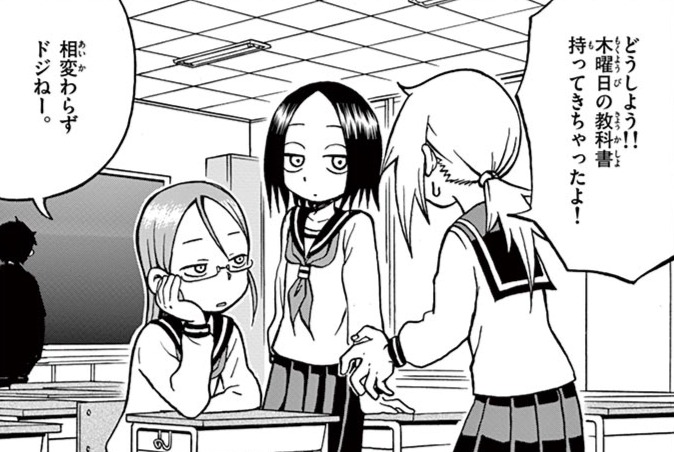
Mina is startled to learn that today is Friday.
- ミナ:
- 「どうしよう!!木曜日の教科書持ってきちゃったよ!」
- “What'll I do?! I ended up bringing my textbook for Thursday!”
- ユカリ:
- 「相変わらずドジねー。」
- “You're such a klutz, as usual.”
相当 (そうとう) (Corresponding)
相当 describes something that matches or is worth a given amount or standard. As an adverb, it means to a considerable degree.
It combines 相 (mutual) with 当 (appropriate) to show mutually appropriate.
Example 1 of 2: A pretty clean room with 相当
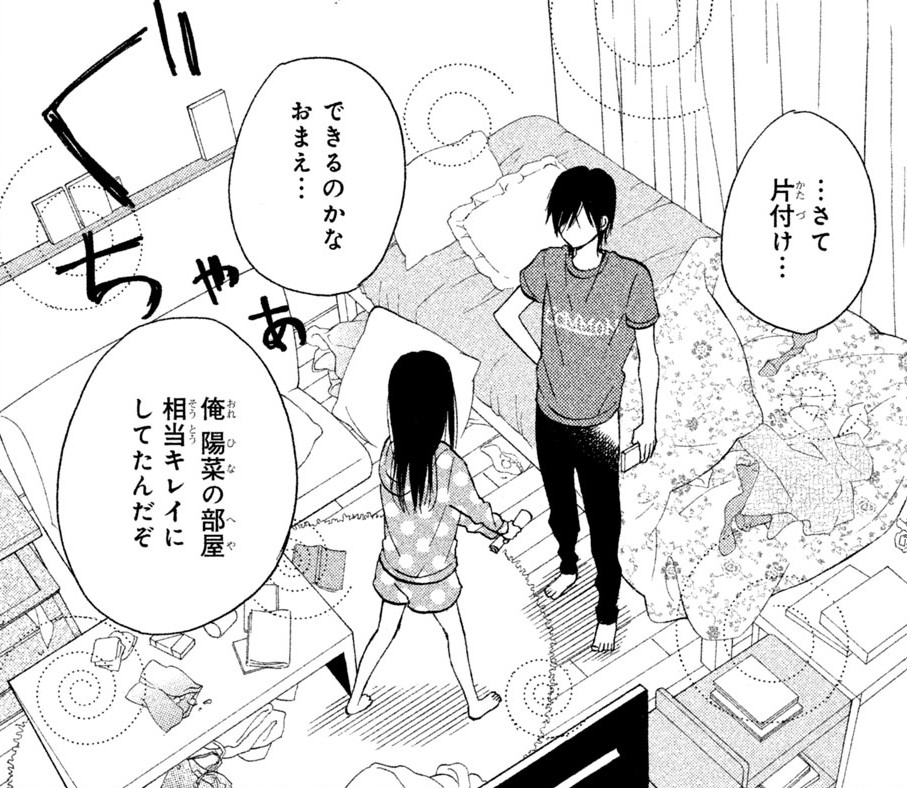
Hiro lets Mao move into his sister’s bedroom, as Hina is living with relatives. After, he comes up with a list of rules that Mao needs to follow if she’s to keep living there.
- 基:
- 「…さて 片付け…」
- “Now then, cleaning...”
- 「できるのかな おまえ…」
- “I wonder if you can do it.”
- 「俺 陽菜の部屋相当キレイにしてたんだぞ」
- “I kept Hina's room pretty clean, you know.”
Example 2 of 2: Corresponding letters of the alphabet with 相当
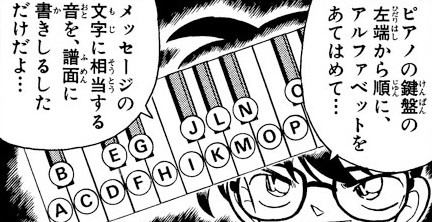
Following a series of murders, Conan discovers a message hidden in sheet music. He explains it to Ran.
- コナン:
- 「ピアノの鍵盤の左端から順に、アルファベットをあてはめて…」
- “Starting from the leftmost key on the piano keyboard, I assigned each key a letter...”
- 「メッセージの文字に相当する音を、譜面に書きしるしただけだよ…」
- “I simply wrote down the notes corresponding to the letters of the message on the sheet music...”
相性 (あいしょう) (Compatibility)
相性 means compatibility between people or things, whether their qualities work well together.
It combines 相 (mutual) with 性 (nature) to show the nature between two things (their compatibility).
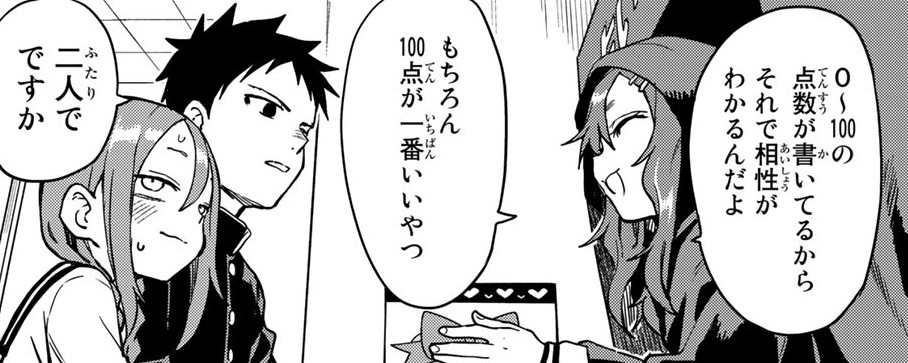
At the school festival, Ayumu and Urushi stop by the affinity fortune telling booth while Maki is on duty. Maki holds out a box with an opening on top, and says they need to pull out a single card together.
- マキ:
- 「0〜100の点数が書いてるからそれで相性がわかるんだよ」
- “Your compatibility is determined by the score written from 0 to 100.”
- 「もちろん100点が一番いいやつ」
- “Of course, 100 points is the best score.”
- 歩:
- 「二人でですか?」
- “Together?”
Aspects
真相 (しんそう) (Truth)
真相 means the truth or actual facts behind an event, beyond appearances and rumors.
It combines 真 (true) with 相 (aspect) to show the true aspect of something.
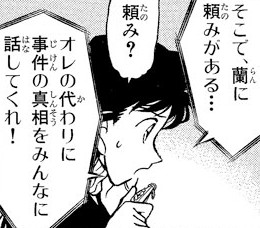
Conan determines the culprit in a series of murders. However, there’s no one around he can use as a conduit for revealing his reasoning. When Ran scolds Conan for wandering around, he accidentally drops an item Professor Agasa made for him, a wireless phone in the form of a large earring. As Ran picks it up, Conan hides and using his bowtie voice changer to sound like Shin’ichi as he calls Ran on the earring phone. He explains that Conan filled him in on the details.
- 新一:
- 「そこで、蘭に頼みがある…」
- “So with that, I have a favor to ask of you...”
- 蘭:
- 「頼み?」
- “A favor?”
- 新一:
- 「オレの代わりに事件の真相をみんなに話してくれ!」
- “In my place, tell everyone the truth of the situation!”
Building Bigger Words
These patterns come up again and again in manga. Learn the pattern and you can read words you've never seen.
〜相手 あいて (the other person)
- 対戦相手 たいせんあいて opponent
- 話し相手 はなしあいて someone to talk to
- 遊び相手 あそびあいて playmate
- 相手にする あいてにする to deal with, to take seriously
相談〜 そうだん (advice)
- 相談役 そうだんやく adviser
- 相談室 そうだんしつ counseling room
〜相 そう (the look of something)
人相 and 手相 above belong here.
- 形相 ぎょうそう a fierce look on the face
- 寝相 ねぞう how you lie when asleep
Where 相 Breaks the Pattern
The meaning above carries you through most words. These are the ones where it won't, or where the reading is a surprise.
- 相撲 (すもう) sumo
The reading belongs to the whole word. You can’t divide it between the two kanji.
- 相応しい (ふさわしい) fitting, worthy
Another whole-word reading. The plain compound 相応, suitable, is read the regular way.
- 可哀相 (かわいそう) poor thing, pitiful
The kanji are borrowed for their sound, so 相 adds no meaning. 可哀想 and plain kana are other spellings of the same word.
Check Yourself
What does 相 mean?
Mutuality and appearance.
Read These Without Furigana
相手
相談
相談にのる
相変わらず
相当
相性
Work Out a New Word
You know 相手. 話し is talking. Read 話し相手 in this line. What does a journey go better with?
「旅は話し相手がいたほうがいい。」
Show the answer
話し相手, someone to talk to. “A journey is better with someone to talk to.”
How is 相 read in 相手, and how in 相談?
Show the answer
相手 and 相談.