Now and the present with 今
今 primarily means “present”, “this moment”, and “right now”.
Etymology
This kanji originated from the 鈴. It was later borrowed for the meaning “now”.
Now and the Present
今回 (This time)今回( こんかい ) means this time, on this occasion, or the present case. It singles out the current instance among several.
It combines 今 (now ) with 回 (occurrence ) to show this present occurrence .
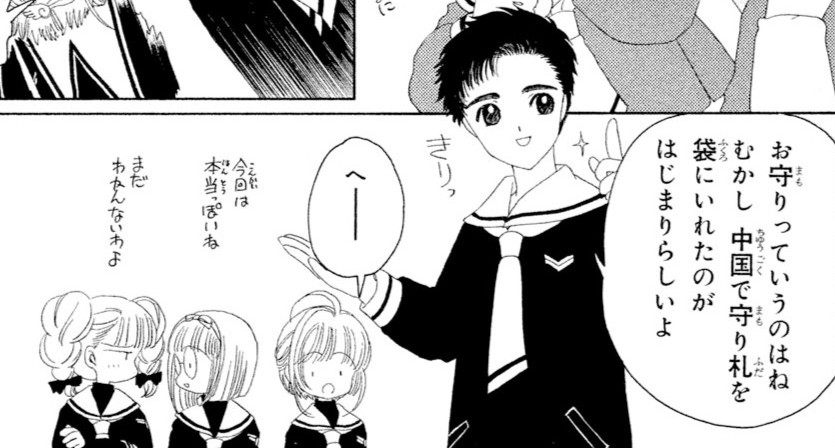
カードキャプターさくら »
Volume 3 » Page 158
Sakura had to take a detour to get to class. She tells her friends at school about the shrine she saw along the way. Naoko says the talismans from there are popular, as they can grant wishes for things such as exams and romance.
山崎( やまざき ) :「お守( まも ) りっていうのはね むかし 中国( ちゅうごく ) で守( まも ) り札( ふだ ) を袋( ふくろ ) にいれたのがはじまりらしいよ」
“You know, apparently good-luck charms began long ago in China, when people put protective talismans into bags.”
奈緒子( なおこ ) :「今回( こんかい ) 本当( ほんとう ) っぽいね」
“This time it sounds true, huh?”
千春( ちはる ) :「まだ わかんないわよ」
“We don't know that yet!”
Challenge Yourself
Show translation
Challenge
How does Chiharu respond to Naoko's reaction?
Clues
まだ
with a negative, something is not the case yet
わかんない
a casual contraction of わからない, meaning do not know
What does the speaker mean?
She says they still cannot tell whether the story is true.
まだわかんない leaves the truth of the story unsettled.
She says she knows the story is false.
わかんない means she does not know. She has not declared the story false.
She agrees that this story is true.
The negative わかんない challenges Naoko's reaction instead of agreeing with it.
Naoko says this story sounds true, but Chiharu replies that they do not know yet. She remains skeptical without calling it false.
View Full Example
今後 (From now on)今後( こんご ) means from now on or in the future.
It combines 今 (now ) with 後 (after ) to show what comes after now .
Example 1 of 2: Better to give up fortune telling with 〜た+方がいい Example 1 of 2
ご注文はうさぎですか? »
Volume 1 » Page 100
Cocoa did fortune telling for her friends, only for all their fortunes to happen to her in a bad way.
チノ:
「ココアさんは人( ひと ) の不幸( ふこう ) の身代( みが ) わりになる才能( さいのう ) があるんですか?」
“Cocoa, do you have a talent for taking on other people's misfortune?”
リゼ:
「今後( こんご ) 占( うらな ) いやめた方( ほう ) がいいぞ自分( じぶん ) のために」
“For your own sake, you had better stop fortune telling from now on.”
ココア:
「なんで!?」
“Why!?”
Challenge Yourself
Show translation
Challenge
What does リゼ mean in the highlighted line?
Clues
占( うらな ) いやめた方( ほう ) がいい(占:うらな)いやめた(方:ほう)がいい advises Cocoa to stop
What does the speaker mean?
For your own sake, you had better stop fortune telling from now on.
Rize recommends giving up fortune telling after its predictions have caused Cocoa trouble.
Rize advises Cocoa to keep telling fortunes from now on.
The highlighted form is 占( うらな ) いやめた方( ほう ) がいい. Here 占( うらな ) いやめた方( ほう ) がいい advises Cocoa to stop, so this choice does not match the Japanese.
Rize says Cocoa has already stopped fortune-telling.
The highlighted form is 占( うらな ) いやめた方( ほう ) がいい. Here 占( うらな ) いやめた方( ほう ) がいい advises Cocoa to stop, so this choice does not match the Japanese.
Rize tells Chino to give up fortune-telling for Cocoa's sake.
The highlighted form is 占( うらな ) いやめた方( ほう ) がいい. Here 占( うらな ) いやめた方( ほう ) がいい advises Cocoa to stop, so this choice does not match the Japanese.
占( うらな ) いやめた方( ほう ) がいい advises Cocoa to stop. Rize recommends giving up fortune telling after its predictions have caused Cocoa trouble.
View Full Example
Example 2 of 2: Coming all the way up here in the mountains with 足を運ぶ Example 2 of 2
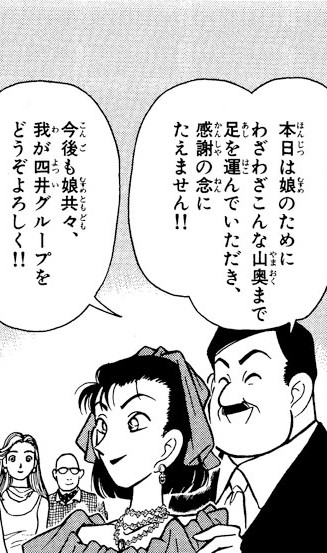
名探偵コナン »
Volume 9 » Page 115
A large gathering takes place in a mansion deep in the mountains, in celebration of Reika, daughter of the head of Yotsui Group. After Reika blows out the candles on her birthday cake, her father congratulates her on turning 24, then he turns and addresses their guests.
四( よつ ) 井( い ) :「本日( ほんじつ ) は娘( むすめ ) のためにわざわざこんな山奥( やまおく ) まで足( あし ) を運( はこ ) んでいただき、感謝( かんしゃ ) の念( ねん ) にたえません!!」
“I can't thank you enough for coming all the way up here in the mountains today for my daughter!”
「今後( こんご ) 娘( むすめ ) 共々( ともども ) 、我( わ ) が四( よつ ) 井( い ) グループをどうぞよろしく!!」
“Please continue to be favorable to both my daughter and my Yotsui Group in the future!”
Challenge Yourself
Show translation
Challenge
What effort does Yotsui thank the guests for making?
Clues
わざわざこんな山奥( やまおく ) まで
going out of their way to come this deep into the mountains
足( あし ) を運( はこ ) んでいただきhonorifically, for making the trip
What does the speaker mean?
Traveling all the way to the mountain estate for his daughter.
わざわざ and 足( あし ) を運( はこ ) ぶ emphasize the trouble the guests took to come in person.
Carrying his daughter up the mountain.
足( あし ) を運( はこ ) ぶ is an idiom for visiting, not physically carrying another person.
Delivering the birthday cake themselves.
He thanks them for making the journey, not for transporting the cake.
Working for the Yotsui Group without pay.
The second line asks for their future goodwill, but the thanks concerns today's visit.
Organizing the party at their own homes.
The guests came to the estate in the mountains.
Walking instead of driving to the mansion.
The idiom does not specify the means of transportation. It means making the trip.
Yotsui thanks the guests for going out of their way to travel deep into the mountains for his daughter’s celebration. 足( あし ) を運( はこ ) ぶ means to visit in person.
View Full Example
今朝 (This morning)今朝( けさ ) means this morning.
It combines 今 (now ) with 朝 (morning ) to show this morning .
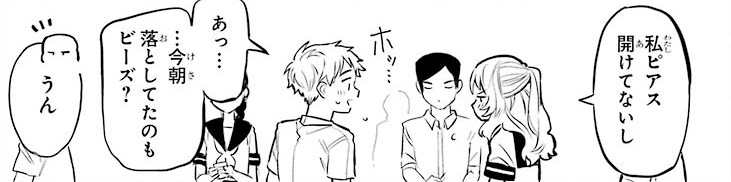
好きな子がめがねを忘れた »
Volume 5 » Page 56
Komura sees Mie pick up an item she dropped and he wonders if it’s an earring. During class later, Mie shows Komura the item held up to her ear calling it a 「ピアス」. She then reveals it’s just a bead.
三重( みえ ) :「私( わたし ) ピアス開( あ ) けてないし」
“Since I don't have my ears pierced.”
小村( こむら ) :「あっ… …今朝( けさ ) 落( お ) としてたのもビーズ?」
“Ah, the item you dropped this morning was a bead?”
三重( みえ ) :「うん」
“Mmhm.”
Challenge Yourself
Show translation
Challenge
What does Mie reveal about the item Komura thought was an earring?
Clues
私( わたし ) ピアス開( あ ) けてないしI do not have my ears pierced
今朝( けさ ) 落( お ) としてたのもビーズ? うんthe item dropped this morning was also a bead, yes
What does the speaker mean?
It was a bead, and she does not have pierced ears.
Mie confirms ビーズ and explains that she has not opened piercing holes.
It was a pierced earring that she wears every day.
開( あ ) けてない says that she does not have pierced ears.
It was an earring that belonged to Komura.
Mie identifies the dropped object as her bead, not Komura's jewelry.
It was a bead she planned to use for a piercing that morning.
She uses the bead to imitate an earring, but confirms that she has no piercing.
It was an earplug she lost during class.
The item is explicitly identified as ビーズ, a bead.
It was a clip-on earring rather than a pierced one.
Komura's assumption is overturned when Mie reveals that the object is only a bead.
Mie confirms that the object was a bead, not an earring. She had only held it by her ear and explains that she does not have pierced ears.
View Full Example
今日 (Today)今日( きょう ) means today. In formal writing, it can also mean the present day or current era.
It combines 今 (now ) with 日 (day ) to show the present day .
Example 1 of 11: Told me not to come with と言う Example 1 of 11
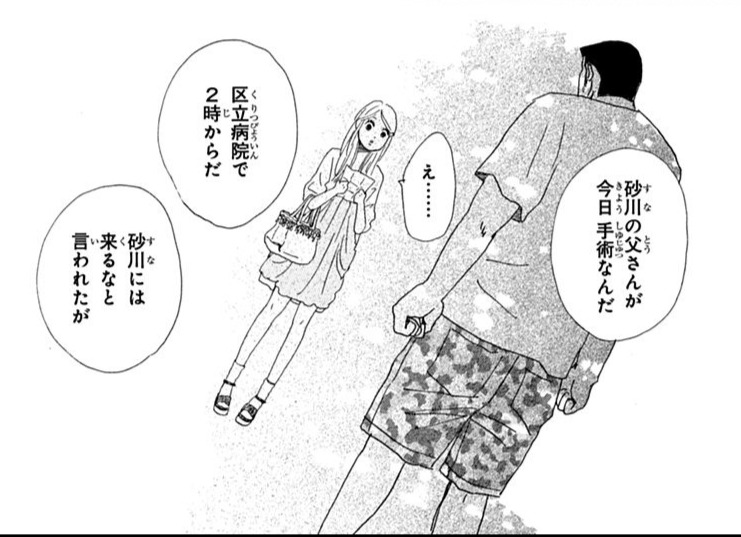
俺物語!! »
Volume 2 » Page 159
Takeo and Yamato go out on a date for Yamato’s birthday. They have a great time spending the day together, but when Yamato asks Takeo what his friend Sunakawa is doing, Takeo becomes silent. He says Suna helped him plan the date’s events, and Takeo gives her the tickets to the date’s finale. He tells Yamato to take a friend, because he needs to go be with Suna.
猛男( たけお ) :「砂川( すな ) の父( とう ) さんが今日( きょう ) 手術( しゅじゅつ ) なんだ」
“Suna's dad is having surgery today.”
大和( やまと ) :「え……」
“Eh......”
猛男( たけお ) :「区立( くりつ ) 病院( びょういん ) で2時( じ ) からだ」
“It's at the municipal hospital at 2 o'clock.”
猛男( たけお ) :「砂川( すな ) には来( く ) るなと言( い ) われたが」
“Suna told me not to come, but...”
Challenge Yourself
Show translation
Challenge
What did Suna tell Takeo about the surgery?
Clues
砂川( すな ) にはfrom Suna, marking him as the source of the instruction
来( く ) るなと言( い ) われたがI was told not to come, but
What does the speaker mean?
Do not come to the hospital.
来( く ) るな is the prohibitive command Suna gave, and 言( い ) われた reports Takeo receiving it.
Come to the hospital before two o'clock.
来( く ) るな forbids coming. The time describes the surgery, not a requested arrival.
Bring Yamato to visit his father.
Suna's quoted instruction contains only the command not to come.
Wait until the surgery is over, then call.
No waiting or calling instruction appears in the quote.
Tell Yamato nothing about the surgery.
The command concerns Takeo coming to the hospital, not what he may tell Yamato.
Go to the municipal hospital in Suna's place.
Suna tells Takeo not to come rather than asking him to substitute for anyone.
Suna told Takeo not to come to the hospital. Takeo reports the command with 来( く ) るなと言( い ) われた, then leaves the contrast hanging with が because he still wants to be there for Suna.
View Full Example
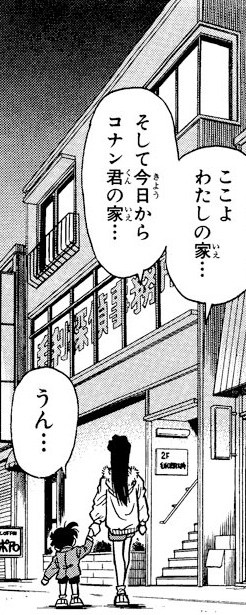
Example 2 of 11: わたし from a teenage girl Example 2 of 11
名探偵コナン »
Volume 1 » Page 65
Professor Agasa convinces Ran to take Conan in to stay with her and her father.
蘭( らん ) :「ここよ わたしの家( いえ ) … そして今日( きょう ) 君( くん ) の家( いえ ) …」
“It's here. My home... And starting today, your home...”
Challenge Yourself
Show translation
Challenge
What does Ran tell Conan about the house?
Clues
わたしの家( いえ )
my home
今日( きょう ) からコナン君( くん ) の家( いえ ) starting today, Conan's home
What does the speaker mean?
Her home will also be Conan's home starting today.
そして今日( きょう ) から links Ran's home to Conan's new living arrangement.
Conan must leave her home today.
今日( きょう ) から marks the start of his living there, not his departure.
She is taking Conan to Agasa's house.
Ran identifies the place as わたしの家( いえ ) , her own home.
The house belongs only to Conan now.
She first calls it her home, then includes Conan in it.
Conan has mistaken the building for his school.
The line introduces a home, not a school.
Ran will visit Conan's home tomorrow.
She is telling him that the home in front of them becomes his from today.
Ran points out her home and tells Conan that it will be his home too starting that day. わたしの marks her relationship to the house before she extends it to him.
View Full Example
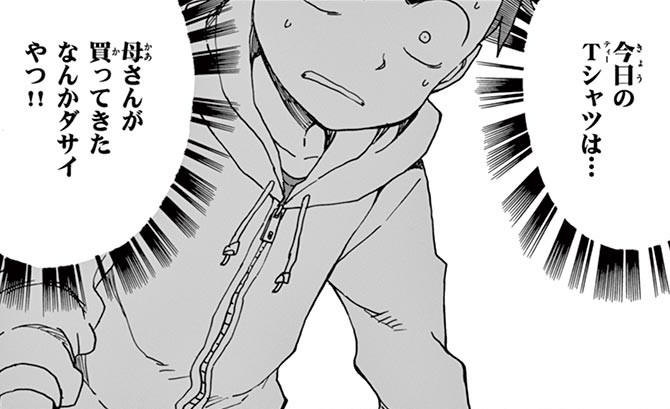
Example 3 of 11: Dorky shirt my mom bought me with ダサイ Example 3 of 11
からかい上手の高木さん »
Volume 7 » Page 91
Nishikata and Takagi meet up at the library to study. Although it’s hot out, and Nishikata ran to make it to the library on time, he refuses to remove his sweater.
西片( にしかた ) :「今日( きょう ) T( ティー ) シャツは… 母( かあ ) さんが買( か ) ってきたなんかダサイやつ!!」
“Today's T-shirt is...some dorky thing my mom bought me!!”
Challenge Yourself
Show translation
Challenge
What does Nishikata say about the T-shirt under his sweater?
Clues
母( かあ ) さんが買( か ) ってきた"my mother bought and brought home"
なんかダサイやつ
"some dorky thing," with a dismissive, embarrassed tone
What does the speaker mean?
It is a dorky shirt his mother bought him.
母( かあ ) さんが買( か ) ってきた identifies who bought it, and ダサイ gives his embarrassed opinion.
It is a fashionable shirt Takagi chose for him.
He calls the shirt ダサイ and says his mother bought it.
It is an old shirt that no longer fits.
The line criticizes its style. It does not mention age or fit.
It is a school shirt he is required to wear.
Nishikata describes a T-shirt his mother bought, not part of his required uniform.
It is a shirt he bought for his mother.
母( かあ ) さんが marks his mother as the person who bought it.
It is a new shirt he wants Takagi to see.
Calling it ダサイ explains why he is hiding it under the sweater.
Nishikata says his mother bought the T-shirt and dismisses it as なんかダサイやつ, some dorky thing. That embarrassment explains why he keeps his sweater on.
View Full Example
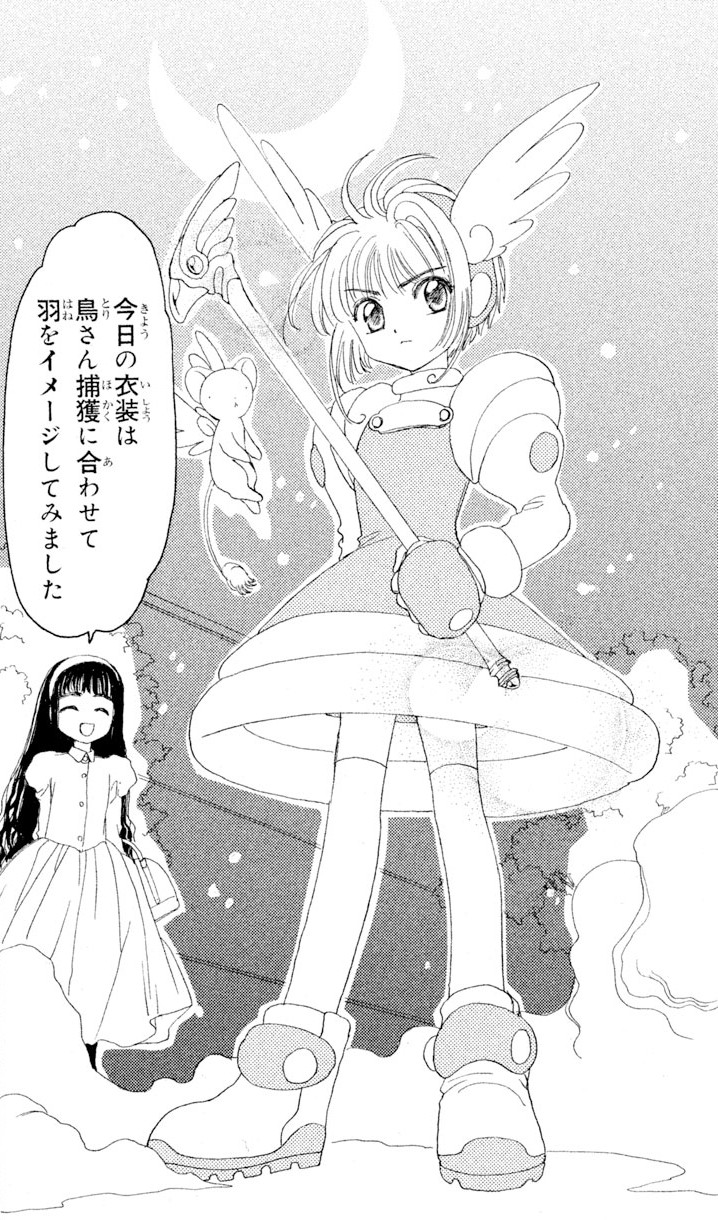
Example 4 of 11: Costume for catching a Clow Card with 衣装 Example 4 of 11
カードキャプターさくら »
Volume 1 » Page 80
A magical bird appears at Sakura’s school and causes trouble with strong winds. Recognizing it as a Clow Card, Sakura returns at night to try to capture it. After she fails, she returns the next night to try again, sporting a new Cardcaptor outfit designed by her friend Tomoyo.
知世( ともよ ) :「今日( きょう ) 衣装( いしょう ) は鳥( とり ) さん捕獲( ほかく ) に合( あ ) わせて羽( はね ) をイメージしてみました」
“For today's outfit, I went with a feather-inspired look to match the bird-catching theme.”
Challenge Yourself
Show translation
Challenge
What inspired Tomoyo's design for Sakura's outfit?
Clues
鳥( とり ) さん捕獲( ほかく ) に合( あ ) わせてto match the task of capturing the bird
羽( はね ) をイメージしてみましたshe tried using feathers or wings as the design image
What does the speaker mean?
Feathers chosen to match the capture of the bird.
捕獲( ほかく ) に合( あ ) わせて connects the design to catching the bird, and 羽( はね ) names the image Tomoyo used.
The uniform worn by students at Sakura's school.
Tomoyo presents a special 衣装( いしょう ) based on feathers. She does not copy the school uniform.
A costume Sakura wore while catching a different animal.
今日( きょう ) の衣装( いしょう ) and the bird capture both refer to the present mission.
The colors of the bird's nest at the school.
Tomoyo names 羽( はね ) , feathers or wings, as the image. The line does not mention a nest or its colors.
Clothes designed to make Sakura look less noticeable.
The line explains a themed design that matches the bird. It does not mention concealment.
An outfit that allows Sakura to fly without magic.
Feathers provide the visual theme. Tomoyo does not claim that the outfit itself grants flight.
Tomoyo designs the outfit around feathers so it matches Sakura’s attempt to capture the bird. 〜に合( あ ) わせて links the costume to the mission, while イメージしてみました presents the design choice politely.
View Full Example
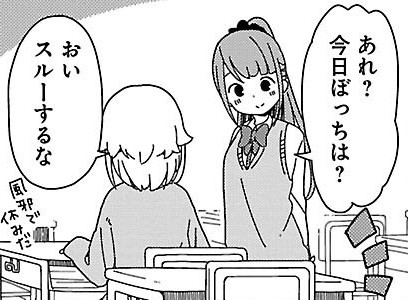
Example 5 of 11: Don't ignore my question with スルー Example 5 of 11
ひとりぼっちの○○生活 »
Volume 1 » Page 67
Nako ponders about the teacher’s tendency to run away from her. She asks Aru if she’s really that scary-looking. Aru stands in silence for a moment before changing the subject.
アル:
「あれ?今日( きょう )
“Oh? Where's Bocchi today?”
なこ:
「おい スルーするな」
“Hey, don't ignore me!”
Challenge Yourself
Show translation
Challenge
What does Aru get told not to do?
Clues
スルーする
ignore or brush past something instead of responding
するな
a blunt command not to do the action
What does the speaker mean?
Ignore the question by changing the subject.
スルーする means to ignore or brush something off, and するな turns it into a negative command.
Ask where Bocchi is today.
Aru's question changes the subject. The complaint tells her not to use that change of subject to ignore the earlier question.
Answer the question too directly.
The problem is that Aru does not answer at all. スルー refers to passing over the question.
Leave the classroom without saying anything.
The line criticizes Aru for ignoring a question, not for physically leaving the room.
Keep asking whether Nako looks scary.
Nako wants an answer to that question. She objects when Aru avoids it.
Interrupt Nako while she is speaking.
スルーするな is about Aru brushing off the prior question, not interrupting another speaker.
Aru avoids the awkward question by asking about Bocchi instead. The speaker calls out that dodge with スルーするな, a blunt order not to ignore the question or brush it aside.
View Full Example
Example 6 of 11: Even though it's still chilly with 〜が〜 Example 6 of 11
ARIA The MASTERPIECE »
Volume 7 » Page 4
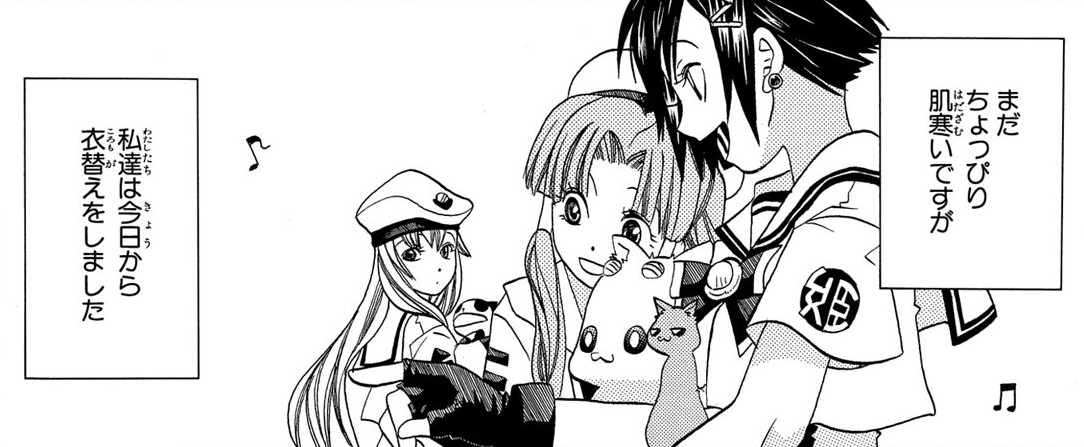
Akari narrates about her group’s change from winter uniforms to summer uniforms.
灯里( あかり ) :「まだちょっぴり肌寒( はだざむ ) いですが私( わたし ) たちは今日( きょう ) 衣替( ころもが ) えをしました」
“It is still a little chilly, but we changed our uniforms today.”
View Full Example
Example 7 of 11: Managing to distribute all fliers with 〜終える Example 7 of 11
ご注文はうさぎですか? »
Volume 1 » Page 8
Cocoa encounters Syaro standing outside.
ココア:
「今日( きょう ) 配( くば ) り?」
“You're handing out fliers today?”
シャロ:
「全部( ぜんぶ ) 配( くば ) り終( お ) えるまで帰( かえ ) れないわ」
“I can't go home until I finish handing out all of them.”
Challenge Yourself
Show translation
Challenge
What does シャロ mean in the highlighted line?
Clues
配( くば ) り終( お ) える(配:くば)り(終:お)える = finish handing them all out
What does the speaker mean?
I can't go home until I finish handing out all of them.
〜終( お ) える attaches to the verb stem, so 配( くば ) る becomes 配( くば ) り終( お ) える.
Syaro says she stopped distributing the fliers without finishing.
The highlighted form is 配( くば ) り終( お ) える. Here 配( くば ) り終( お ) える = finish handing them all out, so this choice does not match the Japanese.
Syaro says she is only beginning to hand out the fliers.
The highlighted form is 配( くば ) り終( お ) える. Here 配( くば ) り終( お ) える = finish handing them all out, so this choice does not match the Japanese.
Syaro says someone else will finish distributing them after she goes home.
The highlighted form is 配( くば ) り終( お ) える. Here 配( くば ) り終( お ) える = finish handing them all out, so this choice does not match the Japanese.
配( くば ) り終( お ) える = finish handing them all out. 〜終( お ) える attaches to the verb stem, so 配( くば ) る becomes 配( くば ) り終( お ) える.
View Full Example
Example 8 of 11: Greeting a cousin's friend with どうも Example 8 of 11
ひらやすみ »
Volume 2 » Page 65
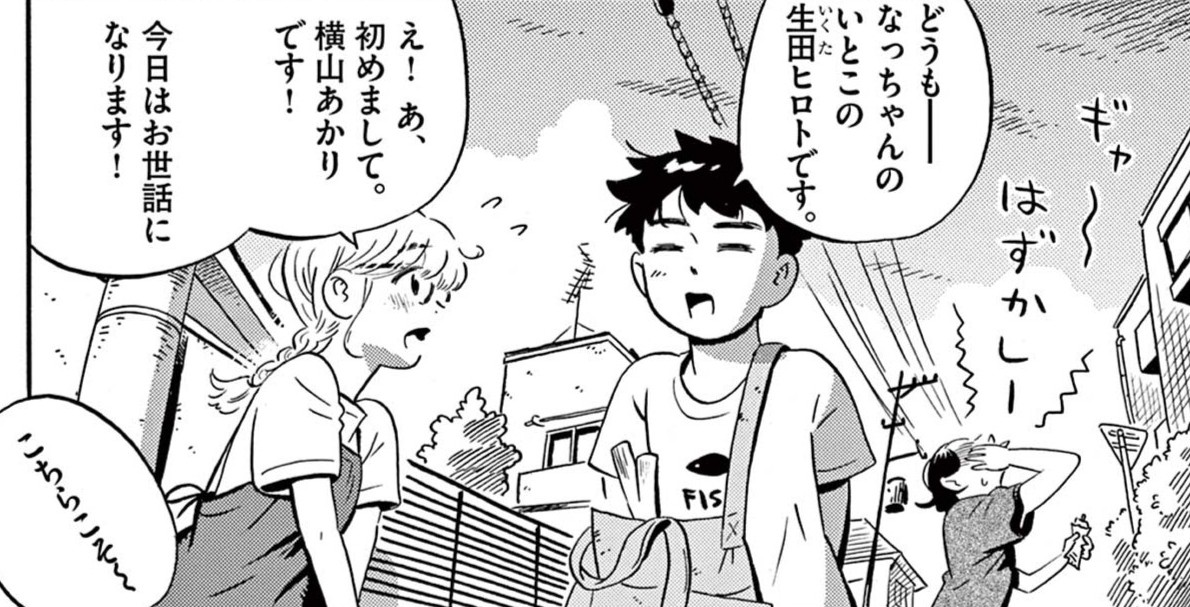
On his way home from buying groceries, Hiroto sees his cousin Natsumi cheering and dancing over a winning popsicle stick. While Natsumi agonizes over having been seen, Hiroto notices she’s brought a friend he hasn’t met.
なつみ:
「ぎゃ〜 はずかしー」
“Gah, how embarassing!”
ヒロト:
「どうもーーー なっちゃんのいとこの生田( いくた ) ヒロトです。」
“Howdy. I'm Nacchan's cousin, Hiroto Ikuta.”
あかり:
「え! あ、初( はじ ) めまして。横山( よこやま ) あかりです!」
“Oh, ah, pleased to meet you. My name's Akari Yokoyama!”
「今日( きょう ) 世話( せわ ) になります!」
“Thank you for having me today!”
ヒロト:
「こちらこそ〜」
“The pleasure is mine!”
Challenge Yourself
Show translation
Challenge
What is Hiroto doing when he says どうも?
Clues
どうもーーー
a brief, casual greeting in this context
なっちゃんのいとこの生田( いくた ) ヒロトです
he follows it by introducing himself as Natsumi's cousin
What does the speaker mean?
He casually greets Akari before introducing himself.
どうも opens the meeting as a casual hello, and Hiroto immediately gives his name and relationship to Natsumi.
He thanks Akari for buying the groceries.
Hiroto has just met Akari and follows どうも with a self-introduction. It is a greeting here, not thanks for groceries.
He apologizes for seeing Natsumi dance.
どうも can be context-dependent, but Hiroto directs this line to Akari and then introduces himself.
He asks Akari to introduce Natsumi.
Hiroto already identifies himself through Natsumi. He is introducing himself, not asking Akari to present someone else.
He says goodbye before continuing home.
The conversation is beginning, and Akari responds with 初( はじ ) めまして. This is not a farewell.
He formally welcomes Akari into the family.
どうも is brief and casual here. Hiroto gives a simple introduction rather than a formal family welcome.
Hiroto uses どうも as an easygoing hello to someone he has not met. His self-introduction makes the function clear, and Akari answers with 初( はじ ) めまして.
View Full Example
Example 9 of 11: Lunch duty today of all days with 〜に限って Example 9 of 11
好きな子がめがねを忘れた »
Volume 1 » Page 47
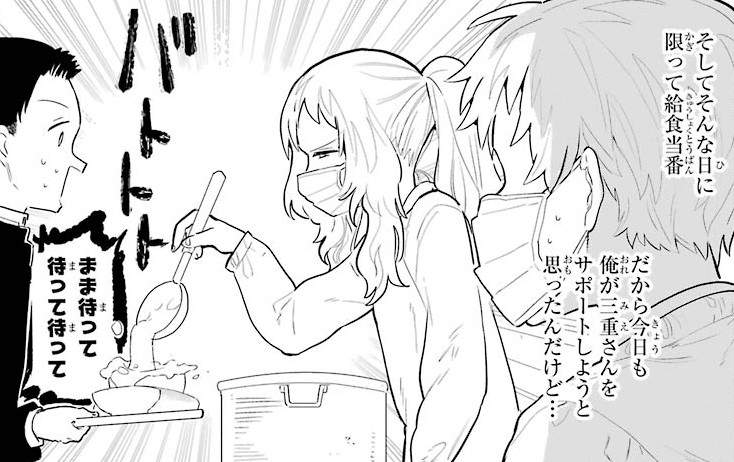
Komura and Mie have serving duty in the cafeteria. Normally this wouldn’t be an issue, except today Mie accidentally stepped on her glasses and broke them, and can barely see without them.
木村( こむら ) :「そしてそんな日( ひ ) に限( かぎ ) って給食( きゅうしょく ) 当番( とうばん ) 」
“Thus, on a day such as that (of all days), she has lunch duty.”
「だから今日( きょう ) 俺( おれ ) が三重( みえ ) さんをサポートしようと思( おも ) っただけど…」
“Therefore, I thought I'd support Mie today as well, but...”
男( おとこ ) の子( こ ) :「まま待( ま ) って待( ま ) って待( ま ) って」
“W-w-wait, wait, wait!”
Challenge Yourself
Show translation
Challenge
Why does Komura regard the lunch duty as especially badly timed?
Clues
そんな日( ひ ) に限( かぎ ) って
on that day of all days
給食( きゅうしょく ) 当番( とうばん ) lunch duty
What does the speaker mean?
It falls on the day Mie can barely see without her broken glasses.
〜に限( かぎ ) って marks lunch duty on this particular day as an inconvenient coincidence.
It falls on the only day Komura is absent.
Komura is present and plans to help Mie with the duty.
Mie has volunteered to handle the duty alone.
Komura expects to support her because seeing is difficult for her.
The cafeteria has canceled lunch for the day.
The problem is having lunch duty under difficult circumstances, not a canceled meal.
Their duty was moved to a day when Mie's glasses are repaired.
そんな日( ひ ) points to the current bad day, when her glasses are broken.
Komura has forgotten that he shares the duty with Mie.
He knows about the shared assignment and is already thinking about helping her.
Mie has lunch duty on the very day her broken glasses leave her unable to see well. 〜に限( かぎ ) って presents that timing as especially inconvenient.
View Full Example
Example 10 of 11: Scheduled to stay the night with 〜ことになっている Example 10 of 11
ふだつきのキョーコちゃん »
Volume 5 » Page 110
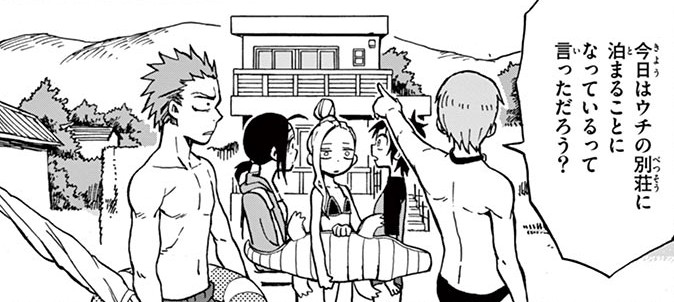
After a day playing at the beach, Hikari asks Shindou when someone is coming to pick everyone up. Shindou says it will be “tomorrow evening”.
神藤( しんどう ) :「今日( きょう ) 別荘( べっそう ) に泊( と ) まることになっているって言( い ) っただろう?」
“Didn't I say we're scheduled to stay the night at my villa?”
Challenge Yourself
Show translation
Challenge
What arrangement does Shindou remind Hikari about?
Clues
今日( きょう ) はウチの別荘( べっそう ) に泊( と ) まるthey will stay tonight at his family's villa
ことになっているって言( い ) っただろう?
he reminds her that this plan was already settled and mentioned
What does the speaker mean?
The group is staying at his villa tonight.
今日( きょう ) は sets the night, ウチの別荘( べっそう ) gives the place, and 泊( と ) まる states that they will stay there.
Someone will pick them up tonight.
The existing plan is to stay overnight, so pickup will not happen until the following day.
Hikari will stay at the villa by herself.
Shindou speaks about the group's arrangement. Nothing in the line singles Hikari out to stay alone.
They are deciding where to sleep right now.
ことになっている shows that the arrangement is already in effect, not being decided at this moment.
The group will visit the villa tomorrow evening.
今日( きょう ) は places the overnight stay on the current night, not tomorrow.
Shindou already told them to leave the villa.
The quoted plan uses 泊( と ) まる, to stay overnight, rather than leaving.
Shindou reminds Hikari that the group is already scheduled to spend the night at his family’s villa. ことになっている marks the standing arrangement, and 言( い ) っただろう points out that he told her before.
View Full Example
Example 11 of 11: The milk here is good with 牛乳 Example 11 of 11
よつばと! »
Volume 1 » Page 58
Yotsuba and her father have their first breakfast since moving to a new house in a new town. Yotsuba takes a bite from her toast, then drinks down some milk.
よつば:
「こっちの牛乳( ぎゅうにゅう ) はうめぇな!!」
“The milk here is good!”
父( とう ) さん:「(いっしょだろう…)よつば 今日( きょう ) 遊( あそ ) びに行( い ) く時( とき ) ちゃんといってきますって言( い ) えよ」
“(It tastes the same...) Yotsuba, when you go out to play today, make sure you say "I'm off", okay?”
Challenge Yourself
Show translation
Challenge
What does Yotsuba think about the milk?
Clues
こっちの牛乳( ぎゅうにゅう )
the milk here, as opposed to milk from somewhere else
うめぇ
a rough, casual form of うまい
What does the speaker mean?
She thinks the milk here tastes good.
こっちの identifies the milk here, and うめぇ says it tastes good.
She thinks the milk here tastes worse than the milk back home.
こっちの can set up a contrast with another place, but うめぇ praises the milk rather than criticizing it.
She asks whether the milk came from this area.
Her line ends as an exclamation with な. It does not contain a question form.
She says that she wants a different kind of milk.
The line comments on the milk she is drinking. It has no expression of wanting, such as ほしい.
Yotsuba praises the milk she is drinking. こっちの牛乳 identifies it as the milk here, and the rough うめぇ means that it tastes good.
View Full Example
今度 (This time)今度( こんど ) means “this time” or “next time”, depending on context.
It combines 今 (now ) with 度 (occurrence ) to show the present or upcoming occasion .
Example 1 of 2: Going to buy mugs with 〜に行く Example 1 of 2
ご注文はうさぎですか? »
Volume 1 » Page 51
Cocoa discusses the café’s coffee cups with Chino.
ココア:
「この前( まえ ) 面白( おもしろ ) いカップ見( み ) つけたんだ」
“I found an interesting cup the other day.”
「今度( こんど ) 買( か ) いに行( い ) かない?」
“Why don't we go buy some?”
リゼ:
「へぇ どんな」
“Oh? What kind?”
Challenge Yourself
Show translation
Challenge
Which interpretation best matches the highlighted line?
Clues
買( か ) いに行( い ) かない?(買:か)いに(行:い)く states the purpose of going
What does the speaker mean?
Why don't we go buy some?
The group would go to the shop in order to buy the cups Cocoa mentioned.
Cocoa says she has already bought the interesting cups.
The highlighted form is 買( か ) いに行( い ) かない?. Here 買( か ) いに行( い ) く states the purpose of going, so this choice does not match the Japanese.
Cocoa asks Rize to go shopping alone.
The highlighted form is 買( か ) いに行( い ) かない?. Here 買( か ) いに行( い ) く states the purpose of going, so this choice does not match the Japanese.
Cocoa invites the others to search for a cup she lost.
The highlighted form is 買( か ) いに行( い ) かない?. Here 買( か ) いに行( い ) く states the purpose of going, so this choice does not match the Japanese.
買( か ) いに行( い ) く states the purpose of going. The group would go to the shop in order to buy the cups Cocoa mentioned.
View Full Example
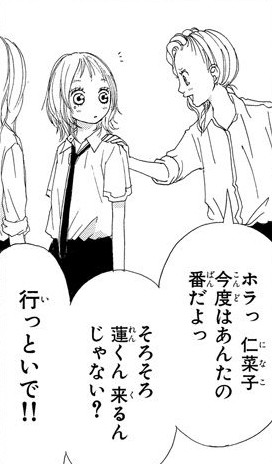
Example 2 of 2: Going to say good morning with 行っといで Example 2 of 2
ストロボ・エッジ »
Volume 2 » Page 15
Ninako confessed her feelings to Ren, even knowing he already has a girlfriend and would turn her down. After not seeing Ren during summer break, Ninako wonders if she’ll still be able to greet him normally. After a boy she turned down greets her normally, Ninako feels more confident.
つかさ:
「ホラっ 仁奈子( になこ ) 今度( こんど ) 番( ばん ) だよっ」
“Hey, Ninako, now it's your turn.”
「そろそろ連( れん ) くん 来( く ) るんじゃない?」
“Won't Ren being coming soon?”
「行( い ) っといで!!」
“Go for it!!”
Challenge Yourself
Show translation
Challenge
What does Tsukasa encourage Ninako to do?
Clues
今度( こんど ) はあんたの番( ばん ) だよnow it is your turn
そろそろ連( れん ) くん来( く ) るんじゃない?
Ren will probably arrive soon
行( い ) っといでgo do it and come back, used as casual encouragement
What does the speaker mean?
Go over and greet Ren when he arrives.
Tsukasa says it is Ninako's turn, notes that Ren will arrive soon, and uses 行( い ) っといで to send her over with encouragement.
Leave before Ren reaches the school.
Tsukasa points out Ren's arrival as Ninako's chance to act, not a reason to avoid him.
Wait for Ren to approach and apologize first.
行( い ) っといで tells Ninako to go herself. It does not tell her to remain where she is.
Tell Ren that Tsukasa wants to speak with him.
It is Ninako's turn because she wants to greet Ren. Tsukasa does not send a message through her.
Ask Ren whether he is coming to school soon.
Tsukasa is the one speculating about Ren's arrival. She urges Ninako to act once he appears.
Go home and return after Ren has left.
行( い ) っといで can carry a go-and-come-back sense, but here the destination is Ren, not Ninako's home.
Tsukasa urges Ninako to take her turn and greet Ren instead of avoiding him. 行( い ) っといで is a casual push to go do something and then return, which fits Tsukasa sending her toward him.
View Full Example
今更 (Now, after all this time)今更( いまさら ) means “now, after all this time”, often with the implication that it is already too late.
It combines 今 (now ) with 更 (late ) to show bringing something up only now .
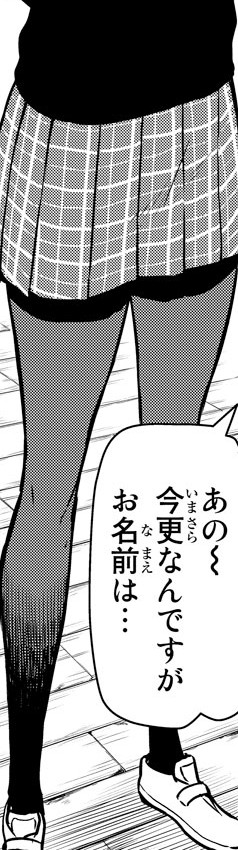
ふらいんぐうぃっち »
Volume 6 » Page 105
During class, Makoto hears her cat meowing over the school’s intercom. After retrieving her cat, Makoto is confronted by another student. The student, also a witch, verbally reprimands Makoto over the ordeal. A few minutes into their conversation, Makoto asks the girl a question.
真琴( まこと ) :「あの~ 今更( いまさら ) 名前( なまえ ) は…」
“Um... It's a bit late for this, but what's your name?”
Challenge Yourself
Show translation
Challenge
Why does Makoto preface her question with 今更?
Clues
今更( いまさら ) なんですがacknowledges that the question is late after everything already said
お名前( なまえ ) は…
an unfinished but polite request for the other student's name
What does the speaker mean?
She realizes she should have asked the student's name earlier.
今更( いまさら ) marks the name question as belated after they have already been talking for some time.
She has forgotten a name the student already gave her.
The scene presents this as Makoto finally asking, not asking the student to repeat an earlier introduction.
She thinks it is too late for the student to answer.
今更 acknowledges Makoto's own delayed question. It does not say an answer is no longer possible.
She wants to end the conversation without learning the name.
お名前( なまえ ) は clearly begins a request for the student's name despite the awkward timing.
She is asking whether the student changed her name.
The unfinished question asks what the name is. Nothing suggests a change of name.
She believes names should never be discussed at school.
Makoto is embarrassed by asking so late, not by the subject of names itself.
Makoto notices that she has spent several minutes talking with the other student without asking her name. 今更 admits that the question comes awkwardly late, and お名前( なまえ ) は leaves the polite request unfinished.
View Full Example
Timing and Opportunities
今年 (This year)今年( ことし ) means this year. It refers to the current year as opposed to last year or next year.
It combines 今 (now ) with 年 (year ) to show the present year .
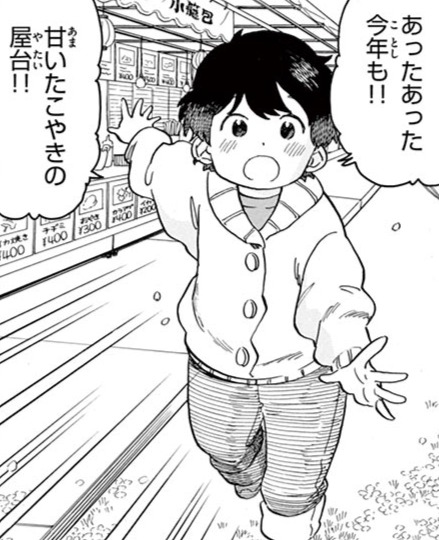
舞妓さんちのまかないさん »
Volume 8 » Page 84
At a local festival, Kiyo hurries over to Sumire and Kenta.
キヨ:
「あったあった 今年( ことし )
“It's here, it's here, again this year!”
「甘( あま ) いたこやきの屋台( やたい ) !!」
“The sweet takoyaki booth!”
Challenge Yourself
Show translation
Challenge
What has Kiyo excitedly found at the festival?
Clues
あったあった 今年( ことし ) も
she has found something familiar that returned this year
甘( あま ) いたこやきの屋台( やたい ) she identifies it as the food stall selling sweet takoyaki
What does the speaker mean?
The sweet takoyaki stall that returns each year.
甘いたこやきの屋台 names the stall, and 今年も shows that Kiyo recognizes it from a previous year.
A new shop selling sweet tea for the first time.
The food is たこやき, not tea, and 今年も says the stall has appeared before.
The platform where the festival performance will begin.
屋台 can contain 台, but at this festival it means a food stall, as shown by 甘いたこやき.
A takoyaki stall that has stopped serving sweet food.
Kiyo identifies it directly as the sweet takoyaki stall. Nothing says its menu has changed.
The booth where Sumire and Kenta are waiting to work.
Kiyo hurries toward her friends after spotting the stall, but she does not say they work there.
A stall Kiyo was unable to find in earlier years.
今年も means it is here again this year, so she treats it as a returning favorite.
Kiyo spots the sweet takoyaki food stall and celebrates that it has returned this year. Her repeated あった conveys the excitement of finding a familiar festival favorite.
View Full Example