Peace and ease with 安
安 means “peaceful”, “calm”, or “safe”. It is also used to mean “cheap” (in terms of price).
Etymology
This kanji is traditionally explained as an ideogrammic compound comprised of 宀 (roof, house) and 女 (woman). These invoke imagery of a woman relaxing peacefully at home.
Peace of Mind
安心 (Peace of mind)安心( あんしん ) means peace of mind or relief from anxiety. It describes feeling that there is no longer a reason to worry.
It combines 安 (peaceful ) with 心 (heart ) to show a peaceful heart .
Example 1 of 2: Not able to swim with 泳がれへん Example 1 of 2
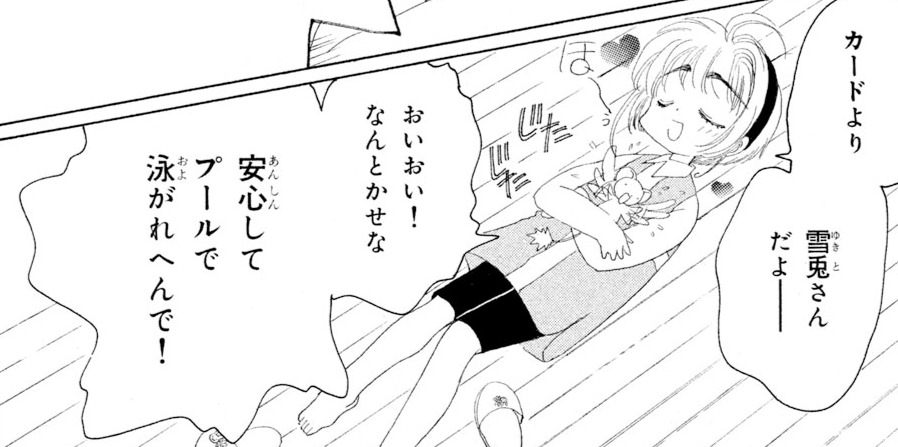
カードキャプターさくら »
Volume 1 » Page 108
Sakura and Kero are supposed to discuss a Clow Card causing problems at the elementary school school. After taking her homemade pancakes to her brother and Yukito, Sakura’s happiness over making something for Yukito overtakes her concern of Clow Cards. Kero tries to get her back on track.
桜( さくら ) :「カードより雪兎( ゆきと ) だよーーー」
“Forget the cards, Yukito's way more important!”
ケロ:
「おいおい!なんとかせな」
“Hey hey! You've gotta do something about it!”
「安心( あんしん ) 泳( およ ) がれへんで!」
“The pool can't be swam in safely!”
Challenge Yourself
Show translation
Challenge
What consequence does Kero warn about?
Clues
なんとかせな
they must do something about the problem
安心( あんしん ) してプールで泳( およ ) がれへんpeople will not be able to swim safely in the pool, in Kansai speech
What does the speaker mean?
People will not be able to swim in the pool without fear.
安心( あんしん ) して describes swimming at ease, and 泳( およ ) がれへん negates the ability to swim.
Sakura will permanently lose her ability to swim.
Kero is warning about the dangerous pool, not describing a lasting change in Sakura's swimming ability.
The Clow Card will become impossible to find outside the pool.
The stated consequence concerns safe swimming. The line does not discuss where the card can be found.
Everyone will have to swim before the pool closes.
泳( およ ) がれへん means they cannot swim, not that they are required to do so.
Yukito will be unable to visit the school.
Sakura mentions Yukito, but Kero's warning is about the pool and the unresolved danger there.
The pool will be safe as long as Sakura does nothing.
なんとかせな says action is necessary. Kero warns that the pool will remain unsafe without it.
Kero tells Sakura they must deal with the Clow Card trouble or nobody can swim at ease. 泳( およ ) がれへん is the Kansai equivalent of 泳( およ ) げない, which means cannot swim.
View Full Example
Example 2 of 2: Relax about what day it is with 安心 Example 2 of 2
からかい上手の(元)高木さん »
Volume 20 » Page 24
After returning home from work, Nishikata is ready to sit back and relax for a bit. Takagi leans over and asks Nishikata if he knows what day it is.
西片( にしかた ) :「あれ?何( なん ) の日( ひ ) だっけ?」
“Huh? What day is it again?”
高木( たかぎ ) :「2人( ふたり ) の記念日( きねんび ) とかではないから安心( あんしん )
“Relax, it's not an anniversary or anything like that.”
Challenge Yourself
Show translation
Challenge
Why does Takagi tell Nishikata to relax?
Clues
2人( ふたり ) の記念日( きねんび ) an anniversary for the two of them
〜とかではないから
because it is not that or anything like it
安心( あんしん ) してrelax or be at ease
What does the speaker mean?
The day is not an anniversary or another occasion he forgot.
記念日( きねんび ) とかではない removes the kind of forgotten special date Nishikata fears, giving the reason for 安心( あんしん ) して.
She has remembered their anniversary for him.
Takagi says the day is not their anniversary or anything like that.
Their anniversary has been canceled.
The line identifies what kind of day this is not. It does not cancel an anniversary.
She wants him to forget every special date.
Takagi reassures him about this question. She does not give a general instruction to forget dates.
She says there is no reason to know what day it is.
She only rules out a shared anniversary as the source of danger. The original day still matters to her question.
She promises never to ask him about anniversaries again.
安心( あんしん ) して is immediate reassurance, not a promise about future conversations.
Nishikata worries he has forgotten an important date. Takagi reassures him that it is not their anniversary or a similar shared occasion.
View Full Example
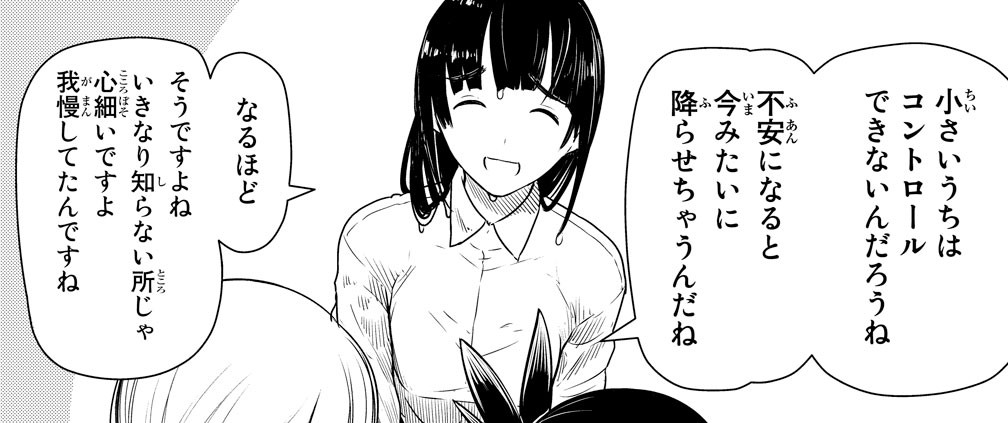
不安 (Anxiety)不安( ふあん ) means anxiety or unease, often a vague fear that something may go wrong.
It combines 不 (not ) with 安 (peaceful ) to show a lack of ease .
ふらいんぐうぃっち »
Volume 5 » Page 49
During a visit with Anzu’s family, Makoto receives a request to babysit for another witch. Things are fine at first, but after a while, rain begins to pour inside. Anzu’s mother realizes that the child they’re watching over has rain magic.
杏子( あんず ) の母( はは ) :「小( ちい ) さいうちはコントロールできないんだろうね。不安( ふあん ) 今( いま ) みたいに降( ふ ) らせちゃうんだね」
“You don't have control while you're small, right? When he's uneasy, it pours like just now.”
真琴( まこと ) :「なるほど。そうですよね。いきなり知( し ) らない所( ところ ) じゃ心細( こころぼそ ) いですよ。我慢( がまん ) してたんですね」
“I see. So that's it. It's a little scary suddenly being in a place you don't know. You've been patient, haven't you?”
Challenge Yourself
Show translation
Challenge
What does Anzu's mother infer about the child's rain magic?
Clues
小( ちい ) さいうちはコントロールできないthe child cannot control it while still young
不安( ふあん ) になると今( いま ) みたいに降( ふ ) らせちゃうwhen the child feels uneasy, the magic unintentionally makes it rain
What does the speaker mean?
The child cannot control it yet and causes rain when uneasy.
小( ちい ) さいうちは limits the lack of control to childhood, and 不安( ふあん ) になると gives the trigger for the rain.
The child deliberately makes it rain whenever visitors arrive.
降( ふ ) らせちゃう presents the rain as an unintended result, not a deliberate greeting.
The magic works only when the child feels calm.
The stated trigger is 不安( ふあん ) になる, becoming uneasy, not relaxing.
The child has already learned to stop the rain at will.
コントロールできない says the child cannot yet control the magic.
Rain magic disappears permanently after childhood.
The temporary stage concerns control while young. The line does not say the magic itself will disappear.
The rain comes from an unfamiliar place, not from the child.
The mother connects the child's unease directly to making it rain like it is now.
Anzu’s mother concludes that the child is still too young to control the rain magic. Anxiety triggers it, so the unfamiliar setting has caused the child to make rain fall indoors without meaning to.
View Full Example
Safety and Public Order
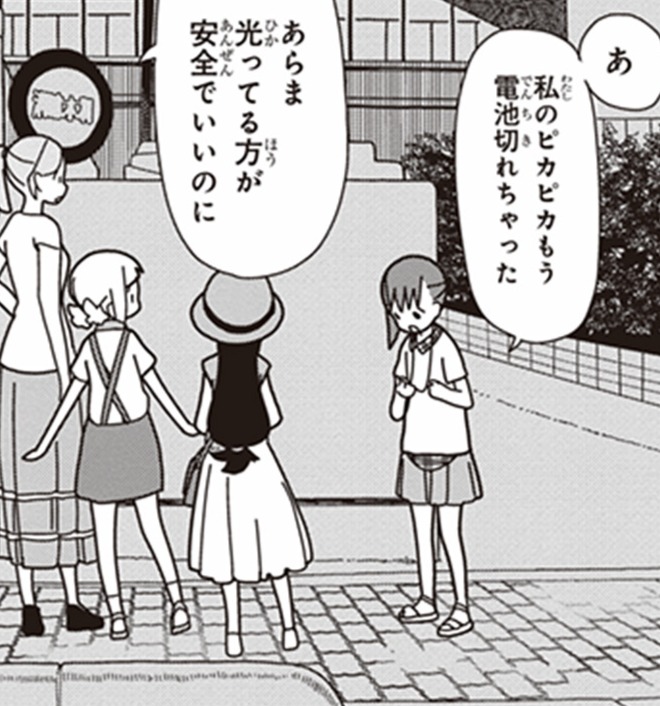
安全 (Safety)安全( あんぜん ) means safety or freedom from danger, harm, or loss.
It combines 安 (safe ) with 全 (whole, complete ) to show a state of being completely free from danger .
三ツ星カラーズ »
Volume 3 » Page 142
At a nighttime festival, Sacchan, Yui, and Kotoha receive glowing star necklaces to wear. After some time, Sacchan’s mother arrives to pick them up.
結衣( ゆい ) :「あ 私( わたし ) のピカピカもう電池( でんち ) 切( き ) れちゃった」
“Ah, my sparkler's battery has already run out.”
母( かあ ) さん:「あらま 光( ひか ) ってる方( ほう ) が安全( あんぜん )
“Oh dear, it's safer and better when it's lit up.”
Challenge Yourself
Show translation
Challenge
Why does Sacchan's mother wish Yui's necklace were still glowing?
Clues
光( ひか ) ってる方( ほう ) がthe glowing state is the preferable option
安全( あんぜん ) でいいのにit would be safe and good, with regret that it is not
What does the speaker mean?
The light would make Yui safer and easier to see at night.
光( ひか ) ってる方( ほう ) selects the lit state, and 安全( あんぜん ) gives the practical reason for preferring it.
The necklace would keep Yui warm.
The mother mentions safety, not warmth.
The light would show that the festival is still open.
Her comparison concerns Yui's glowing necklace and safety, not the festival's hours.
The battery would be cheaper while the necklace glowed.
Yui says the battery has run out, but her mother does not discuss its cost.
The necklace is unsafe whenever its light is on.
光( ひか ) ってる方( ほう ) が安全( あんぜん ) says the glowing option is safer, not more dangerous.
The light would help them find Sacchan's mother.
The mother has already arrived. Her comment is about the girl's nighttime visibility.
Sacchan’s mother prefers the necklace to keep glowing because it makes Yui more visible and therefore safer at night. Sentence-final のに adds regret that the battery has already died.
View Full Example
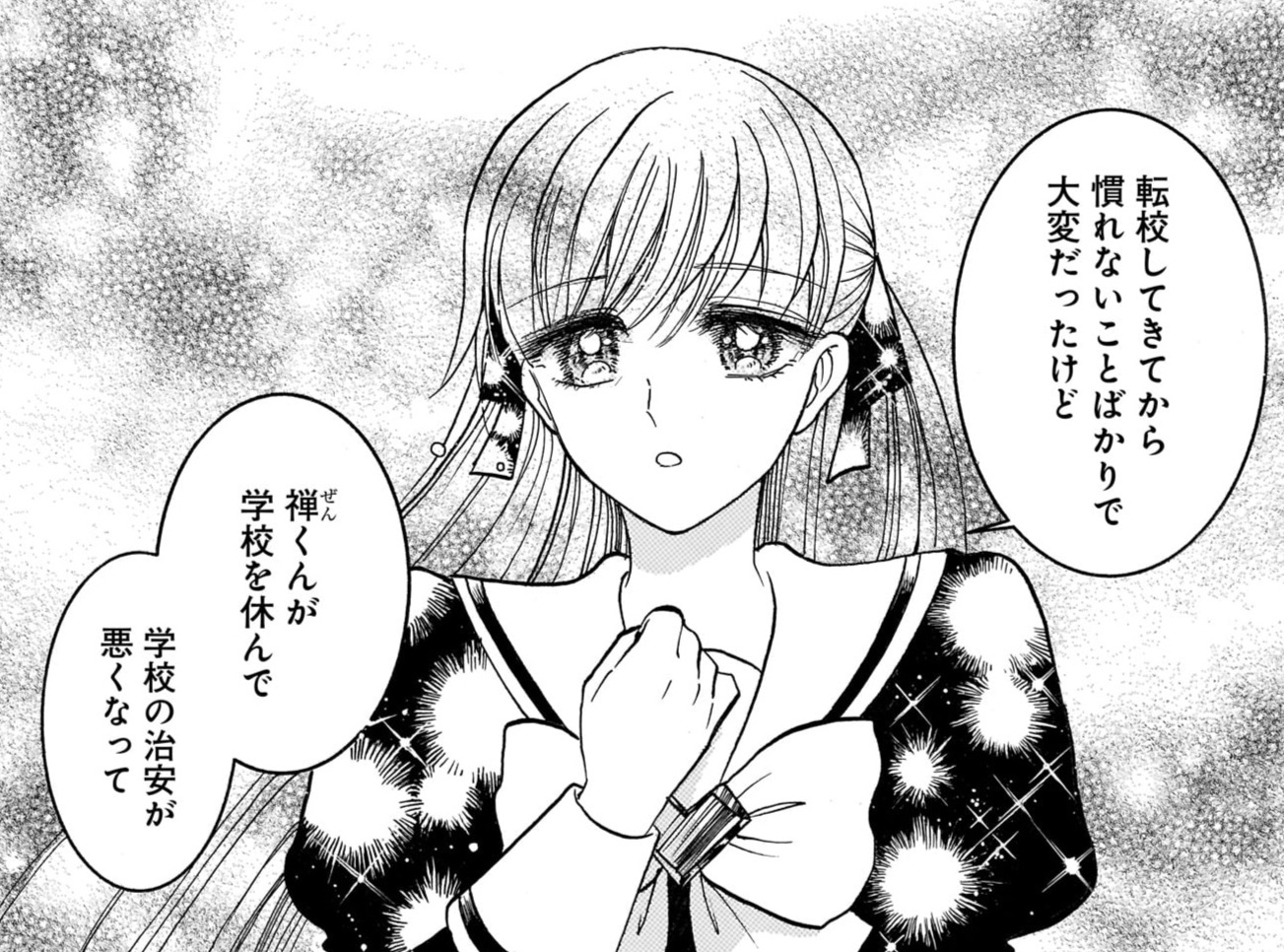
治安 (Public order)治安( ちあん ) means public safety and social order, especially the level of crime and disorder in an area.
It combines 治 (put in order ) with 安 (peace ) to show peace maintained by order .
キラキラとギラギラ »
Volume 1 » Page 195
Following Zen’s absence from school for a while, fights and disobedience have taken over the school grounds. When Lulu learns Zen hasn’t been at home either during this time, she travels to the mountains in search of him. After finding him, she explains the situation at school.
ルル:
「転校( てんこう ) してきてから慣( な ) れないことばかりで大変( たいへん ) だったけど禅( ぜん ) くんが学校( がっこう ) を休( やす ) んで学校( がっこう ) の治安( ちあん ) 悪( わる ) くなって」
“Since I transferred to this school, everything has been unfamiliar and difficult, but ever since you've started missing school, the school's security has gotten worse...”
Challenge Yourself
Show translation
Challenge
What happened at school while Zen was absent?
Clues
禅( ぜん ) くんが学校( がっこう ) を休( やす ) んでZen was absent from school
学校( がっこう ) の治安( ちあん ) が悪( わる ) くなってthe school's public order became worse
What does the speaker mean?
Fighting and disorder made the school less safe.
治安( ちあん ) が悪( わる ) くなって says the school's order and safety deteriorated during Zen's absence.
The school became calmer because Zen was gone.
悪( わる ) くなって means the situation became worse, not calmer.
The school closed while everyone searched for Zen.
Lulu says the school's public order worsened. She does not say the school closed.
Students stopped attending because they transferred away.
転校( てんこう ) してきて refers to Lulu's earlier transfer. The later problem is disorder at the school.
Zen was suspended for causing fights at school.
Zen was absent, and the disorder grew without him. The line does not say he caused it or was suspended.
Lulu became accustomed to everything at the school.
She says she had faced many unfamiliar things, then explains that conditions grew worse.
Lulu tells Zen that order at school broke down while he was away. 治安( ちあん ) covers the school’s general safety and discipline, and 悪( わる ) くなって marks the change for the worse.
View Full Example
Stability and Rest
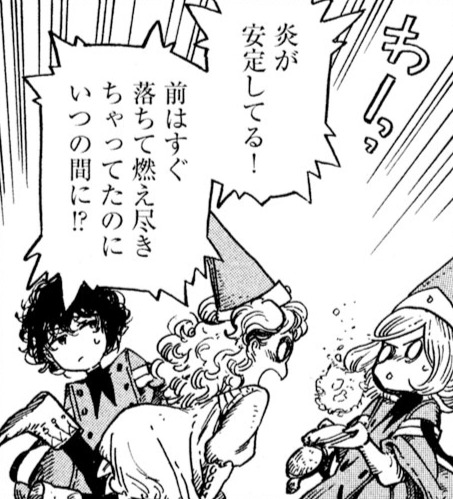
安定 (Stability)安定( あんてい ) means stability, with little risk of sudden change or disruption.
It combines 安 (peaceful ) with 定 (settled, fixed ) to show a peacefully settled state .
とんがり帽子のアトリエ »
Volume 2 » Page 50
Coco and her friends are trapped in a maze and trying to find a way past a dragon. Seeing the others working out magic to use, Coco tries her hand at a spell, creating a flame. Agott isn’t impressed, but Tetia feels otherwise.
テティア:
「炎( ほのお ) が安定( あんてい )
“The flame is stable!”
「前( まえ ) はすぐ落( お ) ちて燃( も ) え尽( つ ) きちゃってたのにいつの間( ま ) に!?」
“It used to go out and burn out right away, so when did this happen!?”
Challenge Yourself
Show translation
Challenge
Why is Tetia surprised by Coco's flame?
Clues
炎( ほのお ) が安定( あんてい ) してる!the flame is burning steadily now
前( まえ ) はすぐ落( お ) ちて燃( も ) え尽( つ ) きちゃってたのにcontrasts the current flame with earlier attempts that quickly fell and burned out
What does the speaker mean?
The flame is stable now, although Coco's earlier flames quickly burned out.
安定( あんてい ) してる describes the flame now, while 前( まえ ) は and のに contrast it with Coco's failed attempts before.
The flame used to be stable, but it has suddenly started burning out.
This reverses the timeline. 前( まえ ) は introduces the flames that burned out, and the current flame is stable.
The flame fell before Coco could make it burn steadily.
Falling and burning out describe Coco's earlier attempts. Tetia says the flame she sees now is stable.
Coco made the flame disappear as soon as Tetia noticed it.
すぐ belongs to the description of earlier flames. The current flame remains steady.
Tetia realizes that Agott created the stable flame instead of Coco.
The lines compare the current flame with Coco's previous results. They do not identify Agott as its creator.
Tetia wonders when the group moved away from the dragon.
いつの間( ま ) に asks when Coco's improvement happened, not when the group changed location.
Tetia sees that Coco’s flame is stable. That is a clear improvement because Coco’s earlier flames would fall and burn themselves out right away, so Tetia blurts out いつの間( ま ) に to ask when Coco became able to do this.
View Full Example
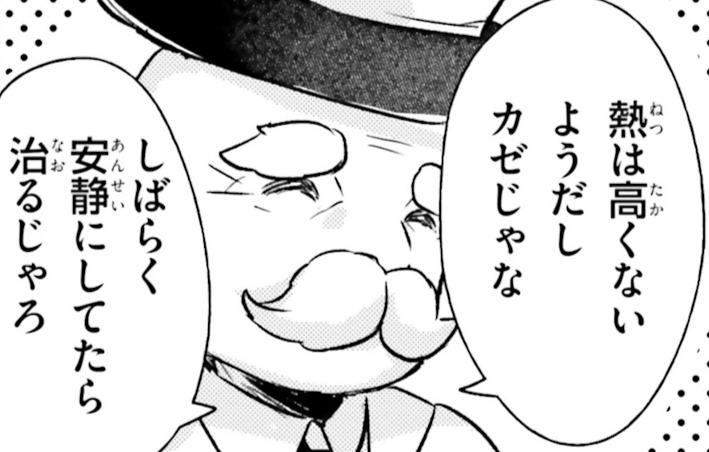
安静 (Rest)安静( あんせい ) means quiet rest, especially while recovering from illness or injury.
It combines 安 (calm ) with 静 (quiet ) to show a calm and quiet state .
ちいさな森のオオカミちゃん »
Volume 1 » Page 150
Wolf isn’t feeling up to patrolling. She sends a bird to call the doctor to visit her.
亀( かめ ) のおじいさん:「熱( ねつ ) は高( たか ) くないようだしカゼじゃな」
“It doesn't seem like you have a high fever, so it's probably just a cold.”
「しばらく安静( あんせい ) 治( なお ) るじゃろ」
“If you rest for a while, you'll probably get better.”
Challenge Yourself
Show translation
Challenge
What does Turtle advise Wolf to do?
Clues
しばらく安静( あんせい ) にしてたら
if she rests quietly for a while
治( なお ) るじゃろhe expects that she will recover
What does the speaker mean?
Rest quietly for a while so she can recover.
しばらく sets the length of time, and 安静( あんせい ) にする tells Wolf to remain at rest.
Return to patrol once her fever gets higher.
Turtle says her fever does not seem high and advises rest. He does not tell her to wait for it to worsen.
Exercise for a while to help the cold pass.
安静( あんせい ) means keeping still and resting, which rules out exercise.
Take medicine until the fever disappears.
The advice names rest as the condition for recovery. No medicine appears in the line.
Keep working, but take a short break afterward.
安静( あんせい ) にする means to avoid activity while recovering, not to rest only after working.
Call the doctor again after resting for one day.
Turtle predicts that rest will help her recover. He does not ask her to call him again or give a one-day deadline.
Turtle advises Wolf to rest quietly for a while. The conditional 〜たら links that rest to the likely result, 治( なお ) るじゃろ, so he expects her to get better if she follows his advice.
View Full Example
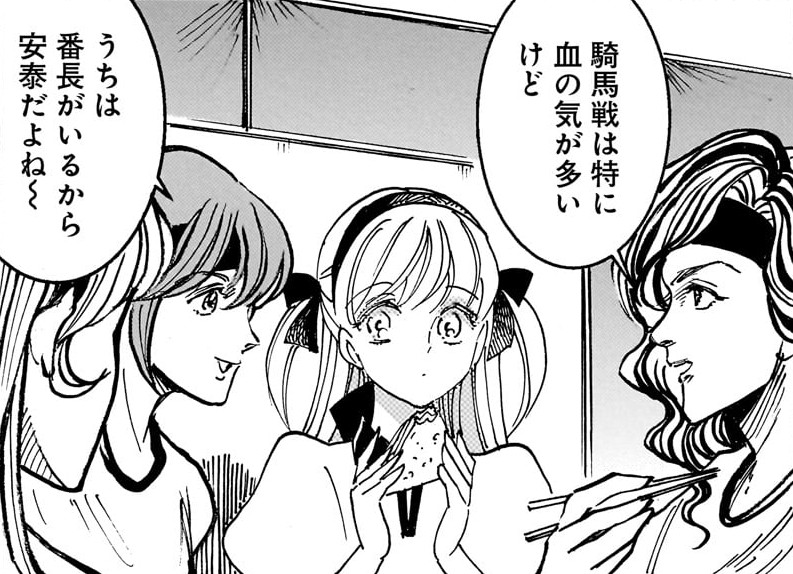
安泰 (Peace)安泰( あんたい ) means safe, secure, and free from worry.
It combines 安 (at ease ) with 泰 (peaceful ) to give the word its sense of being at ease and peaceful .
キラキラとギラギラ »
Volume 4 » Page 85
During sports day, the events break for lunch. Lulu joins her friends, and they discuss the upcoming afternoon activities.
響子( きょうこ ) :「騎馬戦( きばせん ) は特( とく ) に血( ち ) の気( き ) が多( おお ) いけど」
“The cavalry battles are especially full of hot-blooded guys, though.”
清美( きよみ ) :「うちは番長( ばんちょう ) がいるから安泰( あんたい )
“As long as the big boss is here, we're safe and sound, right~”
Challenge Yourself
Show translation
Challenge
Why does Kiyomi think her group will be safe?
Clues
騎馬戦( きばせん ) は特( とく ) に血( ち ) の気( き ) が多( おお ) いけどthe cavalry battle is especially full of hot-blooded competitors, though
うちは番長( ばんちょう ) がいるから
because their side has its big boss
安泰( あんたい ) だよねthey are safe and secure, seeking agreement
What does the speaker mean?
Their group's big boss will be with them.
番長( ばんちょう ) がいるから gives the presence of their big boss as the reason Kiyomi says their side is 安泰( あんたい ) .
The cavalry battle has been canceled for being too violent.
Kyoko says the event is hot-blooded, but nobody says it has been canceled. Kiyomi expects their leader to keep them safe.
Their group has no aggressive competitors.
血( ち ) の気( き ) が多( おお ) い describes the cavalry battle as especially aggressive. Kiyomi's confidence comes from their leader.
They plan to leave before the afternoon events begin.
The group discusses how they will fare in the event. The line does not propose leaving.
The other groups have agreed not to challenge them.
No agreement from the other groups appears. Kiyomi relies on the 番長( ばんちょう ) being present.
Kiyomi believes the cavalry battle is harmless.
The first line acknowledges that the event is full of people ready to clash. Her sense of safety comes despite that danger.
Kyoko warns that the cavalry battle draws especially aggressive competitors. Kiyomi is unconcerned because their group’s big boss is there, which she treats as enough to keep their side safe.
View Full Example
高木さん/からかい上手の(元)高木さん-volume-20-page-24-panel-3.jpg)