Pictures and plans with 画
画 has a few meanings: picture, division, and plans.
Etymology
This kanji is a simplified version of the pictograph 劃, which combines 田 (field) and 聿 (to mark).
Art Supplies
画鋲 (Thumbtack)画鋲( がびょう ) means a thumbtack or drawing pin used to fasten paper to a wall or board.
It combines 画 (picture ) with 鋲 (tack ) to show a tack used to pin up pictures or papers .
名探偵コナン »
Volume 12 » Page 20
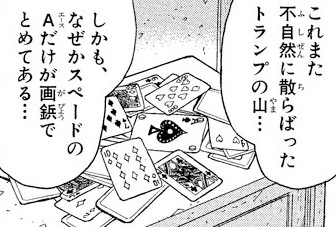
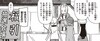
The Detective Boys group visits a cabin where Professor Agasa has secretly set out clues leading to a treasure. Conan draws the group’s attention to an arrow pointing to a table, on top of which there is…
コナン:
「これまた不自然( ふしぜん ) に散( ち ) らばったトランプの山( やま ) …」
“A pile of cards, rather unnaturally scattered about.”
「しかも、なぜかスペードのAだけが画鋲( がびょう )
“Further, for some reason, only the ace of spades is pinned down with thumbtacks...”
Challenge Yourself
Show translation
Challenge
What unusual detail does Conan notice about the cards?
Clues
スペードのAだけが
only the ace of spades
画鋲( がびょう ) でとめてあるhas been fastened with thumbtacks
What does the speaker mean?
Only the ace of spades is pinned down.
だけ singles out the ace of spades as the one card fastened with thumbtacks.
Every card is pinned to the table.
だけ limits the pinned card to the ace of spades.
The ace of spades is missing from the pile.
Conan can see it and notes that it has been pinned down.
Only the spade cards are arranged in order.
The line identifies one card, not the entire spade suit.
The cards have been scattered by the wind.
Conan calls the arrangement unnatural and focuses on the deliberately fixed card.
A thumbtack is hidden beneath every ace.
The thumbtacks are used to fasten only the ace of spades.
The pile is scattered unnaturally, and only the ace of spades has been fixed in place with thumbtacks. だけ marks that card as the exception.
View Full Example
Planning
計画 (Plan)計画( けいかく ) means a plan that sets out what will be done, when, how, and by whom.
It combines 計 (plan ) with 画 (draw out ) to show a drawn out plan of action.
名探偵コナン »
Volume 5 » Page 83
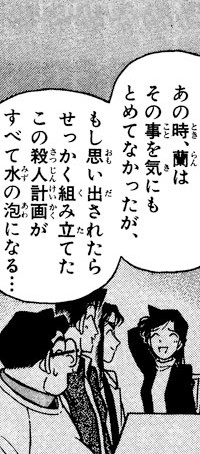
After discovering who the murderer is, Conan explains why the murderer went after Ran. He pinpoints when Ran unknowingly discovered a vital clue.
コナン:
「あの時( とき ) 、蘭( らん ) の事( こと ) 気( き ) にもとめてなかったが、もし思( おも ) い出( だ ) されたらせっかく組( く ) み立( た ) てたこの殺人( さつじん ) 計画( けいかく ) 水( みず ) の泡( あわ ) になる…」
“Ran didn't think anything of it at the time, but if she remembered it, all the murderous plans he worked so hard on putting together would go up in smoke.”
Challenge Yourself
Show translation
Challenge
What would happen if Ran remembered the clue?
Clues
もし思( おも ) い出( だ ) されたら
if she were to remember it
この殺人( さつじん ) 計画( けいかく ) がすべて水( みず ) の泡( あわ ) になる
the entire murder plan would come to nothing
What does the speaker mean?
The culprit's carefully prepared plan would be ruined.
水( みず ) の泡( あわ ) になる means that all the effort put into the plan would be wasted.
Ran would forget the clue permanently.
The condition is that Ran remembers it, not that she forgets it.
The culprit would have time to rebuild the plan.
The idiom describes the existing plan collapsing, not a chance to begin again.
The murder would be mistaken for an accident.
Remembering the clue would threaten the culprit's concealment rather than strengthen it.
Conan's investigation would have to stop.
The wasted effort belongs to the culprit's murder plan.
Ran would become part of the plan willingly.
Her memory would expose a clue and undermine the plan.
If Ran remembered what she had noticed, the culprit’s carefully assembled murder plan would fall apart. 水( みず ) の泡( あわ ) になる says that the invested effort would come to nothing.
View Full Example
Visual Media
漫画 (Manga)漫画( まんが ) means manga or comics, which tell stories or jokes through drawings, panels, and dialogue.
It combines 漫 (loose ) with 画 (drawing ) to show casually drawn pictures .
ご注文はうさぎですか? »
Volume 1 » Page 46
Looking over the menu at Chiya’s shop, Chino and Rize are mystified by the strange dessert names.
○:
「なんだこの漫画( まんが ) 必殺技( ひっさつわざ ) みたいなメニューは…」
“What's with this menu like special techniques from a comic?”
Challenge Yourself
Show translation
View Full Example
映画 (Film)映画( えいが ) means a film, movie, or cinema as an art form.
It combines 映 (project ) with 画 (picture ) to show projected pictures .
アオハライド »
Volume 12 » Page 42
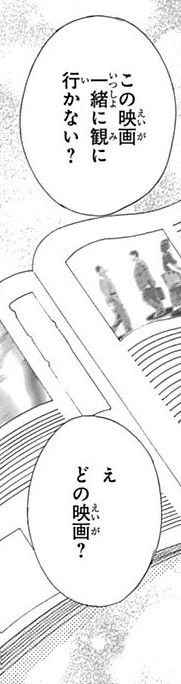
After talking with her boyfriend in the hall, Futaba returns to her classroom and walks over to her friends.
双葉( ふたば ) :「この映画( えいが ) 一緒( いっしょ ) に観( み ) に行( い ) かない?」
“How about going to see this movie?”
悠里( ゆうり ) :「え どの映画( えいが )
“Oh, which movie?”
Challenge Yourself
Show translation
Challenge
What is Futaba asking Yuri to do?
Clues
この映画( えいが )
this movie
一緒( いっしょ ) にtogether
観( み ) に行( い ) くto go in order to watch
〜ない?
a negative question that can make a casual invitation
What does the speaker mean?
She invites Yuri to go see the movie with her.
一緒( いっしょ ) に makes it a shared outing, and 観( み ) に行( い ) かない? turns it into a casual invitation.
She asks whether Yuri has already seen the movie.
That would ask about a past viewing. Here 観( み ) に行( い ) く points to going somewhere in order to watch it.
She tells Yuri to watch the movie by herself.
一緒( いっしょ ) に means together, so Futaba is proposing that they go as a pair.
She says that she does not want to see the movie.
The negative form belongs to the question 〜ない?. In this setting, it offers an activity rather than rejecting it.
She asks Yuri which movie she wants to see.
Futaba points to この映画( えいが ) , this movie. Yuri is the one who responds by asking which movie.
She announces that she is leaving to see the movie now.
行( い ) かない? is addressed to Yuri as a question. It proposes a plan rather than announcing one already underway.
Futaba proposes a shared trip to the movies. The verb stem 観( み ) plus に gives the purpose of going, while the negative question makes the invitation casual.
View Full Example
画像 (Image)画像( がぞう ) means an image, picture, graphic, or photograph, especially in digital media.
It combines 画 (picture ) with 像 (image ) to show a pictorial image .
思い、思われ、ふり、ふられ »
Volume 7 » Page 30
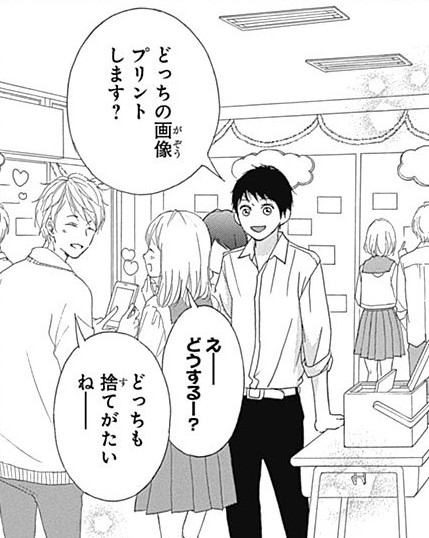
Inui’s class is gathering photos of couples for a school festival contest. Another couple comes to join in.
乾( いぬい ) :「どっちの画像( がぞう )
“Which image should I print?”
彼女( かのじょ ) :「えーーー どうするー?」
“Oh my gosh... What should we do?”
彼氏( かれし ) :「どっちも捨( す ) てがたいねーーー」
“Both are hard to abandon.”
Challenge Yourself
Show translation
Challenge
Why does the couple have trouble choosing which image to print?
Clues
どっちも
both of them
捨( す ) てがたいhard to reject or give up
What does the speaker mean?
Neither photo is easy for them to reject.
どっちも applies 捨( す ) てがたい equally to both images.
Neither photo can be printed by the machine.
The difficulty is choosing against one image, not a technical printing problem.
They dislike both photos and want new ones.
捨( す ) てがたい means both options have enough appeal that giving either one up is difficult.
They have already decided to print both images.
They are still being asked to choose which one to print.
They cannot tell which image belongs to them.
The couple recognizes both photos. Their problem is selecting between them.
Inui has asked them to throw both photos away.
Inui asks which image to print, and the couple uses 捨( す ) てる figuratively for rejecting the other choice.
The couple likes both photos enough that neither is easy to reject. どっちも applies the emotional difficulty of 捨( す ) てがたい to both choices.
View Full Example