Releasing and sending out with 放
放 broadly has three meanings: “to send out” (from a certain place), “to set free” (from confinement), and “to leave as is”.
Etymology
This kanji isa phono-semantic compound comprised of 方 as the phonetic component (ホウ) and 攵 (hand, striking action) as the semantic component.
These invoke imagery of using purposeful action to push something in a direction away from oneself.
Broadcasting and Transmission
放送 (Broadcast)放送( ほうそう ) means broadcasting audio or video to a public audience by television, radio, or the internet.
It combines 放 (send out ) with 送 (send ) to show content being sent outward to the public .
からかい上手の高木さん »
Volume 19 » Page 88
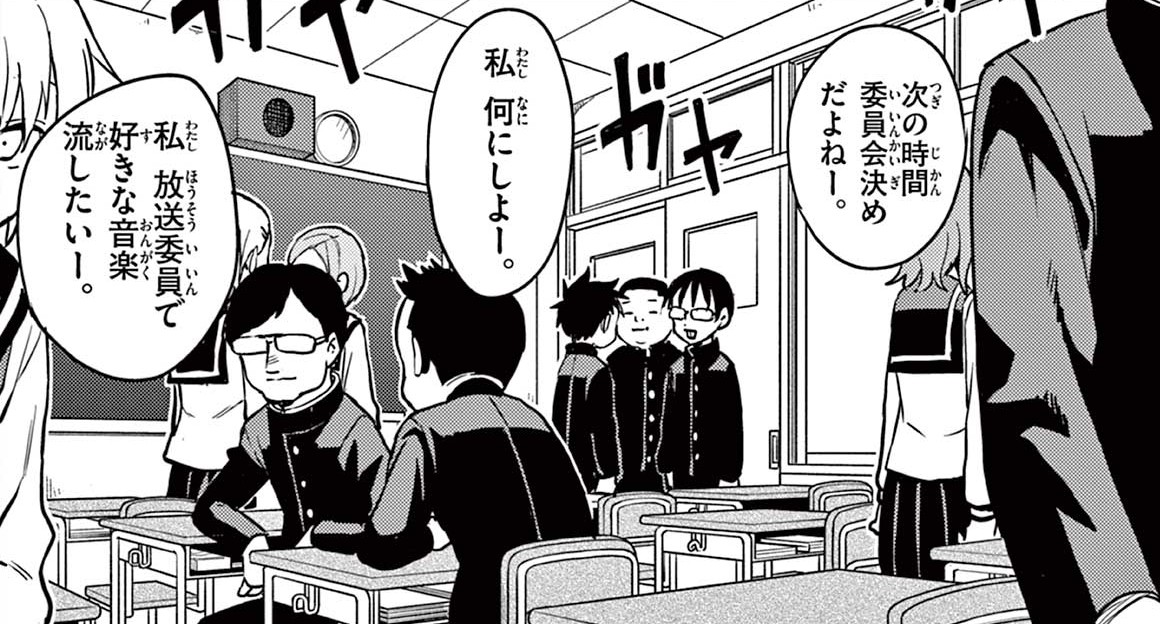
Nishika and Takagi’s class discusses what committees they plan to join.
生徒( せいと ) :「次( つぎ ) の時間( じかん ) 委員会( いいんかい ) 決( ぎ ) めだよねー。」
“Next up is deciding the committee schedule, right?”
生徒( せいと ) :「私( わたし ) 何( なに ) にしよー」
“What should I pick?”
生徒( せいと ) :「私( わたし ) 放送( ほうそう ) 委員( いいん ) で好( す ) きな音楽( おんがく ) 流( なが ) したいー。」
“I want to play my favorite music as a member of the broadcasting committee.”
Challenge Yourself
Show translation
Challenge
Which committee does the student want, and why?
Clues
放送( ほうそう ) 委員( いいん ) で"as a member of the broadcasting committee"
好( す ) きな音楽( おんがく ) 流( なが ) したい"want to play music I like," with the object marker を omitted
What does the speaker mean?
The broadcasting committee, so she can play music she likes.
放送( ほうそう ) 委員( いいん ) names the committee, and 流( なが ) したい states what she wants to do there.
The music committee, so she can perform her own songs.
She says 放送( ほうそう ) 委員( いいん ) , not a music committee, and 流( なが ) す means to play or broadcast music here.
The broadcasting committee, so she can make school announcements.
The committee is right, but her stated goal is to play music she likes.
The class committee, so she can choose the schedule.
委員会( いいんかい ) 決( ぎ ) め is the class activity. It is not the committee she chooses.
The library committee, so she can listen to music while working.
The line names the broadcasting committee and says she wants to send music over the system.
She has not decided which committee she wants.
Her earlier question is followed by a specific choice, 放送( ほうそう ) 委員( いいん ) .
The student settles on the 放送( ほうそう ) 委員( いいん ) , the broadcasting committee. Her reason is 好( す ) きな音楽( おんがく ) 流( なが ) したい, she wants to play music she likes.
View Full Example
Release and Freedom
解放 (Liberation)解放( かいほう ) means release or liberation from confinement, restriction, oppression, or another burden.
It combines 解 (untie ) with 放 (release ) to show freeing something by undoing what holds it back .
ひらやすみ »
Volume 1 » Page 88
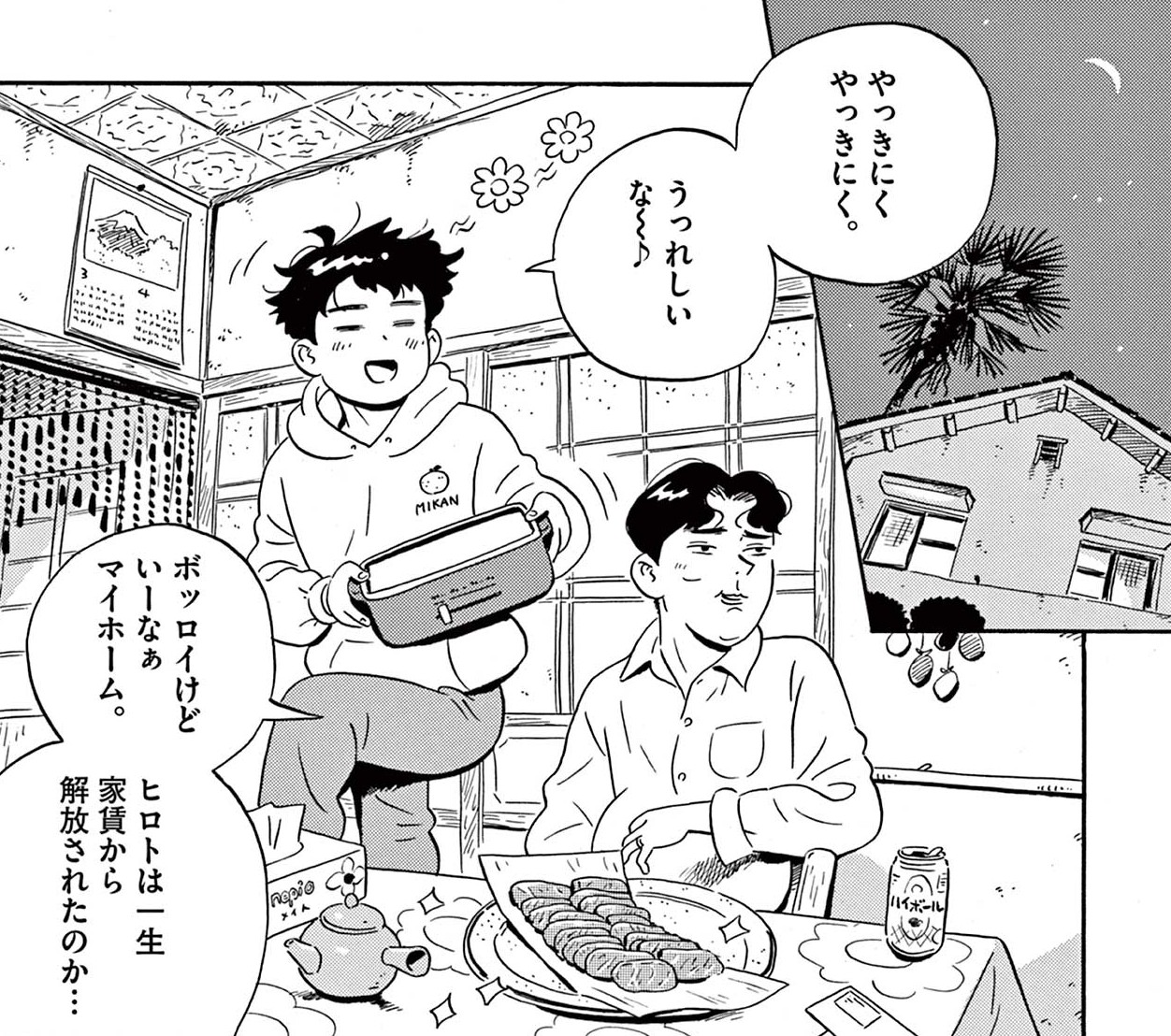
Hiroto’s friend Hideki stops by Hiroto’s workplace looking for a place to stay for the night. He has with him a shopping bag with beef.
ヒロト:
「やっきにく やっきにく。うっれしいな〜♪」
“Grilllled meat, grilllled. So happy~~♪”
ヒデキ:
「ボッロイけどいーなぁマイホーム。」
“It's a bit run down, but how nice, having your own home.”
「ヒロトは一生( いっしょう ) 家賃( やちん ) から解放( かいほう )
“Have you been freed from rent forever...?”
Challenge Yourself
Show translation
Challenge
What does Hideki think Hiroto has been freed from?
Clues
一生( いっしょう ) 家賃( やちん ) からfrom paying rent for the rest of his life
解放( かいほう ) されたのかasks whether Hiroto has been released from that burden
What does the speaker mean?
Paying rent for the rest of his life.
家賃( やちん ) is rent, 一生( いっしょう ) extends it across Hiroto's life, and から marks what he has been freed from.
Working at his current job forever.
The burden named before から is 家賃( やちん ) , not employment.
Repairing his run-down home by himself.
Hideki calls the home run-down, but 解放( かいほう ) された refers specifically to rent.
Sharing the house with his friends.
The line says nothing about housemates. Hideki is impressed that Hiroto may no longer owe rent.
Buying food for visiting friends.
The scene includes food, but the phrase 家賃( やちん ) から解放( かいほう ) された names rent as the burden removed.
Saving money to buy a home someday.
Hideki treats Hiroto as already having a home and asks whether that has freed him from rent.
Hideki realizes that owning the house may mean Hiroto never has to pay rent again. 家賃( やちん ) から解放( かいほう ) された presents rent as a lifelong burden from which Hiroto has been released.
View Full Example
放課後 (After school)放課後( ほうかご ) means after school. It refers to the period following the end of classes.
It combines 放課 (dismissal from class ) with 後 (after ) to show the time after classes end .
俺物語!! »
Volume 4 » Page 165
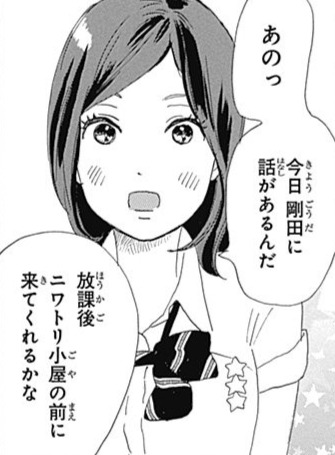
After Takeo (Gouda) has helped her out multiple times, Saijou considers confessing her feelings to him. She waits for him near the shoe lockers before class.
西城( さいじょう ) :「あのっ 今日( きょう ) 剛田( ごうだ ) に話( はなし ) があるんだ」
“Um... I need to talk to you today.”
「放課後( ほうかご ) 小屋( ごや ) の前( まえ ) に来( き ) てくれるかな」
“Could you come to the chicken coop after school?”
Challenge Yourself
Show translation
Challenge
What does Saijou ask Takeo to do?
Clues
今日( きょう ) 剛田( ごうだ ) に話( はなし ) があるんだshe has something to discuss with Takeo today
放課後( ほうかご ) ニワトリ小屋( ごや ) の前( まえ ) に来( き ) てくれるかなshe wonders whether he will come to the chicken coop after school
What does the speaker mean?
Meet her in front of the chicken coop after school.
放課後( ほうかご ) gives the time, ニワトリ小屋( ごや ) の前( まえ ) gives the place, and 来( き ) てくれるかな makes the request.
Bring a chicken to her before class.
ニワトリ小屋( ごや ) is the meeting place. She does not ask Takeo to bring an animal.
Meet her at the shoe lockers during lunch.
The requested time is after school and the requested place is the chicken coop.
Clean the chicken coop for her after school.
She asks him to come there for a conversation, not to perform cleaning.
Tell her immediately what he wants to discuss.
Saijou is the one who has something to say, and she postpones the meeting until after school.
Ask Gouda to meet someone else at the coop.
Saijou directly asks Takeo to come, with herself as the implied beneficiary of 来( き ) てくれる.
Saijou tells Takeo that she has something to discuss and asks him to meet her in front of the chicken coop after school. 来( き ) てくれるかな keeps the request hesitant and soft.
View Full Example