Returning and sending back with 返
The kanji 返 means to return or to return something to its earlier place, owner, or state.
返す can reverse something’s direction, reciprocate an action, or repeat an action in a compound verb. 返る can restore a state or strengthen the meaning of another verb.
Etymology
This kanji isa phono-semantic compound comprised of 辶 (movement) as the semantic component and 反 as the phonetic component (ハン).
Etymology Research
Early Chinese writing often used 反 itself for returning. Shirakawa Shizuka’s 字通 cites the 頌鼎 bronze inscription, where 反入 means returning or handing something back. It treats this as an earlier spelling of the return word and explains that 返 distinguished returning as 反 became common for opposition. This account describes the separation of written uses, rather than a history of the modern Japanese compounds. Heibonsha, 字通, 返
The Chinese University of Hong Kong’s database identifies bronze forms containing 辵 and the phonetic component 反, with the original meaning of returning or coming back. It cites 歲一返 on the 鄂君啟車節, returning once a year, and 返自西陽 on the 楚王酓章鐘, returning from Xiyang. It places the differentiation of 返 in Warring States and later writing, while noting that 反 continued to represent returning in Warring States, Qin, and Han texts. CUHK, 返
Older writing also varied the movement component. CUHK records 𢓉, with 彳 and 反, on the 中山王圓壺, where it means instead or conversely. Its transcription of the Shuowen defines 返 as returning, explicitly recognizes 反’s sound role, and lists 𢓉 as an alternate form with 彳. The entry supplies bronze and small-seal examples, but these establish attested forms without fixing the date when 返 first appeared. CUHK, 返
Reciprocation
返信 (Reply)
返信 means a reply to a message, email, or letter.
It combines 返 (send back) with 信 (message) to show a message sent back.
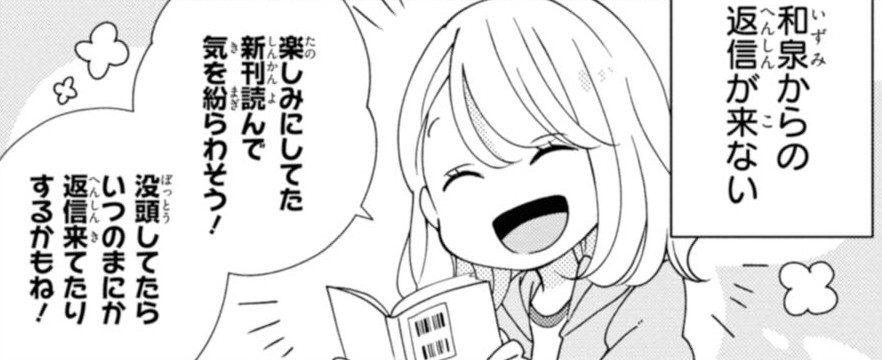
Akari is expecting a text message from Izumi. Unknown to her, Izumi’s response was getting too long, so he switched to his computer to write up an e-mail instead.
- Narration:
- 「和泉からの返信が来ない」
- “I haven't received a reply from Izumi.”
- あかり:
- 「楽しみにしてた新刊読んで気を紛らわそう!」
- “I'll distract myself by reading the new book I've been looking forward to!”
- 「没頭してたらいつのまにか返信来てたりするかもね!」
- “Maybe if I get really absorbed in it, the reply will show up before I know it!”
Repetition
繰り返す (To repeat)
繰り返す means to do the same thing or perform the same action again, or multiple times.
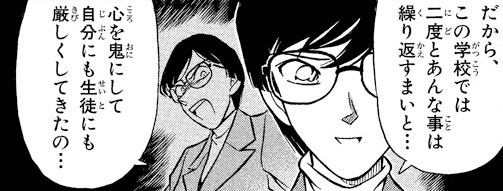
Conan’s classmates aren’t fond of their new teacher’s strict attitude. Ms. Kobayashi explains how at her last school, she couldn’t bring herself to be strict, and it allowed her students to get so out of control that students were injured in a fight.
- 小林:
- 「だから、この学校では二度とあんな事は繰り返すまいと…」
- “Therefore, to keep from repeating that kind of situation at this school...”
- 「心を鬼にして自分にも生徒にも厳しくしてきたの…」
- “I hardened my heart and became strict, with myself and with my students...”