Sacrifice and offerings with 犠
The kanji 犠 centers on sacrifice, especially a life or offering given up for some larger cause.
- Secondary School
- JLPT N1 (estimate)
- WaniKani level 40
- 17 strokes
Words with 犠
- Ritual Offerings
- 供犠 きょうぎ Sacrifice
- Sacrifice
- 犠牲 ぎせい Sacrifice
- 自己犠牲 じこぎせい Self-sacrifice
- Victims
The bold kana are the part 犠 contributes. Words in a dashed box have no manga example yet.
How to Read 犠
Every word on this page reads 犠 as ぎ.
Etymology
This kanji is a phono-semantic compound comprised of 牛 (cow (sacrificial animal)) as the semantic component and 羲 as the phonetic component (キ).
Etymology Research
The older character 犧 combines 牛, which supplies the sacrificial-animal meaning, with 羲 as its phonetic component. Kanjipedia identifies the original sense as a live ox offered to a deity and describes modern 犠 as an abbreviated form. Its notation キ for 羲 concerns the phonetic analysis. Modern Japanese 犠 normally reads ギ. Kanjipedia, 犠
CUHK quotes the Shuowen’s definition of 犧 as an animal sacrificed in an ancestral temple and its analysis as 牛 plus phonetic 羲. The same passage preserves Jia Kui’s observation that 犧 was not an ancient graph. CUHK identifies 羲 as an earlier writing of 犧 and illustrates a small-seal form of 犧. CUHK Multi-function Chinese Character Database, 犧
The earlier 羲 has oracle-bone and bronze forms. CUHK reports place-name uses in oracle-bone inscriptions and personal-name uses in bronze inscriptions. For the sacrificial sense, it points to the Warring States Chu curse inscriptions, where 羲牲 appears alongside jade offerings. This is evidence for the sacrificial word in that text, distinct from a proposal about what the earliest shape depicts. CUHK Multi-function Chinese Character Database, 羲
Accounts of that shape differ. Shirakawa’s Jitsu interprets 羲 as a sacrificial sheep cut with a saw-like 我 and a lower form showing hanging legs. CUHK reports Qin Jianwen’s proposal involving a beheaded pig and a serrated weapon. It questions the weapon interpretation and treats 義 in the bronze form as phonetic. These are attributed analyses, not a settled picture of an animal-sacrifice scene. Heibonsha, Jitsu, 羲, CUHK Multi-function Chinese Character Database, 羲
Sacrifice
犠牲 (ぎせい) (Sacrifice)
犠牲 means sacrifice, casualty, or victim. It can refer to a ritual offering, a personal loss accepted for a cause, or someone who suffers harm as a result of an event.
It combines 犠 (sacrificial offering) with 牲 (sacrificial animal) to show a life given up as an offering or loss.
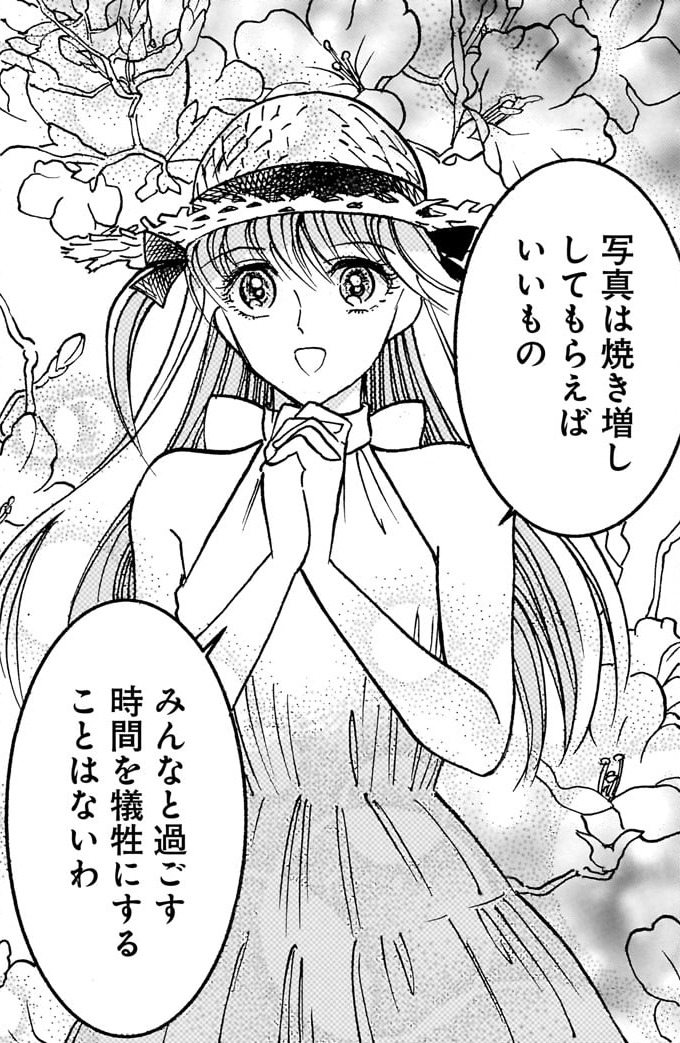
Lulu has come back during summer vacation to visit friends from the school she used to attend. She brought along a photo from her new school’s camping trip, the only one she has from there. A gust of wind blew her hat off, and in the commotion the photo flew away. Her friends offer to split up and search for it.
- ルル:
- 「写真は焼き増ししてもらえばいいもの」
- “I can just get the photo reprinted, after all.”
- 「みんなと過ごす時間を犠牲にすることはないわ」
- “There's no need to sacrifice the time I get to spend with all of you.”
Victims
犠牲者 (ぎせいしゃ) (Victim)
犠牲者 means a victim or casualty. It is the standard word for a person who has been harmed, killed, or otherwise made to suffer.
It combines 犠牲 (sacrifice) with 者 (person) to show a person who becomes the sacrifice.
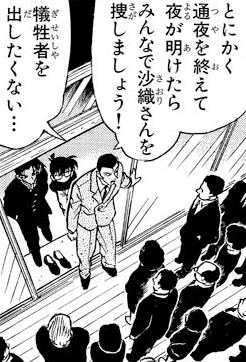
Another woman has been strangled during a wake, and the killer took her Dugong Arrow, a sacred arrow from the island’s festival. Saori is still missing, and she had also lost her arrow. Her father sneers that she may have turned into a mermaid. Kazuha shudders as she recalls the island’s old woman warning that a girl who lets go of her arrow will return to the water as a mermaid.
- 小五郎:
- 「とにかく通夜を終えて夜が明けたらみんなで沙織さんを捜しましょう!」
- “Anyway, let's get through the wake, and once the sun comes up, we'll all search for Saori!”
- 「犠牲者を出したくない…」
- “I don't want any more victims...”
Check Yourself
What does 犠 mean?
Sacrifice and offerings.
Read These Without Furigana
犠牲
犠牲者