Schools and checking with 校
校 has two meanings: a place of education and to compare and correct.
- Grade 1
- JLPT N5 (estimate)
- WaniKani level 7
- 10 strokes
Words with 校
- Organizations and Institutions
- 学校 がっこう School
- 高校 こうこう High school
- 小学校 しょうがっこう Elementary school
- 転校 てんこう Changing schools
- 校舎 こうしゃ School Building
- 校長 こうちょう Principal
- 校内 こうない On campus
- 登校 とうこう Going to school
- 下校 げこう Leaving school
- 校則 こうそく School rules
The bold kana are the part 校 contributes. Words in a dashed box have no manga example yet.
How to Read 校
Every word on this page reads 校 as こう.
That holds off this page too. In 高校 you say こう twice, once for each kanji.
The change to watch is in the kanji before it. 学 is がく by itself, but 学校 squeezes it to がっ. The same happens in 小学校 and 中学校.
Dictionaries also list きょう. It belongs to scholarly words such as 校合, comparing copies of a text. A count across more than 11,000 manga volumes finds that word 4 times.
Etymology
This kanji is a phono-semantic compound comprised of 木 (wood) as the semantic component and 交 as the phonetic component (コウ).
Organizations and Institutions
学校 (がっこう) (School)
学校 means a school, where teachers provide organized instruction to students.
It combines 学 (study) with 校 (school building / institution) to show a place for learning.
Example 1 of 8: According to the rules with 〜によると
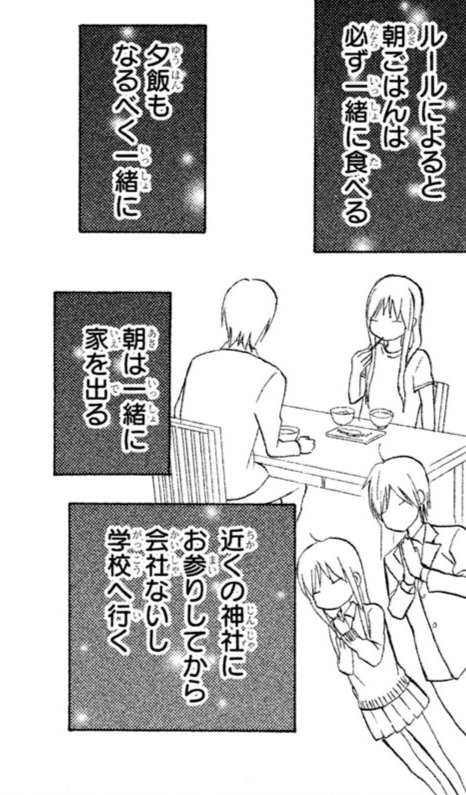
Now that Mao is living at Hiro’s house, Hiro presents her with a list of rules. Before going to bed, Mao looks the list over.
- 真魚:
- 「ルールによると朝ごはんは必ず一緒に食べる」
- “According to the rules, we must always eat breakfast together.”
- 「夕飯もなるべく一緒に」
- “We should eat dinner together too, as often as possible.”
- 「朝は一緒に家を出る」
- “We leave the house together in the morning.”
- 「近くの神社にお参りしてから会社ないし学校へ行く」
- “After praying at the nearby shrine, we go to work or school.”
Example 2 of 8: A loss of public order at school with 治安
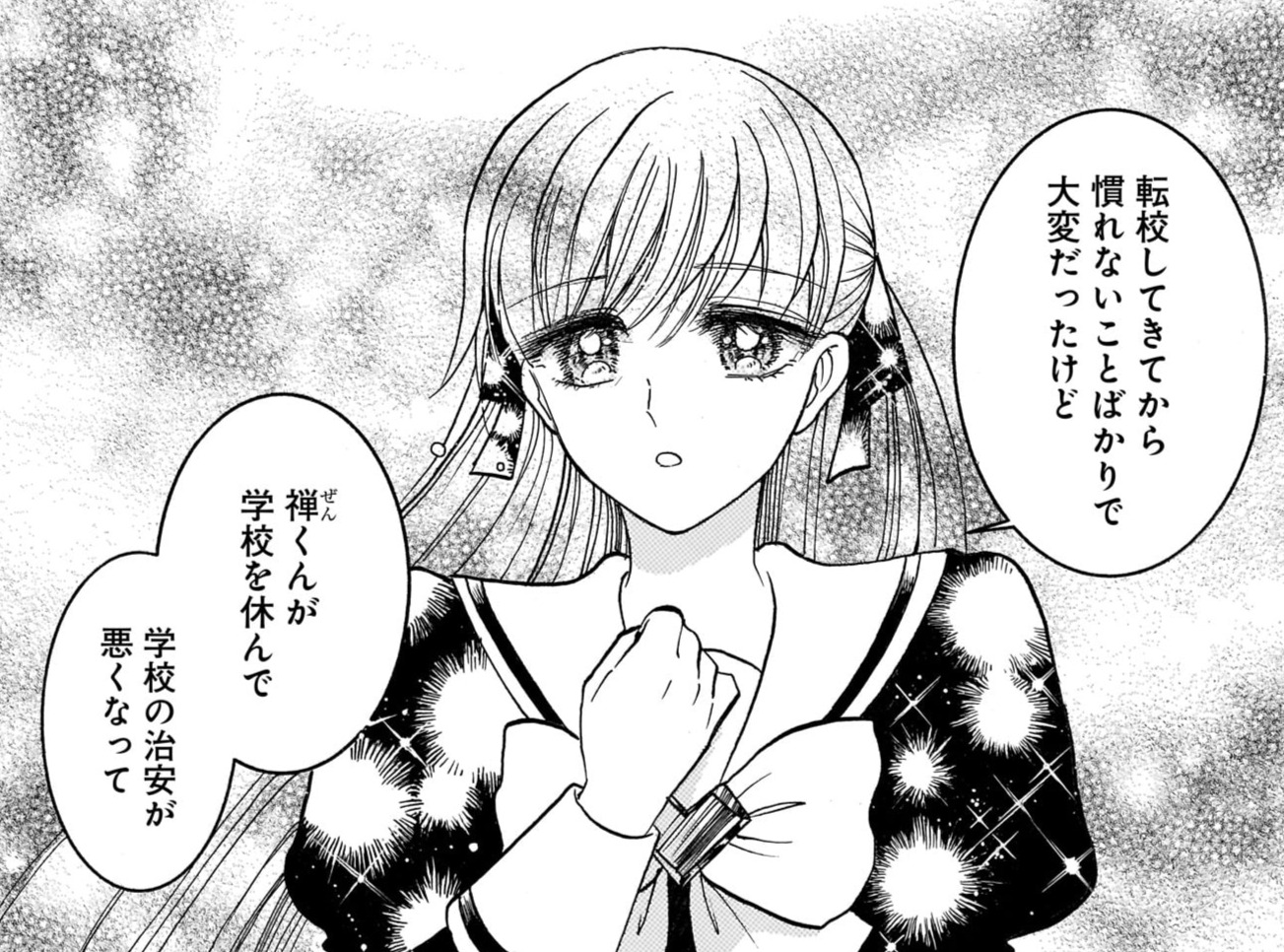
Following Zen’s absence from school for a while, fights and disobedience have taken over the school grounds. When Lulu learns Zen hasn’t been at home either during this time, she travels to the mountains in search of him. After finding him, she explains the situation at school.
- ルル:
- 「転校してきてから慣れないことばかりで大変だったけど禅くんが学校を休んで学校の治安が悪くなって」
- “Since I transferred to this school, everything has been unfamiliar and difficult, but ever since you've started missing school, the school's security has gotten worse...”
Example 3 of 8: Being innocent at school with 猫を被る
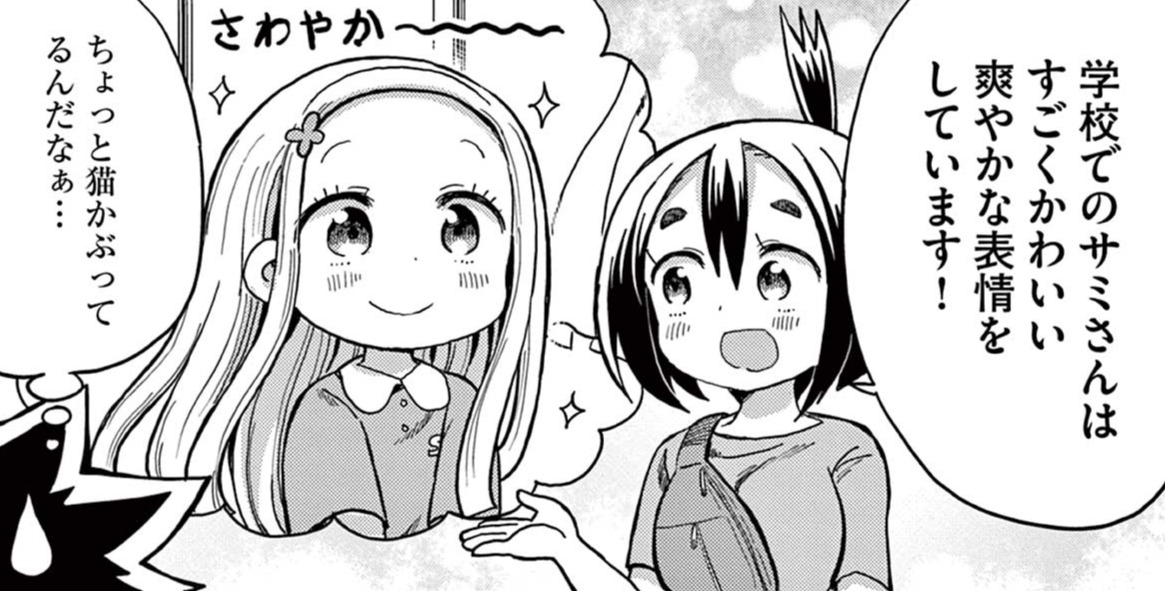
Sami and her father go to the park to play. There, they see Sami’s teacher. The teacher is surprised to see Sami’s rambunctious behavior, as it’s different from the Sami she sees at school.
- 先生:
- 「学校でのサミさんはすごくかわいい爽やかな表情をしています!」
- “At school, Sami has such a cute and delightful expression!”
- パパ:
- 「ちょっと猫かぶってるんだなぁ…」
- “She's just putting on a front, isn't she...”
Example 4 of 8: Being strict with oneself and one's student with 心を鬼にする
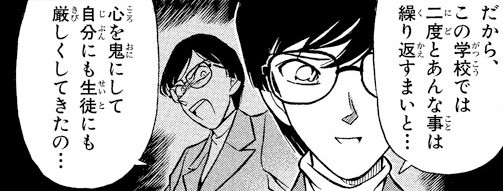
Conan’s classmates aren’t fond of their new teacher’s strict attitude. Ms. Kobayashi explains how at her last school, she couldn’t bring herself to be strict, and it allowed her students to get so out of control that students were injured in a fight.
- 小林:
- 「だから、この学校では二度とあんな事は繰り返すまいと…」
- “So, determined never to let anything like that happen again at this school...”
- 「心を鬼にして自分にも生徒にも厳しくしてきたの…」
- “I hardened my heart and have been strict with myself and my students ever since...”
Example 5 of 8: Call me Teacher with と呼べ
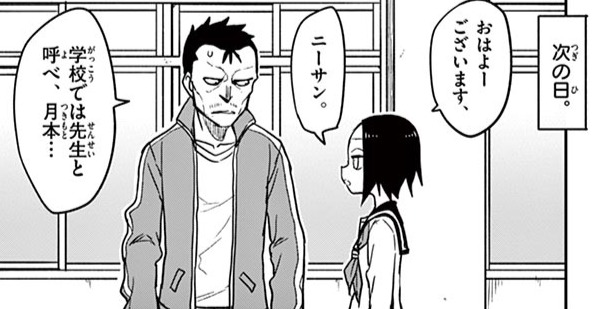
Sanae’s teacher, Mr. Tanabe, has proposed to her older sister, who is also a teacher at the school.
- 「次の日。」
- “The following day.”
- サナエ:
- 「おはよーございます、ニーサン。」
- “Good morning, Big Brother.”
- 田辺:
- 「学校では先生と呼べ、月本…」
- “Call me 'Teacher' at school, Tsukimoto.”
Example 6 of 8: Going to school together so as to not get lost with 〜ように
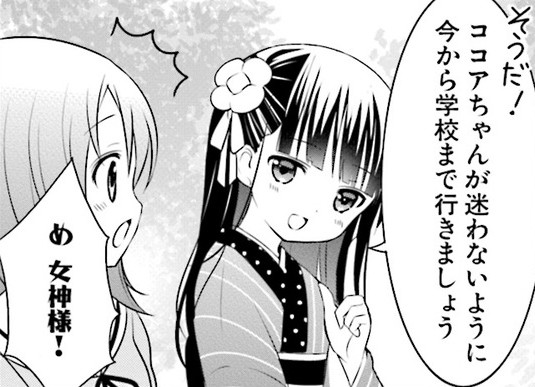
After Cocoa gets lost looking for her new school, she meets Chiya, who will be going to the same school as her.
- 千夜:
- 「ココアちゃんが迷わないように今から学校まで行きましょう」
- “Let's go from here to the school now so you won't get lost.”
- ココア:
- 「め 女神様!」
- “A-a goddess!”
Example 7 of 8: Kindrid spirits in drinking tea with 気が合う
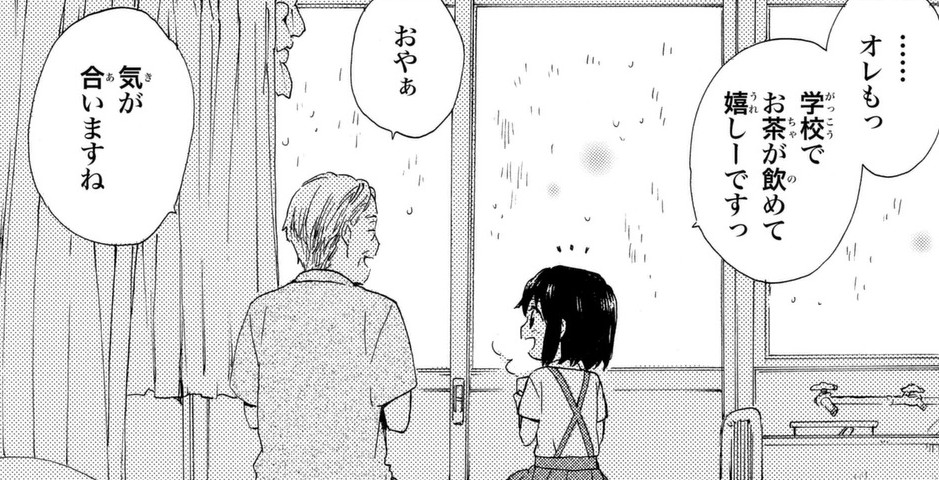
Hinata escorts a classmate to the school nurse. There, she meets an elderly man sipping tea. Seeing her interest, the old man offers her a cup.
- 日向:
- 「……オレもっ 学校でお茶が飲めて嬉しーですっ」
- “It also makes me happy when I can drink tea at school.”
- おじいさん:
- 「おやぁ 気が合いますね」
- “Oh, we're kindred spirits, huh?”
Example 8 of 8: Sometimes pretending to be someone else with 〜ことがある
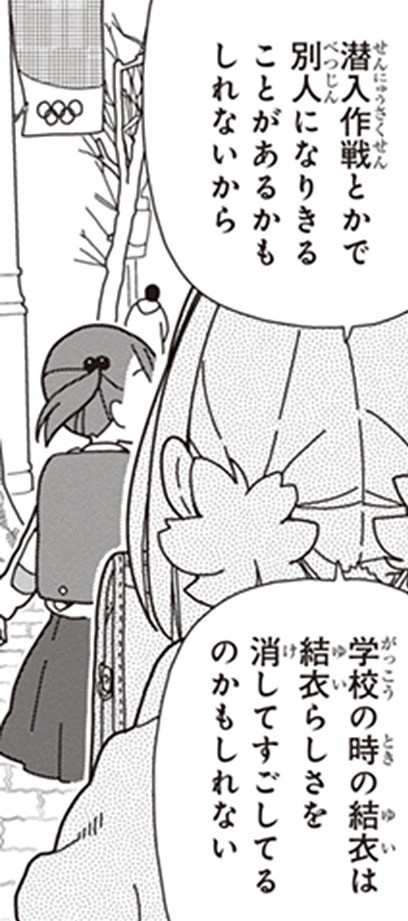
Sacchan and Kotoha notice Yui walking with a couple of her friends from school. The two decide to sneak and follow after them. Sacchan notices Yui doesn’t act quite the same with these friends as she does with Sacchan and Kotoha.
- さっちゃん:
- 「潜入作戦とかで別人になりきることがあるかもしれないから」
- “Maybe it's because she's in an undercover operation or something that she sometimes pretends to be a different person....”
- 「学校の時の結衣は結衣らしさを消してすごしてるのかもしれない」
- “...that Yui at school might be trying to hide her true self.”
小学校 (しょうがっこう) (Elementary school)
小学校 is elementary school, the first six years of school in Japan.
It combines 小 (small / elementary) with 学校 (school) to show an elementary-level school.
Example 1 of 2: A meal provided by the school with 給食
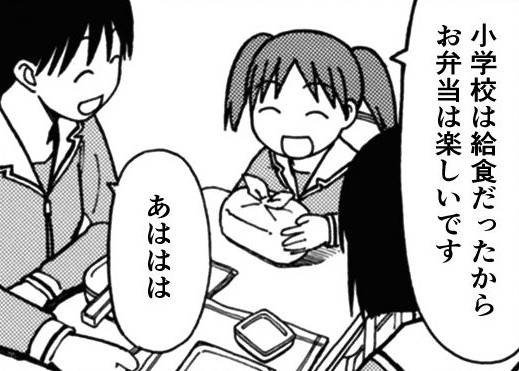
Chiyo is a child prodigy who’s skipped from elementary school to high school.
During her first day of class, Chiyo is invited by a couple of classmates to join them for lunch.
- ちよ:
- 「小学校は給食だったからお弁当は楽しいです」
- “Since we were provided lunches in elementary school, a boxed lunch is fun.”
Example 2 of 2: A run-down fishing village with 漁村
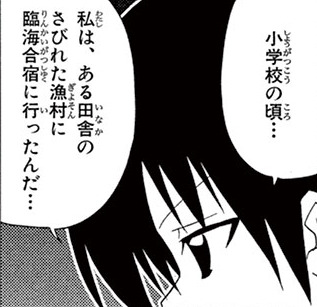
Hayate tried to slip away on an errand, but the Video Research Club girls stopped him. Their clubroom is gone, so they are starting over with new videos, and the first project is an “Ordinary Story Contest”. When Nagi asks what that is supposed to be, Risa says she’ll show them and starts telling a story.
- 理沙:
- 「小学校の頃…」
- “Back in elementary school...”
- 理沙:
- 「私は、ある田舎のさびれた漁村に臨海合宿に行ったんだ…」
- “I went to a seaside camp in a run-down fishing village out in the countryside...”
転校 (てんこう) (Changing schools)
転校 means transferring from one school to another.
It combines 転 (transfer) with 校 (school) to show a transfer to a different school.
Following Zen’s absence from school for a while, fights and disobedience have taken over the school grounds. When Lulu learns Zen hasn’t been at home either during this time, she travels to the mountains in search of him. After finding him, she explains the situation at school.
- ルル:
- 「転校してきてから慣れないことばかりで大変だったけど禅くんが学校を休んで学校の治安が悪くなって」
- “Since I transferred to this school, everything has been unfamiliar and difficult, but ever since you've started missing school, the school's security has gotten worse...”
Building Bigger Words
These patterns come up again and again in manga. Learn the pattern and you can read words you've never seen.
〜校生 こうせい (a student at a school)
高校生 is the most common 校 word missing from this page’s list. 生 marks a student, as it does in 学生.
- 高校生 こうこうせい high school student
- 転校生 てんこうせい transfer student
- 在校生 ざいこうせい current student
〜学校 がっこう (a school of a named kind)
- 中学校 ちゅうがっこう junior high school
- 高等学校 こうとうがっこう high school, in full
- 専門学校 せんもんがっこう vocational school
- 林間学校 りんかんがっこう school camp
〜校 こう (a school, by type or by whose it is)
After a describing word, 校 often stands in for 学校.
- 他校 たこう another school
- 女子校 じょしこう girls' school
- 予備校 よびこう cram school
- 母校 ぼこう the school you graduated from
校〜 こう (belonging to the school)
校舎, 校長, 校内, and 校則 above are built the same way.
- 校門 こうもん school gate
- 校庭 こうてい schoolyard
- 校歌 こうか school song
- 校章 こうしょう school badge
Where 校 Breaks the Pattern
The meaning above carries you through most words. These are the ones where it won't, or where the reading is a surprise.
- 校正 (こうせい) proofreading
This is the second meaning of 校, to compare and correct. A proofreader checks printed pages against the manuscript, and 校了 is the moment that checking is finished. You’ll meet these far less often than the school words. Across more than 11,000 manga volumes, each has about 70 sightings and 学校 has more than 27,000.
- 将校 (しょうこう) military officer
No school here. 校 also has the sense of a commander in a military camp, and this word for a commissioned officer uses it.
Check Yourself
What does 校 mean?
Schools and checking.
Read These Without Furigana
学校
小学校
転校
Work Out a New Word
You met 転校 above, and 生 marks a student. Read 転校生 in this line. Who is joining the class?
「今日からこのクラスに転校生が入る事になった」
Show the answer
転校生, a transfer student. “Starting today, a transfer student is joining this class.”
門 is a gate. What is 校門, and how do you read it?
「校門まで大きい氷持っていった方の勝ち。」
Show the answer
校門, the school gate. “Whoever gets the bigger piece of ice to the school gate wins.”