Spaces and intervals with 間
間 means the “space between” things (whether physical space or time), the “relationship” between people, and also a “pause” or “interval”, as in something occurring without interruption.
Etymology
This kanji is a variant of 閒, an ideogrammic compound comprised of 門 (gate) and 月 (moon). The image is of the moon seen through the opening of a gate, emphasizing the visible gap or opening between the doors.
Spaces and Intervals
人間 (Human being)
人間 means a human being or humanity. It can also refer to someone’s character or personality.
It combines 人 (person) with 間 (between) to show human beings living among one another.
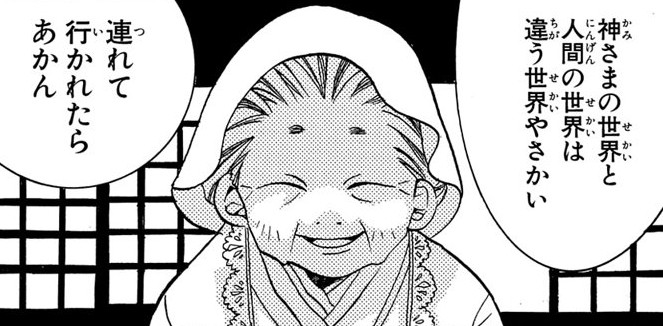
Alicia and Akari visit an island that’s modeled after part of Japan back on Earth. There, an elderly local woman tells the two of the fox spirits that visit the human world there. Akari is excited at the prospect of meeting one, but the old woman gives her a warning: on rare occasion, a fox will take a person back home with them.
- おばあさん:
- 「神さまの世界と人間の世界は違うやさかい」
- “The god world and the human world are different.”
- 「連れて行かれたらあかん」
- “Therefore, it is bad to follow along.”
昼間 (Daytime)
昼間 means daytime or the daylight hours.
It combines 昼 (daytime) with 間 (interval) to show the span of the day.
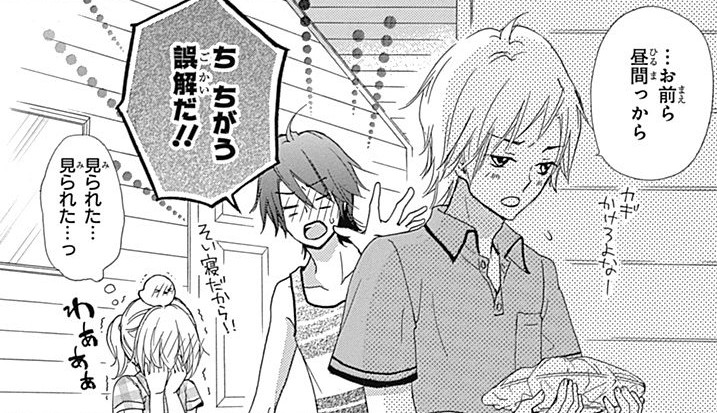
Since Hiyori is resting on a bed inside, Junpei takes a plate from the barbecue to her room. As he walks in, he finds Hiyori and Yuushin in what looks like a compromising position.
- 淳平:
- 「…お前ら昼間っから (カギかけるよなー)」
- “You guys, in the middle of the day… (At least lock the door!)”
- 結心:
- 「ち ちがう 誤解だ!!(そい寝だから!!)」
- “N—No! You've got it wrong!! (We were just lying down together!)”
- ひより:
- 「見られた… 見られた…っ」
- “We were seen… We were seen…!”
時間 (Time)
時間 means time, an amount of time, or the interval between two points.
It combines 時 (time) with 間 (interval) to show a measured span of time.
Example 1 of 5: Broadcasting music at school with 放送
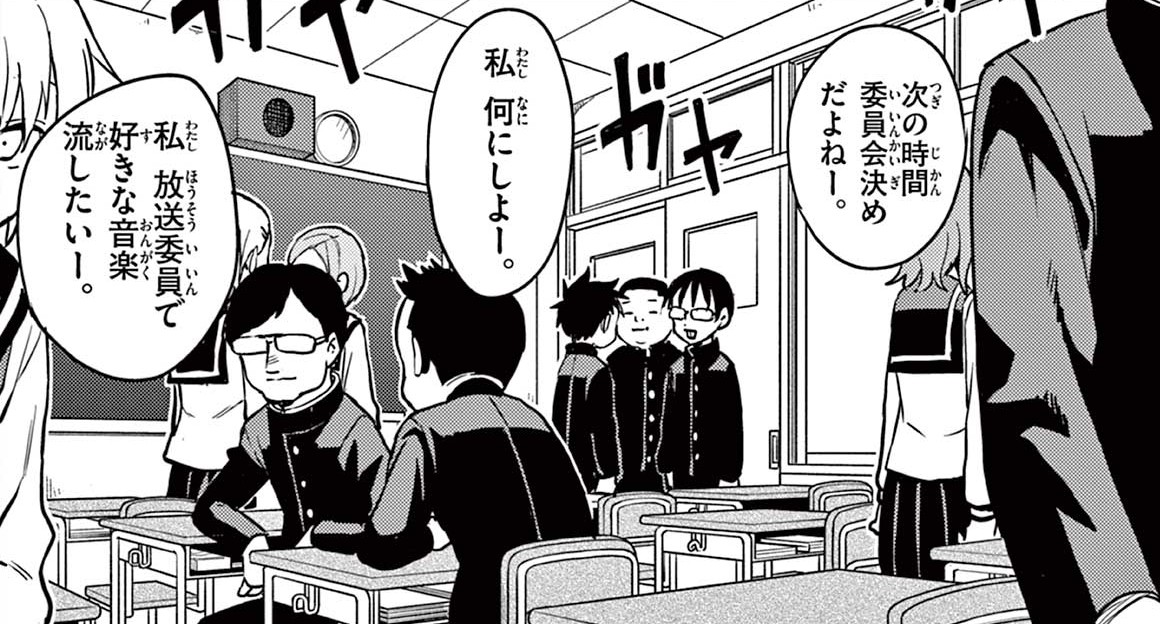
Nishika and Takagi’s class discusses what committees they plan to join.
- 生徒:
- 「次の時間委員会決めだよねー。」
- “Next up is deciding the committee schedule, right?”
- 生徒:
- 「私 何にしよー」
- “What should I pick?”
- 生徒:
- 「私 放送委員で好きな音楽流したいー。」
- “I want to play my favorite music as a member of the broadcasting committee.”
Example 2 of 5: Coming all the way out here with 足を運ぶ
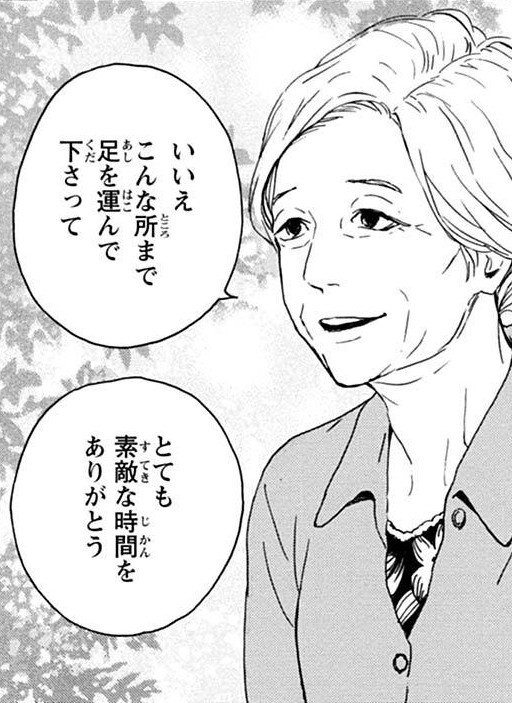
As Suwa and his friends leave Kakeru’s grandmother’s house, Suwa apologizes for the bother.
- おばあさん:
- 「いいえ こんな所まで足を運んで下さってとても素敵な時間をありがとう」
- “No, thank you very much for coming all the way here and having such a wonderful time.”
Example 3 of 5: Hidden behind the short hand with 短針
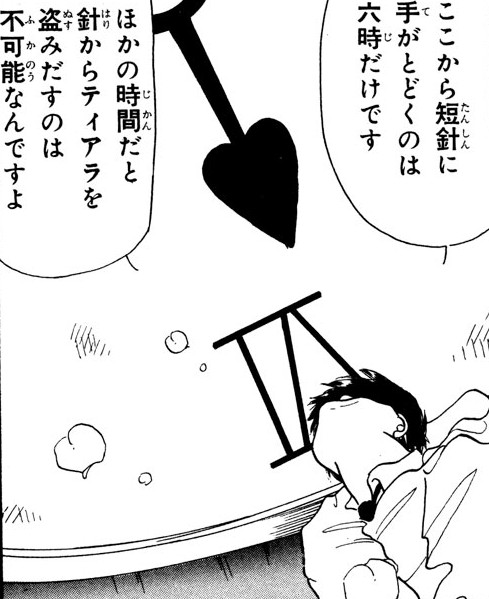
Asuka Jr. is tasked with guarding a jeweled tiara, which Saint Tail has stated her intention to steal. The owner tells Asuka Jr. it’s been hidden behind the short hand on a clock tower, so Asuka Jr. waits below the face of the clock for Saint Tail’s arrival. He tells the owner that Saint Tail will likely arrive precisely at 6 o’clock.
- アスカ Jr.:
- 「ここから短針に手がとどくのは六時だけです」
- “The hour hand is only within reach from here at six o'clock.”
- 「ほかの時間と針からティアラを盗みだすのは不可能なんですよ」
- “At any other time, it would be impossible to steal the tiara from the hand, you see.”
Example 4 of 5: Never mind the time with いいから
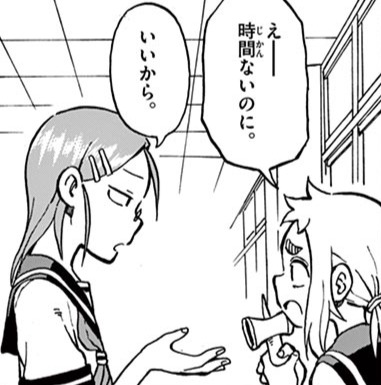
Yukari sees Mina with a kendama while between classes. She tells Mina they need to get to their next class, but Mina has decided not to head to the classroom until she successfully gets the ball onto the spike. Yukari tells Mina to hand it over to her to try.
- ミナ:
- 「えーーー 時間ないのに。」
- “No way... I don't have time.”
- ユカリ:
- 「いいから。」
- “Never mind that.”
Example 5 of 5: No time to return to headquarters with 本部
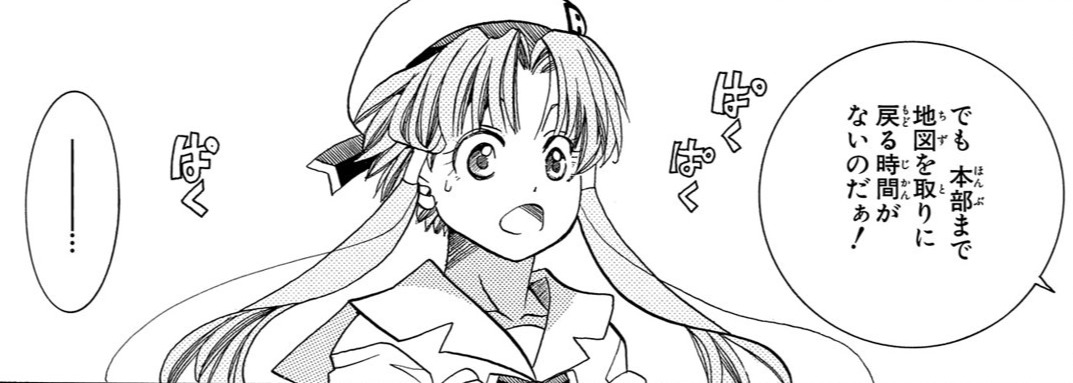
Akari encounters Woody while he’s out on a delivery run. He stopped to show off for some kids, but in the process, he seems to have lost his city map, and he has a terrible sense of direction. Akari asks if he has the delivery addresses, which he says he does.
- ウッディー:
- 「でも 本部まで地図を取りに戻る時間がないのだぁ!」
- “But I don't have time to go back to headquarters to get a map!!”