Strangeness and wonder with 奇
奇 represents something that is different from the norm or an unusual state.
Etymology
This kanji is pictographic-phonetic compound, combining 大 (a large person) and 可 (to bend) for the sound.
Surprises
奇襲 (Surprise attack)
奇襲 means a surprise attack made at an unexpected time or place.
It combines 奇 (unusual) with 襲 (attack) to show an unexpected attack.
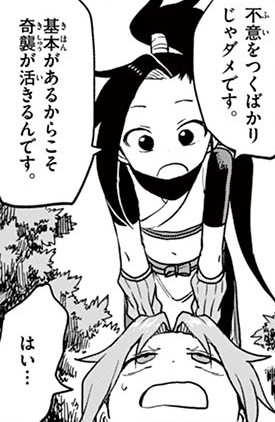
During a training session, Tsubaki quickly subdues Asagao. Sazanka uses this opportunity to launch a surprise attack, only for Tsubaki to anticipate it and take her down as well.
- ツバキ:
- 「不意をつくばかりじゃダメです。」
- “You can't rely just on surprise attacks.”
- 「基本があるからこそ奇襲が活きるんです。」
- “It's precisely from having fundamentals that surprise attacks become effective.”
- サザンカ:
- 「はい…」
- “Yeah...”
Wonders
奇遇 (Fortuitous meeting)
奇遇 means a chance encounter or strange coincidence.
It combines 奇 (strange) with 遇 (encounter) to show a remarkable chance meeting.
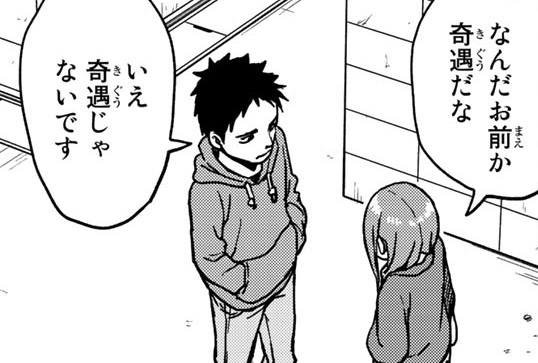
On her way home from grocery shopping, Urushi sees Ayumu from shogi club at school.
- うるし:
- 「なんだお前か 奇遇だな」
- “Oh, it's you. What a coincidence.”
- 歩:
- 「いえ 奇遇じゃないです」
- “No, it's not a coincidence.”