Strength and force with 強
The kanji 強 means strong or powerful.
Etymology
This kanji isa phono-semantic compound comprised of 虫 (insect) as the semantic component and 弘 as the phonetic component (キョウ).
Etymology Research
Kanjipedia, citing 『角川新字源 改訂新版』, analyzes 強 as a phono-semantic compound: 虫 supplies the semantic element and 弘 supplies the sound. The same account says that the character originally denoted a grain insect and was later used in the sense of 彊, strong. This is a published dictionary analysis, not a settled paleographic conclusion. 漢字ペディア, 強
The Shuowen tradition gives the short gloss 強, 蚚也。从虫, 弘聲, and records 𧖑 as a 籒文 form made from 䖵 and 彊. The accompanying Xu Kai note questions the analysis, saying that 弘 and 強 do not have close sounds and that the Qin inscription appears to use 口. CUHK reproduces both passages. The gloss 蚚 refers to a grain insect, often identified as a rice or grain weevil, but grain insect is safer than assigning a precise modern species. CUHK, 強, Chinese Text Project, 說文解字: 虫部
CUHK’s paleographic account is cautious. It says the bronze form is unclear, while Warring States Qin slips and seals are described as containing 弓, 口, and 虫. Its entry does not display an oracle-bone form. The database also treats 彊 as an early form associated with field boundaries and says that 彊 was later borrowed for the strong sense. Kanjipedia describes the relationship in the other direction, saying that 強 came to be used for the 彊 sense. The sources therefore support a historical relationship, but not a settled direction of borrowing. CUHK, 強, CUHK, 彊, 漢字ペディア, 強
The visible 弓 and the published explanation that links 強 with a strong bow or bowstring can remain a memory aid, but the sources do not establish 弓 as the original semantic component. The disputed 弘 analysis also does not by itself explain the modern Japanese readings. These accounts concern the Chinese character; the origins of native Japanese words written with 強 remain separate questions. 小学館, 普及版字通 via 強, CUHK, 弘
Degrees Of Strength
強度 (Strength)
強度 is how strong something is, such as how well a material holds up against force, or the intensity of a feeling or effect.
It combines 強 (strong) with 度 (degree) to show a degree of strength.
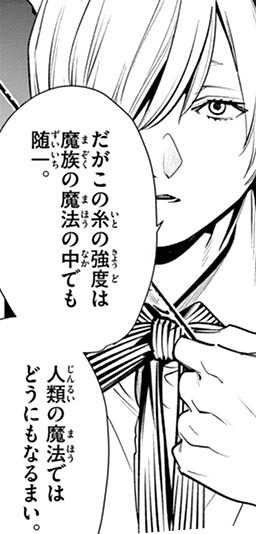
The demon Draht has slipped into the town jail where Frieren is held, intending to kill her. He wrapped invisible threads of mana around her neck and pulled to behead her, but she blocked the cut by concentrating her mana in her neck. Draht admits she kept her cool and warns that an ordinary mage would have lost their head before realizing what was happening.
- ドラート:
- 「だがこの糸の強度は魔族の魔法の中でも随一。」
- “But this thread is stronger than anything else in demon magic.”
- 「人類の魔法ではどうにもなるまい。」
- “Human magic won't be able to do a thing against it.”
Study and Effort
勉強 (Study)
勉強 refers to learning academic subjects or skills, or to devoting oneself wholeheartedly to a task.
It combines 勉 (exert oneself) with 強 (force / strength) to show driving oneself through effort.
Example 1 of 3: An all-around athlete with 万能

Urushi asks Rin about what Ayumu was like in middle school.
- うるし:
- 「真面目だけど少し抜けてていつも真剣で勉強苦手でスポーツ万能か」
- “Serious but a bit absent-minded, always earnest, struggles with academics, but excels at sports, huh?”
Example 2 of 3: Came to be studying with us with 〜ことになる
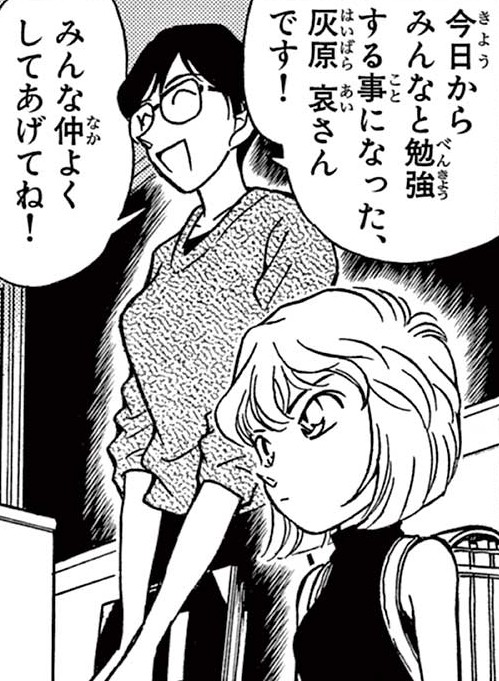
A new student joins Conan’s elementary school classroom. The teacher introduces her.
- 先生:
- 「今日からみんなと勉強する事になった、灰原 哀さんです!」
- “This is Ai Haibara. It came to be that she'll be studying with us starting today.”
- 「みんな仲良くしてあげてね!」
- “Everyone be friendly with her!”
Example 3 of 3: Studying classical Japanese with 古文

Following a midterm exam, Yomi asks Tomo how it went.
- とも:
- 「古文はなんのために勉強するの?」
- “What's the point of studying classical Japanese?”
Powerful People and Opponents
強者 (Strong contender)
強者 refers to someone who excels in strength, ability, or power, or who is in a position of strength.
It combines 強 (strong) with 者 (person) to show a strong or formidable person.

Cocoa inquires about the board and pieces sitting in front of Chino. Chino says it’s chess and gives a further explanation.
- チノ:
- 「この温泉は強者が集まるのでおじいちゃんは白熱してました」
- “Grandpa would get excited because strong players gather at this hot spring spa.”
- ココア:
- 「温泉に浸かりながらチェス出来るのっていいねー」
- “It's nice being able to play chess while soaking in the hot spring.”
Firmness and an Unyielding Attitude
強い (Strong)
強い describes superior strength or skill, physical or mental resilience, or an extreme degree or level of something.
Example 1 of 3: Cost to ride the train with 電車
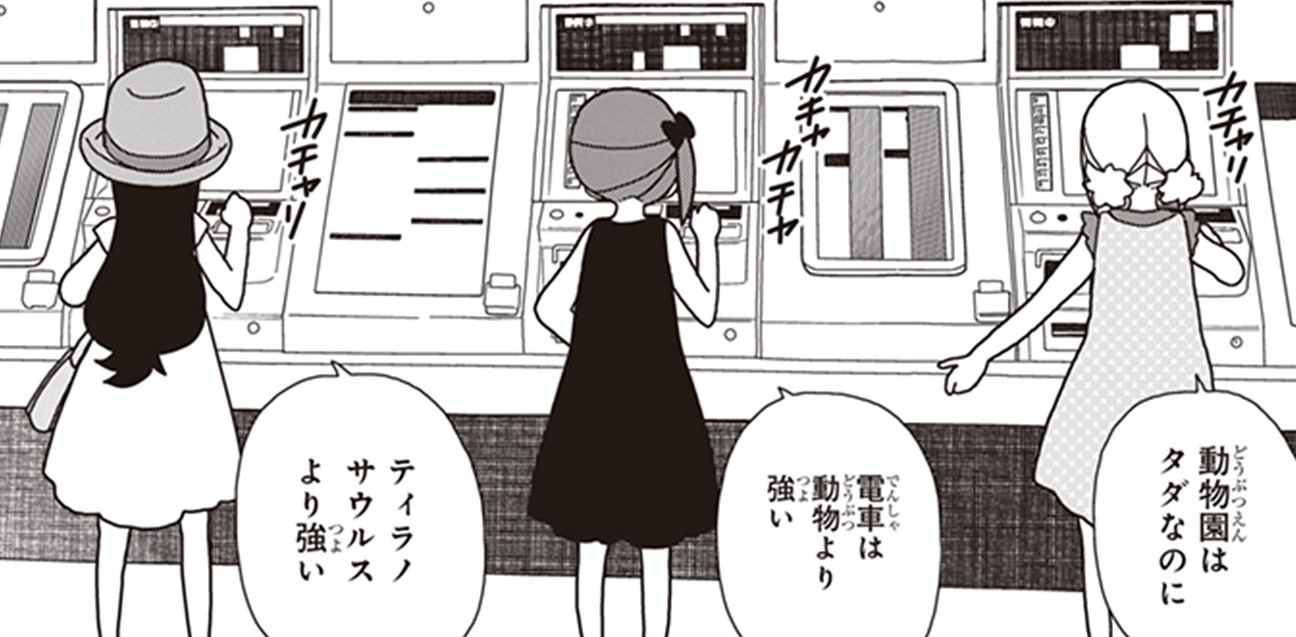
Yui and her friends get permission to ride the train to continue their search for the legendary giant robot. Tickets are listed as 70 yen for children.
- さっちゃん:
- 「動物園はタダなのに」
- “Even though the zoo is free...”
- 結衣:
- 「電車は動物より強い」
- “Trains are stronger than animals.”
- 琴葉:
- 「ティラノサウルスより強い」
- “Stronger than a Tyrannosaurus.”
Example 2 of 3: Not as good as you say with 口でいうほど〜ない
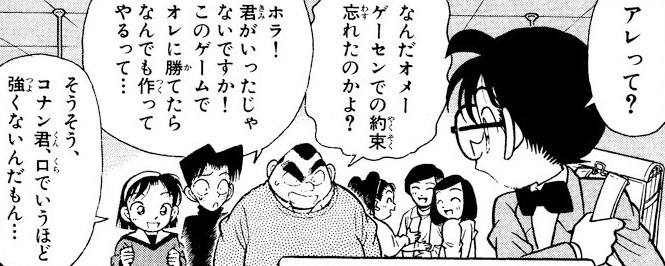
At Teitan Elementary, Genta asks Conan whether the thing he promised them should be ready by now.
- コナン:
- 「アレって?」
- “What thing?”
- 元太:
- 「なんだオメー ゲーセンでの約束忘れたのかよ?」
- “What, you forgot the promise you made at the arcade?”
- 光彦:
- 「ホラ! 君がいったじゃないですか! このゲームでオレに勝てたらなんでも作ってやるって…」
- “Come on! You said it yourself! 'If you can beat me at this game, I'll make you anything you want...'”
- 歩美:
- 「そうそう、コナン君、口でいうほど強くないんだもん…」
- “That's right. Because you're not as good as you said you were, Conan...”
Example 3 of 3: Strong like a lion with 〜みたい

After a misunderstanding brings Cocoa and her friends to the teahouse where Syaro works, the group stays to have some tea.
- ココア:
- 「ライオンみたいに強くなれるよ!」
- “You'll be able to become strong like a lion!”
- リゼ:
- 「たんぽぽって意味分かってないな」
- “You don't know what “dandelion” means, do you?”