Tea and tea culture with 茶
茶 means tea, including the plant, its leaves, and the drink.
- Grade 2
- JLPT N4 (estimate)
- WaniKani level 6
- 9 strokes
Words with 茶
- Tea Drinks
- お茶 おちゃ Tea
- 茶 ちゃ Tea
- 紅茶 こうちゃ Black tea
- 抹茶 まっちゃ Green tea
- 緑茶 りょくちゃ Green tea
- Tea Spaces
- Tea Culture
- 茶道 さどう Tea ceremony
- お茶する おちゃする To have tea
- Tea Utensils
- 茶碗 ちゃわん Tea bowl
- Brown Color
- Tea Ingredients
- 茶葉 ちゃば Tea leaves
The bold kana are the part 茶 contributes. Words in a dashed box have no manga example yet.
How to Read 茶
ちゃ almost everywhere. さ is found in 喫茶店, 茶道, and a few other set words.
茶 also stands for brown, the color of brewed tea.
Etymology
茶 is a plant character built with 艹 (grass) over a sound-bearing element related to 余. Its oldest use centers on the tea plant and leaves prepared for drinking.
Tea Drinks
お茶 (おちゃ) (Tea)
お茶 is tea, especially Japanese green tea. It can also mean taking a break with a drink.
Example 1 of 2: Hot tea after a rainy grocery run with お茶を淹れる
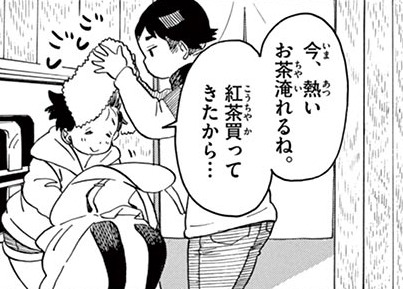
Kiyo and Riko come home from a grocery run in the cold rain. Kiyo is relieved that the groceries in her backpack stayed dry, but she is soaked through herself, so Riko dries her hair with a towel.
- 理子:
- 「今、熱いお茶淹れるね。紅茶買ってきたから…」
- “I'll make you some hot tea right now. I picked up some black tea, so...”
Example 2 of 2: Kindred spirits in drinking tea with 気が合う
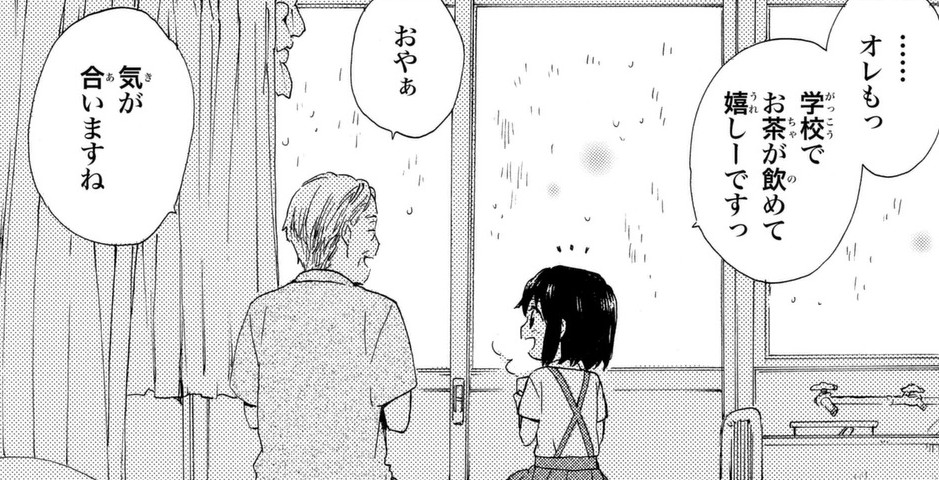
Hinata escorts a classmate to the school nurse. There, she meets an elderly man sipping tea. Seeing her interest, the old man offers her a cup.
- 日向:
- 「……オレもっ 学校でお茶が飲めて嬉しーですっ」
- “It also makes me happy when I can drink tea at school.”
- おじいさん:
- 「おやぁ 気が合いますね」
- “Oh, we're kindred spirits, huh?”
紅茶 (こうちゃ) (Black tea)
紅茶 means black tea, named for the reddish color of the brewed drink.
It combines 紅 (crimson) with 茶 (tea) to show a red-colored tea.
Example 1 of 2: Another round of tea with おかわり
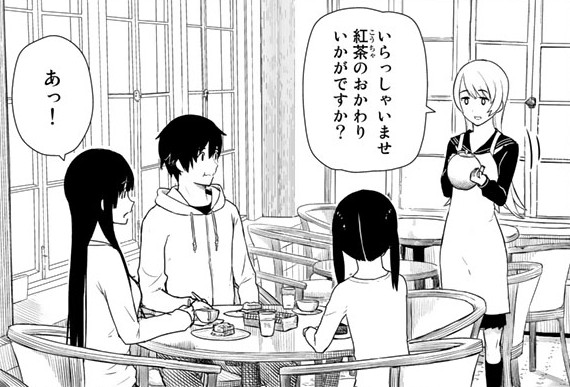
Makoto and her cousins visit a trendy witch-owned café. As the trio chats over tea and cake, the café’s owner and her daughter, Anzu, return home. Anzu goes out to greet the guests.
- 杏子:
- 「いらっしゃいませ。紅茶のおかわりいかがですか?」
- “Welcome. Can I offer you some more tea?”
Example 2 of 2: Hot tea after a rainy grocery run with お茶を淹れる
Kiyo and Riko come home from a grocery run in the cold rain. Kiyo is relieved that the groceries in her backpack stayed dry, but she is soaked through herself, so Riko dries her hair with a towel.
- 理子:
- 「今、熱いお茶淹れるね。紅茶買ってきたから…」
- “I'll make you some hot tea right now. I picked up some black tea, so...”
抹茶 (まっちゃ) (Green tea)
抹茶 is a finely powdered green tea whisked with hot water or used to flavor foods and sweets.
It combines 抹 (rub into powder) with 茶 (tea) to show powdered tea.
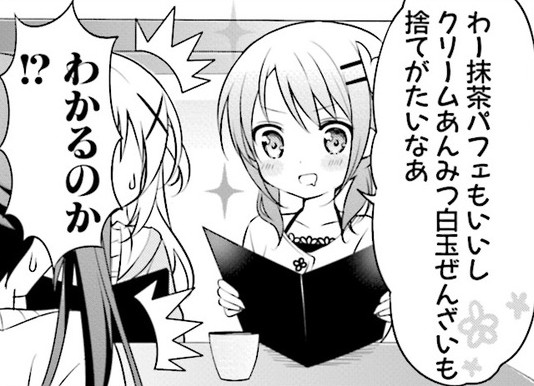
Visiting her new friend’s family’s café, Cocoa ponders over which menu item to order.
- ココア:
- 「わー抹茶パフェもいいし クリームあんみつ白玉ぜんざいも 捨てがたいなあ」
- “Wow, the green tea parfait is good, but the cream anmitsu and dumpling red bean soup are difficult to pass on.”
- リゼ:
- 「わかるのか!?」
- “You understand that!?”
Tea Spaces
喫茶店 (きっさてん) (Café)
喫茶店 means a café or Japanese-style coffeehouse serving drinks and light food.
It combines 喫 (consume), 茶 (tea), and 店 (shop) to show a shop for drinking tea or coffee.
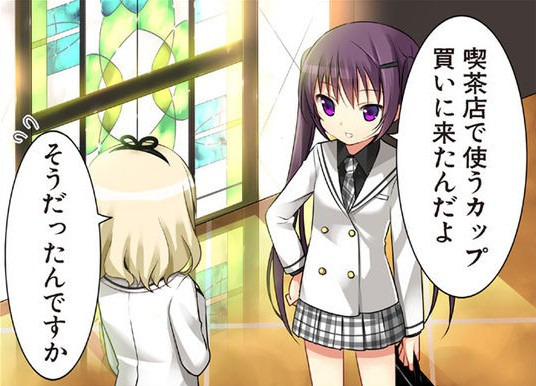
Rize explains to Syaro why she and her friends are at the store.
- リゼ:
- 「喫茶店で使うカップ買いに来たんだよ」
- “We came to buy cups to use at the café.”
- シャロ:
- 「そうだったんですか」
- “Oh, I see.”
茶屋 (ちゃや) (Teahouse)
茶屋 means a teahouse, tea shop, or tea dealer. In Kyoto’s geisha districts, it refers to an establishment that arranges banquets with maiko and geiko.
It combines 茶 (tea) with 屋 (shop or building) to show a teahouse or tea shop.
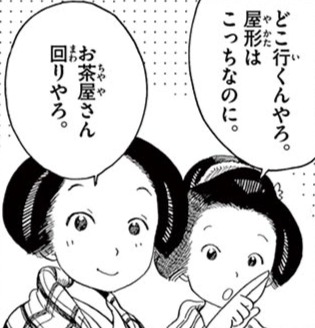
A couple of maiko see Momohana leave a shop and head in the other direction.
- まいこ1:
- 「どこ行くんやろ。屋形はこっちなのに。」
- “I wonder where she's going. The lodge is this way, though.”
- まいこ2:
- 「お茶屋さん回りやろ。」
- “She's probably doing the teahouse rounds.”
Tea Culture
お茶する (おちゃする) (To have tea)
お茶する is to stop somewhere for tea, coffee, or a light snack and chat.
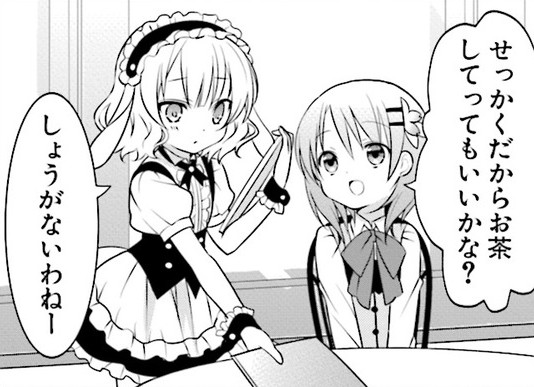
Following a misunderstanding, Cocoa and her friends ended up at the tea house where Syaro works.
- ココア:
- 「せっかくだからお茶してってもいいかな?」
- “Since we have the chance, would it be okay if we had some tea ?”
- シャロ:
- 「しょうがないわねー」
- “I guess it can't be helped.”
Brown Color
茶髪 (ちゃぱつ) (Brown hair)
茶髪 is hair dyed or bleached brown, or brown hair in general.
It combines 茶 (brown) with 髪 (hair) to show brown hair.
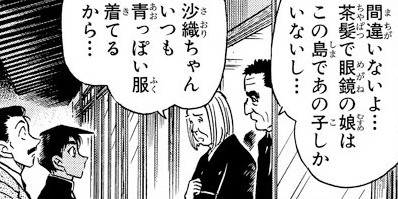
Naoko has been murdered during Sumi’s wake, and Kogoro tells the islanders that the killer took her Dugong Arrow, a sacred arrow from the island’s festival. Saori is missing, and she had also said she lost her arrow, so she may have been killed too. Then an elderly woman says she saw Saori near the Mermaid Falls on the morning of the festival, and other villagers say they spotted her there as well. Heiji asks whether it was really Saori.
- お爺さん:
- 「間違いないよ… 茶髪で眼鏡の娘はこの島であの子しかいないし…」
- “It was her, all right... She's the only girl on this island with brown hair and glasses...”
- お婆さん:
- 「沙織ちゃんいつも青っぽい服着てるから…」
- “And Saori always wears bluish clothes...”
茶色っぽい (ちゃいろっぽい) (Brownish)
茶色っぽい describes a color close to brown, with a brown tint.
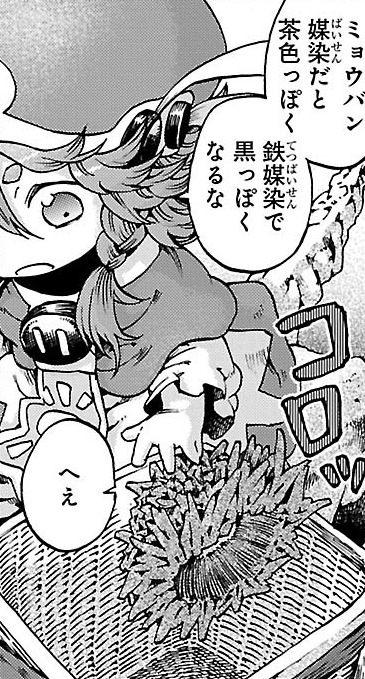
Mikochi is making Sen new clothes and thinks darker colors would suit her, so she sends Hakumei and Sen to gather dye materials such as sawtooth oak. Hakumei shows Sen that sawtooth oak is just acorns. When Sen asks whether acorn caps can really dye cloth, Hakumei says yes. You dye with the shells, caps, and twigs, then finish the cloth in a mordant, a solution that fixes the color.
- ハクメイ:
- 「ミョウバン媒染だと茶色っぽく 鉄媒染で黒っぽくなるな」
- “With an alum mordant, it turns brownish, and with an iron mordant, it turns blackish.”
- セン:
- 「へえ」
- “Huh.”
Building Bigger Words
These patterns come up again and again in manga. Learn the pattern and you can read words you've never seen.
茶〜 ちゃ (of tea)
- 茶菓子 ちゃがし sweets served with tea
- 茶室 ちゃしつ tea room
- 茶会 ちゃかい tea gathering
- 茶漬け ちゃづけ rice with tea poured over it
〜茶 ちゃ (a kind of tea)
- 麦茶 むぎちゃ barley tea
- ウーロン茶 ウーロンちゃ oolong tea
茶 with no tea ちゃ
- 無茶 むちゃ reckless, unreasonable
- 無茶苦茶 むちゃくちゃ absurd, a mess
- 滅茶苦茶 めちゃくちゃ a total mess
Where 茶 Breaks the Pattern
The meaning above carries you through most words. These are the ones where it won't, or where the reading is a surprise.
- 茶番 (ちゃばん) farce
A staged scene that fools nobody.
- 日常茶飯事 (にちじょうさはんじ) an everyday occurrence
茶 is さ here. The thing is as ordinary as tea and rice.
- 茶々 (ちゃちゃ) a flippant interruption
茶々を入れる is to butt in with jokes while someone is talking.
Check Yourself
What does 茶 mean?
Tea and tea culture.
Read These Without Furigana
お茶
紅茶
抹茶
喫茶店
茶屋
お茶する
Work Out a New Word
No tea is involved. Read 無茶 in this line. What kind of work is the speaker asking about?
「無茶な仕事を振ってきたりしてませんか?」
Show the answer
無茶, unreasonable. “They aren’t dumping unreasonable jobs on you, are they?”
紅茶 is こうちゃ. Is 喫茶店 read きっちゃてん or きっさてん?
Show the answer
喫茶店, a café. 茶 is さ in a few set words.