Vehicles and wheels with 車
車 names a wheeled vehicle and also a wheel or rotating mechanism.
Etymology
This kanji is a pictograph of a wheeled cart seen from above.
Etymology Research
車 began as a pictograph of a wheeled vehicle, not as a combination of separate meaning and sound components. Kanjipedia describes its model as a horse-drawn cart. CUHK shows oracle-bone and bronze forms whose details vary: some depict wheels, carriage body, axle, yoke, shafts, and crossbar. Bronze inscriptions usually turn the drawing upright; the later written form retains that orientation in a simplified shape. Kanjipedia; CUHK Multi-function Chinese Character Database.
The vehicle sense is attested in oracle-bone inscriptions, including an entry recording “six vehicles” and another with “vehicles and horses.” Bronze inscriptions also use 車 for vehicles, including war chariots. The Shuowen Jiezi later defines 車 as a general name for carriage body and wheels, confirming that the written sign meant the vehicle as a whole. Modern Japanese also applies 車 to the wheel and to rotating devices, as in 歯車; the sources checked do not date each step of that widening. CUHK; Jitsū on Kotobank; Kanjipedia.
Vehicles and Places for Them
車 (Vehicle or wheel)
車 means a wheeled vehicle, especially a car. It can also mean a wheel or rotating mechanism.
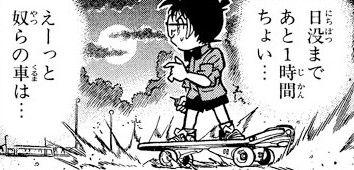
During a game of hide-and-seek in the park, Ayumi hides in the trunk of a car only to fall asleep. Since the car drove off a while ago, Conan plans to track Ayumi’s communication badge with his tracking glasses and follow the vehicle on his turbo-engine skateboard. Since the engine is solar-powered, he can only use it during sunlight.
- コナン:
- 「日没まであと1時間ちょい…」
- “Just over an hour until sunset.”
- 「えーっと 奴らの車は…」
- “Let's see, their car is...”
自動車 (Automobile)
自動車 is a car or other motor vehicle. It is the formal, general word, while 車 is used in everyday speech.
It combines 自動 (self-moving) with 車 (vehicle) to show a vehicle that moves under its own power.
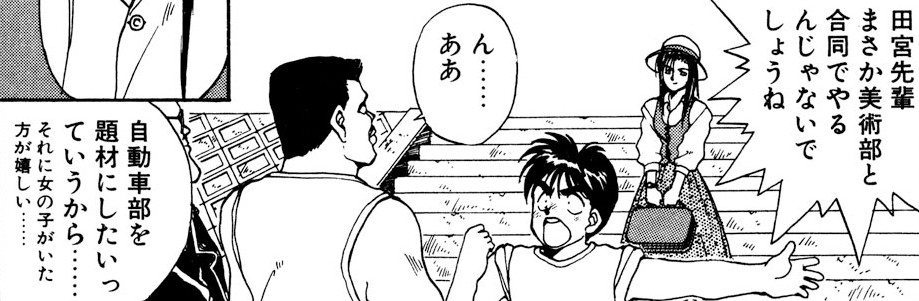
Kei’ichi is excited to spend four days at the beach with his university automobile club and Belldandy. His mood changes when he hears Sayoko call out to him.
- 螢一:
- 「田宮先輩まさか美術部と合同でやるんじゃないでしょうね」
- “Tamiya, don't tell me we're doing this with the art club!”
- 田宮:
- 「ん……ああ。自動車部を題材にしたいっていうから…… それに女の子がいた方が嬉しい…」
- “It's because they said they wanted to use the automobile club as a subject... Additionally, I'm happier having girls here.”
盗難車 (Stolen car)
盗難車 means a stolen car, a vehicle reported or known to have been stolen.
It combines 盗難 (theft) with 車 (car) to name a car taken by theft.
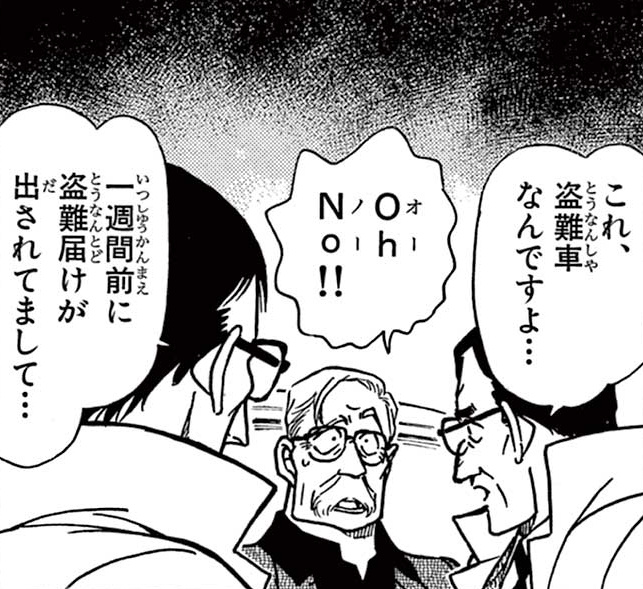
James Black leaves a show and returns to his car. Before he can get in, two men stop him. They say they are police officers and ask whether the car is his. James tells them it is a rental.
- Man 1:
- 「これ、盗難車なんですよ…」
- “This is a stolen car...”
- James:
- 「Oh no!!」
- “Oh no!!”
- Man 2:
- 「一週間前に盗難届けが出されてまして…」
- “A theft report was filed a week ago...”
Rail Vehicles
電車 (Train)
電車 means an electric train, especially an everyday passenger train.
It combines 電 (electric) with 車 (vehicle) to show a vehicle powered by electricity.
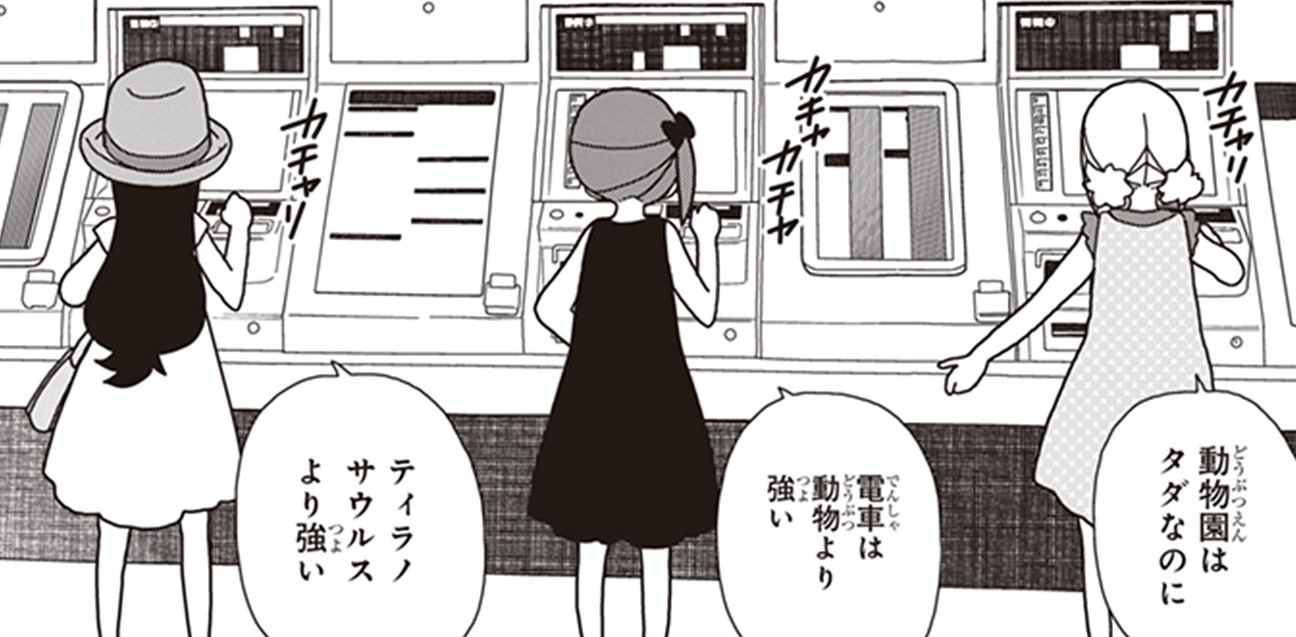
Yui and her friends get permission to ride the train to continue their search for the legendary giant robot. Tickets are listed as 70 yen for children.
- さっちゃん:
- 「動物園はタダなのに」
- “Even though the zoo is free...”
- 結衣:
- 「電車は動物より強い」
- “Trains are stronger than animals.”
- 琴葉:
- 「ティラノサウルスより強い」
- “Stronger than a Tyrannosaurus.”
Clubs
自動車部 (Automobile club)
自動車部 means an automobile club or department. In the example, it is Keiichi’s university club centered on cars.
It combines 自動車 (automobile) with 部 (club) to name a car club.
Kei’ichi is excited to spend four days at the beach with his university automobile club and Belldandy. His mood changes when he hears Sayoko call out to him.
- 螢一:
- 「田宮先輩まさか美術部と合同でやるんじゃないでしょうね」
- “Tamiya, don't tell me we're doing this with the art club!”
- 田宮:
- 「ん……ああ。自動車部を題材にしたいっていうから…… それに女の子がいた方が嬉しい…」
- “It's because they said they wanted to use the automobile club as a subject... Additionally, I'm happier having girls here.”
Games
香車 (Lance (shogi))
香車 is the lance in shogi. It moves straight forward any number of unobstructed squares; it cannot move sideways or backward unless promoted.
It combines 香 (incense) with 車 (chariot) as the traditional name of a shogi piece.
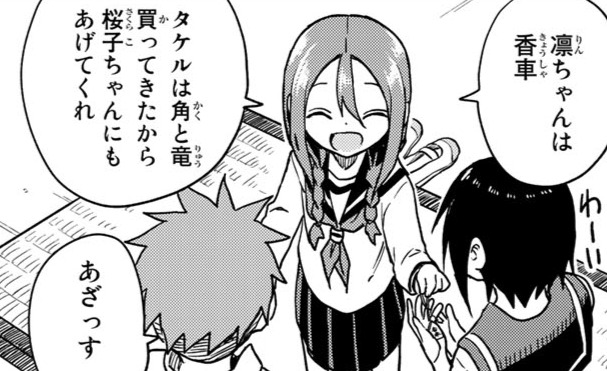
Urushi returns from her school trip with gifts for the underclassmen in the shogi club. First she presents the treats she bought for everyone, then she pulls out shogi piece keychains.
- うるし:
- 「凛ちゃんは香車」
- “Rin, this one's the lance.”
- 「タケルは角と竜買ってきたから桜子ちゃんにもあげてくれ」
- “Takeru, I bought a bishop and a dragon, so give one of them to Sakurako too.”
- タケル:
- 「あざっす」
- “Thanks.”