Beginnings and first times with はじめ
はじめ has two official spellings, and the choice comes down to time versus action. 初め and 初めて are about time or order: the first time something happens, or the early part of a period. 始める and 始まる are about action: starting something, or something getting under way.
The official guide defines 初め with 最初, “first”, and 始める with 開始する, “start”. That makes a rough test. If you could say 最初, write 初. If you could say 開始, write 始. “The beginning” can pass both, as the section on overlap below shows. Both are official, so they show up in formal writing as well as in manga. Same reading, different kanji explains where the official list comes from.
The Spellings at a Glance
| Spelling | Used for | Standing |
|---|---|---|
| 初め・初めて | the early part of a period; the first time | Official |
| 始め・始める | begin; the start of an activity; the origin | Official |
First Times with 初め and 初めて
初めて is “for the first time”, and 初め is the first part of something: 初めは, “at first”, 初めから, “from the start”, and 秋の初め, “early autumn”. Both are about where something falls in time or order, not about anyone starting anything.
Manga keep these apart from 始. In this site’s manga corpus, only two of nearly 2,000 kanji spellings of はじめての use 始, and 初めて会う, in all its forms, turns up more than 500 times without a single 始めて会う.
1 source
【初め・初めて】ある期間の早い段階。最初。先の方のもの。
初めはこう思った。秋の初め。年の初め。初めて聞いた話。初めてお目に掛かる。初めての経験。初めからやり直す。初めの曲の方がいい。初め, 初めて: an early stage of a period. The first. The one that comes earlier. "At first I thought this." "Early autumn." "The start of the year." "Something I'm hearing for the first time." "Meet someone for the first time." "A first experience." "Start over from the beginning." "I like the first song better."
Example 1 of 3: Merely by shaking hands with 握手
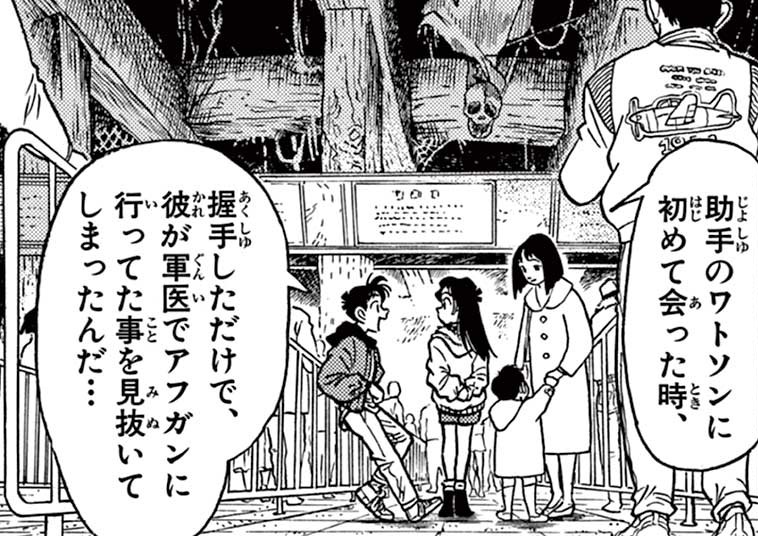
Shin’ichi treats Ran to a day at Tropical Land as a reward for winning the city karate tournament. As they wait in line for a ride on the roller coaster, Shin’ichi explains all the reasons why Sherlock Holmes was the greatest detective.
- 新一:
- 「助手のワトソンに初めて会った時、握手しただけで、彼が軍医でアフガンに行ってた事を見抜いてしまったんだ…」
- “The first time he met his assistant Watson, Holmes could tell just from a handshake that he was a military doctor who had been stationed in Afghanistan...”
Shin’ichi is telling Ran why Sherlock Holmes is the greatest detective. The first time Holmes met Watson, a handshake told him Watson was an army doctor back from Afghanistan. 初めて会った時 is “the first time he met him”.
Example 2 of 3: Something like shogi with 〜みたい
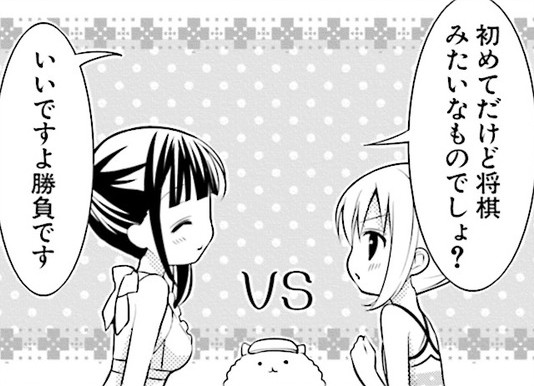
Chiya asks if she can play a game of chess with Chino.
- 千夜:
- 「初めてだけど将棋みたいなものでしょ?」
- “It's my first time, but it's something like shogi, right?”
- チノ:
- 「いいですよ勝負です」
- “All right. You're on.”
Chiya has never played chess, but she assumes it’s something like shogi. 初めてだけど is “it’s my first time, but”.
Example 3 of 3: Deep-sea fishing with 遠洋漁業
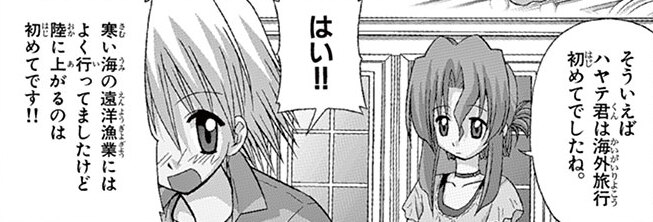
Over Golden Week, Hayate, Nagi, and Maria have come to the Aegean Sea on vacation. Hayate leans over the balcony railing, thrilled at the view. He has worked jobs among adults since he was a small child.
- マリア:
- 「そういえばハヤテ君は海外旅行初めてでしたね。」
- “Come to think of it, Hayate, this is your first trip abroad, isn't it?”
- ハヤテ:
- 「はい!!」
- “Yes!!”
- 「寒い海の遠洋漁業にはよく行ってましたけど陸に上がるのは初めてです!!」
- “I used to go out on deep-sea fishing trips in cold waters all the time, but this is my first time going ashore!!”
Maria remarks that this is Hayate’s first trip abroad. He agrees, then adds that he often went out on deep-sea fishing voyages, but this is his first time going ashore. 陸に上がるのは初めてです is “it’s my first time going ashore”.
Meeting Someone with 初めまして
初めまして, “nice to meet you”, takes 初, since you’re meeting someone for the first time. Manga often write it in kana, and はじめまして outnumbers 初めまして about 3:2 in this site’s manga corpus. Dictionaries also list 始めまして, but manga hardly use it: only two greetings in this site’s manga corpus, against nearly 900 written with 初.
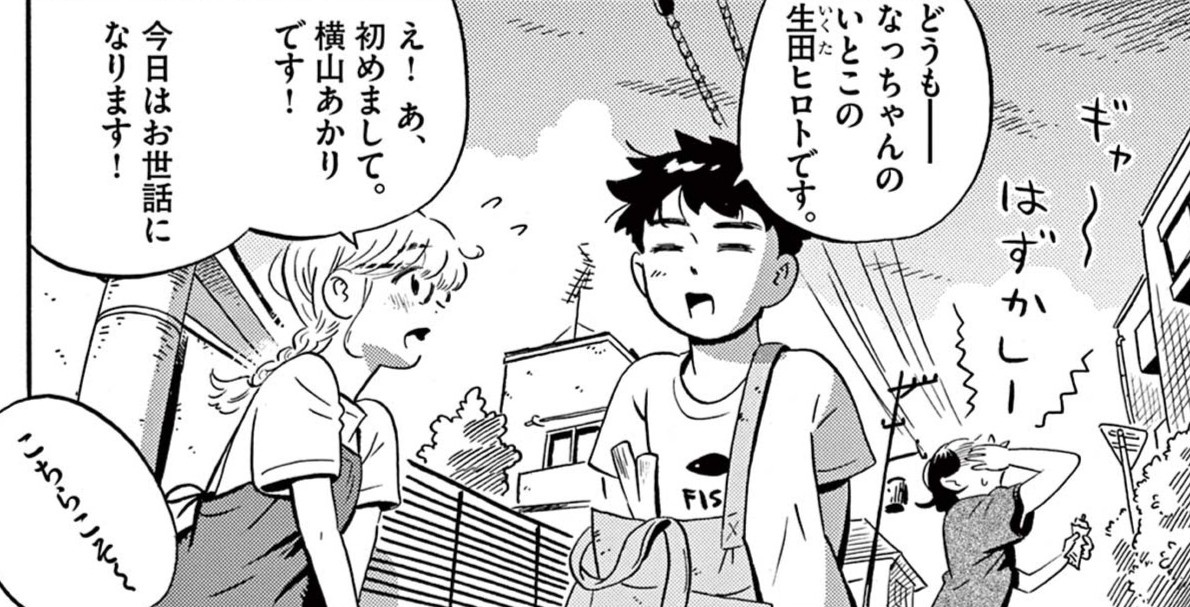
On his way home from buying groceries, Hiroto sees his cousin Natsumi cheering and dancing over a winning popsicle stick. While Natsumi agonizes over having been seen, Hiroto notices she’s brought a friend he hasn’t met.
- なつみ:
- 「ぎゃ〜 はずかしー」
- “Gah, how embarrassing!”
- ヒロト:
- 「どうもーーー なっちゃんのいとこの生田ヒロトです。」
- “Howdy. I'm Nacchan's cousin, Hiroto Ikuta.”
- あかり:
- 「え! あ、初めまして。横山あかりです!」
- “Oh, ah, pleased to meet you. My name's Akari Yokoyama!”
- 「今日はお世話になります!」
- “Thank you for having me today!”
- ヒロト:
- 「こちらこそ〜」
- “The pleasure is mine!”
Hiroto introduces himself to the friend his cousin Natsumi has brought along. Akari answers with 初めまして and her name, the standard way to greet someone new.
Starting Something with 始める and 始まる
始める is starting something, and 始まる is something getting under way. A class starts, a game starts, or someone takes up a new hobby. It’s the 始 of 開始, “start”, and 始業, “start of work”. 始まる has no 初 spelling, so in kanji it’s always 始.
After another verb’s stem, 〜始める means “start doing it”, as in 書き始める, “start writing”, and 降り始める, “start to rain”. Nouns built on it take 始 too, such as 手始め, “a starting point”, and 仕事始め, the start of work in the new year.
Example 1 of 3: Training so as to be able to swim with 〜ように
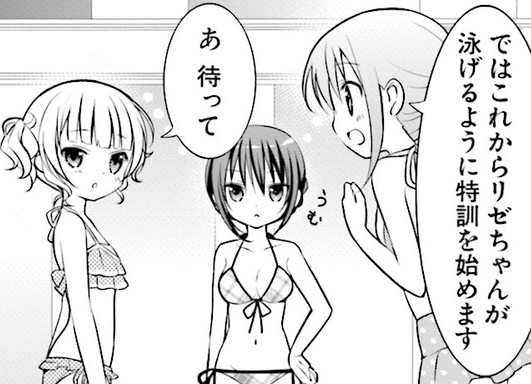
Cocoa and her friends visit an indoor hot spring. Rize admits she doesn’t know how to swim.
- ココア:
- 「ではこれからリゼちゃんが泳げるように特訓を始めます」
- “Now then, we're going to start special training so that Rize-chan can swim.”
- シャロ:
- 「あ 待って」
- “Ah, wait.”
Rize admits she can’t swim, so Cocoa announces a training session on the spot. 特訓を始めます is “we will now begin special training”.
Example 2 of 3: Distracted by test scores with 気が散る
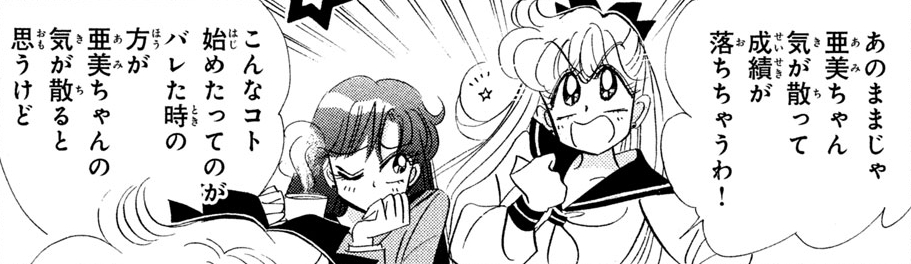
Ami is used to getting the top grade on mock exams, but when another name starts tying her scores, she begins to get flustered. Her friend Minako suggests they investigate the person behind the name, but Rei isn’t so sure.
- 美奈子:
- 「あのままじゃ 亜美ちゃん気が散って成績が落ちちゃうわ!」
- “The way things are, Ami-chan'll be distracted, and her grades will drop!”
- レイ:
- 「こんなコト 始めたってのがバレた時の方が亜美ちゃんの気が散ると思うけど」
- “I think Ami-chan will be more distracted when she finds out we've started something like this.”
Minako wants to investigate the person whose scores keep tying Ami’s. Rei thinks finding out they started snooping would distract Ami even more. こんなコト始めた is “started something like this”.
Example 3 of 3: A cleanup starting today with 始まる
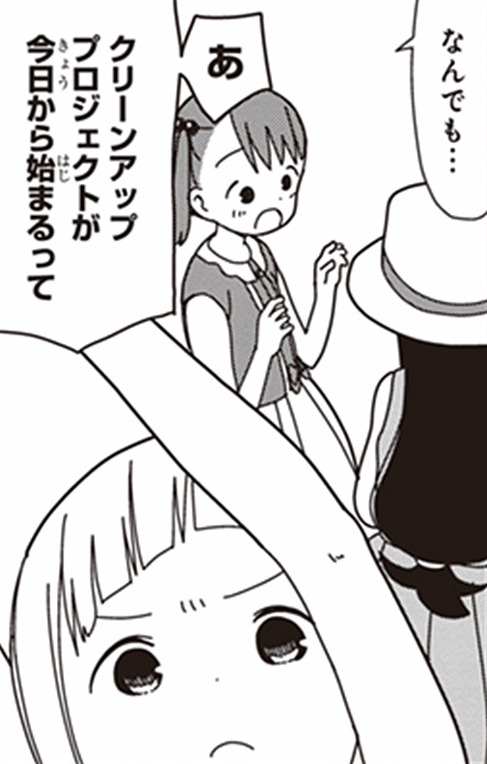
All over the neighborhood, Yui, Kotoha, and Sacchan keep finding passages marked off-limits that were open yesterday. They suspect the man who keeps chasing them out is hiding something, but every search turns up nothing. While Sacchan holds him off, Kotoha asks Yui whether anything else has changed since yesterday. Anything at all will do.
- 結衣:
- 「なんでも…」
- “Anything...”
- 「あ」
- “Oh!”
- 「クリーンアッププロジェクトが今日から始まるって」
- “They said the Cleanup Project starts today.”
Kotoha asks Yui what’s changed since yesterday, and Yui remembers some news: クリーンアッププロジェクトが今日から始まるって. With 始まる, the project itself is what starts: “the Cleanup Project starts today”.
Leading a List with をはじめ
〜をはじめ and 〜をはじめとする put one example at the head of a list, as in “the principal and all the staff”. The guide gives it 始, in the sense of the main one among many. It also says that in practice it’s often written in kana, and manga bear that out. In this site’s manga corpus, をはじめとする outnumbers を始めとする about 5:2.
1 source
「校長をはじめ,教職員一同……」などという場合の「はじめ」については,多くの人や物の中で「主たるもの」の意で「始」を当てるが,現在の表記実態としては,仮名で書かれることも多い。
For the はじめ in "the principal and all the teachers and staff", 始 is used in the sense of "the main one" among many people or things. In actual writing today, though, it is also often written in kana.
When the Two Overlap
“The beginning” can lean either way. The guide puts 初めからやり直す, “start over from the beginning”, under 初, since it goes back to the first point. It puts 始めと終わり, “the beginning and the end”, under 始, since it’s the start of something. Manga mostly write 初めから, but 始めから shows up too, at about one for every five with 初.
For “the first time”, though, write 初めて. Some dictionaries list 始めて as a variant, but the guide doesn’t, and manga almost never write it. Read a 始めて as the て form of 始める unless the context makes that impossible.
When はじめ Stays in Kana
Kana works for every はじめ, and the 2014 guide says its spelling examples don’t rule out writing a word in kana where it suits. Manga use kana most for はじめまして and をはじめ. They write はじめて for “the first time” too, though 初めて is far more common.
Check Yourself
Guess the Meaning from the Kanji
Each spelling's kanji points at one sense of はじめ・はじめて・はじめる. Say what each one means, then open it.
初め・初めて
the early part of a period; the first time始め・始める
begin; the start of an activity; the origin
Pick the Spelling
Each phrase has はじめ・はじめて・はじめる in kana. Decide which kanji fits, then open it.
秋のはじめ
秋の初め. 初め・初めて: the early part of a period; the first time.
仕事をはじめる
仕事を始める. 始め・始める: begin; the start of an activity; the origin.
はじめて会った日
初めて会った日. 初め・初めて: the early part of a period; the first time.
会がはじまる
会が始まる. 始め・始める: begin; the start of an activity; the origin.
仕事はじめ
仕事始め. 始め・始める: begin; the start of an activity; the origin.
Spell a Manga Line
Shin’ichi is explaining why Sherlock Holmes is the greatest detective. Which kanji fits はじめて?
「助手のワトソンにはじめて会った時、握手しただけで…」
Show the answer
初めて. Meeting Watson for the first time is about order in time, so it passes the 最初 test. In this site’s manga corpus, 初めて会う turns up more than 500 times without a single 始めて会う. “The first time he met his assistant Watson, just from a handshake…”
Rize has admitted she can’t swim, and Cocoa takes charge. Which kanji fits はじめます?
「ではこれからリゼちゃんが泳げるように特訓をはじめます」
Show the answer
始めます. Cocoa is starting an activity, so it passes the 開始 test. 特訓を始める is starting special training. “Now then, we’re going to start special training so that Rize-chan can swim.”
Akari is meeting her friend’s cousin Hiroto. Which kanji could はじめまして take, and what do manga do most often?
「え! あ、はじめまして。横山あかりです!」
Show the answer
初めまして, since you’re meeting someone for the first time. Manga write it in kana most often, about 3:2 over 初めまして, and this page is one of those. 始めまして is in dictionaries but almost never in manga. “Oh, ah, pleased to meet you. My name’s Akari Yokoyama!”
Yui remembers some news about the Cleanup Project. Which kanji fits はじまる, and why is there no choice to make?
「クリーンアッププロジェクトが今日からはじまるって」
Show the answer
始まる. 始まる is something getting under way, and it has no 初 spelling at all, so in kanji it’s always 始. “They said the Cleanup Project starts today.”