Going home and giving back with かえる
かえる and its partner かえす have two official spellings. 帰る is going home, or back to where you came from, and 帰す is sending someone home. 返る and 返す are things going back, like a borrowed book to its owner or a mind to its senses, and things flipping over, like a cup turned upside down. Manga also write 還る, an unofficial spelling for returning to where everything began, as in 土に還る, “return to the earth”.
A quick test: if someone is heading home, or back to where they set out from, write 帰. If a thing is handed back or put back, a state is restored, or a direction is reversed, write 返. Both are official, so they show up in formal writing as well as in manga. Same reading, different kanji explains where the official list comes from, and Changing and swapping with かえる and かわる covers 変える, 換える, 替える, and 代える.
The Spellings at a Glance
| Spelling | Used for | Standing |
|---|---|---|
| 返す・返る | give back or go back to the owner or the former state; turn over; do again | Official |
| 帰す・帰る | go home or back to where you came from; send someone home | Official |
| 還る | return to where everything began | Off-list |
An official spelling has its reading in the 常用漢字表, the government's list of kanji for general use. An off-list spelling uses a reading the list doesn't give that kanji, or a kanji that isn't on it. Newspapers avoid those spellings, but manga use them freely.
Going Home with 帰る and 帰す
帰る is going back to your home, or to the place you came from. 家に帰る is “go home”, 帰り道 is “the way home”, and お帰り is “welcome back”. 帰る is also used for simply leaving where you are, as in 客が帰る, “the guests leave”. 帰す is the transitive partner: sending or letting someone go home.
Bringing something home takes 帰 too, since you’re the one heading home. In this site’s manga corpus, 持ち帰る, “take home”, turns up hundreds of times, and 持ち返る never.
2 sources
【帰す・帰る】自分の家や元の場所に戻る。
親元へ帰す。故郷へ帰る。生きて帰る。帰らぬ人となる。帰り道。帰す, 帰る: go back to your own home or the place you came from. "Send someone home to their parents." "Go back to your hometown." "Come back alive." "Pass away," literally "become someone who won't come back." "The way home."
かえ・る〔かへる〕【帰る/▽還る】
[動ラ五(四)]《「返る」と同語源》
1 自分の家や、もといた場所に戻る。「郷里へ―・る」「まもなく―・ってくる」
2 今いる場所を離れて去る。「客が―・る」
3 野球で、走者が本塁を踏んで得点になる。「ヒットでランナーが―・る」かえる, written 帰る or 還る, with 還 outside the 常用漢字表 for this reading. A godan verb, from the same root as 返る. 1. Go back to your own home or the place you were before. "Go back to your hometown." "Will be back soon." 2. Leave the place you're in. "The guests leave." 3. In baseball, a runner touches home plate and scores. "The runner comes home on a hit."
Example 1 of 4: Until the fliers are distributed with 〜まで
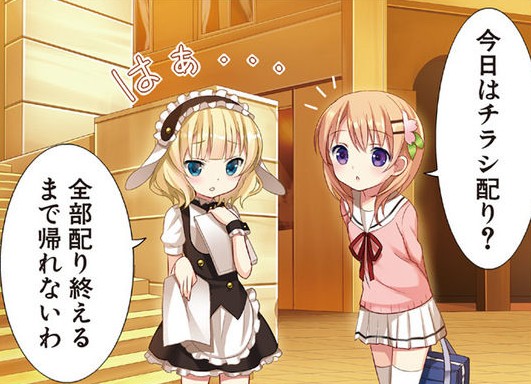
Cocoa encounters Syaro standing outside.
- ココア:
- 「今日はチラシ配り?」
- “You're handing out fliers today?”
- シャロ:
- 「全部配り終えるまで帰れないわ」
- “I can't go home until I finish handing out all of them.”
Cocoa runs into Syaro handing out fliers, and Syaro says she can’t go home until they’re all gone. 帰れない is the negative potential form, “can’t go home”.
Example 2 of 4: Experience returning home for a backpack with 〜た+ことがある
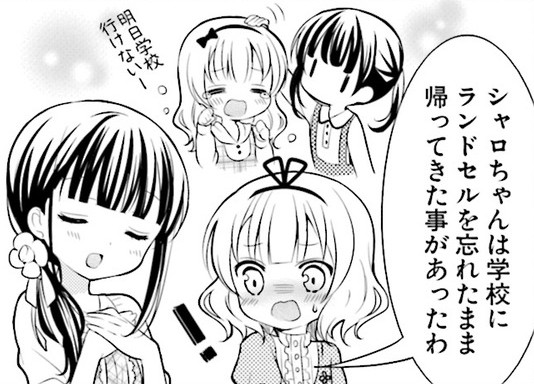
Rize wonders what became of the missing piece from Chiya’s puzzle. Syaro suggets it’ll turn up once it’s no longer being looked for. This reminds Chiya of something else that was forgotten.
- 千夜:
- 「シャロちゃんは学校にランドセルを忘れたまま帰ってきた事があったわ」
- “Syaro-chan once came home having left her backpack at school.”
- シャロ:
- 「明日学校行けない…」
- “I can't go to school tomorrow...”
Chiya remembers the time Syaro came home from school without her backpack. 帰ってくる is “come home”.
Example 3 of 4: Leaving right after a drink with 〜たばっか
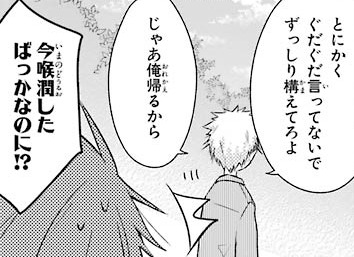
Fujimiya’s mother has asked Hase to meet her at the park on Sunday, and he’s anxious about what she wants. On Saturday he calls Kiryuu out to the same park to talk it over. Kiryuu, thirsty and without his wallet, gets Hase to buy him a drink. Hase admits he could have just phoned, but he wanted Kiryuu to set him straight in person.
- 桐生:
- 「とにかく ぐだぐだ言ってないで ずっしり構えてろよ」
- “Anyway, quit whining and hold steady.”
- 「じゃあ俺帰るから」
- “Okay, I'm heading home.”
- 長谷:
- 「今喉潤したばっかなのに!?」
- “You only just wet your whistle, and you're leaving?!”
Kiryuu has said his piece and announces he’s off with 帰るから, though Hase only just bought him a drink. 帰る covers both going home and simply leaving where you are, and the scene doesn’t say which.
Example 4 of 4: A freeloading child with 居候
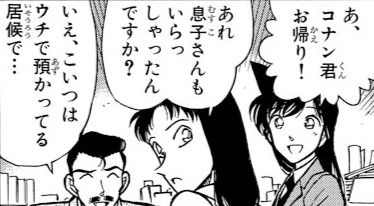
Conan returns home from school to the sound of a music box. When he opens the door, he finds Kogoro and Ran with a client.
- 蘭:
- 「あ、コナン君 お帰り!」
- “Ah, Conan, welcome back!”
- 春菜:
- 「あれ 息子さんもいらっしゃったんですか?」
- “Oh? You have a son, too?”
- 小五郎:
- 「いえ、こいつはウチで預かってる居候で…」
- “No, this kid's just a freeloader we're looking after...”
Conan comes home from school, and Ran greets him with お帰り, “welcome back”. The person coming home says ただいま, “I’m home”.
Giving Back and Flipping with 返す and 返る
返す is sending a thing back where it came from. 本を返す is “return a book”, 借金を返す is “pay back a debt”, and 恩返し is “repaying a kindness”. 返る is the intransitive partner, with the thing that comes back as the subject, as in 忘れ物が返る, “a lost item comes back”, or a reply that 返ってくる, “comes back”.
The guide gives 返 three more jobs. It’s going back to an earlier state, as in the guide’s 正気に返る and manga’s favorite 我に返る, both “come to your senses”. It’s flipping something over, as in 裏返す, “turn over”, and ひっくり返る, “tip over”. And in some verb compounds it’s doing something again, as in 読み返す, “reread”, and 繰り返す, “repeat”. Other 〜返す compounds answer an action in kind, as in 言い返す, “talk back”. In this site’s manga corpus, 我に返る turns up dozens of times and 振り返る, “look back”, hundreds, and neither is ever written with 帰.
2 sources
【返す・返る】元の持ち主や元の状態などに戻る。向きを逆にする。重ねて行う。
持ち主に返す。借金を返す。恩返し。正気に返る。返り咲き。手のひらを返す。
言葉を返す。とんぼ返り。読み返す。思い返す。返す, 返る: go back to the original owner, the original state, and so on. Turn the other way. Do again. "Return something to its owner." "Pay back a debt." "Repaying a kindness." "Come to your senses." "A comeback." "Change your attitude completely," literally "flip your palm." "Reply, or talk back." "A quick round trip," literally "a dragonfly's turn." "Reread." "Think back."
かえ・る〔かへる〕【返る/▽反る】
2 (返る)一度変化したものが、前やもとの状態になる。「童心に―・る」「正気に―・る」
3 (返る)一度手を離れた物が手元に戻る。もとの所有者に戻る。「忘れ物が―・る」「投資した金が倍になって―・ってくる」
4 (返る)こちらからの働きかけに対して、相手が反応する。「返事が―・ってくる」かえる, written 返る or 反る, with 反 outside the 常用漢字表 for this reading. Senses 2 to 4 are marked as 返る only. 2. Something that changed goes back to how it was before. "Feel like a child again." "Come to your senses." 3. Something that left your hands comes back to you, or goes back to its original owner. "A lost item comes back." "Invested money comes back doubled." 4. Someone responds to your approach. "A reply comes back."
Example 1 of 2: Fishing grounds with 漁場
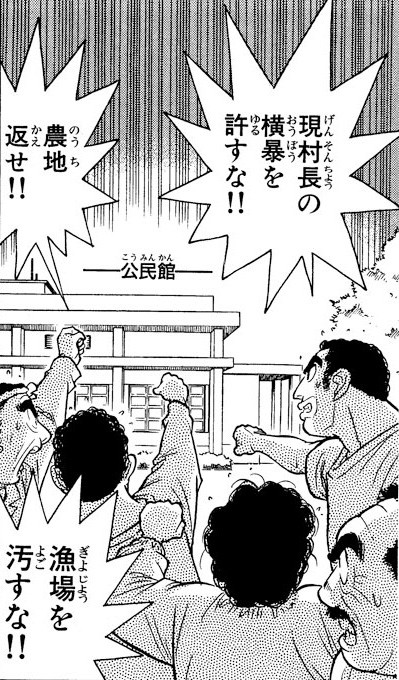
Kogoro, Ran, and Conan have come to Tsukikage Island because of a letter signed by a pianist who died twelve years ago. A doctor tells them the island is in the middle of a mayoral race. One candidate, Masato Shimizu, represents the island’s fishermen and campaigns to protect its fishing grounds, while the current mayor, Tatsuji Kuroiwa, has been losing support. The three head to the community center, where a memorial service for the previous mayor is being held tonight.
- 村人Ⓐ:
- 「現村長の横暴を許すな!!」
- “Don't let the mayor get away with his tyranny!!”
- 村人Ⓑ:
- 「農地返せ!!」
- “Give us back our farmland!!”
- 村人Ⓒ:
- 「漁場を汚すな!!」
- “Stop polluting our fishing grounds!!”
During the island’s mayoral race, villagers protesting outside the community center shout at the current mayor. 農地返せ, “give back the farmland”, is the imperative of 返す.
Example 2 of 2: Being strict with oneself and one's student with 心を鬼にする
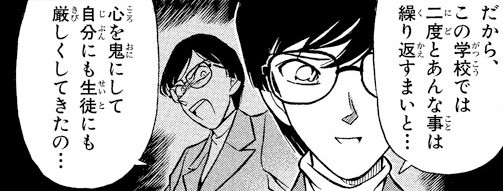
Conan’s classmates aren’t fond of their new teacher’s strict attitude. Ms. Kobayashi explains how at her last school, she couldn’t bring herself to be strict, and it allowed her students to get so out of control that students were injured in a fight.
- 小林:
- 「だから、この学校では二度とあんな事は繰り返すまいと…」
- “So, determined never to let anything like that happen again at this school...”
- 「心を鬼にして自分にも生徒にも厳しくしてきたの…」
- “I hardened my heart and have been strict with myself and my students ever since...”
Ms. Kobayashi explains that students got hurt at her last school because she was too soft. She was determined never to let it happen again. 繰り返す is “repeat”, 返 in its “do again” sense.
Returning to the Source with 還る
還る is an unofficial spelling of 帰る. The 常用漢字表 gives 還 only its on reading カン, as in 生還, “coming back alive”, and 返還, “handing back”, so 帰る is the standard spelling. デジタル大辞泉 lists 還る under 帰る, marked as a reading outside that list.
Manga use it for returning to where everything began. Bodies go back to the soil in 土に還る, and the dead go back to nothing in 無に還る. In this site’s manga corpus, 土に還る is far more common than 土に帰る. Its transitive partner 還す sends something back the same way, as in 土に還す, “lay to rest in the earth”, and 海に還す, “return to the sea”. Don’t confuse 無に還る with 無に帰す, “come to nothing”, a separate verb 帰する. Baseball manga also use 還: a runner who reaches home plate and scores かえる, デジタル大辞泉’s third sense, and the corpus writes that both ways. For coming back alive, manga mostly follow the guide’s 生きて帰る, and 生きて還る turns up only a few times, mostly in wartime scenes.
1 source
かえ・る〔かへる〕【帰る/▽還る】
[動ラ五(四)]《「返る」と同語源》かえる, written 帰る or 還る, with 還 outside the 常用漢字表 for this reading. A godan verb, from the same root as 返る.
Example 1 of 4: A shattered pot returns to the earth with 還る
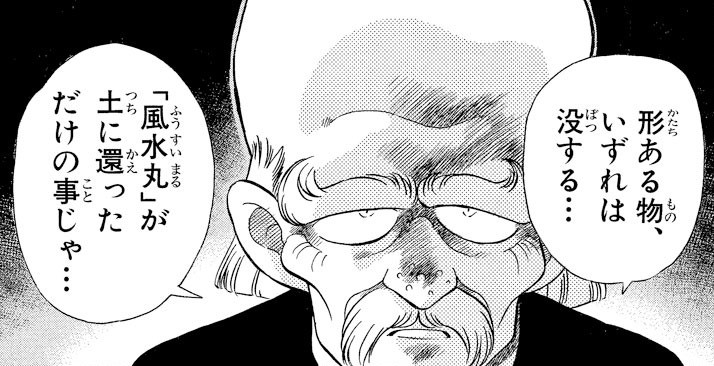
The famous potter Kikuemon has invited Kogoro to his home and sent his daughter-in-law, Masuko, to bring his new work, Fusuimaru, from the storehouse to show him. A cry from the storehouse brings everyone running, and they find the piece smashed on the floor. Masuko starts to apologize, saying it rolled down on her just as she started up the ladder, but Kikuemon cuts her off with “Enough!”
- 菊右衛門:
- 「形ある物、いずれは没する…」
- “Everything that has form perishes sooner or later...”
- 「『風水丸』が土に還っただけの事じゃ…」
- “Fusuimaru has just gone back to the earth, that's all...”
The potter Kikuemon’s new piece has just been found smashed in his storehouse. Instead of getting angry, he says it has 土に還った, “gone back to the earth”. The pot was made of clay, so it has gone back to what it was made from.
Example 2 of 4: Returning to nothingness with 無に還る
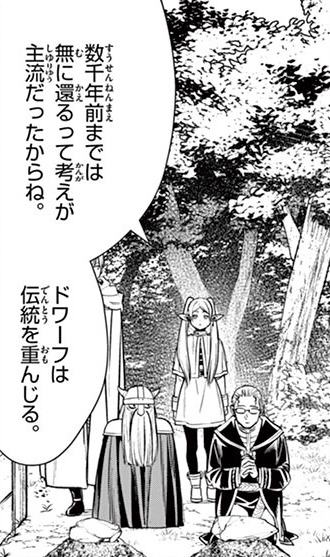
On their journey, the hero party stops at a cabin in the woods with graves beside it. Eisen says his village was attacked by demons long ago, and Heiter kneels at a grave to pray. Eisen tells him that when people die, they return to nothingness. Heiter answers that they go to heaven.
- フリーレン:
- 「数千年前までは無に還るって考えが主流だったからね。 ドワーフは伝統を重んじる。」
- “Up until a few thousand years ago, the main belief was that you return to nothingness. Dwarves hold on to tradition.”
Eisen has told Heiter that people 無に還る when they die, and Heiter answered that they go to heaven. Frieren explains that returning to nothingness was the main belief until a few thousand years ago. Death sends a person back to the nothing they came from.
Example 3 of 4: Returning to the dust of primordial space with 還る
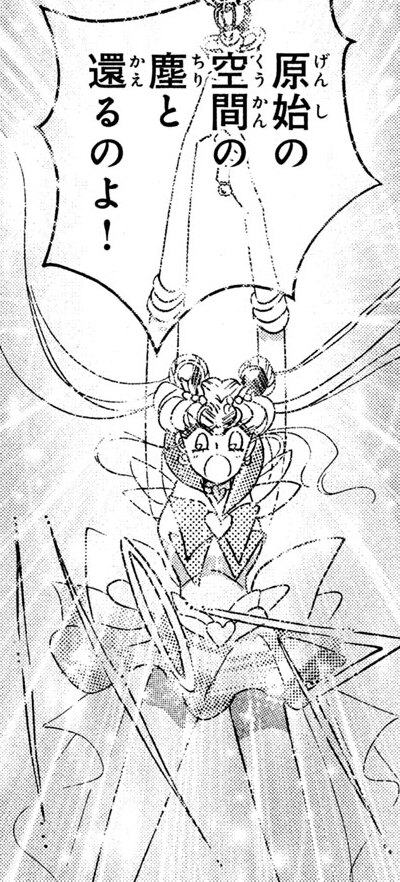
Princess Snow Kaguya’s comet is headed for Earth, and the Sailor Guardians fight her through a blizzard on Christmas Eve. When the clouds part and the full moon comes out, Kaguya flees into space. The guardians combine their power, Usagi transforms into Super Sailor Moon, and they chase Kaguya there. As Kaguya realizes they’ve followed her, Usagi calls her a twisted wanderer of ice.
- うさぎ:
- 「原始の空間の塵と還るのよ!」
- “Go back to being dust in primordial space!”
Super Sailor Moon has chased Princess Snow Kaguya into space. She orders Kaguya to go back to being 塵, “dust”, in primordial space, the state everything started from. と marks what Kaguya returns as.
Example 4 of 4: Sending retired gondolas to the heavens with 還す
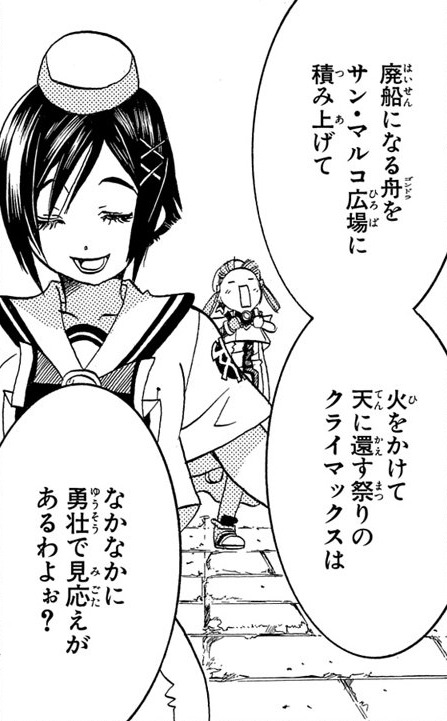
Summer is ending, and Akari, Aika, and Alice are out together on the canals of Neo-Venezia. Akari mentions a big festival this weekend. Aika names it, the “gondola fire send-off”, and says that even festival-loving Neo-Venezia holds it only once every few years.
- 藍華:
- 「廃船になる舟をサン・マルコ広場に積み上げて」
- “They pile the gondolas being retired in San Marco Square...”
- 「火をかけて天に還す祭りのクライマックスは」
- “...and the festival's climax, when they set them on fire and send them back to the heavens...”
- 「なかなかに勇壮で見応えがあるわよぉ?」
- “...is pretty stirring and well worth seeing, you know?”
Aika describes a festival that Neo-Venezia holds only once every few years. Gondolas being retired are piled in San Marco Square, set on fire, and sent back to the heavens. 還す is the transitive partner of 還る, sending something back to where it came from.
When the Spellings Overlap
The two spellings share a root. デジタル大辞泉 marks 帰る as having the same origin as 返る. The usual line is what kind of return it is. Heading home, or back to where you set out from, takes 帰. A thing handed back or put back, a state restored, or a direction reversed takes 返. So 帰ってくる is someone coming home, and 返ってくる is a lent item or a reply coming back.
Sending a person away is where they cross. The guide’s 親元へ帰す sends someone home, and in this site’s manga corpus, 家に帰す is about ten times as common as 家に返す. 名探偵コナン volume 4 writes both, 家に帰した and 家に返してやった, in the same case. But compounds that turn someone back the way they came usually take 返. 追い返す, “turn away”, is about 20 times as common as 追い帰す.
Going back to a state takes 返. 初心に返る, “get back to your original resolve”, is one, and デジタル大辞泉’s 初心 entry writes it with 返. Manga write 初心に帰る just as readily, though, and across more series. Coming back to life is another: 生き返る, “revive”, turns up hundreds of times, and 生き帰る almost never.
1 source
しょ‐しん【初心】
1 最初に思い立ったときの純真な気持ち。初志。「初心を貫く」「初心に返る」初心: 1. The pure feeling you had when you first set out. Your original resolve. "Stick to your original resolve." "Get back to your original resolve."
Other Words Read かえる
Several other words share the reading. 変える is “change”, and it has its own same-reading group with 換える, 替える, and 代える, covered in Changing and swapping with かえる and かわる. カエル, often written in katakana and sometimes 蛙, is “frog”. 孵る is an egg hatching. かえって, “on the contrary” or “if anything”, is an adverb, usually written in kana. It can look like the て form かえって, “going home”, so the rest of the sentence has to tell you which.
When かえる Stays in Kana
Kana works for every かえる and かえす, and the 2014 guide says its spelling examples don’t rule out writing a word in kana as needed. The greeting おかえり is the clearest case. In this site’s manga corpus, setting aside お帰りください and the like, the greeting is written in kana about twice as often as お帰り.
1 source
また,この使い分け例は,必要に応じて,仮名で表記することを妨げるものでもない。
Nor do these spelling examples rule out writing a word in kana as needed.
Check Yourself
Guess the Meaning from the Kanji
Each spelling's kanji points at one sense of かえす・かえる. Say what each one means, then open it.
返す・返る
give back or go back to the owner or the former state; turn over; do againMore about 返帰す・帰る
go home or back to where you came from; send someone home還る
return to where everything beganoff-list
Pick the Spelling
Each phrase has かえす・かえる in kana. Decide which kanji fits, then open it.
持ち主にかえす
持ち主に返す. 返す・返る: give back or go back to the owner or the former state; turn over; do again. More about 返
故郷へかえる
故郷へ帰る. 帰す・帰る: go home or back to where you came from; send someone home.
土にかえる
土に還る. 還る: return to where everything began. An off-list spelling.
借金をかえす
借金を返す. 返す・返る: give back or go back to the owner or the former state; turn over; do again. More about 返
親元へかえす
親元へ帰す. 帰す・帰る: go home or back to where you came from; send someone home.
無にかえる
無に還る. 還る: return to where everything began. An off-list spelling.
Spell a Manga Line
Syaro is handing out fliers when Cocoa finds her. Which kanji fits かえれない?
「全部配り終えるまでかえれないわ」
Show the answer
帰れない. Syaro is the one who wants to go home, so it’s 帰. “I can’t go home until I finish handing out all of them.”
Villagers are shouting at the mayor during a heated election. Which kanji fits かえせ?
「農地かえせ!!」
Show the answer
返せ. The protesters are demanding that the farmland be given back, a thing changing hands, so it’s 返. “Give us back our farmland!!”
Ms. Kobayashi is explaining why she became so strict. Which kanji fits くりかえすまい?
「だから、この学校では二度とあんな事はくりかえすまいと…」
Show the answer
繰り返すまい. Doing something again is one of 返’s jobs, as in the guide’s 読み返す, “reread”. “So, determined never to let anything like that happen again at this school…”
Yamato is heading out to back up a call, and he calls to his sister. Which kanji fits かえれよ?
「蘭! まっすぐ 家にかえれよ! じゃ」
Show the answer
帰れよ. Ran is a person heading home, so it’s 帰. “Ran! Head right home! Bye!”