Meeting and matching with あう
あう has three official spellings. 会う is two people meeting, 合う is two things matching or fitting, and 遭う is running into something unexpected, usually something bad. Manga also write 逢う, an unofficial spelling of 会う that can give a meeting extra feeling.
Only the first three are official spellings, so formal writing uses 会う instead of 逢う. Same reading, different kanji explains where the official list comes from.
The Spellings at a Glance
| Spelling | Used for | Standing |
|---|---|---|
| 会う | meet a person | Official |
| 合う | match, fit, or suit; do something to each other | Official |
| 遭う | run into something unexpected, usually something bad | Official |
| 逢う | meet someone; another spelling of 会う that can add feeling, as with a lover or a fated reunion | Off-list |
An official spelling has its reading in the 常用漢字表, the government's list of kanji for general use. An off-list spelling uses a reading the list doesn't give that kanji, or a kanji that isn't on it. Newspapers avoid those spellings, but manga use them freely.
Meeting a Person with 会う
会う is two people coming face to face, whether they planned it or not. 人に会いに行く is going to see someone, and 駅でばったり会う is bumping into them at the station. A chance meeting is unexpected, so it could take 遭, but the official guide says 会 is usual, since two people still meet face to face.
出会う, “meet” or “come across”, takes 会 too. The guide also uses it for coming across a work that stays with you for life. For coming upon the scene of an accident, or for two roads that join, it often gives 出合う. In this site’s manga corpus, 出会う outnumbers 出合う about 180:1.
2 sources
「駅でばったり友人とあった」の「あう」については,「思わぬことに出くわす」という意で「遭」を当てることもあるが,「友人と顔を合わせる」という視点から捉えて,「会」を当てるのが一般的である。
For the あう in "I bumped into a friend at the station", 遭 is sometimes used in the sense of "come across something unexpected", but 会 is the usual choice, seeing it as "coming face to face with a friend".
「出会う」は,「人と人が顔を合わせる」意だけでなく,「生涯忘れられない作品と出会う」のように,「その人にとって強い印象を受けたもの,価値あるものなどに触れる」意でもよく使われる。また,「事故の現場に出合う」や「二つの道路が出合う地点」のように,「思わぬことや好ましくない出来事に出くわす。合流する」意では「出合う」と表記することが多い。
出会う is used not only for two people coming face to face, but often also for coming into contact with something that makes a strong impression or has value to that person, as in "come across a work you will never forget". For the sense "come across something unexpected or unwelcome, or join together", as in "come upon the scene of an accident" or "the point where two roads meet", it is often written 出合う.
Example 1 of 3: Coming to meet someone with 〜に来る
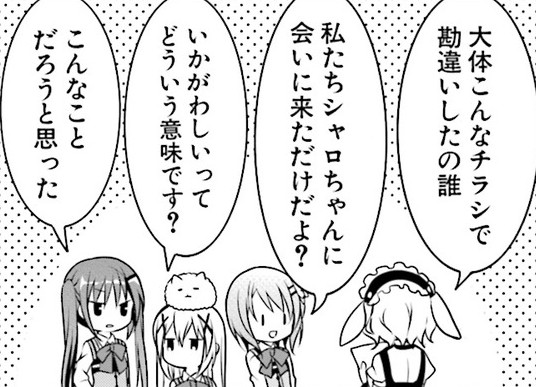
Syaro tries to find out who’s responsible for Chiya and the others visiting her workplace.
- シャロ:
- 「大体こんなチラシで勘違いしたの誰」
- “Who misunderstood this flyer in the first place?”
- ココア:
- 「私たちシャロちゃんに会いに来ただけだよ?」
- “We just came to see you, Syaro-chan.”
- チノ:
- 「いかがわしいってどういう意味です?」
- “What does “shady” mean?”
- リゼ:
- 「こんなことだろうと思った」
- “I figured it was something like this.”
Syaro asks who misread the flyer that brought her friends to her workplace. Cocoa says they only came to see her. 会いに来る is coming in order to meet someone.
Example 2 of 3: Wanting to meet up with 〜たい
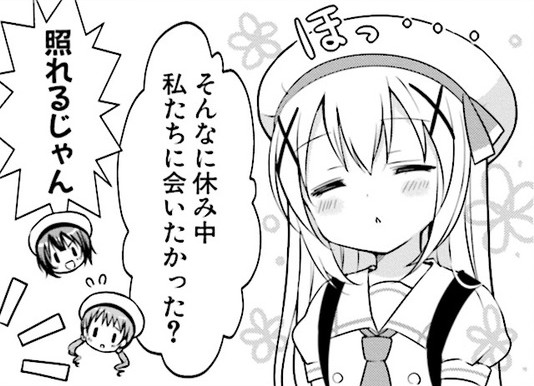
After worrying about being short, Chino sees Megu and Maya after summer break. Finding their heights comparable to her own brings Chino relief.
- メグ:
- 「そんなに休み中私たちに会いたかった?」
- “Did you really want to see us that badly during break?”
- マヤ:
- 「照れるじゃん」
- “You're making me blush.”
Back from summer break, Chino sighs with relief that her friends are still about her height. Megu takes it as Chino having missed them. 会いたかった is “wanted to see”, and 会いたい is a common way to say you miss someone.
Example 3 of 3: Have met with 〜た+ことがある
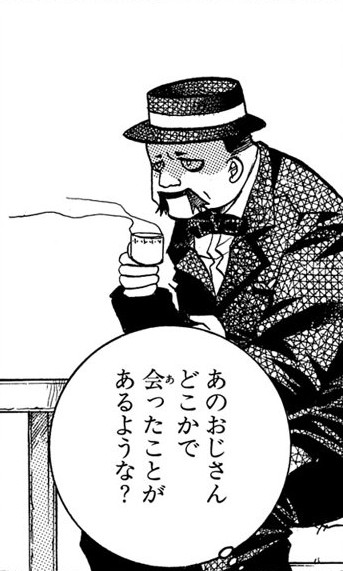
Akari and President Aria walk with Alicia to her meeting location. Rather than head back home, Akari and President Aria decide to sit at the café across the street until the meeting is over. There, Akari notices a gentleman sitting at another table.
- 灯里:
- 「あのおじさんどこかで会ったことがあるような?」
- “It feels like I have met that man somewhere before.”
Akari thinks she may have met a gentleman at the café somewhere before. Planned or not, two people meeting is usually written 会う.
Matching and Fitting with 合う
合う is two things that match: opinions that agree, an answer that’s right, clothes that fit, tastes that are the same. The official guide gives it three senses, “agree”, “suit”, and “do to each other”. The last one is the 合う that follows a verb stem, as in 話し合う, “talk it over”, and 付き合う, “go out with someone”.
Between 会う and 合う, the question is whether people meet or things match. 目が合う, “lock eyes”, takes 合, because it’s two gazes meeting, not two people.
Example 1 of 4: Might have similar tastes with 〜かもしれない
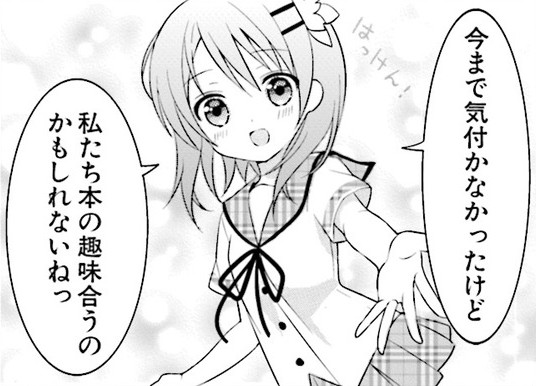
At the library, Cocoa thinks she’s realized which book Chino is trying to find but forgot the title of.
- ココア:
- 「今まで気付かなかったけど」
- “I didn't notice until now, but...”
- 「私たち本の趣味合うのかもしれないねっ」
- “...maybe we have similar taste in books.”
Cocoa suspects she and Chino may have the same taste in books. 趣味が合う is having tastes that match, with the が dropped here.
Example 2 of 4: Honorific or humble language with 謙譲語
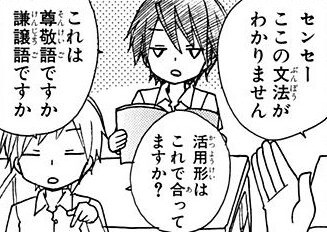
Students ask their teacher, Mittan, how long she has gone without a boyfriend. Mittan declares it top secret and tells them the only thing they may ask their teacher about is their studies.
- 生徒:
- 「センセー ここの文法がわかりません」
- “Miss, I don't understand the grammar here.”
- 淳平:
- 「活用形はこれで合ってますか?」
- “Is this the right conjugation?”
- 結心:
- 「これは尊敬語ですか謙譲語ですか」
- “Is this honorific language or humble language?”
Junpei asks his teacher whether he has the conjugation right. An answer that matches the right one is 合っている, so 合ってますか asks “is this right?”
Example 3 of 4: Unsuitable conditions for live-in work with 住み込み
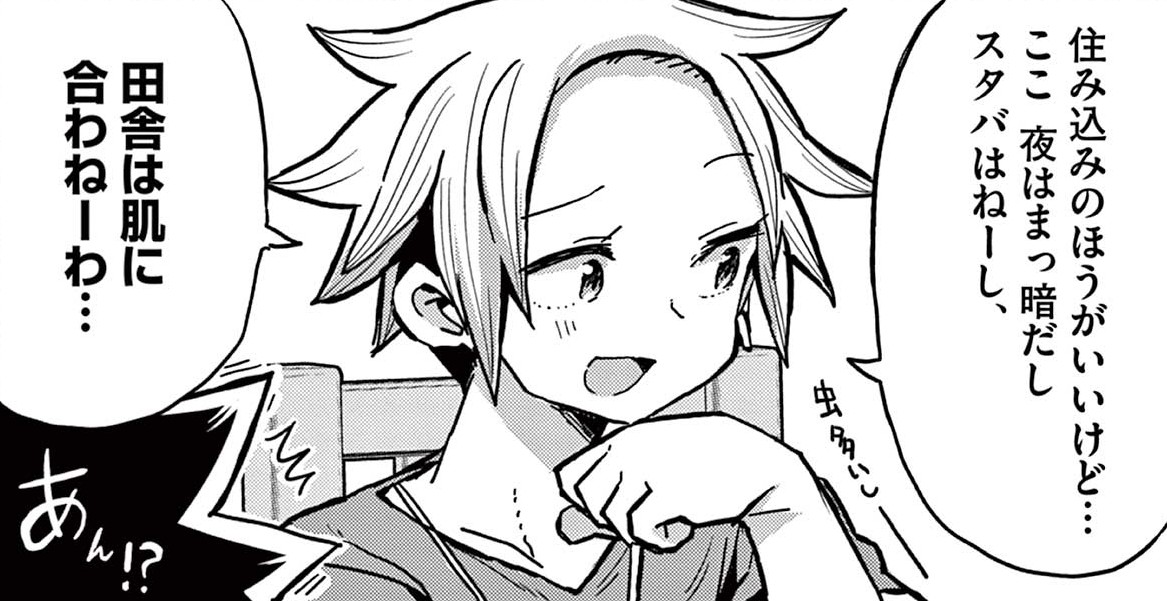
Sami answers a phone call from her uncle. He thinks his friend’s son Nishi would be a good assistant for Sami’s father. Since her father’s busy trying to meet a deadline, Sami accepts on her father’s behalf. When the assistant arrives, he’s completely unwilling to adjust to Sami’s father’s workstyle, then he stays overnight in their bed and wears Sami’s father’s clothes. After all this, Sami’s father is still willing to take Nishi on, but not as a live-in assistant.
- 西:
- 「住み込みのほうがいいけど… ここ 夜はまっ暗だしスタバはねーし、(虫多いしーーー)」
- “A live-in arrangement would be better, but... it gets pitch dark here at night, there's no Starbucks, and there are tons of bugs...”
- 「田舎は肌に合わねーわ…」
- “Country life just doesn't suit me...”
Nishi has seen the dark nights and the bugs, and he decides the countryside isn’t for him. 肌に合わない, “doesn’t suit my skin”, is a place or a way of life that doesn’t suit someone. 合わねー is a rough casual form of 合わない.
Example 4 of 4: Kindred spirits in drinking tea with 気が合う
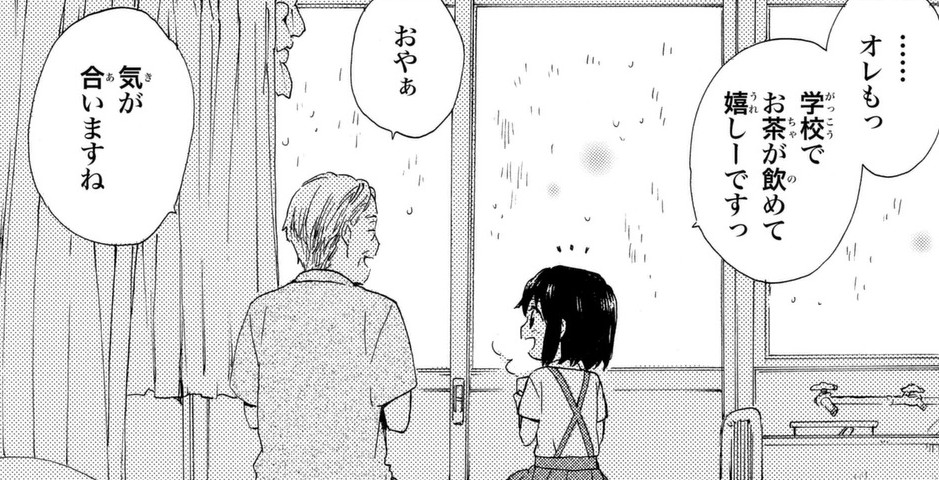
Hinata escorts a classmate to the school nurse. There, she meets an elderly man sipping tea. Seeing her interest, the old man offers her a cup.
- 日向:
- 「……オレもっ 学校でお茶が飲めて嬉しーですっ」
- “It also makes me happy when I can drink tea at school.”
- おじいさん:
- 「おやぁ 気が合いますね」
- “Oh, we're kindred spirits, huh?”
Hinata is glad she can drink tea at school, and the old man finds a kindred spirit. Getting along with 気が合う covers the phrase.
Running into Trouble with 遭う
遭う is running into something unexpected or unwelcome, such as an accident, a sudden shower, or opposition you didn’t see coming. The kanji is the 遭 of 遭難, “being caught in a disaster”, and 遭遇, “an encounter”.
Its most common use in manga is 目に遭う, “go through an ordeal”, as in ひどい目に遭った, “that was awful”. Having a bad experience with 〜目に遭う covers the phrase. Manga sometimes write it 目に合う, but 目に遭う outnumbers that spelling about 10:1.
Example 1 of 3: Had a bad experience in Nara with 〜目に遭う
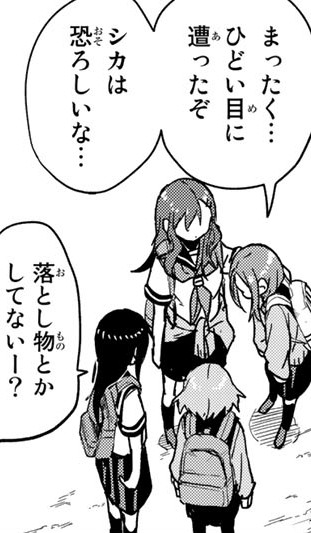
While in Nara on a class trip, Urushi and her friends stop to feed to deer. As the hungry animals completely surround Urushi, her friends discuss their schedule, ignoring Urushi’s plight. When Urushi finally returns to her group, she demands to know why no one came to her rescue.
- うるし:
- 「まったく… ひどい目に遭ったぞ」
- “Seriously… I had a terrible experience.”
- 「シカは恐ろしいな…」
- “Deer are scary…”
- ミク:
- 「落とし物とかしてないー?」
- “Did you drop anything?”
Urushi has been mobbed by hungry deer while her friends ignored her. ひどい目に遭った is “that was awful”.
Example 2 of 3: Such an experience being attacked with 〜目に遭う
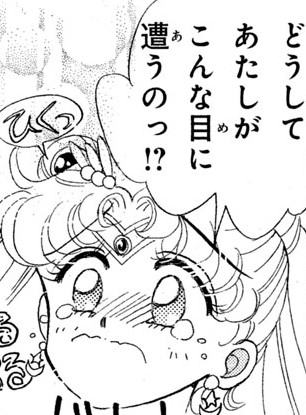
After an unexpected transformation into a warrior of justice, Usagi learns that her friend Naru is in danger. When she gets to the jewelry shop owned by Naru’s family, Usagi is violently attacked by a mind-controlled crowd.
- うさぎ:
- 「どうして あたしがこんな目に遭うのっ!?」
- “Why is this happening to me?”
Usagi is attacked by a crowd under someone else’s control. こんな目に遭う is going through something awful like this.
Example 3 of 3: A submerged town with 水没
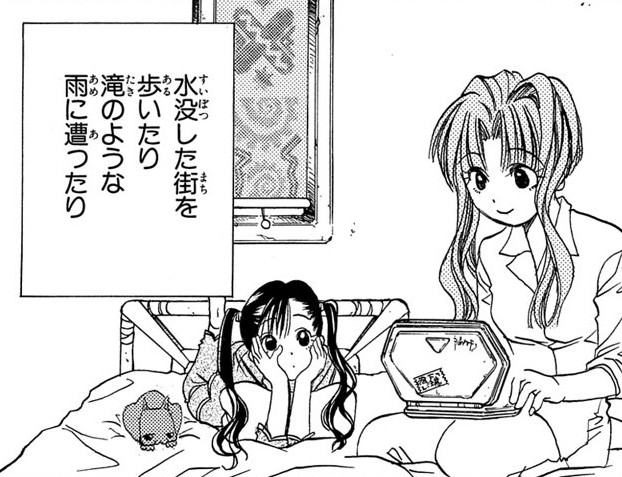
While out buying cat food during acqua alta, when tides have risen onto the streets, Akari is caught in a heavy downpour. She finds herself near Himeya Company, where her friend Aika lives, and she’s invited in to stay the night. As the two watch the falling rain through a window, Akari types an e-mail about her adventure that day.
- 灯里:
- 「水没した街を歩いたり滝のような雨に遭ったり」
- “Walking through a flooded town, getting caught in a downpour...”
Akari sums up her day of walking through flooded streets and getting caught in a downpour. Rain you get caught in takes 遭う, as in the guide’s にわか雨に遭う, “get caught in a sudden shower”.
Meetings with Feeling with 逢う
逢う is an unofficial spelling of 会う. 逢 isn’t in the 常用漢字表 at all, so formal writing keeps to 会う. デジタル大辞泉 gives 逢う as another spelling of 会う in its “meet a person” sense, with no separate meaning of its own.
Manga often use it when a meeting carries feeling, such as one with a lover or someone fate brings back, as in 逢いたい, “I want to see you”, やっと逢えた, “at last we meet”, and また逢う日まで, “until we meet again”. It’s still rare. In this site’s manga corpus, 会う outnumbers 逢う about 50:1, and 会いたい outnumbers 逢いたい about 30:1.
めぐりあう, “meet or come across, often by chance or after a long search or separation”, is the exception. In this site’s manga corpus, 逢 makes up about a fifth of its verb uses, and with kana めぐり it’s about as common as 会. Counting both めぐり and 巡り, 会 is still the most common kanji overall. The guide files 巡り合う under 合, and allows 会 when the two who meet are people.
2 sources
あ・う〔あふ〕【会う/遭う/▽遇う/×逢う】
(会う・逢う)㋐互いに顔を向かい合わせる。場所を決めて対面する。「客に―・う」「明日、いつもの場所で―・おう」㋑たまたま人と出あう。「駅でばったり知人と―・った」あう, written 会う, 遭う, 遇う, or 逢う. Written 会う or 逢う: to come face to face, or to meet at an agreed place. "Meet a customer." "Let's meet at the usual place tomorrow." Also to meet someone by chance. "I bumped into an acquaintance at the station."
「巡りあう」の「あう」についても,「互いに出くわす」意で「合」を当てるが,「出くわす」ものが人同士の場合には「人と人が顔を合わせる」という視点から捉えて,「会」を当てることもできる。
For the あう in めぐりあう, 合 is used in the sense of "come across each other", but when the ones who come across each other are people, 会 can also be used, seeing it as "two people coming face to face".
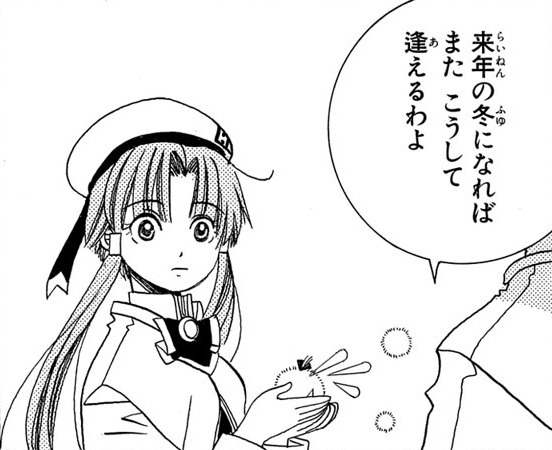
Akari has been keeping a fluffy snow bug that goes everywhere with her. An older friend tells her that snow bugs leave before the real cold sets in, and that the first snow falls once they’re gone. When hers disappears, Alicia takes her to a field full of snow bugs to say goodbye. Akari finds it there, and Alicia reassures her that Martian snow bugs live a long time.
- アリシア:
- 「来年の冬になれば また こうして逢えるわよ」
- “Once next winter comes, you'll see each other again, just like this.”
Akari has come to say goodbye to her snow bug before it leaves for the winter. Alicia comforts her: once next winter comes, they’ll see each other again. 逢 fits a reunion with a friend Akari will miss.
When あう Stays in Kana
Kana works for every あう. The 2014 guide says its spelling examples don’t rule out writing a word in kana. In 目にあう, manga use kana more than kanji: it outnumbers 目に遭う about 5:3.
1 source
したがって,ここに示した使い分けとは異なる使い分けを否定する趣旨で示すものではない。また,この使い分け例は,必要に応じて,仮名で表記することを妨げるものでもない。
Accordingly, these examples are not meant to rule out other ways of choosing among these spellings. Nor do they stop anyone from writing a word in kana where needed.
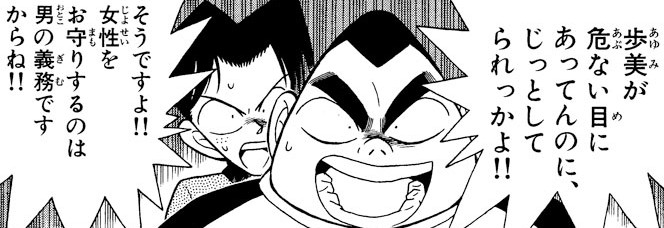
During a hide-and-seek game at the park, Ayumi hides in a car trunk and falls asleep. She wakes to find the car moving and discovers a bag of money, a slimy saw, and what seems like a severed head. Conan, tracking her via their Detective Boys badges, prepares to pursue on his electric skateboard. Genta and Mitsuhiko join him on it, but Conan urges them to stay behind due to the danger.
- 元太:
- 「歩美が危ない目にあってんのに、じっとしてられっかよ!!」
- “Ayumi is in danger, so how can I just stand by and do nothing?”
- 光彦:
- 「そうですよ!! 女性をお守りするのは男の義務ですからね!!」
- “That's right! It's a man's duty to protect women!”
Genta won’t sit still while Ayumi is in danger. 危ない目にあう is “be in danger”, written here in kana.
Check Yourself
Guess the Meaning from the Kanji
Each spelling's kanji points at one sense of あう. Say what each one means, then open it.
会う
meet a personMore about 会合う
match, fit, or suit; do something to each otherMore about 合遭う
run into something unexpected, usually something bad逢う
meet someone; another spelling of 会う that can add feeling, as with a lover or a fated reunionoff-list
Pick the Spelling
Each phrase has あう in kana. Decide which kanji fits, then open it.
客とあう
客と会う. 会う: meet a person. More about 会
意見があう
意見が合う. 合う: match, fit, or suit; do something to each other. More about 合
災難にあう
災難に遭う. 遭う: run into something unexpected, usually something bad.
君にあいたい
君に逢いたい. 逢う: meet someone; another spelling of 会う that can add feeling, as with a lover or a fated reunion. An off-list spelling.
人にあいに行く
人に会いに行く. 会う: meet a person. More about 会
答えがあう
答えが合う. 合う: match, fit, or suit; do something to each other. More about 合
事故にあう
事故に遭う. 遭う: run into something unexpected, usually something bad.
出あい
出逢い. 逢う: meet someone; another spelling of 会う that can add feeling, as with a lover or a fated reunion. An off-list spelling.
Spell a Manga Line
Syaro wants to know who misread the flyer, and Cocoa explains why the friends came. Which kanji fits あいに?
「私たちシャロちゃんにあいに来ただけだよ?」
Show the answer
会いに. Coming to see a person is 会う. 会いに来る is coming in order to meet someone. “We just came to see you, Syaro-chan.”
Cocoa has noticed that she and Chino like the same books. Which kanji fits あう?
「私たち本の趣味あうのかもしれないねっ」
Show the answer
合う. Two tastes that match are 合う, not two people meeting. 趣味が合う is having the same tastes, with the が dropped here. “Maybe we have the same taste in books.”
Urushi has been mobbed by the deer in Nara. Which kanji fits あった, and how do manga usually write this phrase?
「まったく… ひどい目にあったぞ」
Show the answer
遭った. 目に遭う is going through something bad, the sense of 遭. Manga sometimes write 目に合う, but 遭 outnumbers it about 10:1, and kana is more common than either. “Seriously, I had a terrible time.”
Alicia is comforting Akari, who is saying goodbye to her snow bug until next winter. The writer chose a kanji that isn’t on the official list. Which one, and what would the official spelling be?
「来年の冬になれば また こうしてあえるわよ」
Show the answer
逢える. 逢 is 会う with feeling, and a reunion with a friend you’ll miss is where manga reach for it. The official spelling is 会える, and it’s just as right. “Once next winter comes, you’ll see each other again, just like this.”