Something, nothing, and anything with question words
Question words like 何, 誰, どこ, いつ, and どう combine with a particle to make a family of related words. か makes “some-“ words, も with a negative verb makes “no-“ words, and でも makes “any-“ words. A few set phrases, such as なんとか and なんとなく, grew out of the same pattern.
Usage Notes
A question word asks about something unknown. With a particle after it, the same word refers to something unknown instead of asking about it. Linguists call these words indeterminate pronouns, or 不定語 in Japanese.
Question Word
+ か
+ も (negative verb)
+ でも
何 “what”
何か “something”
何も “nothing”
何でも “anything”
誰 “who”
誰か “someone”
誰も “no one”
誰でも “anyone”
どこ “where”
どこか “somewhere”
どこにも “nowhere”
どこでも “anywhere”
いつ “when”
いつか “someday”
いつも “always”
いつでも “anytime”
どれ “which”
どれか “one of them”
どれも “none of them”
どれでも “any of them”
何 reads なに before か and も, but なん before でも.
Other particles go between the question word and も or でも: どこにも, 誰にも, どこでも. いつも breaks the pattern. It means “always” with any verb, negative or not.
Something and Someone with か
か turns a question word into a “some-“ word. The speaker knows the thing, person, or place exists but doesn’t name it, often because they don’t know. These words take particles like any noun: 誰かが, 何かを, どこかで.
何か (Something)
何か means something or anything. It can also introduce an uncertain question, as in “Is something wrong?”
Ran and Conan have just gotten home after a case. 今、何か作ってあげるからね! is “I’ll make you something right now!” Ran hasn’t decided what to cook yet, so 何か stands in for the dish.
Example 2 of 3: Want me to buy something with 〜てほしい
Chinatsu gets home from school just as her mother is heading out to buy food for dinner. Chinatsu is invited to come along, but she says she’ll stay home as there’s a TV show she wants to watch.
Chinatsu’s mother is heading out to buy food for dinner. 何か買ってきてほしい物ある? asks whether there’s anything Chinatsu wants her to buy. In a question, 何か works like English “anything”.
Example 3 of 3: Because this is chance encounter with 〜ので
Cocoa picks up a handkerchief an older student dropped and uses it as a chance to make friends. 何かの縁 is “some kind of fate”. With の, 何か describes the noun after it: a connection Cocoa can’t name.
なんか (Something)
なんか is a casual form of なにか, “something”. After a noun, it means “things like” or “someone like”, often looking down on it. It also means “kind of” or “somehow”.
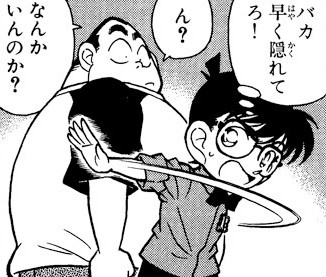
In a game of hide-and-seek, Conan and Ayumi find they’re hiding on the same bench. Their conversation attracts the seeker, Genta, leading him to find Conan. As Ayumi sneaks away unseen, she signals an apology to Conan.
During hide-and-seek, Genta finds Conan on a bench. He then sees Conan motion. なんかいんのか? is “is something there?” なんか is the casual 何か, and Genta doesn’t know yet what Conan motioned for.
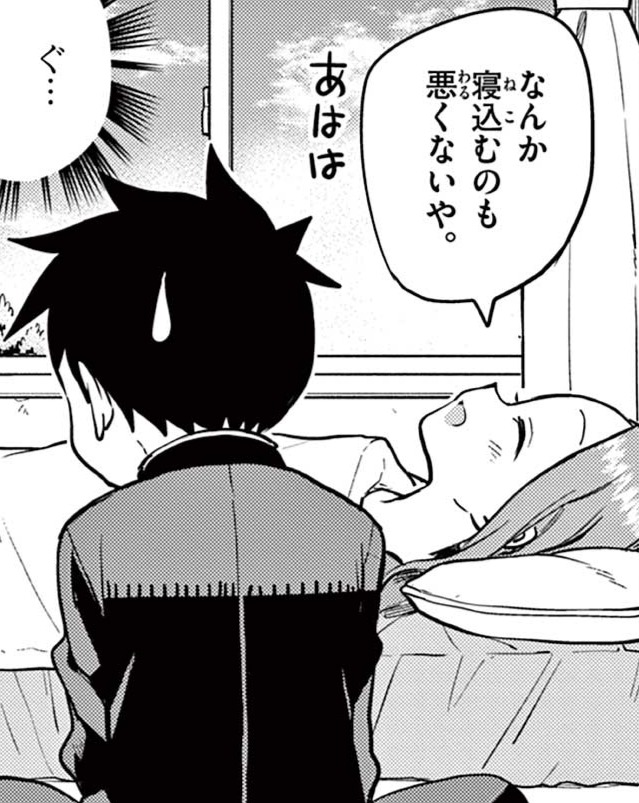
Takagi is home sick, and Nishikata has stayed to keep her company. なんか寝込むのも悪くないや is “being stuck in bed isn’t so bad, somehow”. This なんか doesn’t refer to a thing. It softens the whole sentence, like “kind of”, and hints at a feeling Takagi doesn’t spell out.
After Cocoa suggests if she were staying at Chiya’s place rather than Chino’s, that she’d be working for Chiya’s family’s tea house, Chiya takes to the idea.
千夜:
「じゃあ部屋を空けておくから早速荷物をまとめて来てね」
“Then I'll clear out a room in advance, so go gather your things and come right away.”
Chiya likes the idea of Cocoa living at her family’s tea house so much that she starts clearing out a room. Cocoa cries 誰か止めてよ!, “somebody stop her!” She isn’t calling on anyone in particular, just whoever will help.
Alone in the changing room, Cocoa feels eyes on her. 誰もいないはずなのに誰かに見られているような is “even though nobody should be here, it feels like someone is watching me”. The line uses both words: 誰も with いない for “nobody”, and 誰かに for the unknown someone watching her.
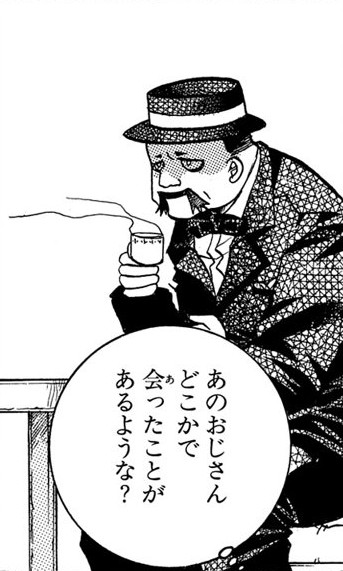
Akari and President Aria walk with Alicia to her meeting location. Rather than head back home, Akari and President Aria decide to sit at the café across the street until the meeting is over. There, Akari notices a gentleman sitting at another table.
灯里:
「あのおじさんどこかで会ったことがあるような?」
“It feels like I have met that man somewhere before.”
At a café, Akari notices a man at another table who looks familiar. あのおじさんどこかで会ったことがあるような? is “I feel like I’ve met that man somewhere.” どこか takes で like any place word, and the place stays vague because Akari can’t remember it.
いつか (Someday)
いつか is some time that is not fixed, usually in the future. It can also mean “at some point” in the past.
も after a question word, together with a negative verb, makes a “no-“ word. 何も〜ない is “nothing”, and 誰も〜ない is “no one”. The verb carries the negative, so 何も知らない is literally “doesn’t know anything”. In conversation, the verb is often left off when context makes it clear.
いつも is the exception. It means “always” and doesn’t need a negative verb.
何も (Nothing)
何も with a negative verb means nothing or not anything, as in 何も知らない, “doesn’t know anything”.
Yousuke’s daughter Yotsuba wanders off while he’s moving things into their new home. One of his new neighbors offers to keep an eye out for her. Later, he finds Yotsuba outside with the neighbors.
Yousuke thanks his new neighbor Asagi for bringing Yotsuba home. いえいえ 私はたいした事はなにも is “no, no, I didn’t do anything much”. Asagi leaves off the negative verb, but なにも already says “nothing”, so the meaning is clear.
誰も (No one)
誰も with a negative verb means no one or not anyone, as in 誰もいない, “nobody is here”.
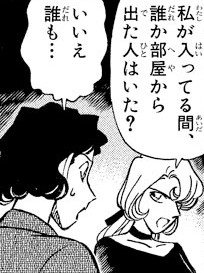
A murder victim was last heard from via phone call at 9PM. Her body was found outside later that night. Yukiko was in the main room with everyone except when she was bathing.
有希子:
「私が入ってる間、誰か部屋から出た人はいた?」
“While I was in the bath, was there anyone who left the room?”
Yukiko asks whether anyone left the room while she was in the bath, using 誰か. Hiromi answers いいえ誰も…, “no, no one…” She trails off before the negative verb, the way an English speaker might say only “no one”. The question’s 誰か and the answer’s 誰も make a natural pair.
どこにも (Nowhere)
どこにも with a negative verb means nowhere or not anywhere, as in どこにもいない, “isn’t anywhere”.
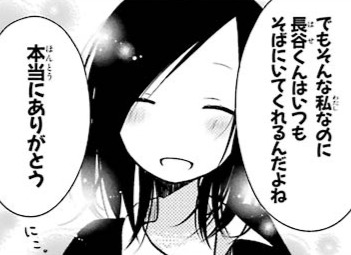
Due to a condition where she loses all memories of friends every Monday morning, Fujimiya acts cold toward classmates to avoid becoming friends. While eating lunch on the roof with Hase, she remarks how hard it is to act that way. Hase says it’s because she’s naturally a nice person. He recalls when he first tried becoming friends with her, how Fujimiya avoided eye contact with him and gave only brief responses. Fujimiya is shocked to hear how she had treated him.
藤宮:
「でもそんな私なのに長谷くんはいつもそばにいてくれるんだよね」
“But even though I was like that, Hase-kun, you're always by my side, aren't you?”
Fujimiya learns how coldly she treated Hase when they first met. 長谷くんはいつもそばにいてくれる is “you’re always by my side”. The verb is positive, and いつも still means “always”.
Syaro is wearing pajamas she borrowed from Chino. いつもはジャージなのに is “even though I usually wear a tracksuit”. With は, いつも sets her usual nights against this one.
Anything and Anyone with でも
でも after a question word makes an “any-“ word: anything, anyone, anywhere, or anytime at all. It leaves the choice open. 何でもいい is “anything is fine”. In casual speech, だって often replaces でも, as in 誰だって.
何でも (Anything)
何でも means anything at all, whatever it is. 何でもない means “it’s nothing” or “never mind”.
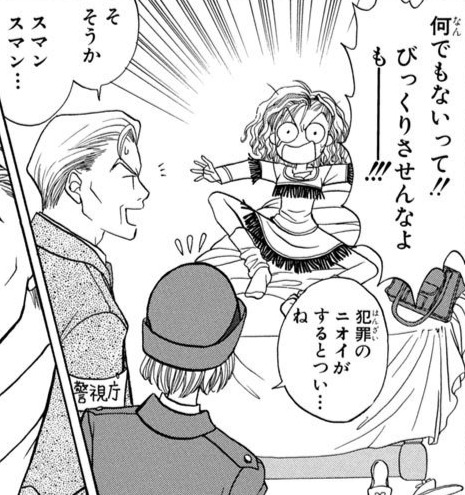
A classmate shows off her new satchel from Meisho Daichi High School. Ran wants one for herself, so she heads down to Shibuya in search of a Meisho Daichi student who’ll give her one. She accidentally steals one, which she later ruminates on in her room. As she talks to herself about how her pride cannot abide stealing, her police officer parents burst into her room, asking what was stolen and who the suspect is.
蘭:
「何でもないって!! びっくりさせんなよ もーーーー!」
“It's nothing!! Don't scare me like that! Seriously!!”
泰三:
「そ そうか スマン スマン…」
“Oh... okay. Sorry, sorry...”
清香:
「犯罪のニオイがするとつい…ね」
“When I smell a crime, I just can't help myself...”
Ran’s police officer parents burst into her room after hearing her talk about stealing. 何でもないって!! is “it’s nothing!!” 何でもない is a set phrase for brushing something off, literally “it isn’t anything at all”.
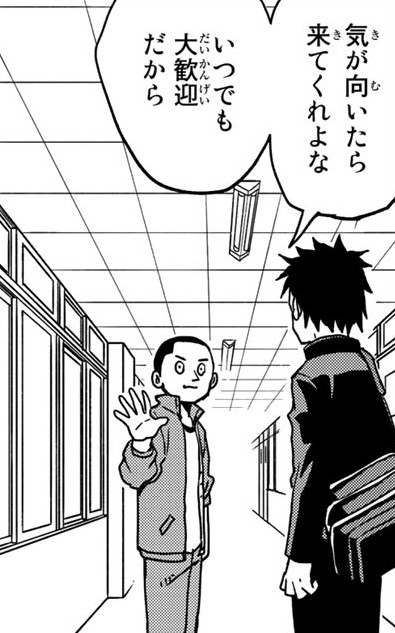
A member of the kendo club asks Ayumu to join the club, so they can win the next tournament. Although Ayumu is well known for his kendo prowess in middle school, he’s in the shogi club now, and rejects the request.
A kendo club member is trying to recruit Ayumu, who is in the shogi club now. Before leaving, he adds いつでも大歓迎だから, “you’re always welcome”. いつでも leaves the timing up to Ayumu.
Somehow and Vaguely
A few words built from 何 and どう have meanings of their own. なんとか and どうにか describe getting something done one way or another. なんだか and なんとなく describe a feeling or reason the speaker can’t pin down, like the “kind of” なんか above.
なんとか (Somehow)
なんとか describes managing something one way or another. なんとかする means to do something about a problem.
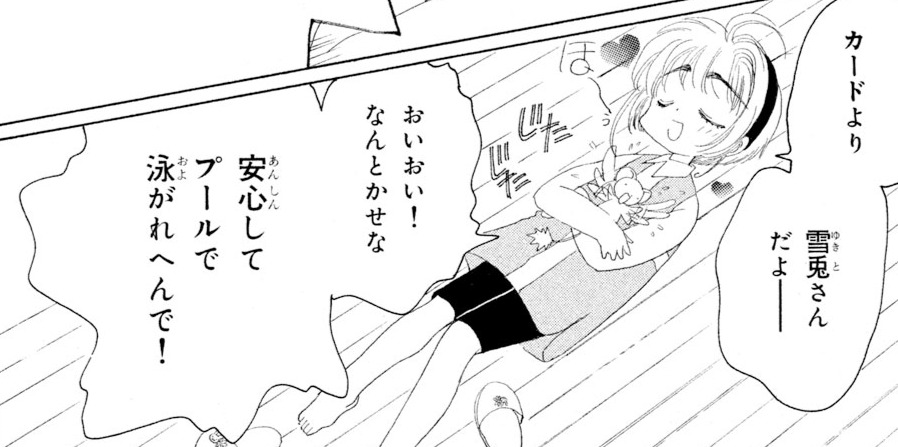
Sakura and Kero are supposed to discuss a Clow Card causing problems at the elementary school. After taking her homemade pancakes to her brother and Yukito, Sakura’s happiness over making something for Yukito overtakes her concern of Clow Cards. Kero tries to get her back on track.
Sakura’s excitement about Yukito has made her forget the Clow Card causing trouble at school. Kero cuts in: おいおい!なんとかせな, “hey, you’ve gotta do something about it!” なんとかする is “deal with it somehow”. Kero doesn’t say how, only that something has to happen. せな is Kansai for しないと.
Example 2 of 2: Finished helping somehow with なんとか
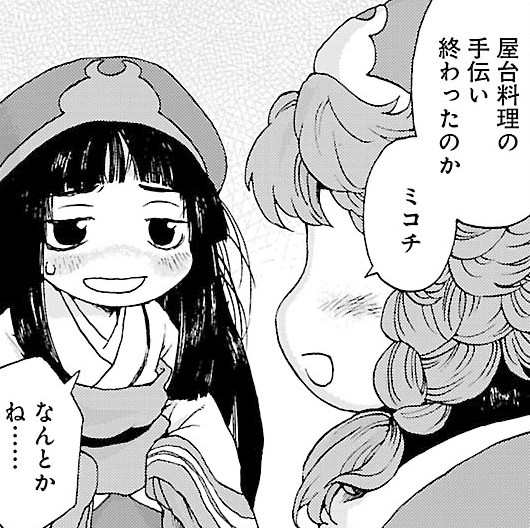
Mikochi shows up late after helping cook for a food stall, and Hakumei asks whether she’s done. なんとかね… is “somehow, yeah…” It stands for なんとか終わった. She got the job finished, but it wasn’t easy.
どうにか (Somehow)
どうにか describes getting something done in some way, even when it’s hard. どうにかする means to do something about a problem, and どうにかなる means things will work out.