Sticking, arriving, and taking up posts with つく
つく and its partner つける have three official spellings. 付く is one thing sticking to or being added to another, such as a stain on a shirt or a name on a pet. 着く is arriving somewhere or taking a place, such as reaching the station or sitting down at your seat. 就く is taking up a job, a post, or a new state, such as starting work or falling asleep. つく is intransitive and つける is transitive: 名前が付く is “get a name”, and 名前を付ける is “give a name”.
A quick test: if something sticks on or gets added, write 付. If someone gets somewhere or takes a seat, write 着. If someone takes up a job or a role, write 就. All three are official, so they show up in formal writing as well as in manga. Same reading, different kanji explains where the official list comes from.
The Spellings at a Glance
| Spelling | Used for | Standing |
|---|---|---|
| 付く・付ける | stick to; be added; bring the mind to bear | Official |
| 着く・着ける | arrive; take a place; put on, as clothes | Official |
| 就く・就ける | take up a job, post, or situation | Official |
Sticking and Adding with 付く and 付ける
付く is one thing staying on another. 墨が顔に付く is “get ink on your face”, and 傷が付く is “get scratched”. It’s also something being added, as in 名前を付ける, “give a name”, and 味を付ける, “season”. The noun 味付け, “seasoning”, comes from that.
The guide gives 付 a third job, bringing your attention to bear. 気を付ける is “be careful”, and 気が付く is “notice”. 付き合う, “go out with” or “keep someone company”, takes 付 as well, since it’s staying by someone’s side.
1 source
【付く・付ける】付着する。加わる。意識などを働かせる。
墨が顔に付く。足跡が付く。知識を身に付(着)ける*。利息が付く。名前を付ける。
条件を付ける。味方に付く。付け加える。気を付ける。目に付く。付く, 付ける: stick to something. Be added. Bring your attention and so on to bear. "Get ink on your face." "Leave footprints." "Pick up knowledge," with 着 allowed. "Earn interest." "Give a name." "Attach conditions." "Side with someone." "Add on." "Be careful." "Catch your eye."
Example 1 of 2: Tracking device performance with 性能
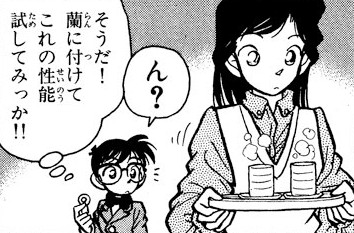
Professor Agasa gives Conan a tracking device. He eagerly looks for an opportunity to see how it works.
- コナン:
- 「そうだ!蘭に付けてこれの性能試してみっか!!」
- “I know! I'll stick it on Ran and see how it performs!!”
Conan has just been given a tracking device and decides to test it by sticking it on Ran. 付ける is attaching one thing to another.
Example 2 of 2: Checking the seasoning with 味付け
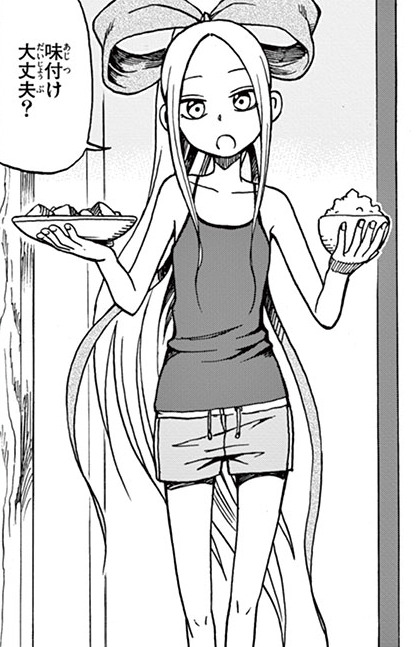
Kenji’s younger sister Kyoko has made breakfast at home. Kenji sits at the low table eating it.
- キョーコ:
- 「味付け大丈夫?」
- “Is the seasoning all right?”
Kyoko has made breakfast and asks Kenji whether the seasoning is all right. 味付け is the noun from 味を付ける, adding flavor to food.
Arriving and Taking a Seat with 着く and 着ける
着く is reaching a place. 駅に着く is “arrive at the station”, and 手紙が着く is “a letter arrives”. It’s also taking a place, as in 席に着く, “take your seat”. 着ける is bringing something to a place, as in 車を玄関に着ける, “pull the car up to the entrance”, and putting on clothes, as in 身に着ける, “wear”. The kanji is the 着 of 到着, “arrival”, and of 着る, “wear”.
Manga keep to 着 for arriving. In this site’s manga corpus, 駅に着く turns up dozens of times and never with 付, and 落ち着く, “calm down”, is written with 着 thousands of times and with 付 only a handful.
1 source
【着く・着ける】達する。ある場所を占める。着る。
手紙が着く。東京に着く。船を岸に着ける。車を正面玄関に着ける。席に着く。
衣服を身に着ける。着く, 着ける: reach. Take a place. Wear. "A letter arrives." "Arrive in Tokyo." "Bring a boat alongside the shore." "Pull the car up to the front entrance." "Take your seat." "Put on clothes."
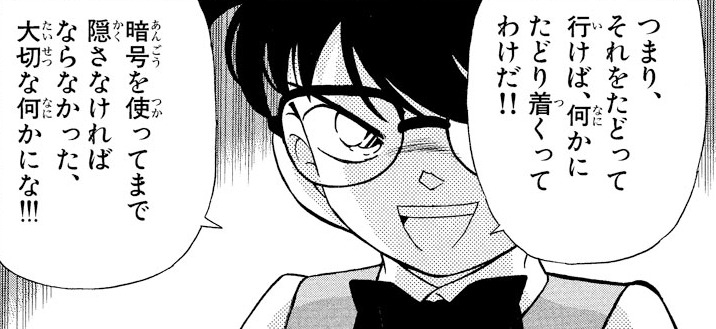
Professor Agasa set up a treasure hunt for the Detective Boys at his late uncle’s villa, but an intruder got there first and slashed the hidden toys. The children found codes of suns, moons, and stars drawn on objects all around the villa. Conan worked out that the symbols stand for hiragana and decoded two of them as “Look at the propeller” and “Look at the oil painting”.
- コナン:
- 「つまり、それをたどって行けば、何かにたどり着くってわけだ!!」
- “So if we follow them, we'll get to something, that's what it means!!”
- 「暗号を使ってまで隠さなければならなかった、大切な何かにな!!!」
- “Something important, important enough that it had to be hidden with codes!!!”
Conan works out that the codes at Professor Agasa’s uncle’s villa form a trail. Following them should lead somewhere. たどり着く is “finally reach”, 着 for getting to a place at the end of a search.
Jobs and New Roles with 就く
就く is putting yourself into a job, a role, or a new situation. 職に就く is “get a job”, 役職に就く is “take up a post”, and 眠りに就く is “fall asleep”. 帰路に就く is “head for home”, starting on the way back. The kanji is the 就 of 就職, “finding employment”. デジタル大辞泉 gives 就く the same root as 付く.
For jobs, manga mostly write 就. In this site’s manga corpus, 職に就く and 仕事に就く turn up about 100 times together, and with 付 only a handful. 眠りにつく and 帰路につく are a different story: manga nearly always leave them in kana.
2 sources
【就く・就ける】仕事や役職,ある状況などに身を置く。
職に就く。役に就ける。床に就く。緒に就く。帰路に就く。眠りに就く。就く, 就ける: put yourself into a job, a post, a situation, and so on. "Get a job." "Appoint someone to a role." "Go to bed." "Get under way." "Head for home." "Fall asleep."
つ・く【就く】
[動カ五(四)]《「付く」と同語源》
1 ㋑ある役職に身を置く。また、就職する。「管理職に―・く」「販売の仕事に―・く」
2 みずからある動作を始める。「帰路に―・く」「眠りに―・く」つく, written 就く. A godan verb, from the same root as 付く. 1. Take up a post, or find employment. "Become a manager." "Take a job in sales." 2. Begin an action yourself. "Head for home." "Fall asleep."
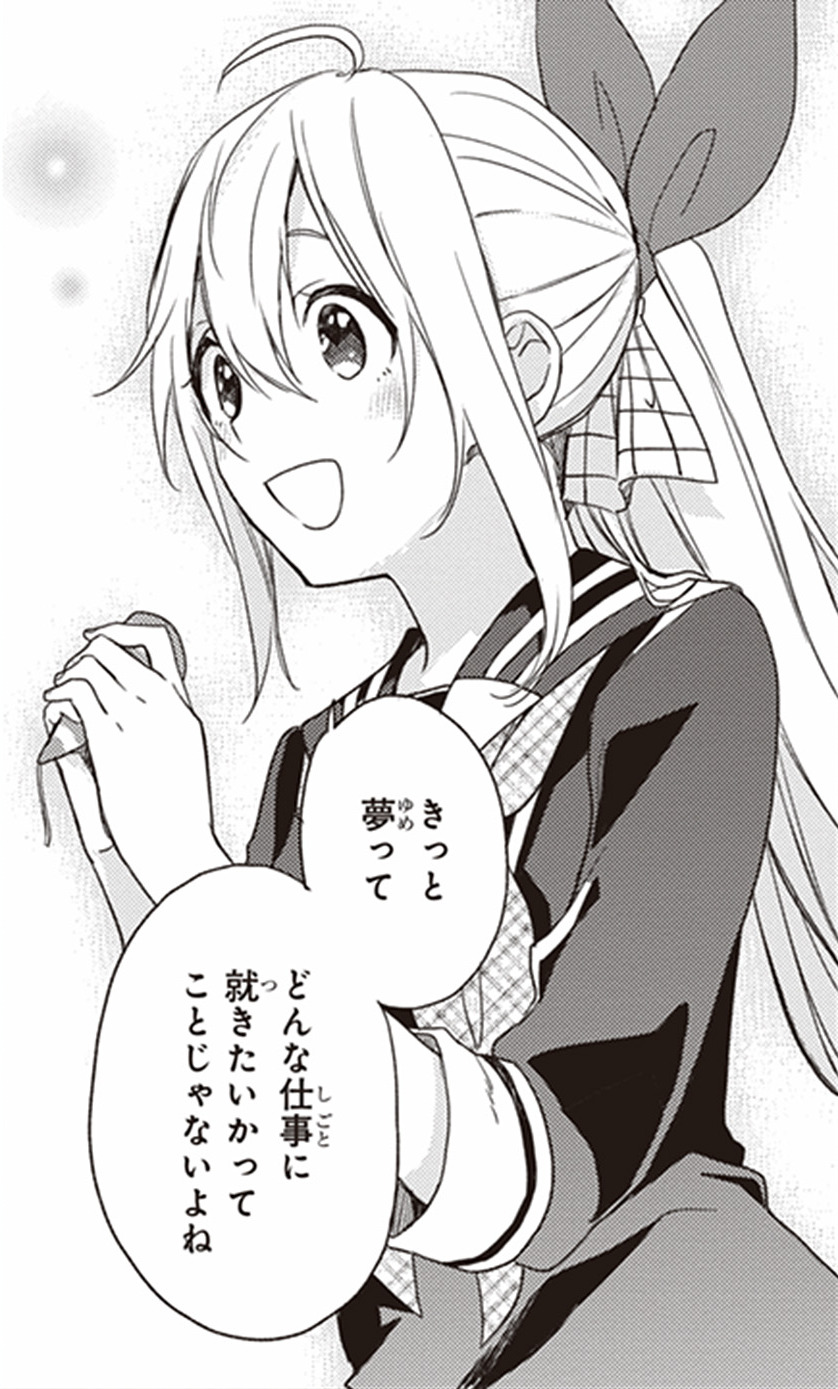
Neko came to this town to train as a witch. Her friends heard she was going home and threw her a farewell party, but she tells them it was a misunderstanding and she’s staying. She has come to see her training as a time to learn what she can and can’t do, and she admits she doesn’t have a real dream or goal yet.
- 禰子:
- 「きっと夢って」
- “I bet a dream...”
- 「どんな仕事に就きたいかってことじゃないよね」
- “...isn't about what kind of job you want to get, right?”
Neko has come to see her witch training as a way to learn what she can and can’t do, though she has no real dream yet. どんな仕事に就きたいか is “what kind of job you want to get”, 就 for taking up a line of work.
When the Spellings Overlap
The three spellings started out as one word. デジタル大辞泉 lists arriving as one sense of 付く, labeled 着く, and gives 就く the same root.
身につける is where the guide allows a choice. For clothes it’s 身に着ける, “wear”. For a skill or knowledge it’s 身に付ける, “pick up”, since the knowledge sticks to you, but the guide also accepts 着, picturing knowledge as something you put on. Manga mostly leave it in kana, and when they use kanji they split between the two.
席に着く is sitting down at your seat. In this site’s manga corpus, the few 席に付く hits come from host and hostess clubs, where staff 付く at a customer’s table to look after them. That’s 付 in its sense of staying by someone’s side.
The 1972 list that the 2014 guide replaced wrote 仕事に手を着ける, “set to work”. The 2014 guide drops that example, and manga write 手を付ける or leave it in kana, never with 着.
3 sources
つく・つける
付く・付ける-墨が顔に付く。味方に付く。利息が付く。名を付ける。気を付ける。条件を付ける。付け加える。
着く・着ける-席に着く。手紙が着く。東京に着く。船を岸に着ける。仕事に手を着ける。衣服を身に着ける。
就く・就ける-床に就く。緒に就く。職に就く。役に就ける。つく, つける. 付く, 付ける: "Get ink on your face." "Side with someone." "Earn interest." "Give a name." "Be careful." "Attach conditions." "Add on." 着く, 着ける: "Take your seat." "A letter arrives." "Arrive in Tokyo." "Bring a boat alongside the shore." "Set to work." "Put on clothes." 就く, 就ける: "Go to bed." "Get under way." "Get a job." "Appoint someone to a role."
「知識を身につける」の「つける」は,「付着する」意で「付」を当てるが,「知識」を「着る」という比喩的な視点から捉えて,「着」を当てることもできる。
For the つける in "pick up knowledge", 付 is used in the sense of "stick to", but 着 can also be used, seeing knowledge figuratively as something you put on.
つ・く【付く/▽附く/着く】
2 (着く)あるものが他のものや他の所まで達する。
㋐到着する。「手紙が昨日―・いた」「目的地に―・く」「定刻に―・く」
㋒ある場所を占める。位置する。「守備位置に―・く」「席に―・く」つく, written 付く, 附く, or 着く. 2. Written 着く: something reaches another thing or another place. Arrive. "The letter arrived yesterday." "Reach your destination." "Arrive on time." Take a place, be positioned. "Take up your fielding position." "Take your seat."
Other Words Read つく
Several other verbs share the reading. 突く is “poke” or “thrust”, and it’s official. The rest are usually written in kana. 電気がつく, “the light comes on”, is sometimes written 点く, but the 常用漢字表 doesn’t give 点 that reading. The つく in 嘘をつく, “tell a lie”, and ため息をつく, “sigh”, is almost always kana. A spirit that 憑く, “possesses”, someone is often written with 憑, a kanji outside the 常用漢字表.
〜について, “about”, and 〜につき, “per” or “due to”, grew out of 就く. In this site’s manga corpus, について is in kana thousands of times, and に就いて only a few dozen.
When つく Stays in Kana
Kana works for every つく and つける, and the 2014 guide says its spelling examples don’t rule out writing a word in kana where it suits. Manga leave many common phrases in kana. In this site’s manga corpus, 気をつける is in kana about five times as often as with 付, and つきあう and つき合う together turn up nearly as often as 付き合う.
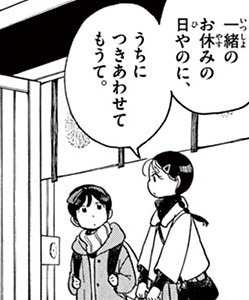
Kiyo meets up with Sumire at the entrance to a local shrine.
- すみれ:
- 「一緒のお休みの日やのに、うちにつきあわせてもうて。」
- “Sorry for making you come along with me on our day off.”
Sumire apologizes to Kiyo for dragging her along on their shared day off. つきあわせる, the causative of つきあう, “keep someone company”, is written here in kana.
Check Yourself
Guess the Meaning from the Kanji
Each spelling's kanji points at one sense of つく・つける. Say what each one means, then open it.
付く・付ける
stick to; be added; bring the mind to bear着く・着ける
arrive; take a place; put on, as clothes就く・就ける
take up a job, post, or situation
Pick the Spelling
Each phrase has つく・つける in kana. Decide which kanji fits, then open it.
墨が顔につく
墨が顔に付く. 付く・付ける: stick to; be added; bring the mind to bear.
東京につく
東京に着く. 着く・着ける: arrive; take a place; put on, as clothes.
職につく
職に就く. 就く・就ける: take up a job, post, or situation.
気をつける
気を付ける. 付く・付ける: stick to; be added; bring the mind to bear.
席につく
席に着く. 着く・着ける: arrive; take a place; put on, as clothes.
眠りにつく
眠りに就く. 就く・就ける: take up a job, post, or situation.
Spell a Manga Line
Conan has a new tracking device to test. Which kanji fits つけて?
「そうだ!蘭につけてこれの性能試してみっか!!」
Show the answer
付けて. Sticking a device onto someone is attaching one thing to another, so it’s 付. “I know! I’ll stick it on Ran and see how it performs!!”
Conan has worked out that the codes form a trail. Which kanji fits たどりつく?
「つまり、それをたどって行けば、何かにたどりつくってわけだ!!」
Show the answer
たどり着く. Reaching a place at the end of a search is arriving, so it’s 着. “So if we follow them, we’ll get to something, that’s what it means!!”
Kyoko has made breakfast for her brother. Which kanji fits あじつけ?
「あじつけ大丈夫?」
Show the answer
味付け. Seasoning adds flavor to food, like the guide’s 付け加える, “add on”, so it’s 付. “Is the seasoning all right?”
Sumire has brought Kiyo along on their day off. If this line were in kanji, which would fit つきあわせて?
「一緒のお休みの日やのに、うちにつきあわせてもうて。」
Show the answer
付き合わせて. Keeping someone company is staying by their side, so it’s 付. Sumire’s line actually leaves it in kana. “Sorry for making you come along with me on our day off.”