Stopping, fastening, and staying over with とまる
とまる and its partner とめる have three official spellings. 止まる is something stopping, such as a clock, a car, or a laugh. 留まる is something being held in place, such as a button, or something kept in mind. 泊まる is staying the night somewhere, such as at a hotel or a friend’s house. とまる is intransitive and とめる is transitive: 車が止まる is “the car stops”, and 車を止める is “stop the car”.
A quick test: if movement or flow ends, write 止. If something is fastened or kept, write 留. If someone spends the night, write 泊. All three are official, so they show up in formal writing as well as in manga. Same reading, different kanji explains where the official list comes from.
The Spellings at a Glance
| Spelling | Used for | Standing |
|---|---|---|
| 止まる・止める | stop moving | Official |
| 留まる・留める | be fastened; stay in the mind; keep in place | Official |
| 泊まる・泊める | stay the night; lie at anchor | Official |
| 停まる・停める | stop or park a vehicle; manga write it often, formal writing uses 止 | Off-list |
An official spelling has its reading in the 常用漢字表, the government's list of kanji for general use. An off-list spelling uses a reading the list doesn't give that kanji, or a kanji that isn't on it. Newspapers avoid those spellings, but manga use them freely.
Stopping with 止まる and 止める
止まる is something that was moving or flowing coming to a halt. 時計が止まる is “the clock stops”, 息を止める is “hold your breath”, and 笑いが止まらない is “can’t stop laughing”. 止める is also stopping a person, as in けんかを止める, “break up a fight”, and turning something off, as in 火を止める, “turn off the heat”.
It’s by far the most common of the three, and many set words take it. 行き止まり is “a dead end”, 口止め is “an order to keep quiet”, and 足止め is “being held up”. In this site’s manga corpus, 受け止める, “take in” or “accept”, turns up hundreds of times and never with 留.
1 source
【止まる・止める】動きがなくなる。
交通が止まる。水道が止まる。小鳥が木の枝に止(留)まる*。笑いが止まらない。
息を止める。車を止める。通行止め。止まり木。止まる, 止める: movement ends. "Traffic stops." "The water is cut off." "A bird lands on a branch," with 留 allowed. "Can't stop laughing." "Hold your breath." "Stop the car." "Road closed." "A perch."
Example 1 of 3: Clearing out a room with 〜ておく
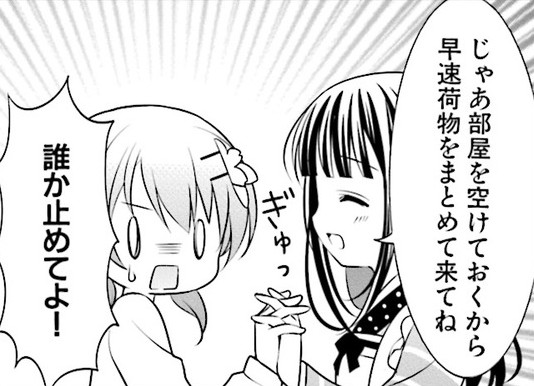
After Cocoa suggests if she were staying at Chiya’s place rather than Chino’s, that she’d be working for Chiya’s family’s tea house, Chiya takes to the idea.
- 千夜:
- 「じゃあ部屋を空けておくから早速荷物をまとめて来てね」
- “Then I'll clear out a room in advance, so go gather your things and come right away.”
- ココア:
- 「誰か止めてよ!」
- “Somebody stop her!”
Chiya loves Cocoa’s offhand idea of working at her family’s tea house, and she’s already planning to clear out a room. Cocoa begs someone to stop her. 止める here is stopping someone from doing something, the けんかを止める sense.
Example 2 of 3: Interrupted in a restroom stall with 話しかける
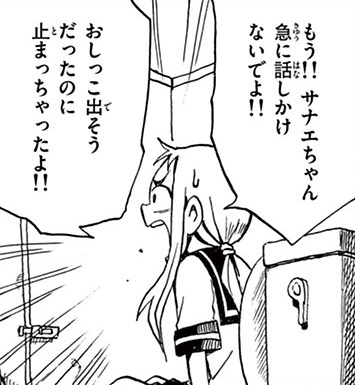
In the girls’ restroom, Sanae and Yukari wonder whether Nishikata and Takagi are dating. Sanae teases Yukari by calling out to Mina, who is inside a stall, that Yukari wants to flirt with boys. When Mina doesn’t answer, Sanae keeps shouting her name.
- ミナ:
- 「もう!! サナエちゃん急に話しかけないでよ!!」
- “Geez!! Sanae, don't talk to me out of nowhere!!”
- 「おしっこ出そうだったのに止まっちゃったよ!!」
- “I was just about to pee, and now it stopped!!”
Sanae keeps shouting Mina’s name through the stall door, and Mina complains that she was just about to pee and now it’s stopped. Something that was about to flow coming to a halt is 止まる.
Example 3 of 3: Watching the pot for Mom with 鍋がふく
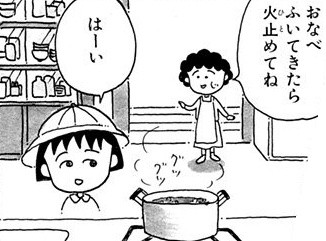
Maruko comes home after school. Her mother asks her to keep an eye on the pot on the stove while she brings in the laundry.
- お母さん:
- 「おなべふいてきたら火止めてね」
- “If the pot starts to boil over, turn off the heat, okay?”
- まる子:
- 「はーい」
- “Okay!”
Maruko’s mother goes to bring in the laundry and asks Maruko to turn off the heat if the pot boils over. 火を止める is “turn off the heat”.
Fastening and Keeping with 留まる and 留める
留める is fixing something so it stays put. ボタンを留める is “do up a button”, and ピンで留める is “pin something”. It’s also keeping something in your mind, as in 心に留める, “bear in mind”, and 気に留める, “pay attention to”. 書留 is “registered mail”, and the kanji is the 留 of 留守, “being away from home”.
In this site’s manga corpus, 留 is the usual spelling for 心に留める and 気に留める, kana is common for both, and 止 is rare.
1 source
【留まる・留める】固定される。感覚に残る。とどめる。
ピンで留める。ボタンを留める。目に留まる。心に留める。留め置く。局留めで送る。留まる, 留める: be fixed in place. Leave an impression. Keep. "Pin something." "Do up a button." "Catch your eye." "Bear in mind." "Keep something in place." "Send something to be held at the post office."
Example 1 of 2: A borrowed hair clip with 髪留め
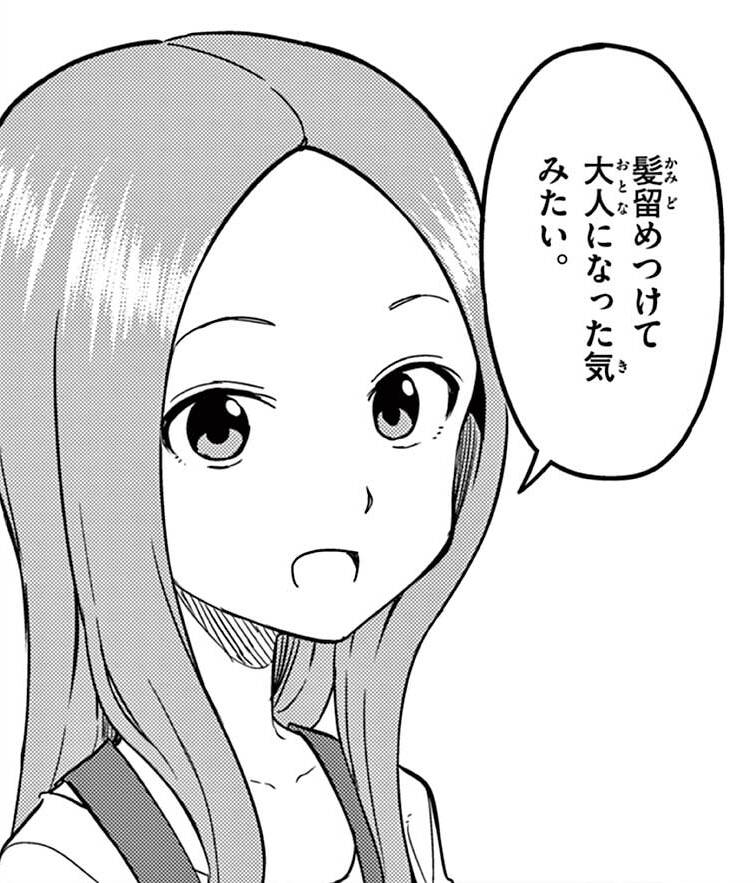
Chi shows off a clip holding up her little ponytail. When Nishikata asks about it, Takagi says she’s lending it to her. Chi asks in a ladylike voice whether it makes her look grown-up.
- 高木:
- 「髪留めつけて大人になった気みたい。」
- “Wearing the hair clip seems to make her feel all grown up.”
Chi is wearing a hair clip she borrowed from her mother, Takagi, and acting very ladylike. 髪留め is 髪, “hair”, plus the noun form of 留める, so it’s something that fastens hair. The と of とめ turns voiced to ど.
Example 2 of 2: Held in place by a screw with 留まる
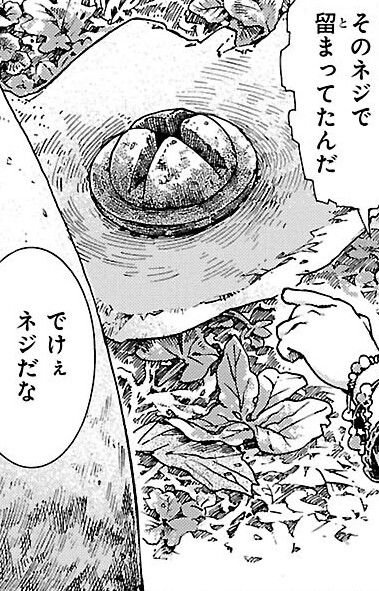
The beautician lives and works in an egg-shaped house, and overnight it rolled away from its spot with her trapped inside. Iwashi, a passing weasel, has pulled her out. She wonders why the house rolled at all, and Iwashi wonders why it never rolled before.
- 美容師:
- 「そのネジで留まってたんだ」
- “It was held in place by that screw.”
- イワシ:
- 「でけぇネジだな」
- “That's one big screw.”
The beautician’s egg-shaped house rolled away overnight, and Iwashi wonders why it never rolled before. She points to the screw it was fastened to. 留まってた is casual 留まっていた, “had been held in place”.
Staying the Night with 泊まる and 泊める
泊まる is spending the night somewhere other than home. 家に泊まる is “stay over at someone’s house”, 泊まり込み is “staying overnight at a place, such as work”, and お泊まり is “a sleepover”. 泊める is putting someone up for the night. Ships take the same kanji: 船が港に泊まる is “the ship lies in port”, and 船を泊める is “moor the ship”. The kanji is the 泊 of 宿泊, “lodging”, and 一泊, “one night’s stay”.
1 source
【泊まる・泊める】宿泊する。停泊する。
宿直室に泊まる。友達を家に泊める。船が港に泊まる。泊まる, 泊める: stay the night. Lie at anchor. "Stay the night in the night-duty room." "Put a friend up at your house." "A ship lies in port."
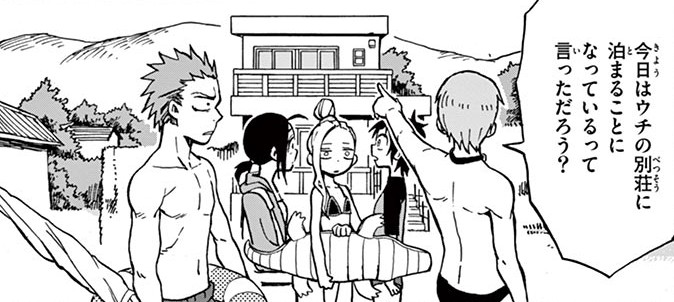
After a day playing at the beach, Hikari asks Shindou when someone is coming to pick everyone up. Shindou says it will be “tomorrow evening”.
- 神藤:
- 「今日はウチの別荘に泊まることになっているって言っただろう?」
- “Didn't I say we're scheduled to stay the night at my villa?”
After a day at the beach, Hikari asks when someone is coming to pick them up, and Shindou reminds everyone they’re spending the night at his family’s villa. 泊まる is staying the night.
When the Spellings Overlap
止 and 留 overlap where something stops and then stays. The guide’s own example is a bird on a branch. It writes 小鳥が枝に止まる, since the bird stops flying, but allows 留, since it then stays put. The 1972 list that the 2014 guide replaced had it the other way around, with 留 first and 止 allowed.
目にとまる, “catch your eye”, is the same kind of case. The guide gives 留, and in this site’s manga corpus, 目に留まる is the more common spelling, but 目に止まる turns up more than half as often. 引きとめる, “hold someone back”, splits too, and there 止 leads: 引き止める is more than twice as common as 引き留める.
2 sources
「小鳥が木の枝にとまる」の「とまる」については,小鳥が飛ぶのをやめて「木の枝に静止する(動きがなくなる)」意で「止」を当てるが,「木の枝にとどまっている(固定される)」という視点から捉えて,「留」を当てることもできる。
For the とまる in "a bird lands on a branch", 止 is used in the sense that the bird stops flying and comes to rest on the branch, its movement ending, but 留 can also be used, seeing it as the bird staying fixed on the branch.
とまる・とめる
止まる・止める-交通が止まる。水道が止まる。笑いが止まらない。息を止める。通行止め。
留まる・留める-小鳥が木の枝に留(止)まる。ボタンを留める。留め置く。書留。
泊まる・泊める-船が港に泊まる。宿直室に泊まる。友達を家に泊める。とまる, とめる. 止まる, 止める: "Traffic stops." "The water is cut off." "Can't stop laughing." "Hold your breath." "Road closed." 留まる, 留める: "A bird lands on a branch," with 止 allowed. "Do up a button." "Keep something in place." "Registered mail." 泊まる, 泊める: "A ship lies in port." "Stay the night in the night-duty room." "Put a friend up at your house."
Stopping Cars with 停まる and 停める
Manga often write a car stopping as 停まる or 停める, an unofficial spelling. The 常用漢字表 gives 停 only its on reading テイ, as in 停車, “stopping a vehicle”, and 停止, “a halt”, so formal writing uses 車を止める. デジタル大辞泉 lists 停める under 止める, marked as a spelling outside that list. It also notes that some people write 停める for stopping a car and 駐める for parking one.
In this site’s manga corpus, 車を停める is about half as common as 車を止める, so it’s a spelling you’ll see often.
1 source
と・める【止める/留める/▽停める】
1 動いているものを動かないようにする。「タクシーを―・める」「文章を書く手を―・める」
[補説]俗に、「駐める」と書いて駐車の意とし、「停める」を停車の意として使い分けることがある。とめる, written 止める, 留める, or 停める, with 停 outside the 常用漢字表 for this reading. 1. Make something that's moving stop. "Stop a taxi." "Stop writing." Note: informally, some people write 駐める for parking and 停める for stopping a vehicle.
When 止める Reads やめる
止める can also be read やめる. 止める is “quit” or “give up”, as in タバコを止める, “quit smoking”, and 止む is “stop”, as rain or wind does. The 常用漢字表 gives 止 only the kun readings とまる and とめる, so for quitting a habit or dropping a plan, formal writing uses やめる in kana, but manga sometimes print 止める for it, and furigana or context usually tells you which. Stopping something in motion is とめる, and giving up a habit or a plan is やめる.
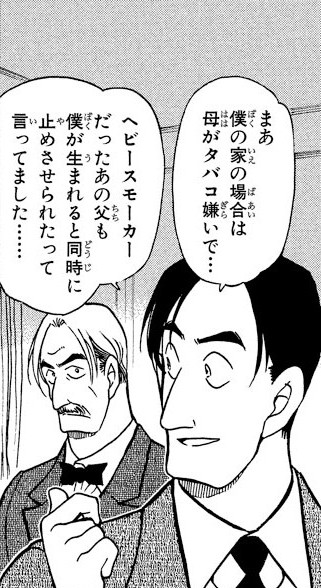
Four actors filming a mystery drama at a mansion are suspects in a real murder. While they wait with Kogoro, he lights a cigarette, and the actress Ruri says her father’s dislike of smoking rubbed off on her. Nobuharu, who acts alongside his father, Akatsuki, says it’s the same in his family.
- 伸晴:
- 「まあ 僕の家の場合は母がタバコ嫌いで…」
- “Well, in my family's case, it's my mother who hates cigarettes...”
- 「ヘビースモーカーだったあの父も僕が生まれると同時に止めさせられたって言ってました……」
- “Even my dad there, who used to be a heavy smoker, told me she made him quit the moment I was born...”
Nobuharu says his mother hates cigarettes, and his heavy-smoking father was made to quit the moment Nobuharu was born. 止めさせられる is the causative-receptive of やめる, “be made to quit”. Here 止 reads や, not と.
When 留まる Reads とどまる
留まる can also be read とどまる, “stay” or “remain”. 村に留まる is “stay on in the village”, and 留まらせる is “keep someone somewhere”. The 常用漢字表 gives 留 only the kun readings とまる and とめる, so formal writing uses とどまる in kana, but manga often print 留まる for it with とど furigana. Staying the night is 泊まる. とどまる is staying put instead of moving on, with no night implied.
Example 1 of 2: No reason to stay in the village with 留まる
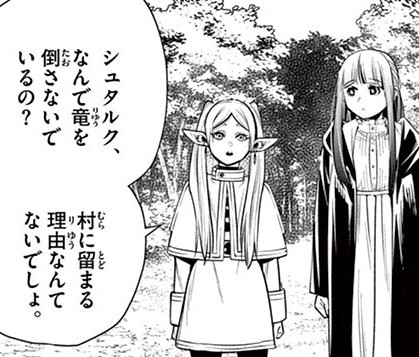
Frieren and Fern have come to a village by the Riegel Canyon to recruit Stark, a warrior Eisen told them about. The villagers say Stark faced down the dragon that attacked them three years ago, and that it hasn’t returned while he’s been there. Frieren and Fern have tried fighting the dragon themselves and fled. Stark has just learned they know his master.
- フリーレン:
- 「シュタルク、なんで竜を倒さないでいるの?」
- “Stark, why haven't you killed the dragon?”
- 「村に留まる理由なんてないでしょ。」
- “It's not like you have any reason to stay in this village.”
Frieren has come to recruit Stark, who has stayed in a village since driving off a dragon three years ago. She asks why he hasn’t killed it, since nothing else keeps him there. 留まる is staying on in a place instead of moving on.
Example 2 of 2: Keeping us here on purpose with 留まらせる
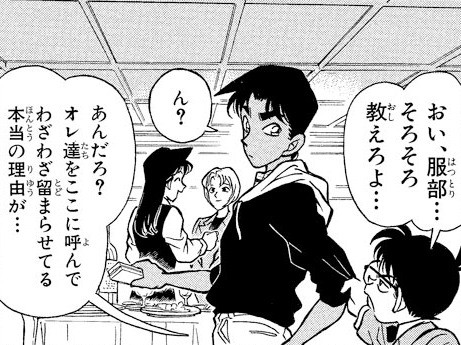
Heiji had his father, the head of the Osaka police, recommend Kogoro to the Nagato Group’s chairman. The job turned out to be finding the chairman’s childhood first love, hardly work for a famous detective, and Conan has noticed security guards all over the mansion. Now, at the chairman’s birthday dinner, he tugs at Heiji’s shirt.
- コナン:
- 「おい、服部…そろそろ教えろよ…」
- “Hey, Hattori... Time you told me...”
- 平次:
- 「ん?」
- “Hm?”
- コナン:
- 「あんだろ?オレ達をここに呼んでわざわざ留まらせてる本当の理由が…」
- “There's something, right? The real reason you called us here and went out of your way to keep us here...”
Heiji got Kogoro hired for a job that hardly needs a detective, and Conan suspects a hidden reason. 留まらせる is the causative of とどまる, so Heiji is the one keeping them at the mansion.
When とまる Stays in Kana
Kana works for every とまる and とめる, and the 2014 guide says its spelling examples don’t rule out writing a word in kana where it suits. Manga use kana for these often.
Check Yourself
Guess the Meaning from the Kanji
Each spelling's kanji points at one sense of とまる・とめる. Say what each one means, then open it.
止まる・止める
stop moving留まる・留める
be fastened; stay in the mind; keep in place泊まる・泊める
stay the night; lie at anchor停まる・停める
stop or park a vehicle; manga write it often, formal writing uses 止off-list
Pick the Spelling
Each phrase has とまる・とめる in kana. Decide which kanji fits, then open it.
交通がとまる
交通が止まる. 止まる・止める: stop moving.
ボタンをとめる
ボタンを留める. 留まる・留める: be fastened; stay in the mind; keep in place.
ホテルにとまる
ホテルに泊まる. 泊まる・泊める: stay the night; lie at anchor.
車がとまる
車が停まる. 停まる・停める: stop or park a vehicle; manga write it often, formal writing uses 止. An off-list spelling.
息をとめる
息を止める. 止まる・止める: stop moving.
目にとまる
目に留まる. 留まる・留める: be fastened; stay in the mind; keep in place.
友達を家にとめる
友達を家に泊める. 泊まる・泊める: stay the night; lie at anchor.
車をとめる
車を停める. 停まる・停める: stop or park a vehicle; manga write it often, formal writing uses 止. An off-list spelling.
Spell a Manga Line
Chiya is already planning to clear out a room for Cocoa. Which kanji fits とめて?
「誰かとめてよ!」
Show the answer
止めて. Cocoa wants someone to stop Chiya before she gets carried away. Stopping someone from doing something is 止. “Somebody stop her!”
Maruko’s mother is heading out to bring in the laundry. Which kanji fits とめて?
「おなべふいてきたら火とめてね」
Show the answer
止めて. Turning off the heat stops the burner, so it’s 止. “If the pot starts to boil over, turn off the heat, okay?”
Shindou reminds everyone of the plan after the beach. Which kanji fits とまる?
「今日はウチの別荘にとまることになっているって言っただろう?」
Show the answer
泊まる. Spending the night at the villa is staying over, so it’s 泊. “Didn’t I say we’re scheduled to stay the night at my villa?”
Nobuharu is talking about his father’s smoking. This line writes 止めさせられた. How is 止め read here?
「ヘビースモーカーだったあの父も僕が生まれると同時に止めさせられたって言ってました……」
Show the answer
やめさせられた. Quitting smoking is giving up a habit, so it’s やめる, not とめる. “Even my dad there, who used to be a heavy smoker, told me she made him quit the moment I was born…”
The beautician’s egg-shaped house rolled away overnight. Which kanji fits とまって?
「そのネジでとまってたんだ」
Show the answer
留まって. The screw kept the house fixed in place, so it’s 留. “It was held in place by that screw.”
Frieren asks Stark why he hasn’t killed the dragon. This line writes 留まる with とど furigana. What does it mean?
「村に留まる理由なんてないでしょ。」
Show the answer
留まる, “stay on”. Read とどまる, 留まる is staying in a place instead of moving on, not staying the night. “It’s not like you have any reason to stay in this village.”