Training with 稽古
稽古( けいこ )
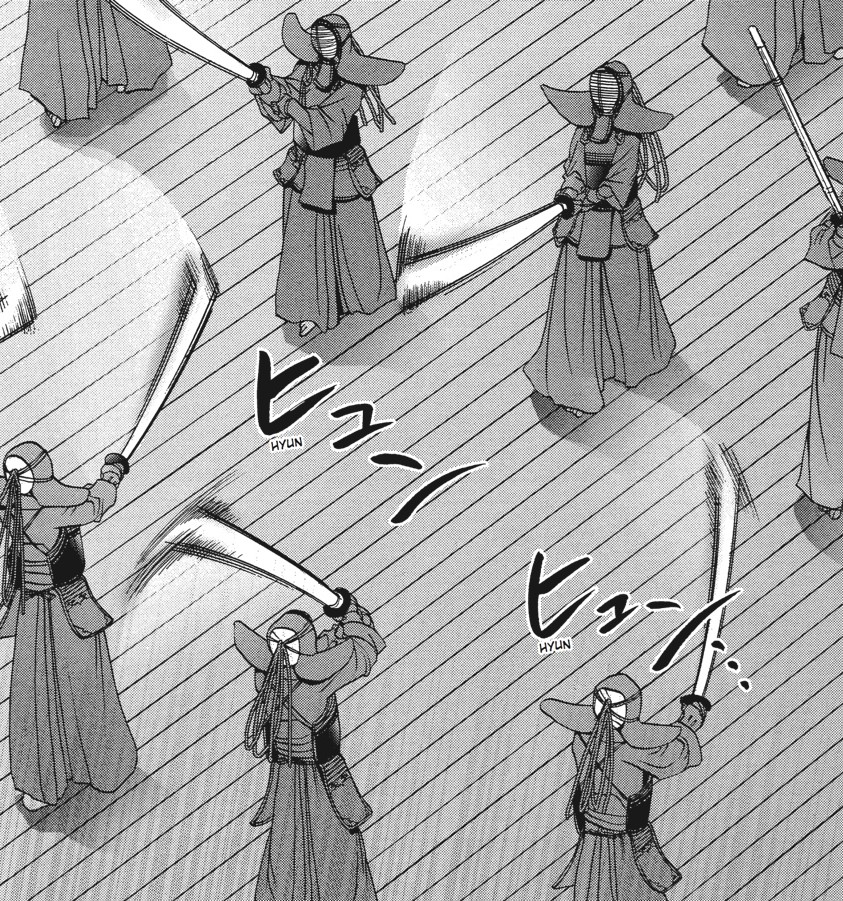
稽 means to consider or examine, and 古 means old. Together they point to learning by studying what earlier practitioners passed down.
Compared with the general word 練習( れんしゅう ) , 稽古( けいこ ) is closely associated with training under an established tradition or teacher.
You will hear 稽古 for kendo, judo, karate, kabuki, noh, and tea ceremony. It can refer to a training session as well as the practice itself.
Dictionary Definition
1. 芸能( げいのう ) ・武術( ぶじゅつ ) ・技術( ぎじゅつ ) などを習( なら ) うこと。また、練習( れんしゅう ) 。
2. 芝居( しばい ) などで、本番( ほんばん ) 前( まえ ) の練習( れんしゅう ) 。下( した ) げいこ。リハーサル。
3. 昔( むかし ) の書( しょ ) を読( よ ) んで物( もの ) の道理( どうり ) や故実( こじつ ) を学( まな ) ぶこと。学問( がくもん ) 。
1. To take lessons in performing arts, martial arts, technical skills, and similar fields. Also, training.
2. Rehearse before a performance of a play, etc. Rehearsal.
3. Reading old books to learn about the principles of things and historical facts. Study.
Goo Dictionary
Examples
Vocabulary Explanation:
Training with 稽古
名探偵コナン »
Volume 6 » Page 27
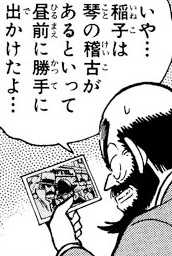
Hired to confirm whether a client’s wife is having an affair, Kogoro reveals a candid photo he took of the wife with another man.
The client mentions he let his staff take a break so they wouldn’t know about Kogoro’s visit. Kogoro asks if that includes the client’s wife.
伝次郎( でんじろう ) :「いや… 稲子( いねこ ) は琴( こと ) の稽古( けいこ ) 昼前( ひるまえ ) に勝手( かって ) に出( で ) かけたよ」
“No... Ineko said she had a koto lesson and went out on her own before noon.”
Challenge Yourself
Show translation
Challenge
What reason did Ineko give for leaving before noon?
Clues
琴( こと ) の稽古( けいこ ) があるといってsaying that she had a koto lesson
昼前( ひるまえ ) に勝手( かって ) に出( で ) かけたshe went out on her own before noon
What does the speaker mean?
She said that she had a koto lesson.
といって reports the koto lesson as the reason Ineko stated before leaving.
She said that she needed to buy a new koto.
The line names 稽古( けいこ ) , a lesson or training session, not shopping.
She left to dismiss the household staff.
Her stated destination concerns her own koto training.
She was invited to lunch by Kogoro.
She left before noon on her own, and Kogoro was visiting for the investigation.
She stayed home to practice alone.
出( で ) かけた says that she went out.
She refused to explain why she was leaving.
The speaker reports the reason she gave, whether or not it was truthful.
Ineko said she had a koto lesson and went out on her own before noon. 稽古( けいこ ) suits structured training in a traditional art.
Vocabulary Explanation:
Training with 稽古
俺物語!! »
Volume 2 » Page 56
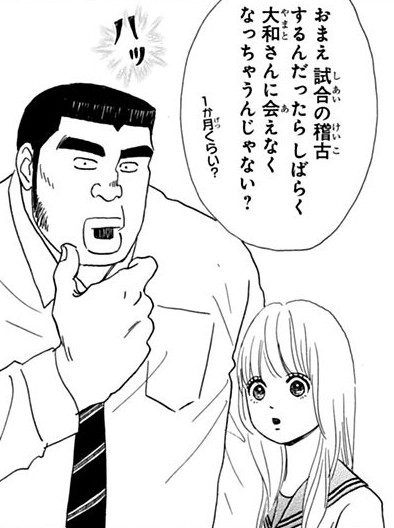
Members of the judo team plea for Takeo to help them in their upcoming match against a rival high school. Takeo quickly accepts their request, but Sunakawa considers how this will impact Takeo’s new relationship with Yamato.
砂川( すなかわ ) :「おまえ試合( しあい ) の稽古( けいこ ) 大和( やまと ) さんに会えなくなっちゃうんじゃない? 1( いっ ) か月( げつ ) くらい?」
“When you're training for the match, won't you be unable to see Yamato for a while? For about a month.”
Challenge Yourself
Show translation
Challenge
What consequence does Sunakawa warn Takeo about if he trains for the match?
Clues
試合( しあい ) の稽古( けいこ ) するんだったらif he is going to train for the match
しばらく大和( やまと ) さんに会( あ ) えなくなっちゃうんじゃない
he may end up unable to see Yamato for a while
What does the speaker mean?
He may be unable to see Yamato for about a month.
会( あ ) えなくなる means become unable to meet, and Sunakawa estimates the period as about one month.
He will have to stop seeing the judo team permanently.
The person he may not see for a while is Yamato, and the duration is temporary.
Yamato will join the judo training every day.
The line predicts less time with Yamato, not her participation in practice.
The match will be postponed for one month.
The month estimate concerns Takeo and Yamato not meeting, not the match date.
He will become unable to compete in the match.
The training creates a relationship cost. It does not remove his ability to compete.
Sunakawa will train in Takeo's place.
Sunakawa asks Takeo to consider the consequence of Takeo's own training.
Sunakawa warns that training for the judo match could leave Takeo unable to see Yamato for roughly a month. 会( あ ) えなくなっちゃう presents that as an unfortunate result.