Using tools and showing care with つかう
つかう has two official spellings. 使う is the everyday verb for using something: a tool, a person, time, or money. 遣う is putting something to full use, mostly care, words, or a skill. It shows up mainly in nouns such as 言葉遣い, “way of speaking”, and 小遣い, “pocket money”.
A rough test: if it’s something you pick up and use, write 使. Care, wording, and a knack lean toward 遣, mostly in set nouns, and the guide accepts 気を使う as well. Both are official, so they show up in formal writing as well as in manga. Same reading, different kanji explains where the official list comes from.
The Spellings at a Glance
| Spelling | Used for | Standing |
|---|---|---|
| 使う | use a person or thing | Official |
| 遣う | put to full use, as care, words, or money | Official |
Tools, Time, and Money with 使う
使う is using a person or thing for some purpose. 道具を使う is “use a tool”, 頭を使う is “use your head”, and 人使いが荒い is “a slave driver”. It also covers spending, as in 大金を使う, “spend a fortune”, and 時間を使う, “spend time”. 魔法を使う, “use magic”, is 使 as well.
使う is the common spelling by far. In this site’s manga corpus, the verb forms of 使う turn up more than 20 times as often as those of 遣う. The guide files 神経を使う, “take care over something”, under 使, and manga agree, 19 times to one.
1 source
【使う】人や物などを用いる。
通勤に車を使う。電力を使う。機械を使って仕事をする。予算を使う。道具を使う。
人間関係に神経を使う。頭を使う。人使いが荒い。大金を使う。体力を使う仕事。使う: use a person or thing. "Drive to work." "Use electricity." "Work with a machine." "Use the budget." "Use a tool." "Tread carefully in relationships." "Use your head." "A slave driver." "Spend a fortune." "Physically demanding work."
Example 1 of 5: Operating a computer with 操作
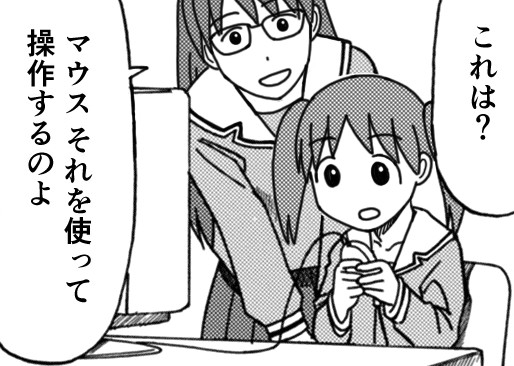
Chiyo is a child prodigy who’s skipped from elementary school to high school.
Chiyo’s new school has a computer class, but she’s never used a computer before.
- ちよ:
- 「これは?」
- “What's this?”
- よみ:
- 「マウス それを使って操作するよ」
- “A mouse. You use that to control it.”
Chiyo has never used a computer, and Yomi tells her the thing in her hand is a mouse. それを使って is “using that”, a tool in your hand.
Example 2 of 5: Heating water for a bamboo bath with 湯を沸かす
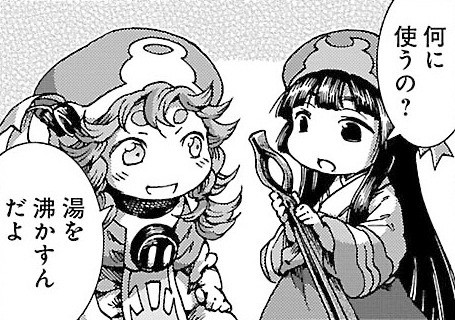
Hakumei and Mikochi went to a newly opened hot spring, only to find it closed for cleaning. Instead of giving up, they decided to build their own open-air bath by splitting a giant bamboo stalk in half. Hakumei split the bamboo while Mikochi cooked over a campfire. Then Hakumei, gathering stones near the fire, called for Mikochi to bring a pair of tongs.
- ミコチ:
- 「何に使うの?」
- “What are they for?”
- ハクメイ:
- 「湯を沸かすんだよ」
- “To heat the water.”
Hakumei has asked for a pair of tongs, and Mikochi wants to know what they’re for. 何に使う is “use it for what”.
Example 3 of 5: Limited time to catch with 制限時間
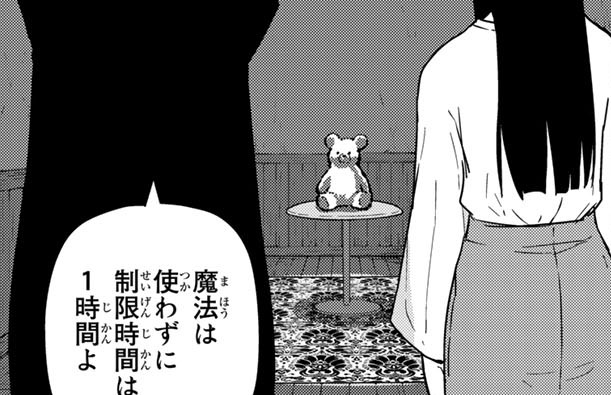
As a form of exam, Makoto is tasked with catching a plush bear that’s skilled at escaping.
- 支部長:
- 「魔法は使わずに制限時間は1時間よ」
- “Your time limit is one hour during which you cannot use magic.”
Makoto’s exam is to catch a runaway plush bear within an hour, and without magic. 魔法は使わずに is “without using magic”.
Example 4 of 5: Psychic power in gym class with 超能力
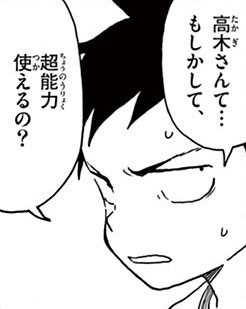
Nishikata and Takagi compete to see who can score higher on the long jump in physical education class. When Nishikata lands his jump, he’s a bit shaky. He watches as the spectating Takagi sweeps her arms as if to knock him over, and he falls back, lowering his score. Takagi gives her condolences afterward.
- 西片:
- 「高木さんて…もしかして、超能力使えるの?」
- “Takagi... could it be... you have psychic powers?”
Nishikata wonders whether Takagi knocked him over from a distance. 超能力使える is “can use psychic powers”, with the particle dropped.
Example 5 of 5: Care for not only Lou's face but also her body with 〜だけでなく〜も
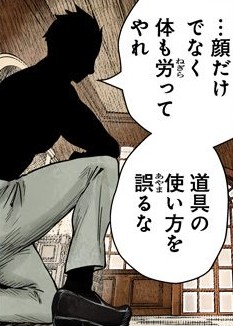
Benjamin suggests Louise do push-ups alongside Lou, her “Living Doll”. When Louise tires quickly, Benjamin tells her to care for Lou’s body as well as her face.
- ベンジャミン:
- 「顔だけでなく体も労ってやれ。」
- “Take care of not only her face but also her body.”
- 「道具の使い方を誤るな」
- “Don't misuse your tools.”
Benjamin tells Louise to look after Lou’s whole body, not just her face. Benjamin calls Lou’s body Louise’s tool, and 道具の使い方 is “how to use your tools”.
Care, Words, and Skill with 遣う
遣う is putting something to full use, most often care and attention. 気を遣う is “be considerate”, 気遣う is “worry about someone”, and 心遣い is “thoughtfulness”. The guide also gives 遣 to words, skill, money, and a few other set nouns: 言葉遣い, “way of speaking”, 筆遣い, “brushwork”, 上目遣い, “an upward glance”, 無駄遣い, “waste”, and 小遣い, “pocket money”. The kanji is the 遣 of 派遣, “dispatch”.
The guide notes that 遣う rarely appears as a verb, and that most uses are nouns ending in 〜遣い. Manga still use the verb for care. In this site’s manga corpus, 気を遣う turns up more than twice as often as 気を使う.
1 source
【遣う】十分に働かせる。
心を遣(使)う*。気を遣(使)う*。安否を気遣う。息遣いが荒い。心遣い。
言葉遣い。仮名遣い。筆遣い。人形遣い。上目遣い。無駄遣い。金遣い。小遣い銭。
* 現在の表記実態としては,「使う」が広く用いられる関係で,「遣う」を動詞の形で用いることは少なく,「○○遣い」と名詞の形で用いることがほとんどである。特に,心の働き,技や金銭などに関わる「○○づかい」の場合に「遣」を当てることが多い。遣う: put to full use. "Be attentive," with 遣 or 使. "Be considerate," with 遣 or 使. "Worry about someone's safety." "Breathe hard." "Thoughtfulness." "Way of speaking." "Kana spelling." "Brushwork." "A puppeteer." "An upward glance." "Waste." "Spending habits." "Pocket money."
* In how people write today, 使う is used so widely that 遣う seldom appears as a verb. It almost always appears in nouns of the form ○○遣い. 遣 is used most for ○○づかい words about the workings of the mind, skill, or money.
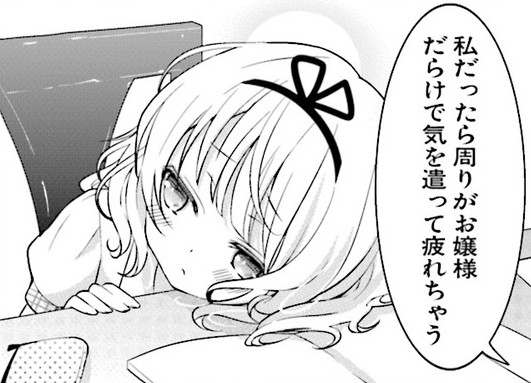
During a library study session with her friends, Syaro wonders what it would be like if she attended Cocoa and Chiya’s school. She does attend the same school as Rize, but they are in different grades. Chiya says that a school like Syaro’s sounds stifling, even for someone who got into an elite school on a tuition waiver.
- 千夜:
- 「私だったら周りがお嬢様だらけで気を遣って疲れちゃう」
- “If it were me, I'd get tired of surroundings filled with rich girls and having to act proper.”
Syaro’s school is full of rich girls, and Chiya says she’d wear herself out minding her manners there. 気を遣って is “being careful around them”.
When the Spellings Overlap
The two spellings write one word. デジタル大辞泉 lists 使う and 遣う under a single headword, and it files care and working a puppet as senses of that one word, without splitting the kanji in its definitions. The guide accepts both kanji for 気をつかう and 心をつかう. The 1972 list was shorter, with only 気遣う, 心遣い, 小遣い銭, and 仮名遣い under 遣う.
In this site’s manga corpus, the nouns split word by word. 小遣い never takes 使, and 言葉遣い and 無駄遣い take 遣 about six times as often as 使, but ムダ遣い in katakana is closer to even. 金遣い, “spending habits”, almost always takes 遣; nearly all the 金使い hits are verb phrases such as 金使いすぎ. The guide writes 人形遣い, “a puppeteer”, but manga use 人形使い more often. 魔法使い, “a mage”, turns up more than 1,200 times and never with 遣 there, though デジタル大辞泉 lists 魔法遣い as a variant spelling. 使い魔, “a familiar”, never takes 遣. 遣い手, “a master” of a sword or spear, can take 遣 for skill, though 使い手 is more common.
So 遣 is safest in the guide’s set 〜遣い nouns for care, words, skill, and money, and 使 is the default elsewhere. For 気をつかう, either kanji is correct.
2 sources
つか・う〔つかふ〕【使う/遣う】
4 容易には扱えないものをたくみに動かす。あやつる。また、自在に言葉を話す。「手品を―・う」「人形を―・う」「フランス語を―・う」
5 あれこれと注意を払って心を働かせる。「気を―・う」「細かい神経を―・う」つかう, written 使う or 遣う. 4. Skillfully move something that isn't easy to handle; manipulate. Also, speak a language freely. "Do magic tricks." "Work a puppet." "Speak French." 5. Pay attention to this and that and put your mind to work. "Be considerate." "Attend to every little detail."
つかう
使う-機械を使って仕事をする。重油を使う。
遣う-気遣う。心遣い。小遣い銭。仮名遣い。つかう. 使う: "Work with a machine." "Use heavy oil." 遣う: "Worry about someone." "Thoughtfulness." "Pocket money." "Kana spelling."
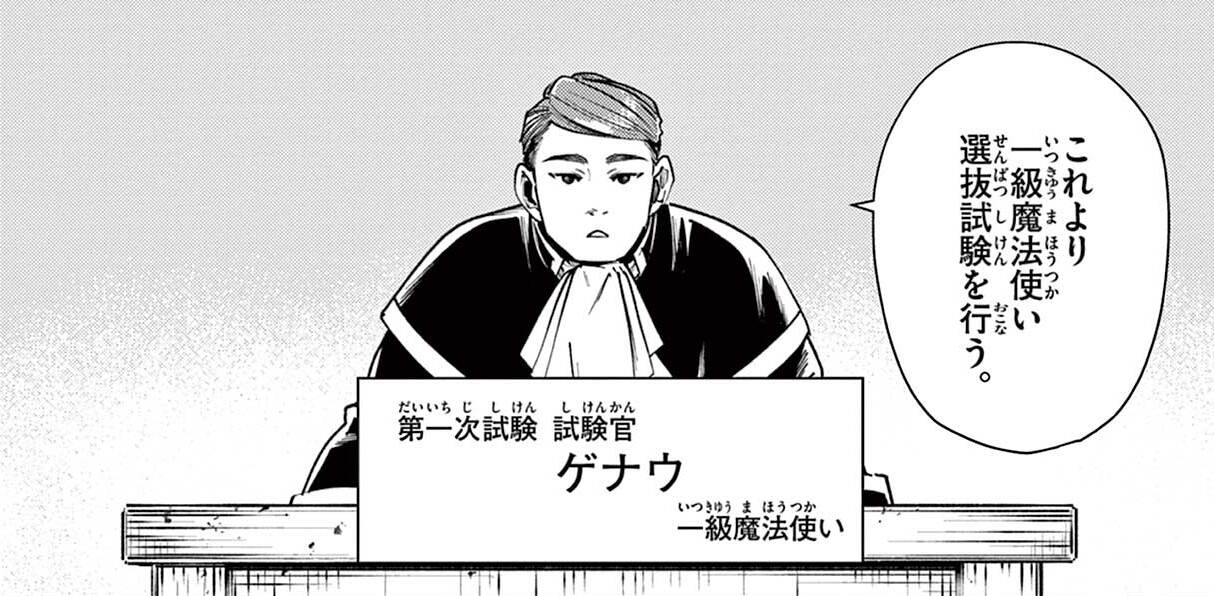
Frieren’s party needs a first-class mage to travel farther north, so Frieren and Fern come to Äußerst to take the first-class mage exam. It’s held only once every three years, many years nobody passes, and examinees sometimes die. After two months of training, the candidates gather in the hall of the Continental Magic Association.
- ゲナウ:
- 「これより一級魔法使い選抜試験を行う。」
- “We will now hold the first-class mage selection exam.”
Genau opens the first-class mage exam. 魔法使い is “mage”, and in this site’s manga corpus it never takes 遣.
When つかう Stays in Kana
Kana works for every つかう, and the 2014 guide says its spelling examples don’t rule out writing a word in kana where it suits. Manga mostly use kanji, but 気をつかう in kana is common, about as common as 気を使う. お使い, “an errand”, is more often written おつかい than with kanji.
1 source
また,この使い分け例は,必要に応じて,仮名で表記することを妨げるものでもない。
These examples of usage also do not stand in the way of writing a word in kana where needed.
Check Yourself
Guess the Meaning from the Kanji
Each spelling's kanji points at one sense of つかう. Say what each one means, then open it.
使う
use a person or thing遣う
put to full use, as care, words, or money
Pick the Spelling
Each phrase has つかう in kana. Decide which kanji fits, then open it.
車をつかう
車を使う. 使う: use a person or thing.
気をつかう
気を遣う. 遣う: put to full use, as care, words, or money.
電力をつかう
電力を使う. 使う: use a person or thing.
言葉つかい
言葉遣い. 遣う: put to full use, as care, words, or money.
無駄つかい
無駄遣い. 遣う: put to full use, as care, words, or money.
Spell a Manga Line
Chiya is imagining life at Syaro’s school. Which kanji does the manga use for つかって?
「私だったら周りがお嬢様だらけで気をつかって疲れちゃう」
Show the answer
遣って. In this site’s manga corpus, 気を遣う is more common than 気を使う, and this panel uses 遣. The 2014 guide accepts 使って too. “If it were me, I’d get tired of surroundings filled with rich girls and having to act proper.”
Hakumei has asked for the tongs. Which kanji fits つかう?
「何につかうの?」
Show the answer
使う. Tongs are a tool, and using a tool is the basic 使う. “What are they for?”
Nishikata has just fallen over on the long jump. Which kanji fits つかえる?
「高木さんて…もしかして、超能力つかえるの?」
Show the answer
使える. Using a power or ability is 使う, just like 魔法を使う. “Takagi… could it be… you have psychic powers?”
Genau is opening the exam. Which kanji fits つかい?
「これより一級魔法つかい選抜試験を行う。」
Show the answer
魔法使い. In this site’s manga corpus, 魔法使い turns up more than 1,200 times and 魔法遣い never. “We will now hold the first-class mage selection exam.”