みる is one verb with five kanji spellings you’ll meet in manga. 見る covers every sense and is never wrong. The other four narrow it down. 診る is a doctor examining a patient, 観る is watching a film or a game, 看る is looking after someone who needs care, and 視る is looking hard, or in manga, seeing what other people can’t.
Only 見る and 診る are official spellings, so formal writing sticks to those two. Manga use all five. Same reading, different kanji explains where the official list comes from.
look after someone who needs care, especially the sick
Off-list
視る
look closely; in manga, often seeing with special sight
Off-list
An official spelling has its reading in the 常用漢字表, the government's list of kanji for general use. An off-list spelling uses a reading the list doesn't give that kanji, or a kanji that isn't on it. Newspapers avoid those spellings, but manga use them freely.
Seeing in General with 見る
When in doubt, write 見る. The official guide gives it three jobs: looking at something, checking something, and looking after someone. Its examples include 面倒を見る and 親を見る, “take care of your parents”, so caring for someone is official 見る territory too.
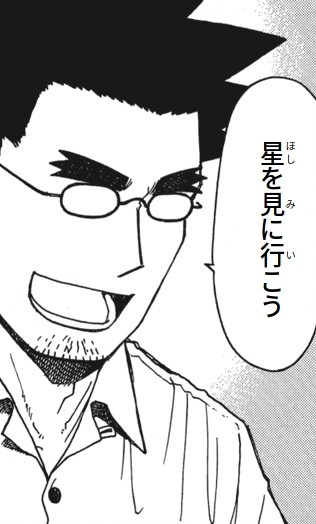
Example 1 of 3: Going to look at the stars with 〜に行く
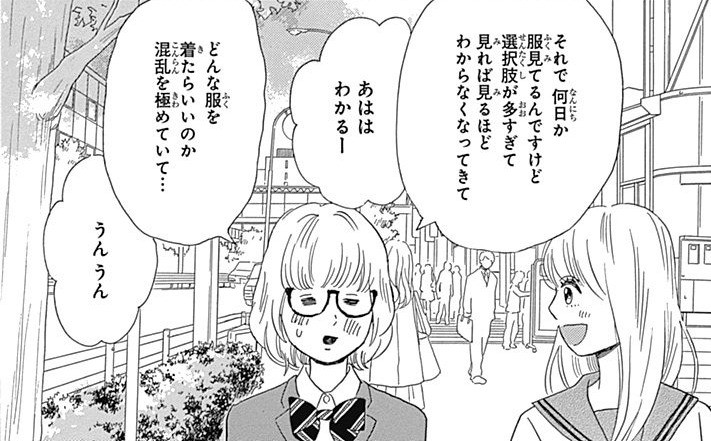
Yukika has invited Sunakawa to go out with her, and he has agreed. She texted Yamato that she was in town shopping for clothes but couldn’t decide, and Yamato came to meet her. Yamato tells her it makes sense to put in the effort when she’s going out with the person she likes.
ゆきか:
「それで何日か服見てるんですけど選択肢が多すぎて見れば見るほどわからなくなってきて」
“So I've been looking at clothes for a few days, but there are too many options. The more I look, the less sure I am.”
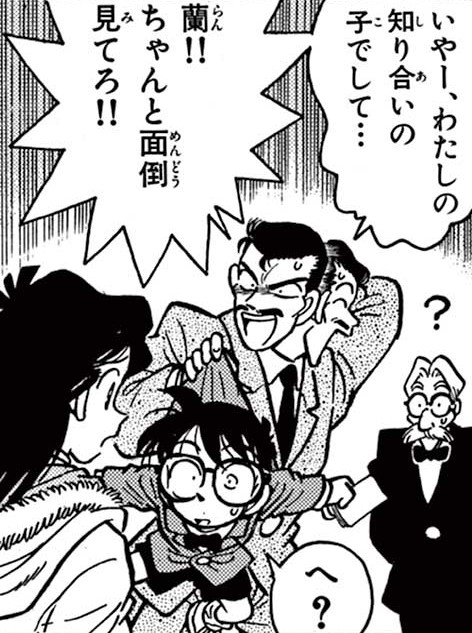
Conan and Ran end up with Kogoro investigating a kidnapping case. As Kogoro questions the butler, Conan steps in with his own questions. The butler asks who the child is.
Kogoro tells Ran to keep an eye on Conan, with the を of 面倒を見る dropped. In this site’s manga corpus, the phrase takes 見 or kana, and never 看る.
Examining a Patient with 診る
診る is a doctor or a vet examining a patient. It’s the spelling in 医者に診てもらう, “see a doctor”, and 脈を診る, “take someone’s pulse”. The kanji is the 診 of 診察, a medical examination. Manga also write 診せる, “show to a doctor”, with the same kanji, as in ちょっと診せて, “let me take a look”. That spelling is off-list, and the official one is 見せる.
診る is official, but 見る is still fine here. In this site’s manga corpus, though, 医者に診て outnumbers 医者に見て 17 to 2.
Example 1 of 2: Get it examined at the hospital with 診てもらう
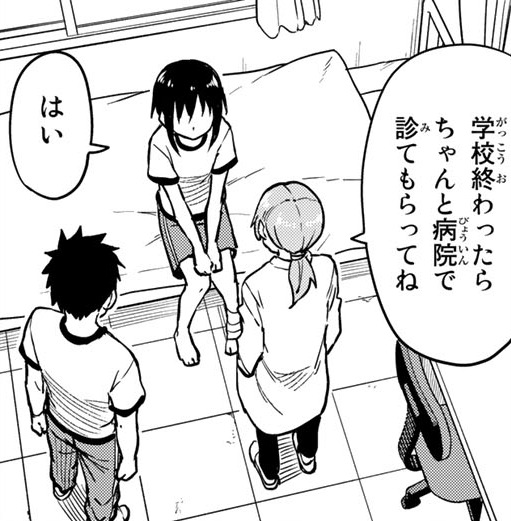
Rin hurt her foot during the sports festival, hid it, and kept competing. Ayumu noticed her strange walk and carried her to the nurse’s office. The school nurse has wrapped Rin’s ankle and told her it’s a sprain.
保健の先生:
「学校終わったらちゃんと病院で診てもらってね」
“Once school's out, make sure you get it examined at the hospital, OK?”
Rin has sprained her ankle at the sports festival, and the school nurse can only wrap it. 病院で診てもらって is “get it examined at the hospital”, the everyday way to tell someone to see a doctor.
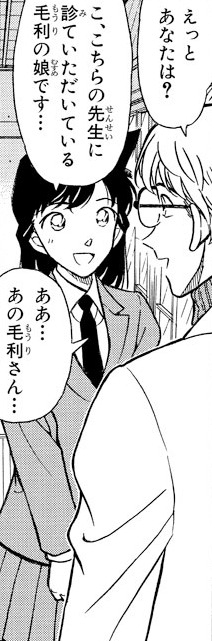
Kogoro has been feeling tired and has been seeing Dr. Araide, who runs a clinic from his home. He brought Ran and Conan along to hear his test results, which showed mild liver damage from drinking. While the doctor takes a phone call, Ran goes to find the bathroom and bumps into a young man in a white coat.
智明:
「えっと あなたは?」
“Um, and you are?”
蘭:
「こ、こちらの先生に診ていただいている毛利の娘です…」
“I-I'm the daughter of Mouri, who's being treated by the doctor here...”
Ran meets a young man at the clinic where her father is a patient. 診ていただく is the humble form of 診てもらう, so Ran shows respect to the doctor while describing her father as his patient.
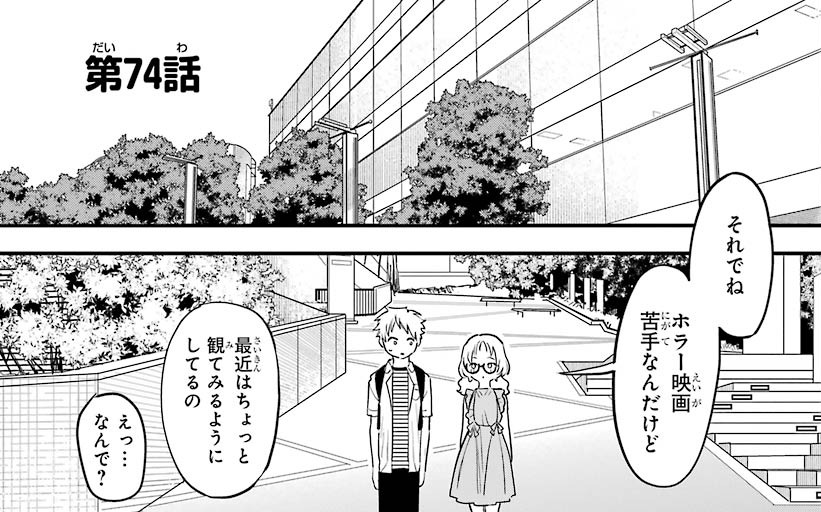
観る is watching a show or an event, such as a film, a play, a match, or a TV program. The kanji is the 観 of 観客, “audience”, and 観戦, “watching a game”. It’s off-list, so formal writing uses 見る. In manga it’s the most common of the four other spellings.
For films, manga prefer 観る. This site’s manga corpus has 映画を観 about 2:1 versus 映画を見. Matches and TV lean the other way, toward 試合を見 and テレビを見.
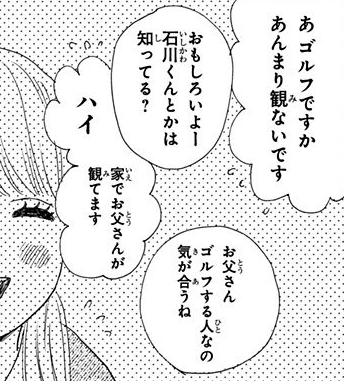
Takeo’s girlfriend Rinko visits to study with him, but Takeo’s parents take turns interrupting them to get to know her better. Takeo’s father, Yutaka, asks if she watches golf.
凛子:
「あ ゴルフですか。あんまり観ないです」
“Ah, golf? I don't watch a lot of it.”
豊:
「おもしろいよー!石川くんとかは知ってる?」
“It's fun! Do you know about Ishikawa-kun?”
凛子:
「ハイ。家でお父さんが観てます」
“I do. My father watches it at home.”
豊:
「お父さん ゴルフする人なの。気が合うね」
“So your dad's a golf guy. We're kindred spirits, eh?”
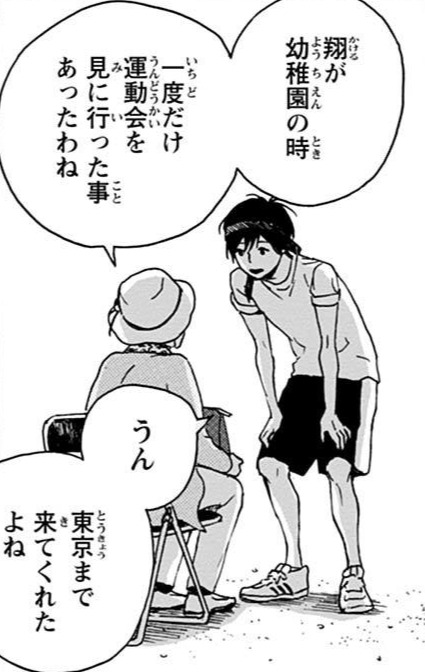
Kakeru’s grandmother once went to watch his kindergarten sports day. Watching an event can take 観る, but 見る is always fine, and this writer chose it.
Caring for Someone with 看る
看る is looking after someone who needs care, most often someone sick or hurt. It’s the 看 of 看病, “nursing someone”, and 看護師, “nurse”. デジタル大辞泉 notes that the “look after” sense of みる can be written 看る.
It’s rare, with very few hits in this site’s manga corpus. Most of them are someone looking after a person, as in ずっと看ててくれたの?, “Were you looking after me the whole time?” A few use 看てもらう for a doctor’s visit, where the official spelling is 診る.
見る is the official spelling for caring, since the 2014 guide files 親を見る under 見る.
1 source
(「看る」とも書く)そのことに当たる。取り扱う。世話をする。「事務をみる」「子供のめんどうをみる」
Also written 看る. To take charge of something, to handle it, to look after someone. "Handle the office work." "Look after the children."
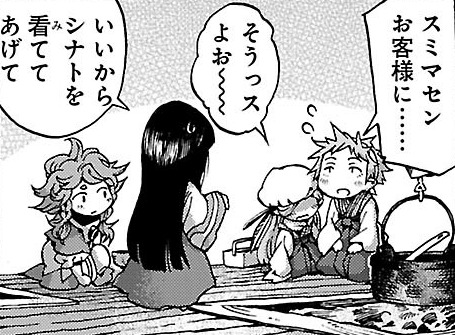
A blizzard has stranded Hakumei and Mikochi at the shop Shinato runs with her younger brother Mimari. Over drinks, the four play a betting game with chopsticks, and Hakumei keeps pouring for Shinato, who can’t hold her liquor, to throw off her game. With Shinato now very drunk, Mikochi offers to bring the big pot of dumpling soup over and asks Hakumei to help.
Shinato has drunk too much to manage, and her younger brother Mimari apologizes for letting the guests do the work. Mikochi waves it off and gives him a job: 看ててあげて, “look after Shinato”. She is in no state to look after herself, which is the kind of care 看る covers.
視る uses the 視 of 視線, “gaze”, 注視, “a close watch”, and 監視, “surveillance”. On its own it means looking hard at something, as in よく視てよく調べて, “look closely and check carefully”.
In manga it often means seeing what ordinary eyes can’t. A psychic who sees ghosts, the future, or the memories left in an object often 視る them. Many of the hits in this site’s manga corpus are this kind of sight.
〜てみる, “try doing”, is a helper verb that follows another verb. Manga write it in kana far more often than as 〜て見る. Even after 観る, the みる that means “try” stays in kana, as in 観てみる. Trying it out with 〜てみる covers it.
Kana works for every other sense too. The 2014 guide says its spelling choices don’t rule out kana where it suits, and this site’s manga corpus has 面倒をみる in kana about 70 times, counting inflected forms.
Check Yourself
Guess the Meaning from the Kanji
Each spelling's kanji points at one sense of みる. Say what each one means, then open it.
look after someone who needs care, especially the sickoff-list
視る
look closely; in manga, often seeing with special sightoff-list
Pick the Spelling
Each phrase has みる in kana. Decide which kanji fits, then open it.
遠くの景色をみる
遠くの景色を見る. 見る: see or look at; check; look after. More about 見
患者をみる
患者を診る. 診る: examine a patient.
映画をみる
映画を観る. 観る: watch a film, show, game, or performance. An off-list spelling.
病人をみる
病人を看る. 看る: look after someone who needs care, especially the sick. An off-list spelling.
未来をみる力
未来を視る力. 視る: look closely; in manga, often seeing with special sight. An off-list spelling.
エンジンの調子をみる
エンジンの調子を見る. 見る: see or look at; check; look after. More about 見
医者にみてもらう
医者に診てもらう. 診る: examine a patient.
試合をみる
試合を観る. 観る: watch a film, show, game, or performance. An off-list spelling.
母をみる
母を看る. 看る: look after someone who needs care, especially the sick. An off-list spelling.
面倒をみる
面倒を見る. 見る: see or look at; check; look after. More about 見
Spell a Manga Line
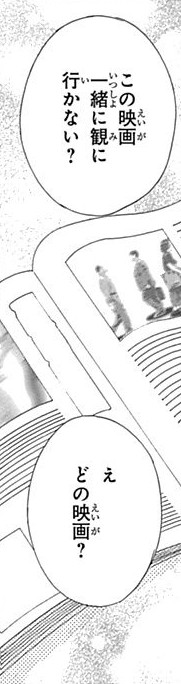
Futaba is asking Yuri to a film. Which kanji would a manga most likely give みに, and which spelling is never wrong?
「この映画一緒にみに行かない?」
アオハライド, volume 12Show the answer
観に. A film is a show to watch, and manga write 映画を観る about twice as often as 映画を見る. 見る is always correct, and it’s the only official choice. “How about going to see this movie with me?”
The school nurse has wrapped Rin’s sprained ankle. Which kanji fits みて here?
「学校終わったらちゃんと病院でみてもらってね」
それでも歩は寄せてくる, volume 14Show the answer
診て. A hospital examination is 診る, the 診 of 診察. In this site’s manga corpus, 病院で診て and 医者に診て are far more common than the same phrases with 見. “Once school’s out, make sure you get it examined at the hospital.”
Shinato has had too much to drink, and Mikochi hands her brother a job. Which kanji fits みてて?
「いいからシナトをみててあげて」
ハクメイとミコチ, volume 1Show the answer
看てて. Shinato can’t look after herself, so this is the care sense, the 看 of 看病. It’s off-list, so 見ててあげて is also right. “Never mind that. You look after Shinato.”
Kogoro is leaving Conan with Ran. The last question was about caring for someone, so is this 看 too?
「蘭!! ちゃんと面倒みてろ!!」
名探偵コナン, volume 1Show the answer
No. 面倒を見る is a set phrase, and the official guide files it under 見. In this site’s manga corpus, it takes 見 or kana and never 看. “Ran! Keep a proper eye on him!”