Japanese has a wide range of ways to express gratitude. The phrase changes with the relationship, whether the favor is still unfolding or already complete, whether it burdened the other person, and whether the thanks belongs to a particular setting such as a meal or a business letter.
Direct thanks built on ありがとう
ありがとう: Casual thanks
ありがとう is the standard casual way to say “thank you”. It’s used with friends, family, children, and other people with whom plain speech is natural. It can stand alone or take a topic.
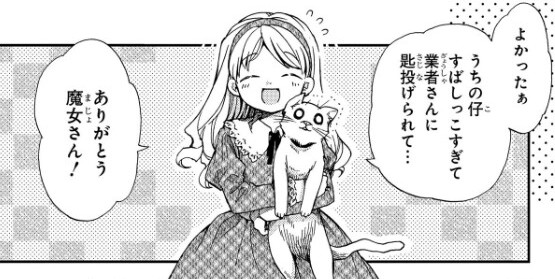
Eve takes the job of catching a cat that ran away from its owner. Following a successful mid-air catch off the roof and into a tree, Eve returns the cat to its owner.
お城ちゃん:
「よかったぁ うちの仔すばしっこすぎて業者さんに匙投げられて…」
“Thank goodness! Our little one was so quick that the hired help gave up on us...”
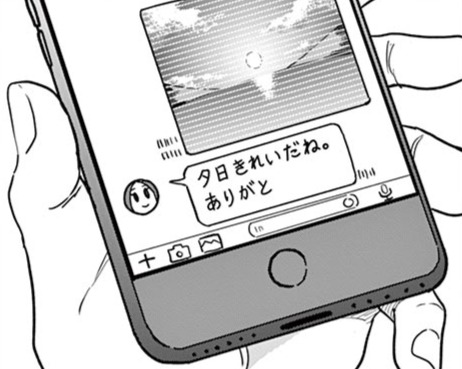
On her way home from the store, Takagi sees Nishikata out jogging. She asks where he’s heading, and he says he doesn’t really have a destination, but he’s jogged as far as the beach before. Takagi doesn’t seem to fully believe him, so after they part ways, Nishikata heads specifically for the beach. Once there, he takes a photograph and sends it to Takagi as proof of his accomplishment.
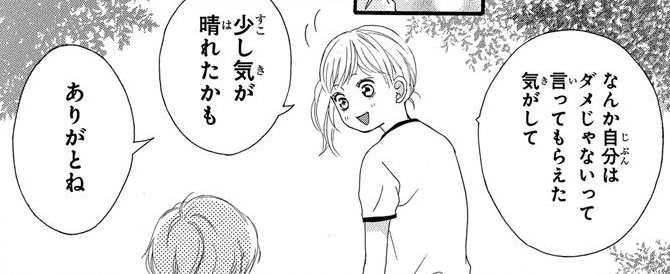
Adding ね gives ありがとうね or ありがとね. The ね makes the thanks sound personal by directing the feeling toward the listener. Depending on the character and delivery, it can sound warm, gentle, or reassuring.
Futaba had been feeling the weight of uncertainty of her standing with Kou. A general discussion about boys and relationships with her friend Kikuchi clears up her feelings.
双葉:
「なんか自分はダメじゃないって言ってもらえた気がして」
“It kind of felt like you were telling me I'm not hopeless.”
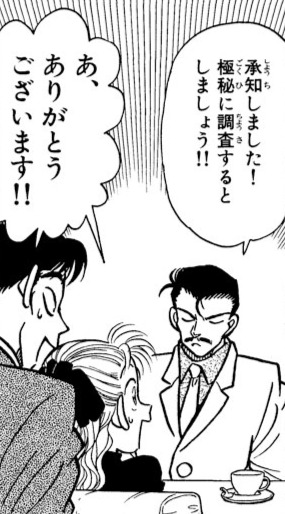
ありがとうございます is the common polite form. It’s used with anyone the speaker is not on familiar terms with, such as a teacher, supervisor, client, or older acquaintance.
Detective Mouri’s favorite idol, Yoko, comes to his agency after receiving threatening calls and candid photos. Her manager hopes to keep the matter quiet to protect her image.
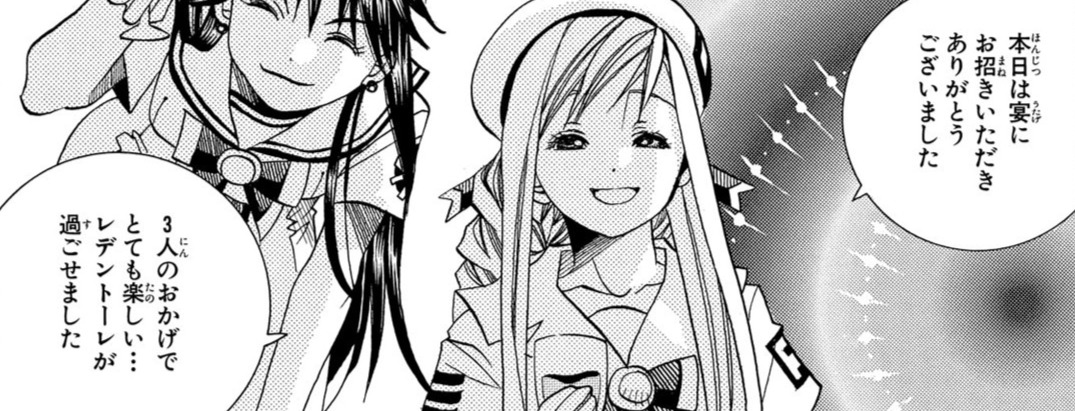
ありがとうございました frames a favor as complete or looks back on something that has ended.
Compared with ありがとうございます, which may still thank someone immediately after an action, ありがとうございました can mark the close of the whole encounter. The latter often has the feeling of “thank you for everything you just did”.
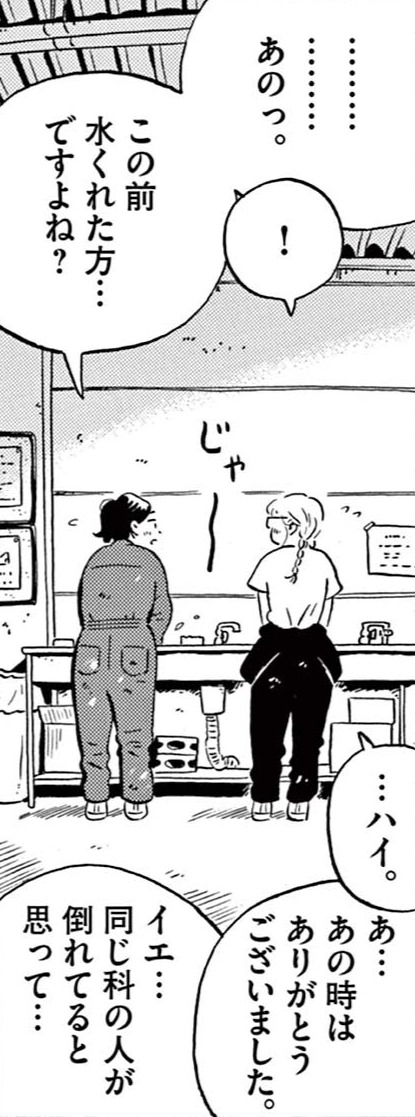
Natsumi tried making new friends from college only to end up drunk and abandoned. At class one day, she finds herself face to face with the helpful person who had found her and briefly helped her afterward.
なつみ:
「……… ……… あのっ。」
“Um...”
「この前水くれた方…ですよね?」
“You're the one who gave me water before...right?”
女:
「…はい。」
“...yes.”
なつみ:
「あ…あの時はありがとうございました。」
“Ah... Thank you for what you did back then.”
女:
「イエ…同じ科の人が倒れてると思って…」
“Not at all... I thought it was someone from the same department who had collapsed...”
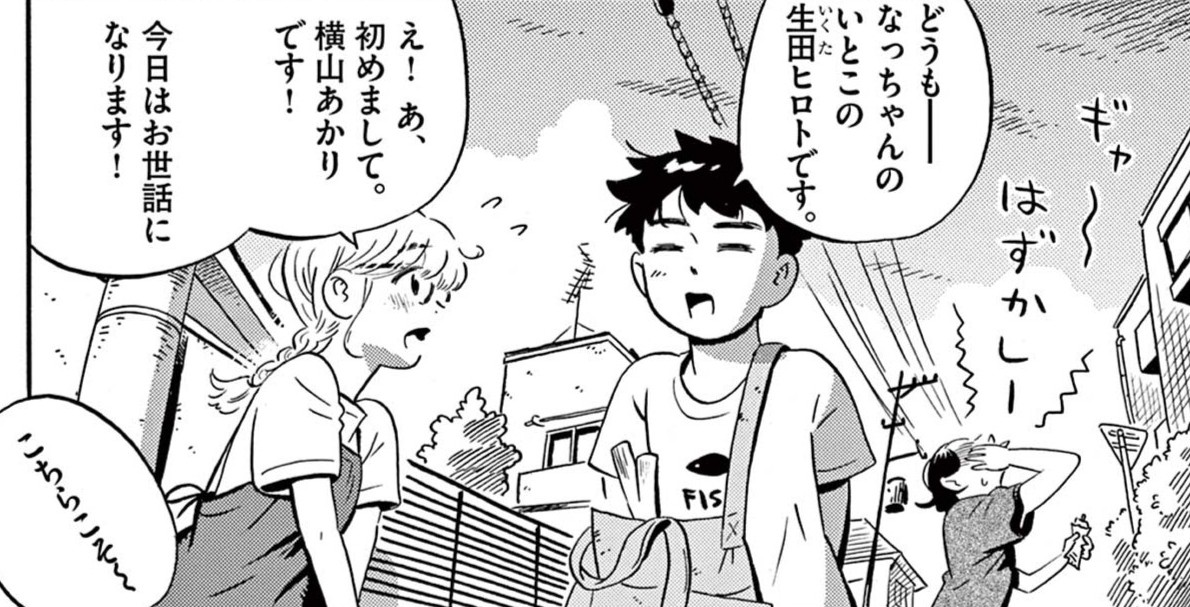
On his way home from buying groceries, Hiroto sees his cousin Natsumi cheering and dancing over a winning popsicle stick. While Natsumi agonizes over having been seen, Hiroto notices she’s brought a friend he hasn’t met.
なつみ:
「ぎゃ〜 はずかしー」
“Gah, how embarassing!”
ヒロト:
「どうもーーー なっちゃんのいとこの生田ヒロトです。」
“Howdy. I'm Nacchan's cousin, Hiroto Ikuta.”
あかり:
「え! あ、初めまして。横山あかりです!」
“Oh, ah, pleased to meet you. My name's Akari Yokoyama!”
Yousuke’s daughter Yotsuba wanders off while he’s moving things into their new home. One of his new neighbors offers to keep an eye out for her. Later, he finds Yotsuba outside with the neighbors.
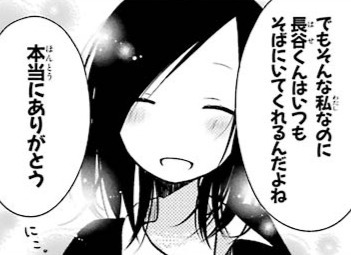
Due to a condition where she loses all memories of friends every Monday morning, Fujimiya acts cold toward classmates to avoid becoming friends. While eating lunch on the roof with Hase, she remarks how hard it is to act that way. Hase says it’s because she’s naturally a nice person. He recalls when he first tried becoming friends with her, how Fujimiya avoided eye contact with him and gave only brief responses. Fujimiya is shocked to hear how she had treated him.
藤宮:
「でもそんな私なのに長谷くんはいつもそばにいてくれるんだよね」
“But even though I was like that, Hase-kun, you're always by my side, aren't you?”
Japanese usually makes the beneficial action explicit with the verb’s て-form. This form may use くれる, くださる, or いただく, dependant on how the speaker construes the favor and the relationship.
〜てくれてありがとう: Thanks for doing something
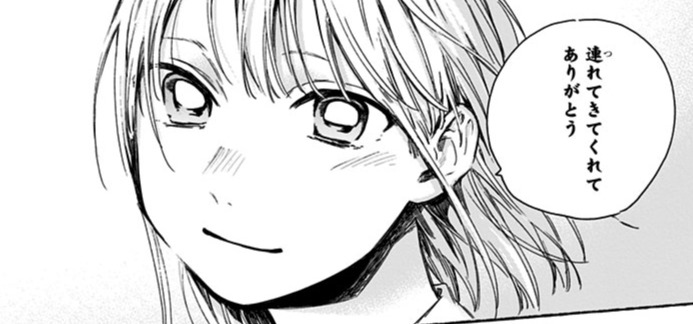
The pattern verb + てくれてありがとう is used with someone close enough for plain speech. It is used as thanks for receiving something or for an action done for the speaker.
Chinatsu tells Taiki she’d like to go to the beach. A train ride later, they’re wading through the tide. After playing for a while, the two sit and watch the setting sun, and then it’s time to head back home.
With polite thanks, 〜てくださってありがとうございます respectfully describes the other person’s action. A shop, workplace, or formal message may instead use 〜ていただきありがとうございます, which presents the speaker as the recipient of that action.
Apology-shaped thanks
すみません: Thanks for the trouble
すみません can thank and apologize at the same time. It’s used when another person went to trouble for the speaker, gave up something, or took on a burden.
Among close speakers, 悪い or 悪いね can acknowledge a favor through apology: “Sorry to put you out,” with an understood thanks. It is casual and depends heavily on the relationship.
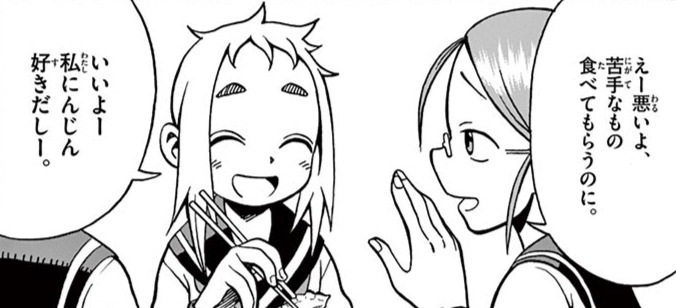
Yukari offers Mina the carrots from her lunch, as Yukari doesn’t like carrots. Mina gladly accepts them and offers Yukari one of her dumplings in return.
ユカリ:
「えー悪いよ、苦手なもの食べてもらうのに。」
“Eh~, I feel bad making you eat something I don't like.”
These expressions can do the social work of thanks, but their literal scope is narrower than “thank you”.
ごちそうさま: Thanks for the meal
ごちそうさま or the more polite ごちそうさまでした is said after eating. It thanks the host or cook and acknowledges the meal. It also thanks someone who paid for the meal. A guest can say 今日はごちそうさまでした when leaving after being hosted.
お世話になっています acknowledges an ongoing relationship of support. It is common when speaking to a teacher, host family, business contact, or someone who looks after a family member.
お世話になりました thanks someone for support over a completed period. A student may say it to a teacher after a course, or a departing employee to coworkers. It is closer to “thank you for everything” than thanks for one isolated action.
おおきに is strongly associated with the Kansai region and corresponds to “thanks” or “thank you”. Manga writers may use it alongside other Kansai vocabulary to establish a character’s regional speech.
The expression can sound friendly or businesslike depending on the speaker and setting. Outside regions where it is part of everyday speech, using it may sound playful or deliberately regional.
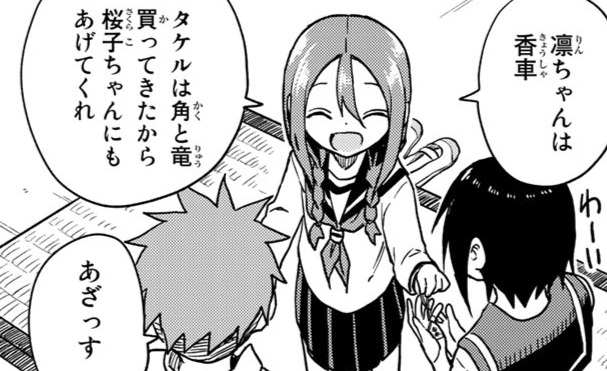
あざっす, あざす, and あざます are reduced, casual forms in the ありがとうございます family. They are very informal and used mainly among close peers. It’s especially common among male speakers in their teens and twenties chatting with friends and acquaintances.
Urushi returns from her school trip with gifts for the underclassmen in the shogi club. First she presents the treats she bought for everyone, then she pulls out shogi piece keychains.
うるし:
「凛ちゃんは香車」
“Rin, this one's the lance.”
「タケルは角と竜買ってきたから桜子ちゃんにもあげてくれ」
“Takeru, I bought a bishop and a dragon, so give one of them to Sakurako too.”
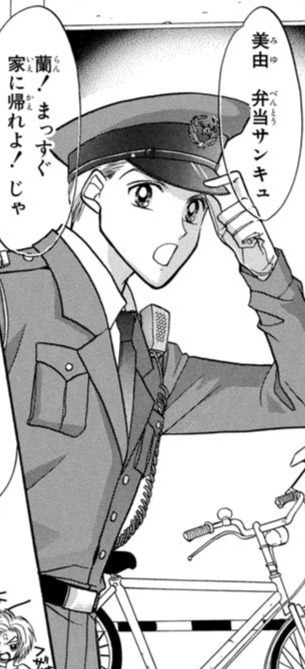
Miyu visits Yamato at his police box workplace to bring him a packed lunch. She sees her friend, Yamato’s sister Ran, there and stops by to see her next. A call comes in, and Yamato heads to help provide backup.
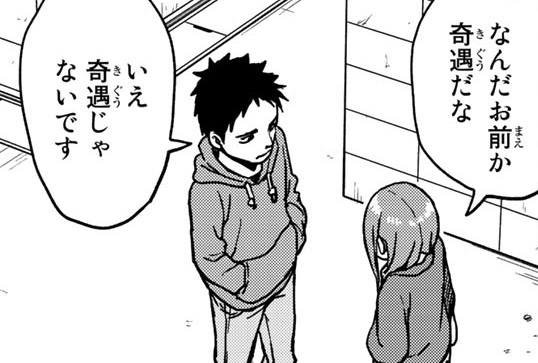
The repeated いえいえ often dismisses praise or thanks and can mean “not at all”. In that use, the speaker rejects the need for gratitude or denies the compliment.
Phrases learners often mistranslate as “thank you”
よろしくお願いします: Relationship-building request
よろしくお願いします is not a general thank-you. It asks for favorable handling of what has just been introduced. Depending on context, English may translate it as “nice to meet you”, “please take care of this”, or “I look forward to working with you”. This phrase falls into the categories of requests and relationship-building rather than gratitude.
お疲れ様 recognizes someone’s effort. Coworkers use it during or after work, and teammates or club members use it after a shared activity. お疲れ様でした looks back on the completed work or event. It’s commonly translated as “thanks for your hard work”, but the phrase is also a greeting and acknowledgment between members of a group. It can accompany gratitude, but it does not itself specify “thank you for helping me”.
ご苦労様でした is even less interchangeable with thanks. It acts as acknowledgment from a higher-status person toward someone who did work for that person’s side.
いただきます is the conventional expression before eating and can also be said when accepting food or drink. It carries appreciation toward the lives, labor, and people behind the food.
お願いします makes or accepts a request. It points toward what the other person is being asked to do. Treating お願いします as both “please” and “thank you in advance” may sometimes produce a smooth English translation, but its Japanese conversational job is still the request.