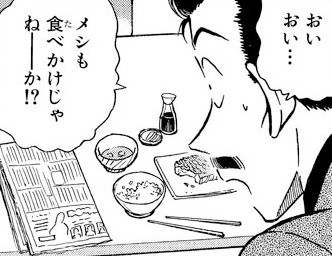
The verb 掛ける means “to hang” or “to put on”, as in 「壁に絵を掛ける」 “hang a picture on the wall”. When 掛ける attaches to another verb’s stem, it either aims the action at someone or marks an action that started but didn’t finish. These compounds are usually written in hiragana as かける. The noun form drops the る, as in 食べかけ “something half-eaten”.
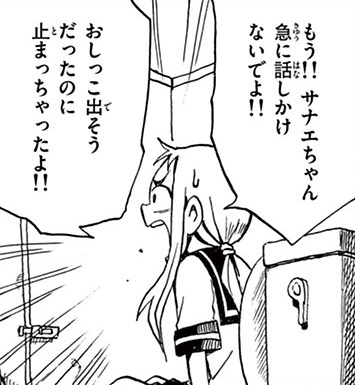
In the girls’ restroom, Sanae and Yukari wonder whether Nishikata and Takagi are dating. Sanae teases Yukari by calling out to Mina, who is inside a stall, that Yukari wants to flirt with boys. When Mina doesn’t answer, Sanae keeps shouting her name.
Mina is in a restroom stall when Sanae shouts her name, and the interruption ruins her concentration.
Calling out with 呼びかける
呼ぶ means to call. 呼びかける means to call out to someone, or to appeal to a group, as with a public announcement. The noun 呼びかけ is common in phrases like 呼びかけに応える, “respond to a call”.
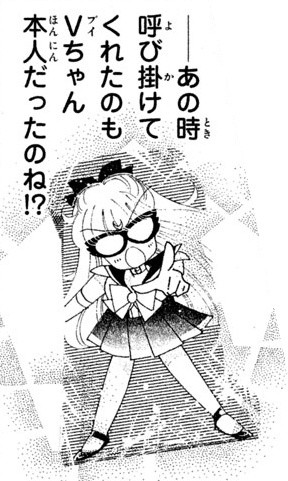
Sailor Venus has just revealed that she is Sailor V, the heroine Usagi idolizes. Venus says she has been in touch with Usagi all along through the arcade’s Sailor V video game, and her cat Artemis adds that the game let Usagi practice fighting. Usagi remembers the time the Sailor V on the game screen spoke to her and urged her into battle.
うさぎ:
「――あの時呼び掛けてくれたのもVちゃん本人だったのね!?」
“So it was really V-chan herself who called out to me that time, too!?”
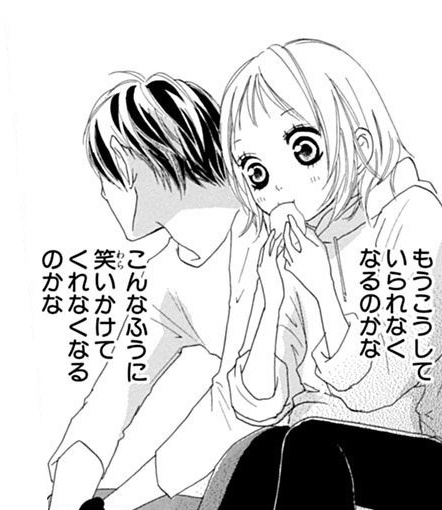
On a group outing, Ninako’s friends leave her alone with Ren, the boy she still loves. They split a mame daifuku, and when Ren smiles at her, she almost blurts out that she likes him. She wonders what would happen if he found out she still has feelings for him.
仁菜子:
「もうこうしていられなくなるのかな」
“Would we never be able to be together like this again?”
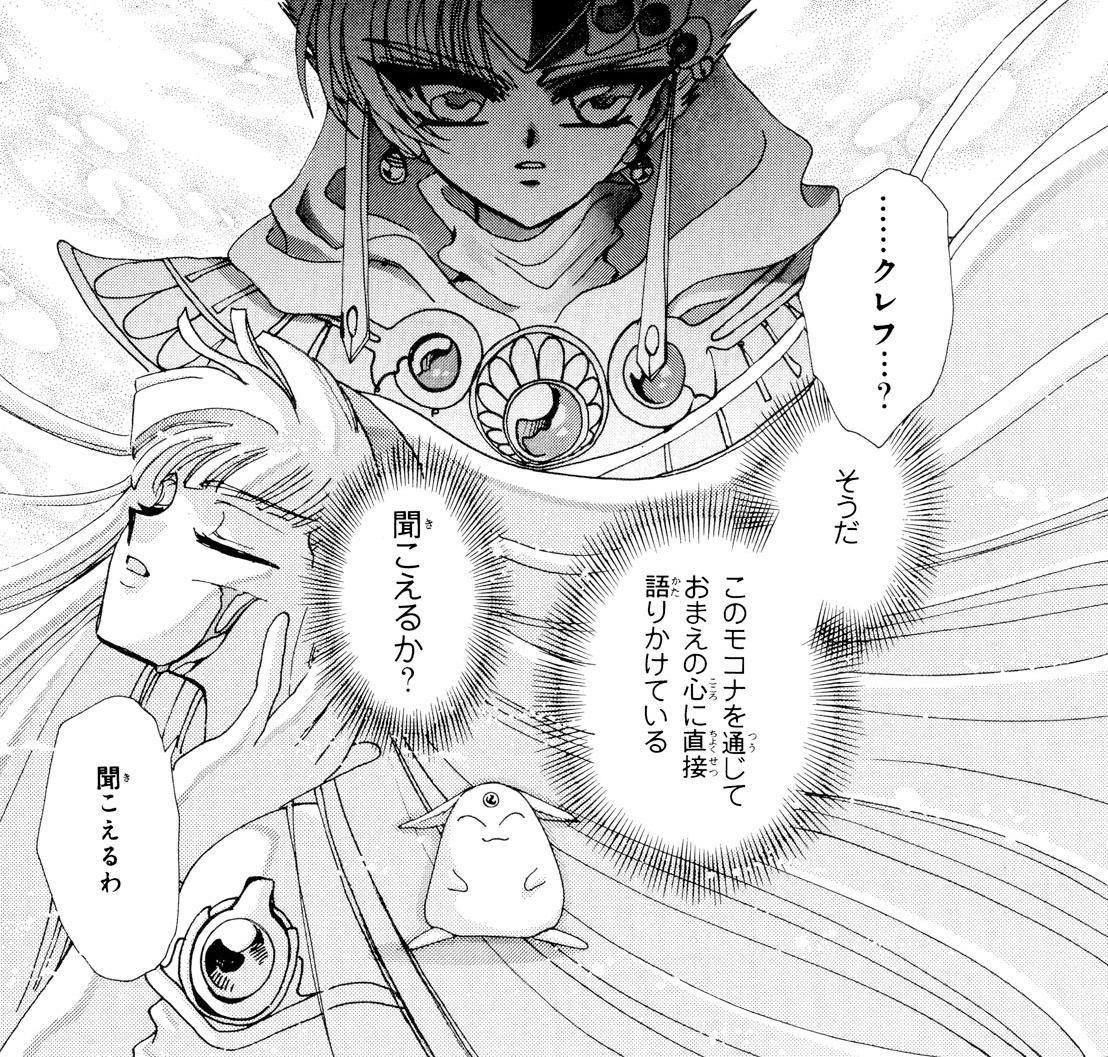
Umi lies injured while Hikaru fights the woman in black alone. Umi wishes she had learned magic from Clef, the sorcerer who is Mokona’s true master, so she could help. The jewel on Mokona’s forehead turns from red to blue, and Clef’s voice calls her name.
海:
「……クレフ…?」
“...Clef...?”
クレフ:
「そうだ」
“That's right.”
「このモコナを通じておまえの心に直接語りかけている」
“I'm speaking directly to your heart through this Mokona.”
Clef uses Mokona to speak directly to the injured Umi’s heart.
Moving Toward a Target
In these compounds, a person moves toward someone or something. The motion has a destination.
Chasing with 追いかける
追う means to chase. 追いかける focuses on running after a target that is moving away. The casual 追っかける means the same thing, and the noun 追っかけ can describe a devoted fan who follows a celebrity.
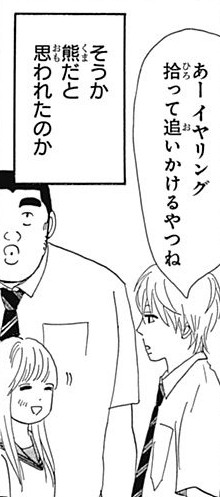
Takeo runs after a mother and her child to give them a shoe they dropped. Due to Takeo’s large size and loud steps, the mother and child get frightened and run from him. After he manages to return the dropped item, Takeo returns to his friends. Rinko remarks that the scene was like “A Bear in the Forest”. Sunakawa recalls the song.
砂川:
「あーイヤリング拾って追いかけるやつね」
“Ah, the one who picked up an earring and chased after.”
Sunakawa recalls the children’s song “A Bear in the Forest”, where a bear picks up a girl’s dropped earring and runs after her.
Barging in with 押しかける
押す means to push. 押しかける means to show up somewhere uninvited, or for a crowd to flock to a place. It often appears in apologies such as 突然押しかけてすみません, “sorry for barging in on you”.
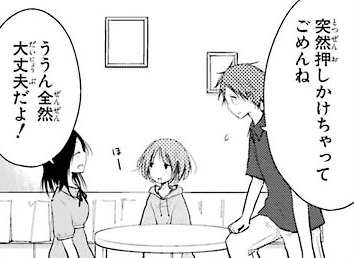
On the last day of summer vacation, Hase, Kiryu, and Saki visit Fujimiya’s house. Fujimiya greets them at the door with a smile and invites them inside.
Hase apologizes to Fujimiya for barging in, even though she was expecting them.
Starting Without Finishing
Here, かける marks an action that has started but hasn’t reached its end. Depending on the verb, this can mean “start to”, “be about to”, or “half-done”. Japanese usually writes this use in hiragana.
The noun form, verb stem + かけ, describes something left partway through. It often appears before の, as in 読みかけの本, “a book someone was partway through reading”.
Nearly Becoming with 〜になりかける
(〜に)なる means to become. 〜になりかける means to be on the way to becoming something without fully getting there.
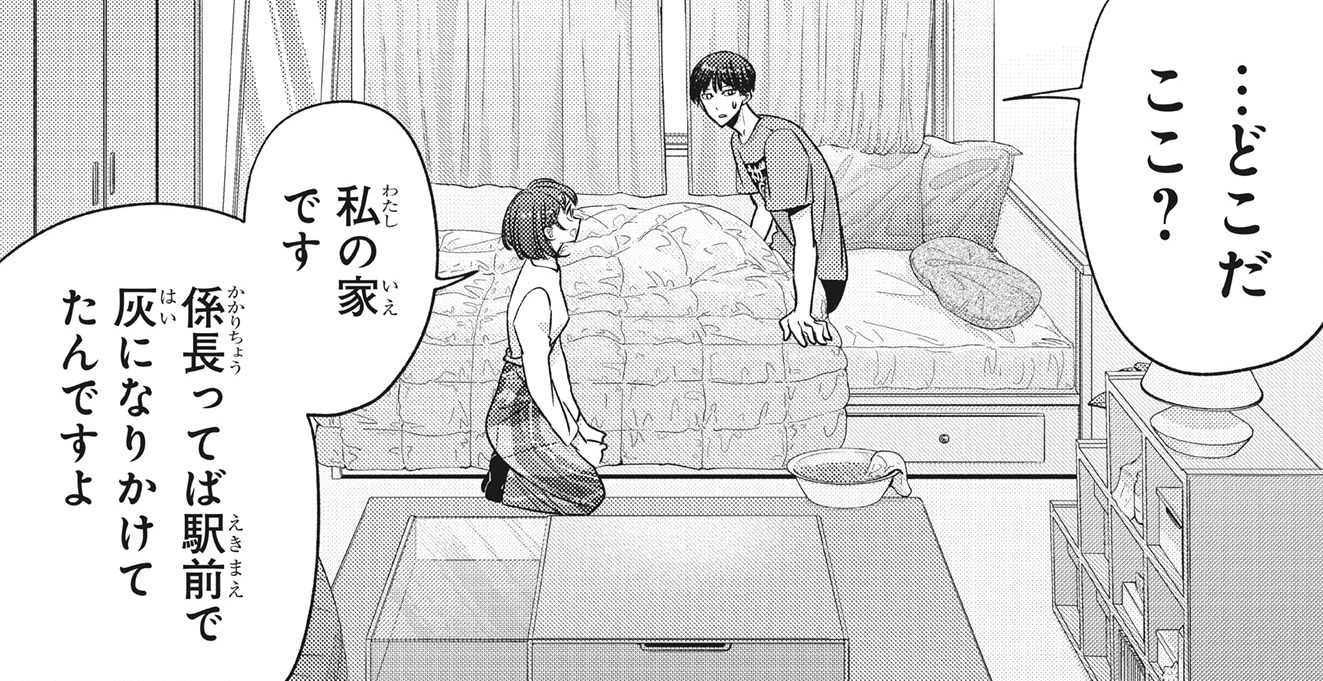
Kumada, a section chief who avoids other people, has spent the night being dragged into one subordinate’s home after another. Worn out, he slumped on the steps by the station, where Akagi, another of his subordinates, found him. He passed out, and he has just woken up in a bed he doesn’t recognize.
熊田:
「…どこだここ?」
“…Where am I?”
赤城:
「私の家です 係長ってば駅前で灰になりかけてたんですよ」
“My place. Honestly, sir, you were about to turn to ash outside the station.”
Kumada was so worn out that he was on his way to turning to ash. Akagi brought him home before he got there.
Starting to Say Something with 言いかける
言う means to say. 言いかける means to start saying something and then stop. It shows up often in questions like さっき何か言いかけた?, “Were you about to say something earlier?”
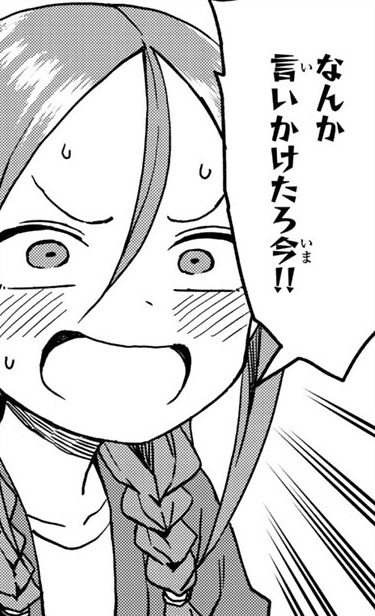
Ayumu walks Urushi home after asking if they could walk together for a while. At her door, she asks what he wanted, and he says he only wanted to walk with her. As he thanks her, he starts to say something, covers his mouth, and then says he enjoyed walking with the senpai he respects.
うるし:
「なんか言いかけたろ 今!!」
“You started to say something just now, didn't you!!”
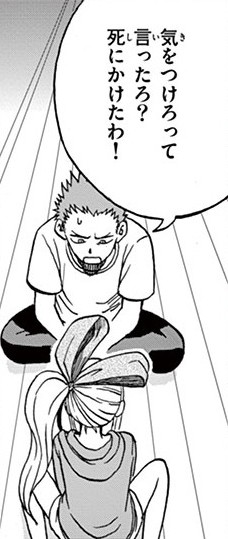
Kenji’s younger sister Kyoko is a jiangshi who must drink blood regularly, and her big ribbon serves as the talisman that keeps her instincts in check. When it came loose, she pinned Kenji down and drank his blood. Kenji managed to tie the ribbon back on, and Kyoko returned to normal.
A woman has hired Kogoro to find Shibata Shiro, a man she knew thirty years ago, and they track him to his apartment. Nobody answers the bell, but Shibata’s friend Yoshikawa arrives for a mahjong game and insists Shibata must be asleep. They find the door unlocked and the TV on, so they go in.
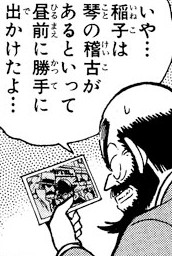
Hired to confirm whether a client’s wife is having an affair, Kogoro reveals a candid photo he took of the wife with another man. The client mentions he let his staff take a break so they wouldn’t know about Kogoro’s visit. Kogoro asks if that includes the client’s wife.
伝次郎:
「いや… 稲子は琴の稽古があるといって昼前に勝手に出かけたよ」
“No... Ineko said she had a koto lesson and went out on her own before noon.”
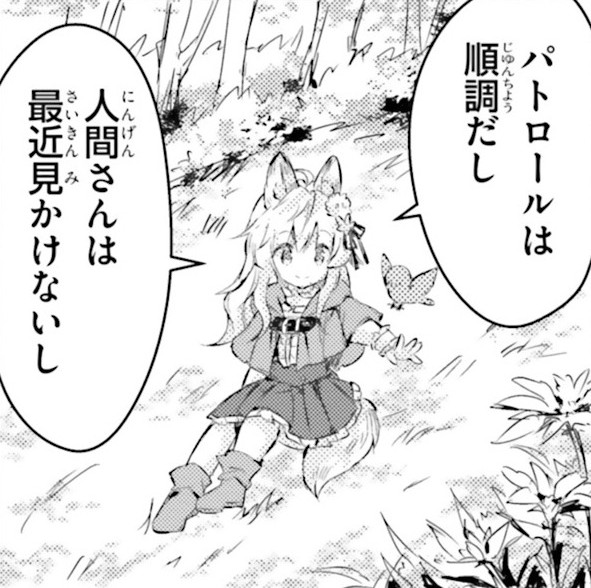
Ookami-chan is pleased that she hasn’t come across any humans in her forest lately.
Setting Traps and Starting Fights with 仕掛ける
仕掛ける means to set something up, such as a trap or a hidden microphone. It can also mean to start something against someone, like a fight, a game, or a tease. The noun 仕掛け means a trick, a device, or a mechanism.
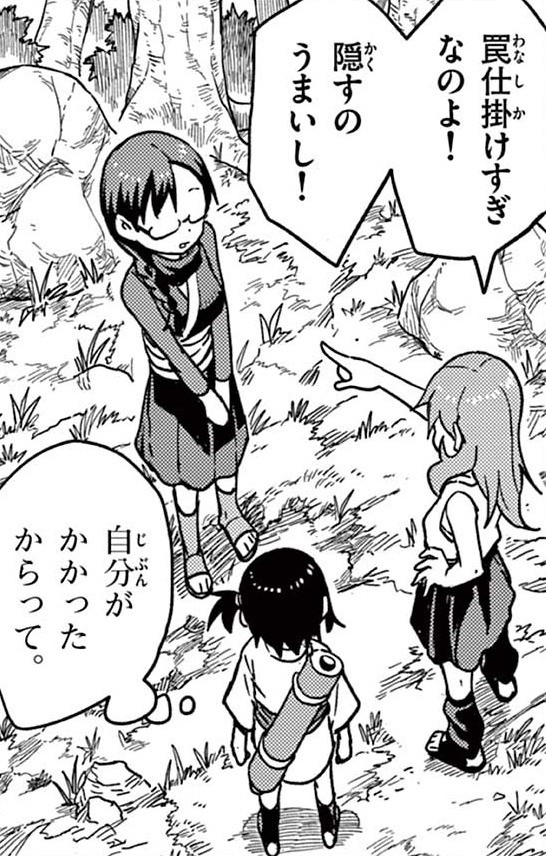
Touwata gets caught in yet another of Mizubashou’s traps and complains that she sets too many. Mizubashou says making traps calms her down. Benisumomo scolds Touwata for not paying attention, but steps into a trap herself in the middle of her lecture. Afterward, she points at Mizubashou and declares traps banned.
Benisumomo bans traps after getting caught in one of Mizubashou’s.
Faking Appearances with 見せかける
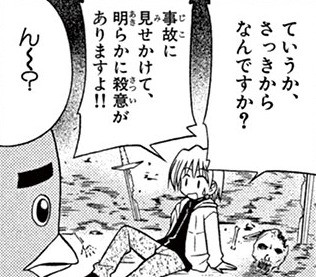
見せる means to show. 見せかける means to make something look like something it isn’t. Mystery stories use 〜に見せかける often, as in 事故に見せかける, “make it look like an accident”. The noun 見せかけ means a false appearance or sham.
At an amusement park, Nagi is too scared to go into the haunted house, so she sends Hayate in alone to see whether it’s scary. The costumed staff, who rehearsed hard for the attraction, decide he is an easy target. Inside, they attack him with real weapons, and Hayate dodges one close call after another.
ハヤテ:
「ていうか、さっきからなんですか?」
“More to the point, what is with you guys?”
「事故に見せかけて、明らかに殺意がありますよ!!」
“You're making it look like accidents, but you're obviously trying to kill me!!”