Words ending in 込む
The verb 込( こ ) む電車( でんしゃ ) が込( こ ) んでいる」 “the train is crowded”. When 込む attaches to another verb’s stem, it often adds inward movement, thoroughness, or a result that lasts. The noun form of a word replaces む with み.
Movement into an Enclosed Space
These compounds describe movement into a room, vehicle, or other enclosed space.
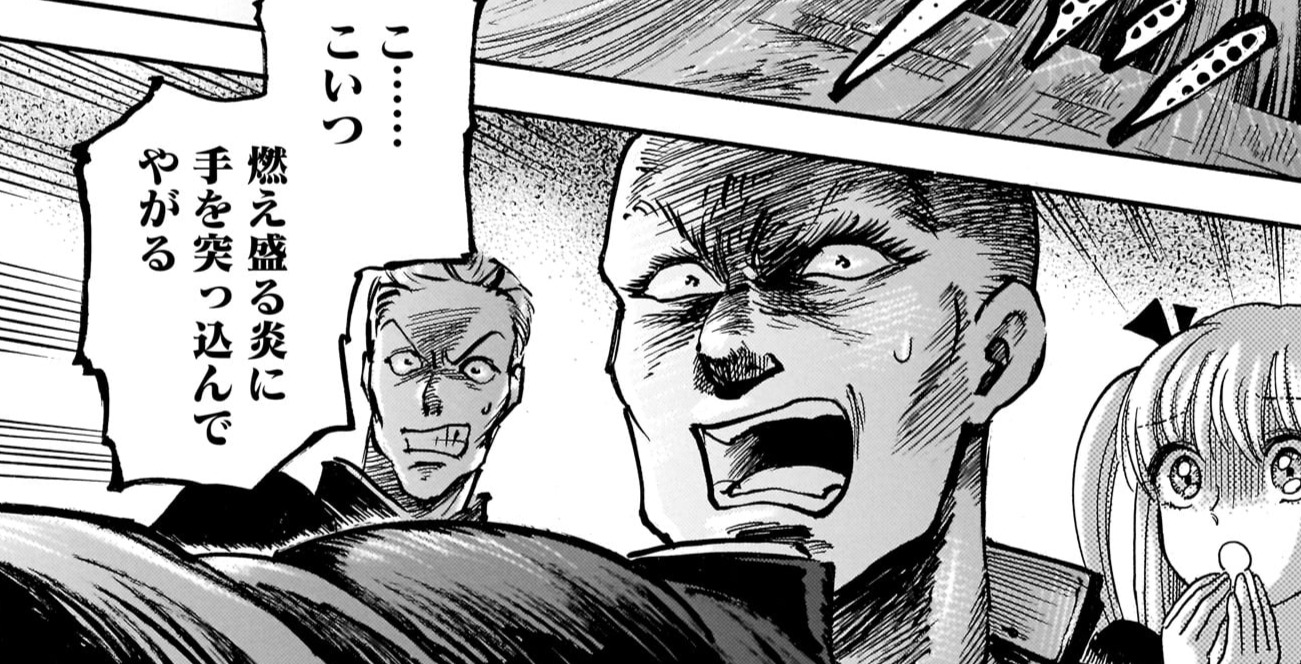
Thrusting into with 突っ込む
The verb 突( つ ) く means to poke or stab. Adding 込( こ ) む makes the motion forcefully inward, so 突( つ ) っ込( こ ) む means to thrust or plunge into something.
キラキラとギラギラ »
Volume 1 » Page 35
Lulu recognizes the dropped charm she found as the one she made for her childhood friend Zen before he moved away. A delinquent classmate takes it from her and throws it into the school incinerator to defy Zen. Lulu tries to retrieve it, but the fire forces her back. Zen appears and reaches into the flames.
不良( ふりょう ) :「こ…こいつ」
“Th-this guy...”
「燃( も ) え盛( さか ) る炎( ほのお ) に手( て ) を突( つ ) っ込( こ ) んでやがる」
“He's thrusting his hand into the raging flames!”
Challenge Yourself
Show translation
Challenge
What is the delinquent reacting to?
Clues
燃( も ) え盛( さか ) る炎( ほのお ) に手( て ) をhis hand into the raging flames
突( つ ) っ込( こ ) んでやがるhe is thrusting it in, described with shock and contempt
What does the speaker mean?
Zen is thrusting his hand into the fire.
炎( ほのお ) に marks the flames as the destination, 手( て ) を marks the hand being moved, and 突( つ ) っ込( こ ) む gives the forceful motion.
Zen is pulling the charm out with a tool.
The line says Zen puts his hand into the flames. No tool is mentioned.
Zen is throwing another object into the fire.
The object marked by を is his 手( て ) , so he is moving his hand into the fire.
Zen is trying to extinguish the fire from a distance.
突( つ ) っ込( こ ) む describes plunging directly into the flames, not acting from far away.
Zen is forcing the delinquent toward the incinerator.
The destination is the flames, and the moved object is Zen's hand. The delinquent is only reacting.
Zen has already retrieved the charm and left.
〜んでやがる describes the action as underway. The delinquent sees Zen reaching into the fire now.
The delinquent is stunned that Zen has plunged his hand into the raging fire. 突( つ ) っ込( こ ) む describes the forceful movement inward, while やがる adds the speaker’s hostile disbelief.
View Full Example
Zen does more than poke at the incinerator. He thrusts his hand into it.
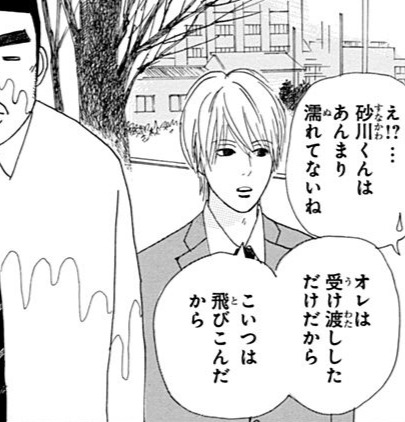
Diving into with 飛び込む
飛( と ) ぶ can mean to jump or fly. Adding 込( こ ) む narrows the direction, so 飛( と ) び込( こ ) む means to jump in or dive.
俺物語!! »
Volume 1 » Page 114
Takeo and Sunakawa meet Yamato at the park. Yamato sees that Takeo is soaked. Sunakawa explains that they saved a child from drowning.
大和( やまと ) :「え!?… 砂川( すなかわ ) くんはあんまり濡( ぬ ) れてないね」
“Huh?!... You're not that wet, Sunakawa.”
砂川( すなかわ ) :「オレは受( う ) け渡( わた ) ししただけだから」
“I just did the handoff, is all.”
「こいつは飛( と ) びこんだから」
“This guy dived right in.”
Challenge Yourself
Show translation
Challenge
Why is Takeo much wetter than Sunakawa?
Clues
オレは受( う ) け渡( わた ) ししただけだから
Sunakawa only handled the handoff
こいつは飛( と ) びこんだから
Takeo jumped into the river
What does the speaker mean?
Takeo jumped into the river while Sunakawa only handled the rescued child.
飛( と ) びこんだ explains Takeo's soaking, while だけ limits Sunakawa's role to the handoff.
Sunakawa jumped in first, then gave Takeo his wet clothes.
Sunakawa assigns 飛( と ) びこんだ to こいつ, Takeo, and says his own role was only the handoff.
Takeo fell into the river while trying to hand something to Sunakawa.
The line describes a deliberate jump into the river, not an accidental fall during the handoff.
Takeo stayed in the rain while Sunakawa waited indoors.
The contrast comes from the river rescue and their different roles, not weather.
Sunakawa dried off before they met Yamato.
He explains that he never entered the water, not that he dried himself afterward.
Takeo carried Sunakawa across the river.
Sunakawa handled the rescued child after Takeo jumped in. He was not carried across.
Takeo entered the river to save the child, while Sunakawa stayed out and handled the handoff. だけ minimizes Sunakawa’s role, and 飛( と ) びこんだ identifies the action that soaked Takeo.
View Full Example
Sunakawa says Takeo 飛( と ) び込( こ ) んだ, so Takeo dove into the river rather than merely jumping.
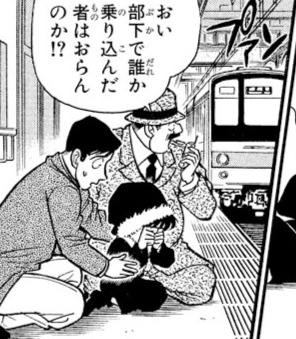
Boarding a Vehicle with 乗り込む
Used alone, 乗( の ) る means to get on or ride something. The compound 乗( の ) り込( こ ) む focuses on entering a vehicle, often with a particular purpose.
名探偵コナン »
Volume 15 » Page 83
Following the kidnapping of a pop music duo, the police are forced to rely on Conan and his friends to deliver the ransom. The kids speak to one of the kidnappers by phone at the subway station, with the police force watching from a distance. When a subway car is about to close its doors, the kids suddenly bolt onto the nearest car, three of the four making it on before the doors close.
目暮( めぐれ ) :「おい部下( ぶか ) で誰( だれ ) か乗( の ) り込( こ ) んだ者( もの ) はおらんのか!?」
“Hey! Did any of you get on?!”
Challenge Yourself
Show translation
Challenge
What does Megure demand to know from his subordinates?
Clues
部下( ぶか ) で誰( だれ ) かanyone among the subordinates
乗( の ) り込( こ ) んだ者( もの ) はおらんのかis there nobody who boarded?
What does the speaker mean?
Whether any officer managed to board the subway car.
乗( の ) り込( こ ) んだ者( もの ) asks for a subordinate who got into the car.
Whether every officer got off at the same station.
The verb is 乗( の ) り込( こ ) む, to board, not to get off.
Who instructed the children to board.
Megure asks about his own subordinates' response, not who directed the children.
Whether the subway car was completely empty.
His concern is whether one of his officers made it aboard.
Which officer bought the subway tickets.
No ticket purchase is mentioned in the demand.
Whether anyone stopped the train from departing.
The doors closed, so Megure asks who got onto the moving pursuit route.
Megure demands to know whether any of his subordinates managed to board the subway car with the children. おらん is his blunt negative form of おる.
View Full Example
Losing One’s Way with 迷い込む
迷( まよ ) う means to lose one’s way. Adding 込( こ ) む makes 迷( まよ ) い込( こ ) む “to stray into a place”.
キラキラとギラギラ »
Volume 1 » Page 173
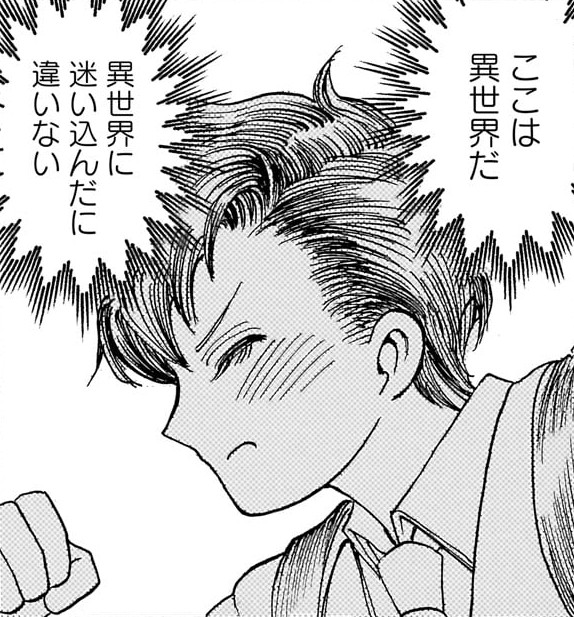
Zen lived in a glittering, idyllic town until his family moved. During his first day of school, he found everyone to be glaring and rugged. Rather than being gentle and playful, his classmates sought a brawl and chased after him.
禅( ぜん ) :「ここは異世界( いせかい ) だ」
“This is another world.”
「異世界( いせかい ) に迷( まよ ) い込( こ ) んだに違( ちが ) いない」
“I must have wandered into another world.”
Challenge Yourself
Show translation
Challenge
What conclusion does Zen reach about his new surroundings?
Clues
ここは異世界( いせかい ) だ
this place is another world
異世界( いせかい ) に迷( まよ ) い込( こ ) んだhe wandered into another world
に違( ちが ) いない
there is no doubt, expressing a strong conclusion
What does the speaker mean?
He must have wandered into another world.
Zen names the place as an 異世界( いせかい ) , and に違( ちが ) いない marks that explanation as his firm conclusion.
He has returned to the town where he used to live.
Zen calls the place an entirely different world because it feels unlike his former home.
He is uncertain whether he entered the correct classroom.
に違( ちが ) いない shows strong certainty, and his conclusion concerns the whole world around him.
He believes his classmates came from another world.
Zen says that he wandered into the other world. He does not say that the classmates traveled into his.
He plans to search for a route into another world.
迷( まよ ) い込( こ ) んだ is past tense, so he believes the wandering has already happened.
He realizes that he became lost on the way to school.
迷( まよ ) い込( こ ) む can involve losing one's way, but its destination here is explicitly an 異世界( いせかい ) , not an ordinary route.
Zen is so shocked by the rough school that he treats it as another world. 迷( まよ ) い込( こ ) んだ describes accidentally ending up there, and に違( ちが ) いない shows that he considers this the only possible explanation.
View Full Example
With 迷( まよ ) う alone, Zen would simply be lost. 込( こ ) む points toward the destination marked by に. He has wandered into another world and become lost there.
Filling or Packing Something In
Here, 込む focuses on the result of filling a limited space rather than the movement into it.
Dragging into a Situation 巻き込む
巻( ま ) く means to wind or wrap something. The compound 巻( ま ) き込( こ ) む can mean physically rolling something in or figuratively dragging someone into a situation, often an unwelcome one.
巻( ま ) き込( こ ) む is one of the most common compounds ending in 込( こ ) む.
ご注文はうさぎですか? »
Volume 1 » Page 104
Chiya and Cocoa play chess at an indoor hot spring.
チノ:
「私( わたし ) が勝( か ) ったらココアさんに逆( ぎゃく ) にお姉( ねえ ) さんと呼( よ ) んでもらう事( こと ) にしましょう」
“If I win, I'll have Cocoa call me her big sister instead.”
ココア:
「なんで巻( ま ) き込( こ ) まれてるの!?」
“Why am I getting dragged into this!?”
Challenge Yourself
Show translation
Challenge
What does ココア mean in the highlighted line?
Clues
巻( ま ) き込( こ ) まれてる巻( ま ) き込( こ ) まれてる means being dragged into a situation
What does the speaker mean?
Why am I getting dragged into this!?
Cocoa receives the effect of a bet made by other people, even though she did not agree to take part.
Cocoa says she volunteered to become part of Chino's wager.
The highlighted form is 巻( ま ) き込( こ ) まれてる. Here 巻( ま ) き込( こ ) まれてる means being dragged into a situation, so this choice does not match the Japanese.
Cocoa says she is dragging Chino into a separate contest.
The highlighted form is 巻( ま ) き込( こ ) まれてる. Here 巻( ま ) き込( こ ) まれてる means being dragged into a situation, so this choice does not match the Japanese.
Cocoa asks to withdraw only after she has won the bet.
The highlighted form is 巻( ま ) き込( こ ) まれてる. Here 巻( ま ) き込( こ ) まれてる means being dragged into a situation, so this choice does not match the Japanese.
巻( ま ) き込( こ ) まれてる means being dragged into a situation. Cocoa receives the effect of a bet made by other people, even though she did not agree to take part.
View Full Example
Making a Request with 申し込む
申( もう ) し込( こ ) む is a fixed compound, so its parts do not reliably predict its meaning. It means to apply or request. This is commonly used as a noun.
それでも歩は寄せてくる »
Volume 6 » Page 27
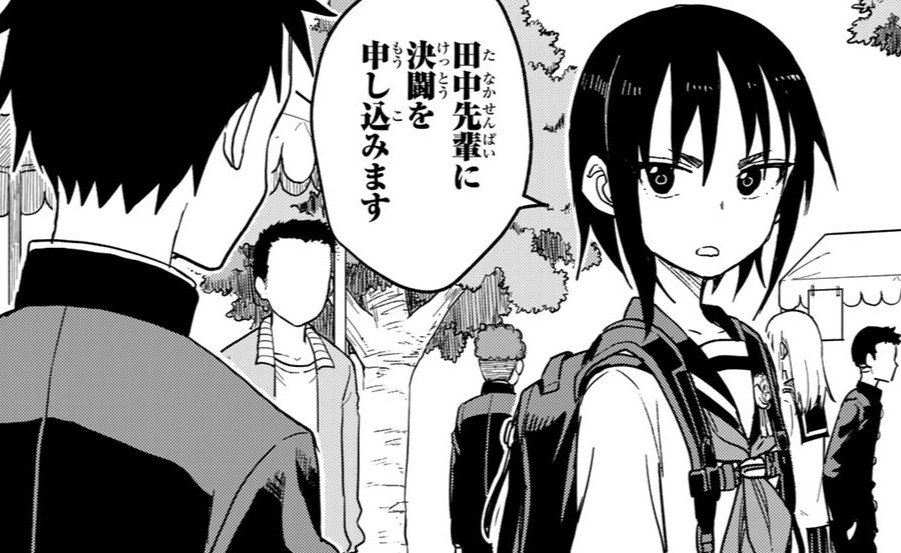
After starting her first year of high school, Rin signs up for the same club as her upperclassmen from middle school. She expected to be signing up for the kendo club, only to find that Ayumu (Tanaka) and Takeru are in the shogi club now. Rin tells Urushi, as the club’s leader, to give them back.
凛( りん ) :「田中( たなか ) 先輩( せんぱい ) に決闘( けっとう ) を申( もう ) し込( こ ) みます」
“I challenge Tanaka to a duel.”
Challenge Yourself
Show translation
Challenge
What does Rin formally announce?
Clues
田中( たなか ) 先輩( せんぱい ) にmarks Tanaka-senpai as the target of the action
決闘( けっとう ) を申( もう ) し込( こ ) みます"I formally challenge him to a duel."
What does the speaker mean?
She challenges Tanaka-senpai to a duel.
田中( たなか ) 先輩( せんぱい ) に identifies the person challenged, and 決闘( けっとう ) を申( もう ) し込( こ ) みます states the formal challenge.
She applies to join Tanaka-senpai's club.
申( もう ) し込( こ ) む can mean apply elsewhere, but its object here is 決闘( けっとう ) , a duel.
She asks Tanaka-senpai to return to the kendo club.
Her broader goal involves the club, but this sentence specifically announces a duel.
She reports that Tanaka-senpai challenged her first.
Rin is the speaker and uses the nonpast polite form to announce the challenge she is making.
She asks Urushi for permission to hold a duel.
The particle に marks Tanaka-senpai as the target. Urushi is not named in the sentence.
She says the duel has already ended.
申( もう ) し込( こ ) みます announces the challenge now. It does not describe a completed duel.
Rin uses 申( もう ) し込( こ ) む in the sense of formally putting forward a challenge. With 決闘( けっとう ) を, she is challenging Tanaka-senpai to a duel.
View Full Example
Going Deep into a Mental or Emotional State
This category moves away from a physical space, with meanings involving the mind or the self. 込( こ ) む in these words adds the sense of sinking deeply into a state and staying there.
Falling into Depression with 落ち込む
The verb 落( お ) ちる means to fall. 落( お ) ち込( こ ) む applies that downward movement to someone’s mood and means to become depressed or fall into a slump.
落( お ) ち込( こ ) む is one of the most common compounds ending in 込( こ ) む. It can also describe physically falling into a hole.
あしたは土曜日 »
Volume 秋・冬 » Page 37
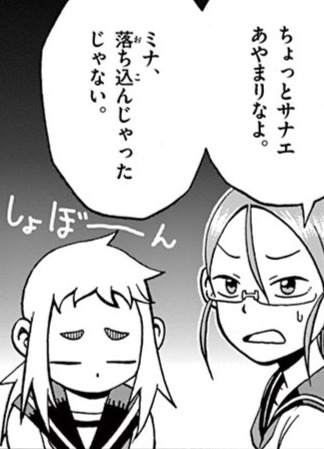
Yukari doesn’t like carrots, so she offers the ones from her lunch to Mina, who gladly accepts. Mina offers one of her dumplings in return, but Yukari is hesitant to accept because Mina did her a favor by taking the carrots. Sanae takes the opportunity to snatch the dumpling and eat it herself, claiming that neither of the other two seemed to want it. Mina mutters that she never said that.
ユカリ:
「ちょっとサナエ あやまりなよ。」
“Hey, Sanae, apologize.”
「ミナ、落( お ) ち込( こ ) んじゃったじゃない。」
“Mina's gotten all depressed.”
Challenge Yourself
Show translation
Challenge
What outcome is Yukari blaming Sanae for?
Clues
あやまりなよ
apologize, a direct command
落( お ) ち込( こ ) むto become depressed or discouraged
〜んじゃった
a contraction of 〜んでしまった, marking an unwelcome result
〜じゃない
points out a result the listener should recognize
What does the speaker mean?
Sanae's action has left Mina feeling depressed.
Yukari commands Sanae to apologize, then points to Mina having 落( お ) ち込( こ ) んじゃった as the result of Sanae's action.
Mina accidentally dropped the dumpling.
落( お ) ち込( こ ) む is an idiom for becoming depressed here. It does not describe an object falling.
Mina has already cheered up.
落( お ) ち込( こ ) んじゃった describes Mina sinking into a discouraged mood, not recovering from one.
Yukari became upset because Mina would not apologize.
ミナ is the person linked to 落( お ) ち込( こ ) んじゃった, while Sanae is the person Yukari orders to apologize.
Sanae is depressed because Yukari scolded her.
The line names Mina as the person who became depressed. Sanae is being blamed for causing it.
Mina did not become depressed at all.
The final じゃない is a pointed appeal for recognition, not ordinary negation of 落( お ) ち込( こ ) んじゃった.
Yukari says Sanae should apologize because taking the dumpling has left Mina discouraged. Sentence-final じゃない presses Sanae to acknowledge that result.
View Full Example
Here, Mina is feeling down because someone took the return offer she meant for Yukari.
Conviction with 思い込む
思( おも ) う means to think. Adding 込( こ ) む gives the sense that the thought has become conviction. One’s mind is set on it being true.
からかい上手の(元)高木さん »
Volume 15 » Page 36
Chii tries to hypnotize her mother using a coin on a string. When Chii gets sleepy instead, her mother suggests Chii’s hypnotized herself instead. As Chii lies down on the sofa for a nap, her mother gives the hypnotic suggestion that Chii will become a cat.
When Chii wakes later, she finds her father is home from work. But when he sees her, he asks why there’s a cat on the sofa.
ちー:
「猫( ねこ ) だと思( おも ) われている…」
“He thinks I'm a cat...”
ちー:
「と思( おも ) い込( こ ) んでいる!」
“He's completely convinced of it!”
Challenge Yourself
Show translation
Challenge
What belief does Chii attribute to her father?
Clues
猫( ねこ ) だと思( おも ) われているI am being thought to be a cat
と
quotes the earlier idea that she is a cat
思( おも ) い込( こ ) んでいるis convinced or has firmly assumed
What does the speaker mean?
Her father is convinced that Chii is a cat.
The second と points back to 猫( ねこ ) だ, and 思( おも ) い込( こ ) んでいる presents her father as firmly believing it.
Chii is convinced that her father is a cat.
This reverses the believer and the person mistaken for a cat.
Her father knows she is pretending and plays along.
Chii interprets his reaction as genuine 思( おも ) い込( こ ) み, not conscious playacting.
Chii believes the hypnosis really turned her into a cat.
Her concern is how her father sees her. She does not say her body actually changed.
Her father thinks there is a cat beside Chii.
Chii says she herself is being taken for the cat, not that a separate cat is present.
Her father has forgotten what cats look like.
The line describes a mistaken identification, not a loss of knowledge about cats.
Chii first frames herself as the person mistaken for a cat, then reframes her father as the believer. She concludes that he is completely convinced she is a cat.
View Full Example
Rather than just thinking Chii is a cat, her father seems convinced that she really is a cat.
Enthusiastic About Something with 入れ込む
入( い ) れる means to put something in. The compound 入( い ) れ込( こ ) む can mean to devote intense interest or energy to someone or something.
名探偵コナン »
Volume 24 » Page 189
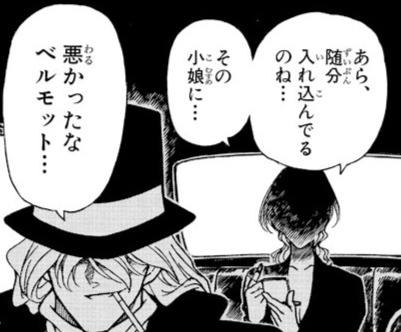
Gin and Vodka finally find Sherry, but after multiple gunshots are fired, she escapes. Vodka thinks they should continue to search for her, but Gin says there’s no way she’ll stay in town after their encounter.
ベルモット:
「あら、随分( ずいぶん ) 入( い ) れ込( こ ) んでるのね…」
“Oh my... You're rather interested in her, aren't you...”
「その小娘( こむすめ ) に…」
“That little girl...”
ジン:
「悪( わる ) かったなベルモット…」
“Sorry, Vermouth...”
Challenge Yourself
Show translation
Challenge
What does Vermouth imply about Gin's attitude toward Sherry?
Clues
随分( ずいぶん ) 入( い ) れ込( こ ) んでるyou are quite personally invested
その小娘( こむすめ ) に
in that little girl
What does the speaker mean?
He has taken an unusually strong interest in her.
随分( ずいぶん ) 入( い ) れ込( こ ) んでる suggests deep attention or personal investment.
He has completely forgotten about her.
Vermouth observes the opposite: Gin remains strongly focused on her.
He considers her too unimportant to pursue.
The teasing remark points to how much attention he is giving her.
He believes she has already left the country.
Her location is not Vermouth's point. She comments on Gin's degree of interest.
He wants Vermouth to protect her.
No protective request appears in the exchange.
He is interested only in the town where she escaped.
その小娘( こむすめ ) に marks Sherry as the target of his interest.
Vermouth teases Gin for being unusually invested in Sherry. 入( い ) れ込( こ ) んでる describes an ongoing, strong personal interest in her.
View Full Example
Gin’s detailed grasp of Sherry’s thinking shows how much attention he has invested in her.
Staying Put Once You’ve Entered
込( こ ) む can also stress remaining in a state for a long time. The person enters the state and does not quickly come back out.
In each word below, the state continues.
Thoroughly Simmered with 煮込む
On its own, 煮( に ) る means to boil or simmer. Compounding it to 煮( に ) 込( こ ) む keeps it in that state, giving something that is simmered thoroughly.
ARIA The MASTERPIECE »
Volume 3 » Page 364
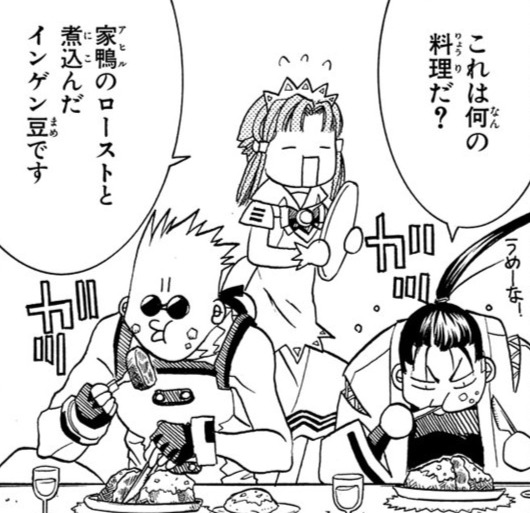
As part of their training, Akari, Aika, and Alice prepare a meal and host a large dinner.
暁( あかつき ) :「これは何( なん ) の料理( りょうり ) だ?」
“What dish is this?”
灯里( あかり ) :「家鴨( アヒル ) のローストと煮( に ) 込( こ ) んだインゲン豆( まめ ) です」
“It's roast duck and stewed green beans.”
View Full Example
The green beans simmered for a long time.
Bedridden with 寝込む
寝( ね ) る means to sleep. 寝( ね ) 込( こ ) む extends the state and usually means to be confined to bed by illness. It can also describe someone sleeping so deeply that they are unlikely to wake soon.
からかい上手の高木さん »
Volume 19 » Page 61
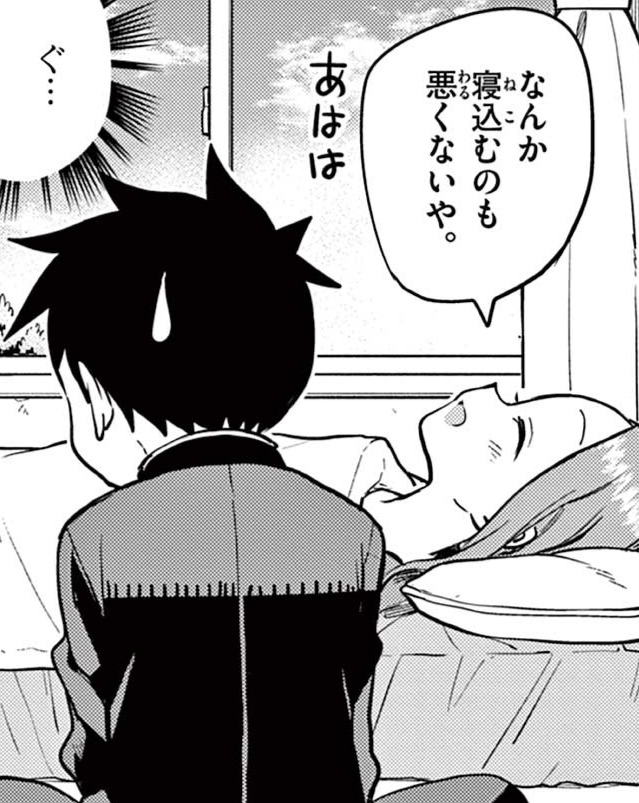
Takagi is home sick. Nishikata brings a printout from school to her room, and she asks him to stay. She thanks him for keeping her company.
高木( たかぎ ) :「なんか寝( ね ) 込( こ ) むのも悪( わる ) くないや。」
“Being stuck in bed like this isn't so bad after all.”
Challenge Yourself
Show translation
Challenge
How does Takagi now feel about being stuck in bed?
Clues
寝( ね ) 込( こ ) むのも"even being confined to bed," treating the experience as the topic of judgment
悪( わる ) くない"is not bad"
What does the speaker mean?
It is not so bad after all.
寝( ね ) 込( こ ) むのも is what Takagi evaluates, and 悪( わる ) くない gives her positive conclusion.
It is worse than she expected.
悪( わる ) くない negates "bad," so her judgment is not negative.
She is tired of staying in bed.
The line says being bedridden is not bad. It does not express boredom or frustration.
She has fully recovered and wants to get up.
Takagi evaluates 寝( ね ) 込( こ ) む, but she does not say that she has recovered.
She thinks sleeping deeply caused her illness.
In this scene, 寝( ね ) 込( こ ) む means staying in bed because she is ill, not causing the illness by sleeping.
She regrets asking Nishikata to stay.
Her conclusion is that the situation is not bad. She does not express regret.
Takagi turns 寝( ね ) 込( こ ) む into the experience she is judging with のも. Her verdict, 悪( わる ) くない, is that being stuck in bed is not so bad after all.
View Full Example
Takagi’s illness kept her in bed for the day.
Plopping Down with 座り込む
座( すわ ) る means to sit. 座( すわ ) り込( こ ) む means to sit down and remain in that spot.
アオのハコ »
Volume 21 » Page 181
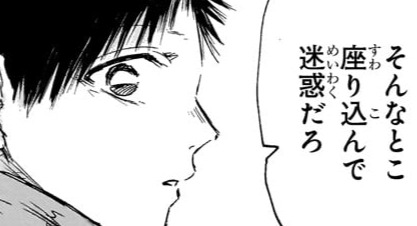
The Winter Cup basketball tournament has arrived, and Taiki is there to cheer on Chinatsu in the competition. He’s feeling so nervous that his legs give out and he falls into a crouch on the ground outside the event. In this state, he doesn’t see his upperclassman from the badminton club approaching.
針生( はりゅう ) :「そんなとこ座( すわ ) り込( こ ) んで迷惑( めいわく ) だろ」
“Sitting there like that is a nuisance.”
Challenge Yourself
Show translation
Challenge
What is Haryu criticizing Taiki for?
Clues
そんなとこ(に)座( すわ ) り込( こ ) んで
settling down in a place like that, with the location particle omitted
迷惑( めいわく ) だろthat is a nuisance, said as a blunt reminder
What does the speaker mean?
Sitting down there and getting in other people's way.
座( すわ ) り込( こ ) んで describes Taiki settling into that spot, and 迷惑( めいわく ) だろ says his position is causing trouble.
Standing up while other people are trying to sit.
座( すわ ) り込( こ ) む means to sit down and remain there. It does not describe standing.
Leaving the event without speaking to his upperclassman.
Haryu comments on where Taiki is sitting. The line does not mention leaving or failing to greet him.
Blocking the entrance with something he dropped.
Taiki himself is sitting in the troublesome spot. No dropped object appears in the line.
Complaining that the tournament venue is inconvenient.
迷惑( めいわく ) describes the effect of Taiki's behavior, not Taiki's opinion of the venue.
Refusing to save a seat for someone else.
The line criticizes his choice of place, not whether he reserved a seat.
Haryu tells Taiki that settling down in that spot is a nuisance. そんなとこ identifies the problematic place, while 座( すわ ) り込( こ ) んで describes sitting there and staying put.
View Full Example
込( こ ) む shows that Taiki stays seated even though he is blocking people walking through the area.
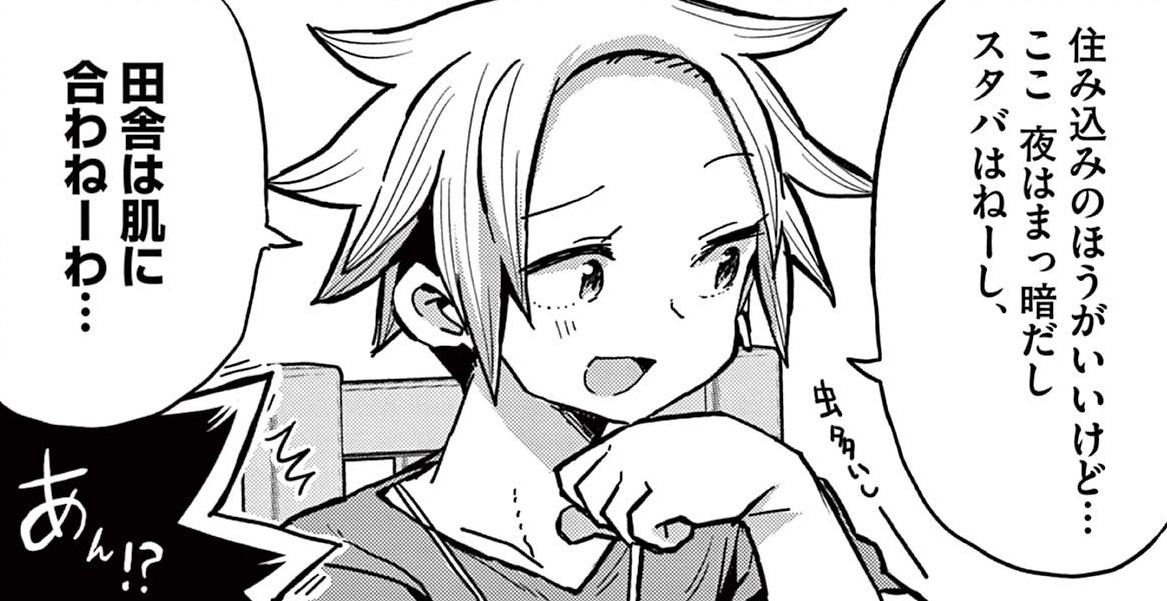
Live-In Employement with 住( す ) み込( こ ) む
住( す ) み込( こ ) み refers to working while staying overnight in a dormitory or company housing provided by the employer, or at the workplace (such as the employer’s home). Although it can be used as a verb, it’s most often used as a noun.
ぼくの魔なむすめ »
Volume 2 » Page 118
Sami answers a phone call from her uncle. He thinks his friend’s son Nishi would be a good assistant for Sami’s father. Since her father’s busy trying to meet a deadline, Sami accepts on her father’s behalf. When the assistant arrives, he’s completely unwilling to adjust to Sami’s father’s workstyle, then he stays overnight in their bed and wears Sami’s father’s clothes. After all this, Sami’s father is still willing to take Nishi on, but not as a live-in assistant.
西( にし ) :「住( す ) み込( こ ) みのほうがいいけど… ここ 夜( よる ) はまっ暗( くら ) だしスタバはねーし、(虫( むし ) 多( おお ) いしーーー)」
“A live-in arrangement would be better, but... it gets pitch dark here at night, there's no Starbucks, and there are tons of bugs...”
「田舎( いなか ) わ肌( はだ ) に合( あ ) わねーわ…」
“Country life just doesn't suit me...”
Challenge Yourself
Show translation
Challenge
Why does Nishi say country life does not suit him?
Clues
夜( よる ) はまっ暗( くら ) だし"it gets pitch dark at night, and..."
スタバはねーし
"there is no Starbucks, and..."
虫( むし ) 多( おお ) いし"there are lots of bugs, and..."
肌( はだ ) に合( あ ) わねー"it does not suit me"
What does the speaker mean?
Because the place feels too rural and inconvenient for him.
His three **し** complaints build up the evidence, and 肌( はだ ) に合( あ ) わねー sums it up as "this kind of place is not for me."
Because he thinks the pay for live-in work is too low.
He never mentions money. His complaints are about the place itself.
Because he says Sami's father would be too strict to live with.
No person is blamed in these lines. He complains about darkness, Starbucks, and bugs.
Because he only wants daytime work and refuses to stay overnight.
住( す ) み込( こ ) み comes up, but his stated reasons are about the rural setting, not his work hours.
Because he thinks the house is too small for another person.
The line says nothing about the size of the house. It focuses on the countryside around it.
Nishi strings together three complaints with し , then sums them up with 肌( はだ ) に合( あ ) わねー. He is saying that the rural live-in environment just does not work for him.
View Full Example

高木さん/からかい上手の(元)高木さん-volume-15-page-36-panel-2.jpg)