Difficult to call out with 〜にくい
Grammar Explanation: Difficult to do with 〜にくい
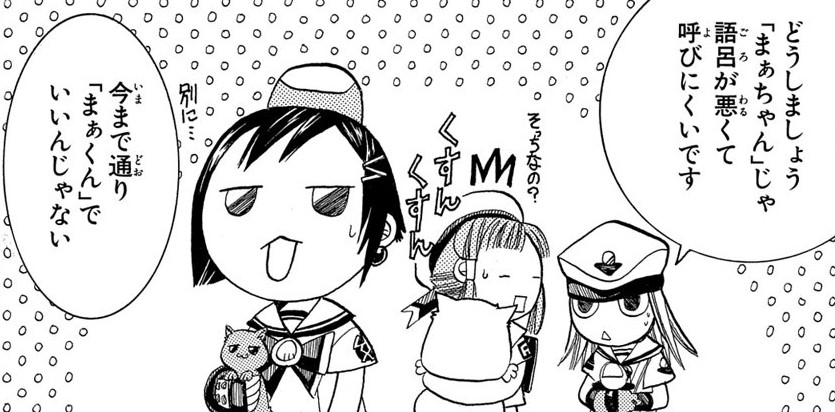
A trip to the vet reveals to Alice that her kitten Maa-kun is a girl, not a boy.
- アリス:
- 「どうしましょう。『まぁちゃん』じゃ語呂が悪くて呼びにくいです」
- “What should I do? 'Maa-chan' sounds bad and is difficult to call out.”
- Literal: “What should I do? With 'Maa-chan', the sound is bad and it is difficult to call.”
- 灯里:
- 「(そっちなの?)」
- “(That's the issue?)”
- 藍華:
- 「今まで通り『まぁくん』でいいんじゃない」
- “Isn't it fine to stick with 'Maa-kun'?”
Key Points
1〜にくい = difficult to do
- Attach 〜にくい to the verb stem to say an action is hard to perform.
- 呼びにくい means “hard to call”.
2語呂が悪い explains why
- 語呂が悪い means the sound or wording feels awkward and does not roll off the tongue well.
3て links the cause and the effect
- 語呂が悪くて gives the reason that まぁちゃん is hard to call out: the name sounds awkward, so 呼びにくい.
- ちゃん is an affectionate, informal suffix attached to names, used mainly for children, close friends, and family members.
- 君 is an honorific suffix used after names, typically for boys or men. It’s commonly used by teachers addressing male students, by friends among young people, or by superiors addressing junior colleagues, and can also be used for girls in childhood or casual contexts.
Vocabulary
語呂 (Sound and phrasing)
語呂 means the sound or rhythm of a phrase, often discussed in puns and mnemonics.
悪い (Bad)
悪い means bad, wrong, or at fault. In conversation, it can also express an apology.
See Also
- Grammar: Difficult to do with 〜にくい
- Grammar: Negation with 〜ない
- Grammar: Connecting actions with 〜て・〜で
ARIA The MASTERPIECE © its respective creators. It is used here for educational commentary.