Happy you came running over for me with 〜てくれる
Grammar Explanation: Receiving kindness with 〜てくれる
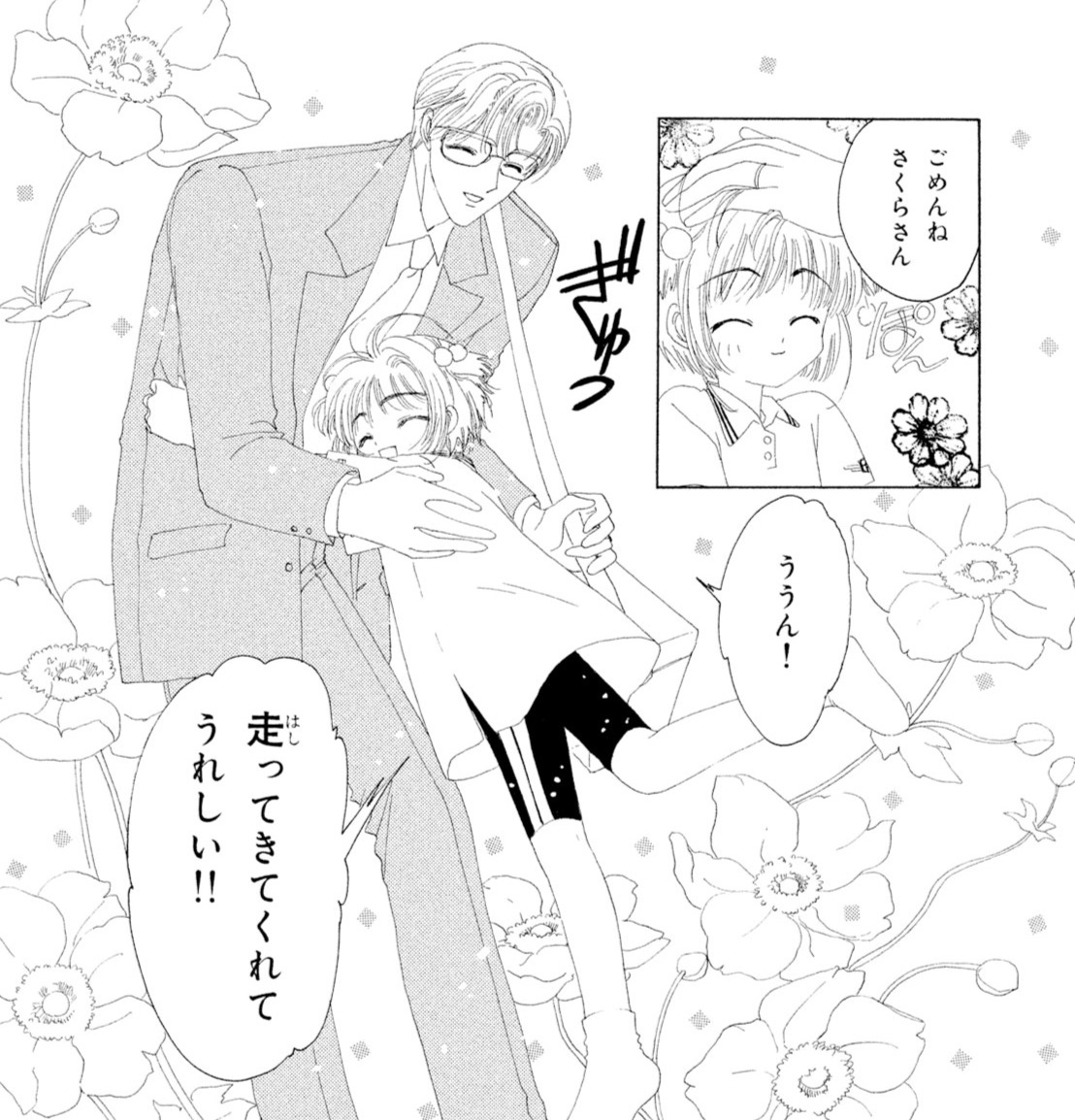
Sakura’s older brother and his friend show up for her school’s sports day event. During their picnic lunch, Sakura’s father runs up to the group and apologizes for missing the cheerleading event Sakura participated in. Tomoyo assures him she recorded it on video, and Yukito says he took photographs.
- 藤隆:
- 「ごめんね さくらさん」
- “I'm sorry, Sakura.”
- 桜:
- 「ううん!」
- “No, no!”
- 「走ってきてくれてうれしい!!」
- “I'm so glad you came running over!!”
- Literal: “I'm happy that you came running over for me!!”
Key Points
1〜てくれて frames the action as kindness Sakura receives
- 走ってきてくれて means her father came running over and Sakura feels grateful or happy about that action.
- くれる puts the event on Sakura’s side as something done for her benefit.
2走ってきて = “came running over”
- 走ってくる combines 走る “run” with くる “come”, so the movement is toward Sakura’s location.
- Before くれる, it appears as the te-form 走ってきて + くれて.
3Implied subject and compact spoken structure
- The fuller reading is お父さんが 走ってきてくれて うれしい, “I’m glad Dad came running over for me.”
- Sakura leaves the subject unsaid because everyone in the scene knows she is talking to her father.
- さん is an honorific suffix attached to a person’s name to show respect and social distance, roughly equivalent to “Mr.”, “Ms.”, or “Mrs.” in English, though it’s used far more broadly and doesn’t specify gender or marital status.
See Also
- Grammar: Receiving kindness with 〜てくれる
カードキャプターさくら © its respective creators. It is used here for educational commentary.