Bedding by the window with 窓際
Kanji Explanation: Windows and openings with 窓 (Future entry)
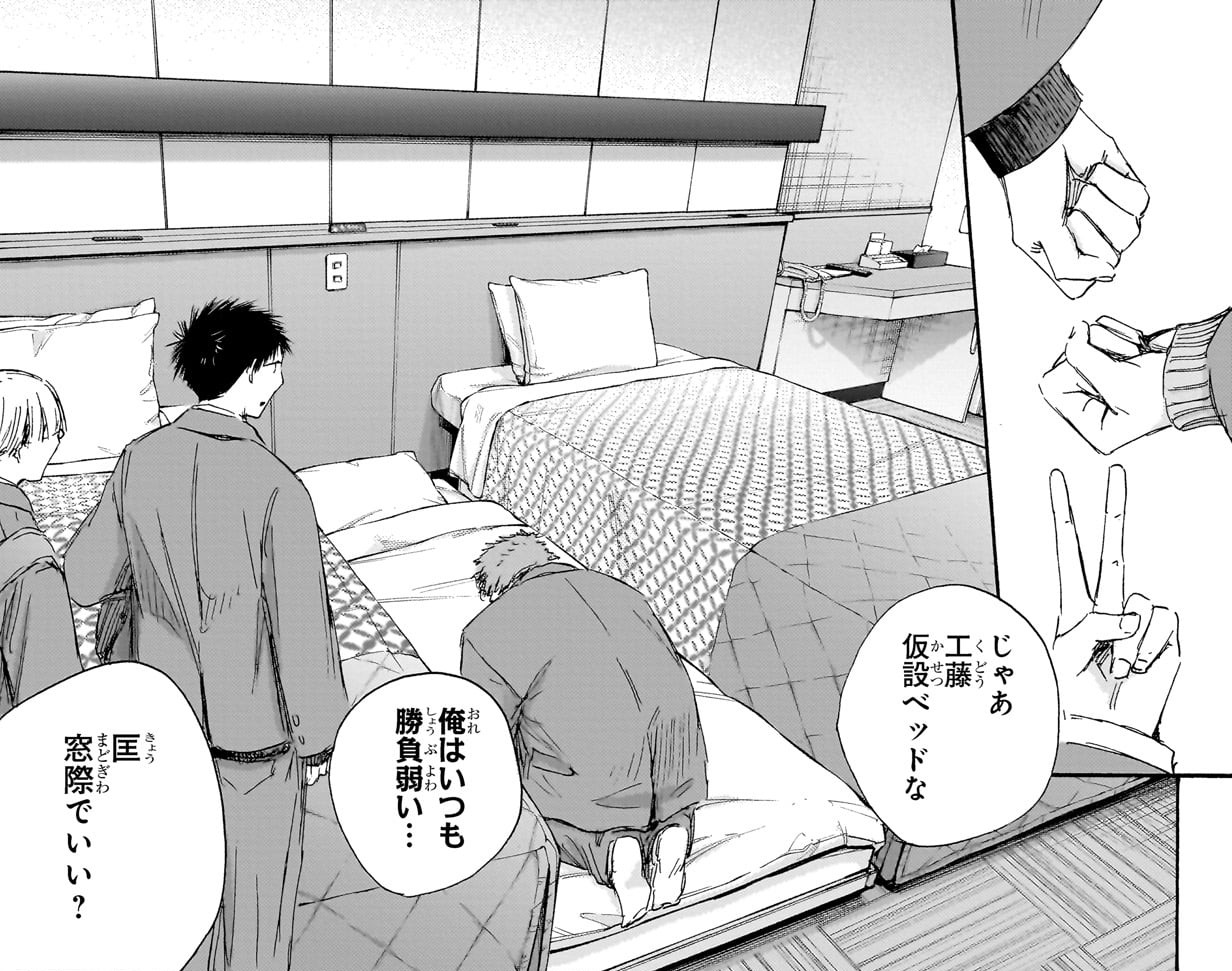
Taiki and his classmates are on the arrival day on their senior school trip. Taiki, Kyou, and Kudou are sharing a room, but with only two beds, they play a game of rock, paper, scissors to decide who sleeps on the floor. Kudou loses.
- ◯:
- 「じゃあ 工藤 仮設ベッドな」
- “All right then, Kudou, the makeshift bed is yours.”
- 工藤:
- 「俺はいつも勝負弱い…」
- “I always choke in competitions...”
- Literal: “As for me, I'm always weak in matches...”
- たいき:
- 「匡 窓際でいい?」
- “Kyou, is the spot by the window okay?”
Key Points
1窓際 literally means “window side”
- 窓 is “window” and 際 means the edge, side, or area right up against something.
- Put together, 窓際 is the spot by the window, not the window itself.
2勝負弱い describes someone who falters when the outcome is on the line
- 勝負 is a match or contest with a clear winner and loser. Adding 弱い produces a common character-trait description: someone who tends to lose their nerve or underperform in decisive moments.
- In English this often comes out as “chokes under pressure” or “is bad in clutch situations,” not literally just “weak at matches.”
3俺はいつも frames this as Kudou’s familiar pattern
- 俺 is Kudou’s casual, masculine “I.”
- いつも means this is not a one-off complaint. He is saying this always happens to him.
4仮設ベッド sounds like a temporary backup sleeping setup
- 仮設 means temporary or makeshift. In this room context, 仮設ベッド points to the extra bed arrangement for the odd person out rather than one of the regular beds.
Vocabulary
仮設 (Temporary setup)
仮設 means a temporary or makeshift setup, installation, or structure put in place for now rather than as a permanent fixture.
俺 (I)
俺 means “I” or “me”. Men commonly use it in casual speech, and it sounds rougher and more masculine than 私 or 僕.
勝負 (Match)
勝負 means a contest, match, or showdown that decides a winner and loser.
アオのハコ © its respective creators. It is used here for educational commentary.