Diving into the river with 飛びこむ
Vocabulary Explanation: Words ending in 込む
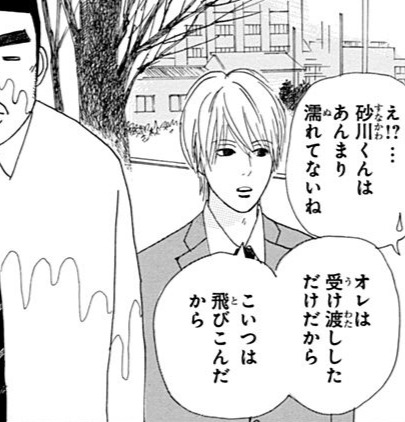
Takeo and Sunakawa meet Yamato at the park. Yamato sees that Takeo is soaked. Sunakawa explains that they saved a child from drowning.
- 大和:
- 「え!?… 砂川くんはあんまり濡れてないね」
- “Huh?!... You're not that wet, Sunakawa.”
- 砂川:
- 「オレは受け渡ししただけだから」
- “I just did the handoff, is all.”
- 「こいつは飛びこんだから」
- “This guy dived right in.”
Key Points
1飛びこむ = “to dive or jump into”
- 飛ぶ means “jump” or “fly”. 込む adds inward motion, so the compound describes Takeo entering the river in a jump.
- Sunakawa omits the destination because the panel makes the river clear. If he named it, he would use に: 川に飛びこむ.
- The speaker gives no information about Takeo’s posture. Here, “dive” means entering the water in a jump.
2飛びこんだ is the plain past form
- 飛びこむ is a godan verb ending in む, so its plain past changes む to んだ: 飛びこむ → 飛びこんだ.
3オレは…だけ and こいつは… contrast their roles
- Sunakawa uses は to set his role against Takeo’s: オレは… / こいつは….
- With だけ, Sunakawa limits his role to the handoff. Takeo entered the river.
- こいつ is a rough, casual way to say “this guy”. It suits Sunakawa’s familiar way of referring to Takeo.
4Sunakawa uses から for two reasons
- Sunakawa ends both remarks with から: he stayed drier because he handled the handoff, and Takeo got soaked because he jumped in.
- In English, we can omit the repeated “because”: “I just did the handoff, is all. This guy dived right in.”
5あんまり〜ない means “not very”
- Yamato’s あんまり濡れてない means “not very wet”. 濡れてない is the spoken form of 濡れていない.
- Yamato uses final ね to ask Sunakawa to confirm what she sees.
See Also
- Vocabulary: Words ending in 込む
- Grammar: Marking the topic with は and も
- Grammar: Ongoing actions and resulting states with 〜ている
- Future entry: Past tense with 〜た・〜だ
俺物語!! © its respective creators. It is used here for educational commentary.