Go to the park or something with でも
Grammar Explanation: Offering an example with 〜でも
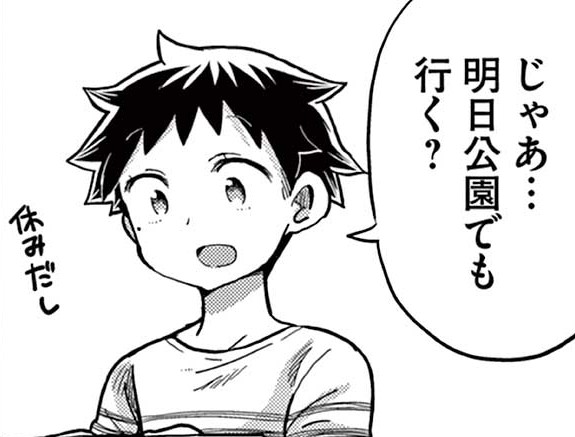
Sami’s father looks over her shoulder as she draws. Sami explains it’s a picture of them playing at a park.
- パパ:
- 「じゃあ… 明日公園でも行く? (休みだし)」
- “Well then... Shall we go to the park or somewhere tomorrow? (Since it's a day off.)”
Key Points
1公園でも = “the park or somewhere like that”
- Here でも gives one easy example destination instead of locking the plan to the park only.
2でも attaches after the destination noun here
- This line uses 公園でも行く?, literally “go to the park or something?”
- With motion verbs, Japanese can leave the destination particle implied in casual speech, so you can read it as “公園にでも行く?”
3じゃあ softens the transition into the suggestion
- じゃあ means “well then” or “in that case” and sets up his response to what Sami was talking about.
- It makes the invitation feel like a natural next idea in the conversation.
4休みだし gives the reason
- The casual し adds an explanatory reason for why going out tomorrow sounds like a good idea.
Vocabulary
明日 (Tomorrow)
明日 means tomorrow, the day after today.
行く (To go)
行く means to go or move toward a place away from the speaker.
See Also
- Grammar: Offering an example with 〜でも
- Kanji: Enclosed grounds and gardens with 園
ぼくの魔なむすめ © its respective creators. It is used here for educational commentary.