Offering an example with 〜でも
Grammar: Choice and Selection » 〜でも
〜でも offers one example option while leaving the choice open: “A or something” or “how about A?”
Usage Notes
でも attaches to a noun or noun phrase when making a suggestion. When used on an object, it replaced を. Other particles, such as に, appear before でも.
This pattern can sound dismissive with a person’s name. 「山田さんでも呼ぼう」 can sound like “let’s call Yamada or whoever”. The relationship and the situation decide whether it comes off as casual or belittling.
Formation
View formation details
-
Object noun + でも + verb
- 茶でも飲もう
- "Let's have some tea or something."
-
Destination + にでも + motion verb
- 京都にでも行きましょう
- "Let's go to Kyoto or somewhere like that."
-
Time phrase + にでも
- 暇な時にでも読んで
- "Read it sometime when you have time."
Invitations and Suggestions
The speaker provides one option while allowing for others.
- 今夜、映画でも見ない?
-
Want to watch a movie or something tonight?
- 疲れたし、コーヒーでも飲もうか。
- We’re tired, so how about we have some coffee or something?
The listener can accept the idea or choose a different option.
Destinations with にでも
A destination marker can stay before でも. にでも means “to A or somewhere like that”. Since に can be implied from context, it may be dropped.
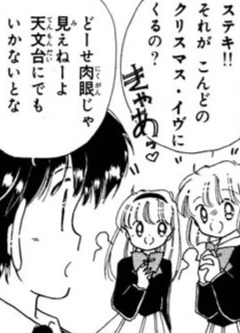
Before class, Asuka Jr. mentions a Graham Comet, which passes near the Earth once every fifty years.
- 涼子:
- 「ステキ!! それが こんどのクリスマス・イヴにくるの?」
- “Awesome!! Is it coming this Christmas Eve?”
- アスカ Jr.:
- 「どーせ肉眼じゃ見えねーよ。天文台にでもいかないとな」
- “You won't be able to see it with the naked eye anyway. You'd have to go to an observatory or something.”
Asuka Jr. suggests an observatory as one likely place, but leaves it open that there can be other places.
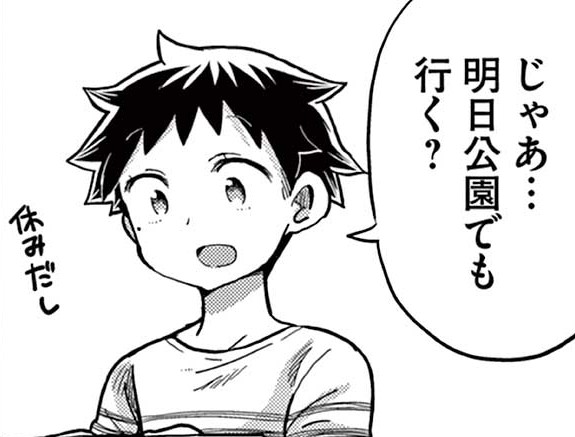
Sami’s father looks over her shoulder as she draws. Sami explains it’s a picture of them playing at a park.
- パパ:
- 「じゃあ… 明日公園でも行く? (休みだし)」
- “Well then... Shall we go to the park or somewhere tomorrow? (Since it's a day off.)”
Light Requests
A speaker can use でも to leave the timing or method open and make the request feel lighter.
- 暇な時にでも読んでください。
- Please read it sometime when you have time.
Other Uses of でも
The spelling でも appears in several constructions:
- Sentence-initial でも means “but”: 「でも、今日は行けない」 “But I can’t go today.”
- Verb て-form plus も means “even if” or “even though”: 「雨が降っても行く」 “Even if it rains, I’ll go.”
- A question word plus でも can cover every choice: 「何でも食べる」 “eat anything”.
- Noun plus でも can name a low or extreme case: 「子供でもできる」 “even a child can do it”.
The surrounding sentence tells you which でも you are looking at.
Further Reading
- 副助詞「でも」 (www.coelang.tufs.ac.jp)
Related Grammar
-
Or something similar with 〜か何か
- か何か states "A or something" and can leave the speaker's identification uncertain; でも presents A as a workable example.
-
Even if with 〜ても
- Verb て-form plus も concedes a condition rather than offering an example.
-
Marking the topic with は and も
- The particle も supplies the sense of including other possibilities.