Joining me even though it's our day off with やのに
Grammar Explanation: Grammar in the Kansai dialect
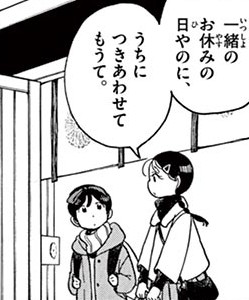
Kiyo meets up with Sumire at the entrance to a local shrine.
- すみれ:
- 「一緒のお休みの日やのに、うちにつきあわせてもうて。」
- “Sorry for making you come along with me on our day off.”
- Literal: “Even though it’s a day we both have off, I ended up making you come along with me.”
Key Points
1やのに = standard なのに after a noun
- The phrase ends in the noun 日, so standard Japanese would say 一緒のお休みの日なのに.
- Kansai や replaces standard だ, and before のに it takes the place of な. のに still means “even though”.
- Because they both have the day off, Sumire feels guilty about taking up Kiyo’s free time.
2一緒のお休みの日 is a day they both have off
- Here 一緒の says that the day off is shared. It does not mean only that they are spending the day together.
3付き合わせる = “make someone come along”
- It is the causative form of 付き合う, “accompany someone” or “go along with someone”.
- うち is a first-person pronoun associated especially with women in Kansai speech, so うちに付き合わせる means “make someone come along with me” here.
- The person made to come along is left unstated and understood to be Kiyo.
4つきあわせてもうて carries an unfinished apology
- Kansai 〜てもうて corresponds to standard 〜てしまって. Here it adds regret to “having made you come along”.
- The line ends in the て-form, leaving an apology such as ごめんな unstated.
Vocabulary
一緒 (Together)
一緒 means together, with someone, or as one group.
うち (I)
うち can mean “I” or “me”, especially in Kansai speech and in casual speech among women. It also has other meanings, including “home” and “inside”.
See Also
- Grammar: Grammar in the Kansai dialect
- Grammar: Grammar in the Kansai dialect
- Future entry: Even though with 〜のに
- Grammar: Making and letting with 〜せる・〜させる
- Grammar: Doing completely or ending up doing with 〜てしまう and 〜ちゃう
舞妓さんちのまかないさん © its respective creators. It is used here for educational commentary.