Thank you for bringing me to the beach with 連れてきてくれてありがとう
Vocabulary Explanation: Ways to say thank you in Japanese
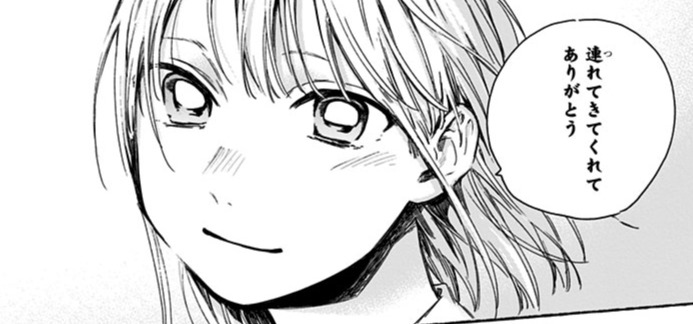
Chinatsu tells Taiki she’d like to go to the beach. A train ride later, they’re wading through the tide. After playing for a while, the two sit and watch the setting sun, and then it’s time to head back home.
- 千夏:
- 「連れてきてくれてありがとう」
- “Thanks for bringing me.”
Key Points
1連れてくる = “bring someone along”
- 連れる means to take someone along. Adding 来る presents the trip as movement toward the place where the speaker is now.
- The person being brought normally takes を. Here the scene supplies both 私を, Chinatsu, and the destination.
2連れてきて contains two て-forms
- First, 連れて joins 連れる to 来る, forming 連れてくる.
- Then 来る changes to 来て, allowing the whole action 連れてきて to attach to くれる.
3〜てくれてありがとう = “thanks for doing…”
- くれて is the て-form of くれる. It presents Taiki’s action as a kindness Chinatsu received.
4ありがとう keeps the thanks casual
- Chinatsu uses plain ありがとう rather than polite ありがとうございます, making the thanks direct and familiar.
See Also
- Vocabulary: Ways to say thank you in Japanese
- Grammar: Receiving kindness with 〜てくれる
- Grammar: Connecting actions with 〜て・〜で
アオのハコ © its respective creators. It is used here for educational commentary.