Contracting 〜ているのだ to 〜てんだ
Grammar: Colloquial and Casual Speech
Casual speech can contract 〜ているのだ to 〜てんだ. First 〜ている becomes 〜てる, then explanatory の becomes ん: 〜てるんだ. Fast speech compresses the remaining る, producing 〜てんだ.
Examples
Why are you silent with 〜てんだ
Grammar Explanation: Contracting 〜ているのだ to 〜てんだ
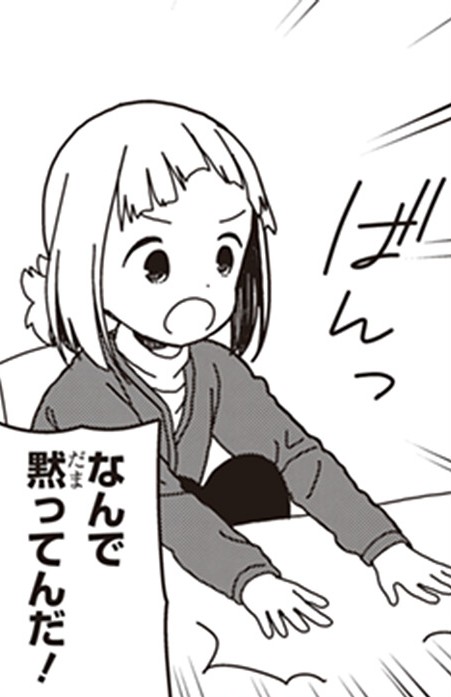
Being the first to arrive at the clubhouse after school, Yui decides to change her hairstyle and see how long it takes the others to notice when they arrive. Sacchan arrives next and starts up a conversation. Yui simply sits there without saying anything.
- さっちゃん:
- 「なんで黙ってんだ!」
- “Why are you being silent!”
You've been found out with 〜てんだ
Grammar Explanation: Contracting 〜ているのだ to 〜てんだ
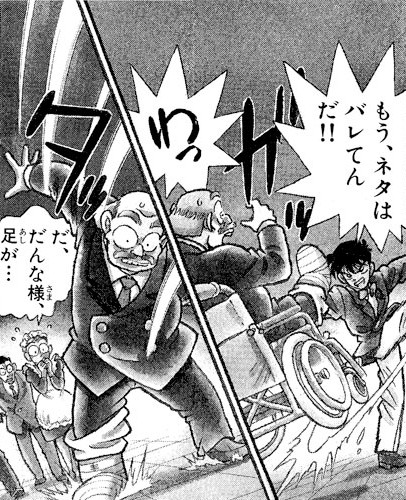
Shin’ichi reveals that the murderer escaped out the window and onto the roof, naming the wheelchair-bound husband as the culprit. The husband points his cast-covered leg, but Shin-ichi knows better.
- 新一:
- 「もう、ネタはバレてんだ!!」
- “Your deceit has already been found out!”
- メイド:
- 「だ、だんな様、足が…」
- “Master, your leg...”