Distracted by test scores with 気が散る
Idiom Explanation: Getting distracted with 気が散る
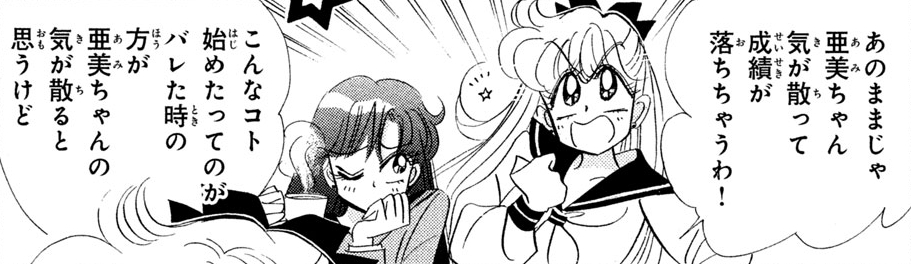
Ami is used to getting the top grade on mock exams, but when another name starts tying her scores, she begins to get flustered. Her friend Minako suggests they investigate the person behind the name, but Rei isn’t so sure.
- 美奈子:
- 「あのままじゃ 亜美ちゃん気が散って成績が落ちちゃうわ!」
- “The way things are, Ami-chan'll be distracted, and her grades will drop!”
- Literal: “At this rate, Ami-chan's spirit will scatter, and her grades will drop!”
- レイ:
- 「こんなコト 始めたってのがバレた時の方が亜美ちゃんの気が散ると思うけど」
- “I think Ami-chan will be more distracted when she finds out we've started something like this.”
- Literal: “I think Ami-chan's spirit will scatter more when she finds out we've started something like this.”
Key Points
1気が散る means attention gets scattered
- The idiom describes losing focus or becoming distracted.
2成績が落ちちゃう adds the feared result
- 落ちちゃう is a casual contraction of 落ちてしまう, suggesting an unwanted outcome.
3Rei uses 方が to compare distractions
- バレた時の方が means the time when she finds out is the more concerning side.
- Rei’s と思うけど softens her disagreement while still pushing back.
- ちゃん is an affectionate, informal suffix attached to names, used mainly for children, close friends, and family members.
Vocabulary
あの (That)
あの comes before a noun to mean “that” or “those”. It points to someone or something away from both speakers, or something they both know about.
成績 (Grades)
成績 means results, grades, or performance at school or work.
時 (Time)
時 means time, a moment, or an occasion.
思う (Think)
思う means to think, feel, believe, expect, or hope.
See Also
- Idiom: Getting distracted with 気が散る
- Future entry: Past tense with 〜た・〜だ
- Grammar: Doing completely or ending up doing with 〜てしまう and 〜ちゃう
- Grammar: More than with 〜方が and 〜より
- Grammar: Quoting and reporting with と and って
- Kanji: Becoming and accomplishing with 成
美少女戦士セーラームーン © its respective creators. It is used here for educational commentary.