You say that, but it's not important with だって
Grammar Explanation: That said with だって
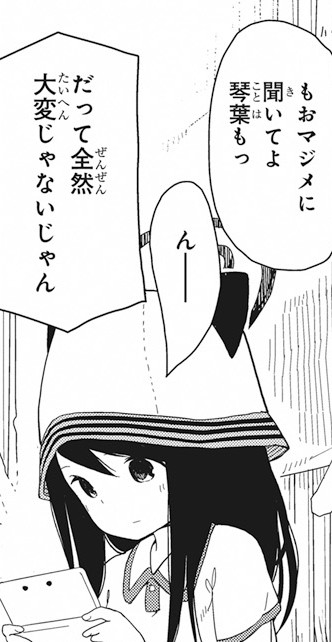
Yui hurries to her clubhouse to tell her friends, Kotoha and Sacchan, about a big case: there’s a cat that looks like a panda. However, Sacchan doesn’t engage in the topic and Kotoha continues playing her video game.
- 結衣:
- 「もおマジメに聞いてよ 琴葉もっ」
- “Geez, listen seriously. You too, Kotoha.”
- さっちゃん:
- 「だって全然大変じゃないじゃん」
- “You say that, but it's not a big deal at all, right?”
- Literal: “Because it isn't hard at all, is it?”
Key Points
1だって introduces the reason for not caring
- Sacchan uses だって to justify why she is not listening seriously.
2て makes a request
- 聞いてよ asks Sacchan and Kotoha to listen. The て-form makes the request without ください, and よ presses the request on the listener.
3全然〜じゃない makes a full negative
- 全然大変じゃない means “not a big deal at all”.
- 全然 expects a negative ending here.
4じゃん seeks agreement casually
- じゃん adds “right?” or “isn’t it?” to her dismissal.
Vocabulary
全然 (Not at all)
全然 means not at all when used with a negative expression. In casual modern speech, it can also strengthen an affirmative statement to mean completely or entirely.
大変 (Serious)
大変 means serious, terrible, or difficult. As an adverb, it means “very”.
See Also
- Grammar: That said with だって
- Grammar: Marking the topic with は and も
- Grammar: Connecting actions with 〜て・〜で
- Kanji: Wholeness and completion with 全
三ツ星カラーズ © its respective creators. It is used here for educational commentary.