That said with だって
Grammar: Emphasis » だって
Sentence-initial だって picks up something already said and responds to it. It can mean “but”, “because”, or “you say that, but…” depending on what follows.
This use developed from だ plus the casual quotation marker って. It treats the previous statement as quoted material before answering it.
Usage Notes
A speaker may refer back to their own statement and give the reason: “I say that because…”
After another person’s line, だって often introduces a contrast: “You say that, but…” It can also take that statement as a starting point and add information without contradicting it.
Related Grammar
-
Quoting and reporting with と and って
- と and って mark quoted or reported content before verbs such as (言:い)う, (思:おも)う, and (聞:き)く.
Examples
I say that because I thought it up with だって
Grammar Explanation: That said with だって
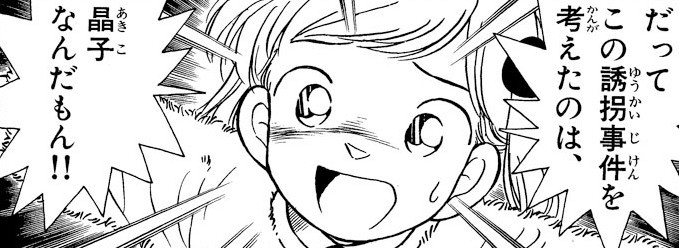
A fake kidnapping ploy turns into an actual kidnapping. After the kidnapped child is safe, her father goes after their butler for concocting the scheme. The daughter, Akiko, protects the butler, saying she’s the bad one.
- 晶子:
- 「だってこの誘拐事件を考えたのは、晶子なんだもん!!」
- “I say that because I'm the one who thought up the kidnapping plot!”
I say that because it'd be impossible with だって
Grammar Explanation: That said with だって
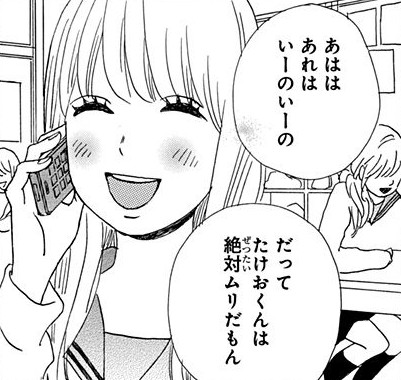
Takeo hopes to get into the same college as his girlfriend, Rinko. Going into a mock exam, he listed the top college Rinko is aiming for. However, the results came back saying it would be impossible for him to get into Rinko’s top choice. Rinko tells Takeo she didn’t do well for that college either, so they should both aim for her second choice. Takeo asks if Rinko is okay with giving up on her top choice.
- 凛子:
- 「あはは あれはいーのいーの」
- “Ha ha, I'm okay with that.”
- 「だってたけおくんは絶対ムリだもん」
- “I say that because it'd be impossible for you to go, Takeo.”
You say that, but I didn't hear a rule against it with だって
Grammar Explanation: That said with だって
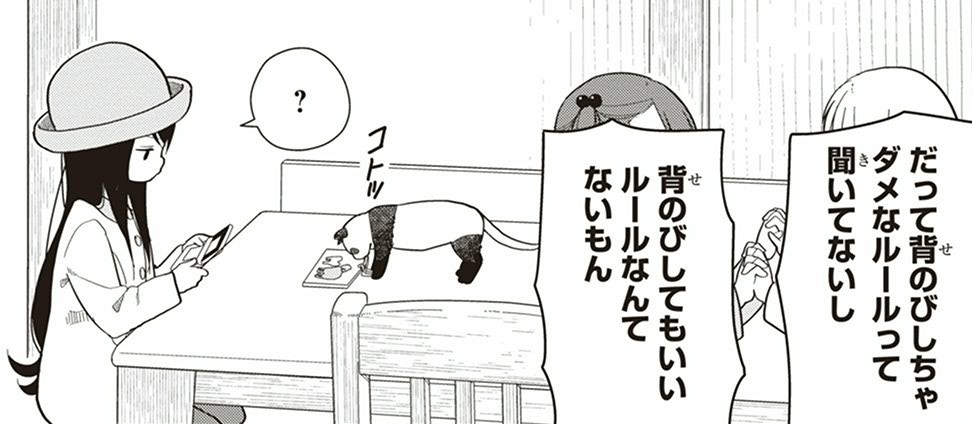
Standing back to back, Sacchan is slightly taller than Yui. Yui questions whether Sacchan is standing tip-toed, which Sacchan denies, but Yui looks and sees that Sacchan is.
- さっちゃん:
- 「だって背のびしちゃダメなルールって聞いてないし」
- “You say that, but I didn't hear a rule against tiptoes.”
- 結衣:
- 「背のびしてもいいルールなんてないもん」
- “There's no way there'd be a rule allowing tiptoes!”