According to with 〜によると and 〜によれば
Grammar: Hearsay » 〜によると・〜によれば
〜によると and 〜によれば identify the source of information or the basis for a statement. Both commonly mean “according to”. The source comes first, followed by what it says or suggests.
These forms use よる, a verb meaning “be based on” or “depend on”. Here, the named source is what the speaker bases the statement on.
A person, a report, or a forecast can be the source. 〜によりますと is the polite form of によると, often used in formal reports and announcements.
Usage Notes
Attach によると or によれば directly to the source noun, without adding の or だ. A longer noun phrase also works, as in 先生の話によると, “according to what the teacher said”.
によると combines に + よる + conditional と. Think of it as “if we go by …”, which gives the meaning “according to”. によれば uses the ば-form よれば of the same verb. In this source-reporting use, the two often replace each other without changing the basic meaning.
Formation
View formation details
-
Source noun + によると + statement
- パンフレットによると、入場は無料だ
- "According to the brochure, admission is free."
-
Source noun + によれば + statement
- 友達の話によれば、あの店は日曜日も開いているそうだ
- "According to a friend, that shop is open on Sundays too."
-
Source noun + によりますと + statement
- 市の発表によりますと、新しい図書館は来月開館するそうです
- "According to the city's announcement, the new library will open next month."
-
Verb + ところ + によると or によれば + statement
- 聞くところによると、駅前に本屋ができるらしい
- "From what I hear, a bookstore is opening near the station."
- Note: Common with 聞く, 聞いた, and 調べた.
Naming the Source
The phrase before によると or によれば answers “Where did this information come from?”
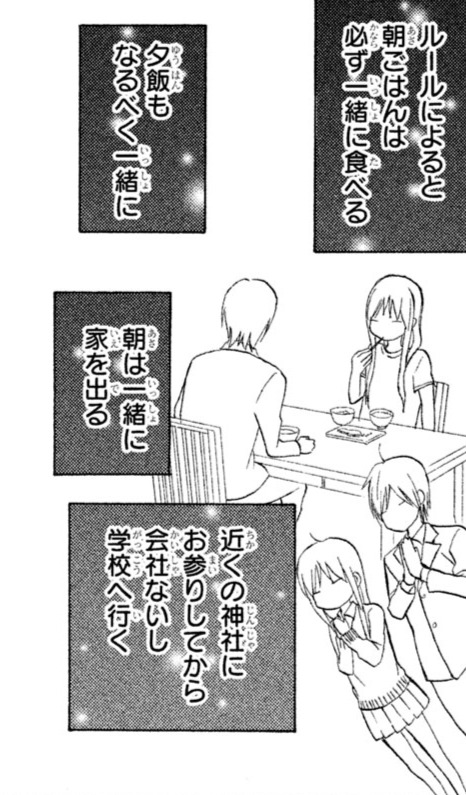
Now that Mao is living at Hiro’s house, Hiro presents her with a list of rules. Before going to bed, Mao looks the list over.
- 真魚:
- 「ルールによると朝ごはんは必ず一緒に食べる」
- “According to the rules, we must always eat breakfast together.”
- 「夕飯もなるべく一緒に」
- “We should eat dinner together too, as often as possible.”
- 「朝は一緒に家を出る」
- “We leave the house together in the morning.”
- 「近くの神社にお参りしてから会社ないし学校へ行く」
- “After praying at the nearby shrine, we go to work or school.”
The instructions for Mao to follow are according to the rules. The rules supply the information, and Mao is reading it.
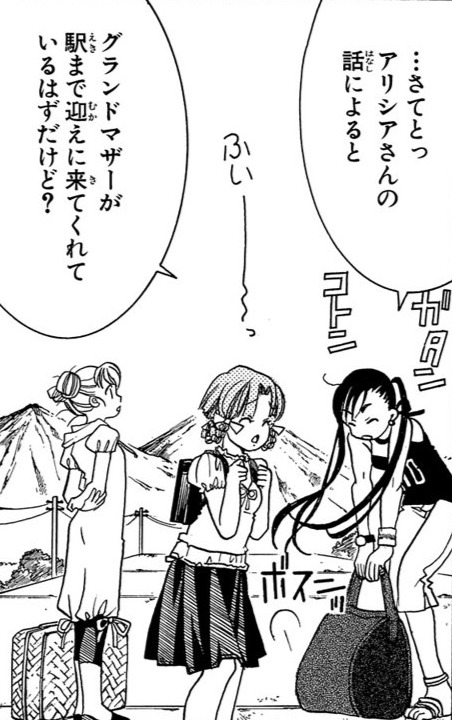
Akari, Aika, and Alice take the train to visit with Grandmother, the founder of Aria Company. Upon arrival, they disembark with their luggage.
- 藍華:
- 「…さてとっ アリシアさんの話によると」
- “Now then, according to Alicia...”
- 「グランドマザーが駅まで迎えに来てくれているはずだけど?」
- “Grandmother should be here at the station to meet us, though...?”
The information on when the girls arrive is according to what Alicia said. Alicia supplied the information, and Aika is relaying it.
Reporting What the Speaker Heard or Read
A sentence ending with 〜そうだ shows the speaker is reporting what they have heard or read.
With そうだ, the reported clause keeps its plain form. A noun predicate keeps だ, as in 無料だそうだ, “I hear it is free”.
A reporting ending is common, but そうだ is not required. The sentence can state the information directly.
Presenting What Appears to be the Case
The sentence ends in 〜らしい when the speaker presents what appears to them to be the case.
Giving Inference Based on Evidence
Ending the sentence with 〜ようだ relays that the speaker is giving inference based on evidence.
Reporting the Content of the Information
The speaker reports the content of the information when the sentence ends with 〜ということだ.
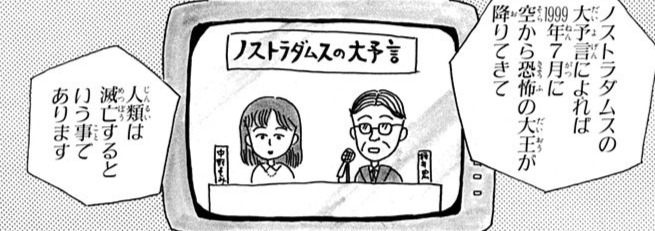
Maruko learns about Nostradamus and his predictions from a classmate. She tells her family about it, leading to them watching a TV show about it that night.
- アナウンサー:
- 「ノストラダムスの大予言によれば1999年7月に空から恐怖の大王が降りてきて」
- “According to Nostradamus's great prophecy, in July 1999 a great king of terror will descend from the sky,”
- 「人類は滅亡するという事であります」
- “and humanity will perish.”
The television announcer is reporting the content of the ancient prophecy. であります here is the polite form of である, a formal equivalent of だ.
Polite Form
によりますと uses the polite form よります before と. It introduces a source in formal speech and writing.
It names the source in the same way as によると. The reported event can be past, present, or future.
What the Speaker Heard or Found Out
With a verb such as 聞く, insert ところ before によると or によれば. The phrase refers to what the speaker has heard or found out.
聞いたところによると means “according to what I heard”. 調べたところによれば means “according to what I found out”. Here, ところ does not name a physical location.
Comparing によると with によって
The shared よる can make these forms look interchangeable. Check what follows the phrase.
- ニュースによると、新しい駅ができるそうだ。
-
According to the news, a new station is going to open.
- ニュースによって、新しい駅ができることを知った。
- I learned through the news that a new station is going to open.
In the first sentence, によると introduces the source for the report. In the second, によって explains how the speaker learned the information. The predicate 知った makes that method reading possible.
Before a noun, による can identify who produced something. 新聞社による報道 means “reporting by a newspaper company”.
Following Instructions
English also uses “according to” when someone follows instructions. Japanese commonly uses に従って for that relationship.
- 説明書に従って組み立てた。
- I assembled it according to the instructions.
Use 説明書によると when reporting what the instructions say. Use 説明書に従って when describing an action that follows them.
A Fixed Expression with a Different Meaning
ことによると is a fixed expression meaning “perhaps” or “possibly”. 時によると can also introduce something that may happen in some circumstances. These expressions do not name an information source.
Further Reading
- によると・によれば, Japan Foundation (kyozai.jpf.go.jp)
- Choosing between ニュースによると and ニュースによって, ARC Tokyo Japanese Language School (arc.ac.jp)
- によると・によれば, Bunpro (bunpro.jp)
Related Grammar
-
Hearsay with 〜そうだ
- そうだ reports what the speaker heard. によると names where the information came from.
-
Conjecture with 〜らしい
- A statement based on the named source can end in らしい.
-
Evidence-based guessing with 〜ようだ
- The source can also provide evidence for an inference with ようだ.
-
Quoting and reporting with と and って
- Quotation grammar reports what someone said. によると identifies a source for the following statement.
-
Cause and means with 〜によって and 〜による
- Related forms of よる identify causes, methods, agents, and factors that affect a result.