Poison and toxicity with 毒
The kanji 毒 means poison or something harmful in a concentrated way. It also covers figurative harm such as cruel words or corrosive influence.
Toxic Effects
中毒 (Poisoning)
中毒 means poisoning, intoxication, or addiction to a substance or activity.
It combines 中 (inside) with 毒 (poison) to show poison taking effect within.

Cocoa wonders why it is that she didn’t like coffee before, but she’s crazy about the coffee Chino makes.
- チノ:
- 「でもココアさんは味の違いわからないじゃないですか」
- “But you don't know the difference in taste, right?”
- 「ただのカフェイン中毒ですよ」
- “That makes it just a caffine addiction.”
- ココア:
- 「中毒扱いされた…」
- “I got treated like an addict...”
Toxic Substances
毒 (Poison)
毒 means poison. It also describes anything harmful, including a corrupting influence or malicious words.
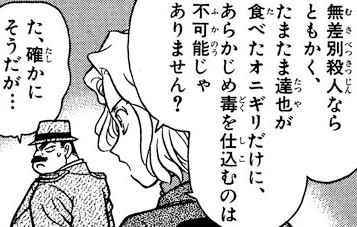
Sonoko is invited to a band’s after party. During the get-together, the band’s singer Tatsuya eats a rice ball only to collapse and die. The police are called in, and Inspector Megure discovers the victim was poisoned. He accuses the man who prepared the food, but Conan bites into a rice ball to show it’s safe. The victim’s manager, Mari, agrees.
- 麻理:
- 「無差別殺人ならともかく、たまたま達也が食べたオニギリだけに、あらかじめ毒を仕込むのは不可能じゃありません?」
- “If it were indiscriminate murder, that's one thing but since it was just the rice ball Tatsuya happened to eat, wouldn't it be impossible to poison it beforehand?”
- 目暮:
- 「た、確かにそうだが…」
- “Th-that's true.”
毒物 (Poisonous substance)
毒物 means a poisonous substance that can damage health or cause death.
It combines 毒 (poison) with 物 (thing) to show a poisonous thing.
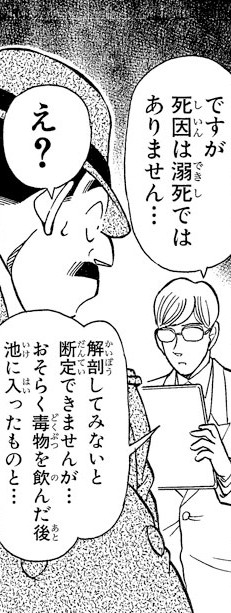
Inspector Megure suggests the murder suspect committed suicide by drowning himself. The medical examiner disagrees.
- 監察医:
- 「ですが死因は溺死ではありません…」
- “However, drowning wasn't the cause of death...”
- 目暮:
- 「え?」
- “What?”
- 監察医:
- 「解剖してみないと断定できませんが… おそらく毒物を飲んだあと池に入ったものと…」
- “I can't say for certain without an autopsy... but it's likely he took poison and then entered the pond...”