Determining the cause of death with 解剖
Kanji Explanation: Separating and understanding with 解
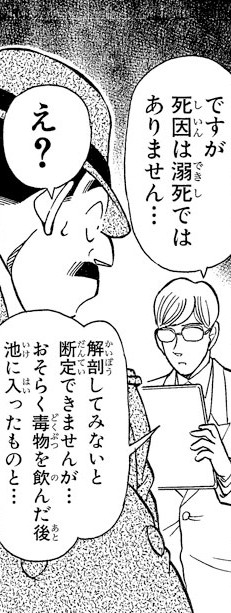
Inspector Megure suggests the murder suspect committed suicide by drowning himself. The medical examiner disagrees.
- 監察医:
- 「ですが死因は溺死ではありません…」
- “However, drowning wasn't the cause of death...”
- 目暮:
- 「え?」
- “What?”
- 監察医:
- 「解剖してみないと断定できませんが… おそらく毒物を飲んだあと池に入ったものと…」
- “I can't say for certain without an autopsy... but it's likely he took poison and then entered the pond...”
- Literal: “I can't determine it unless we try an autopsy... but perhaps he entered the pond after drinking poison...”
Key Points
1解剖 here means an autopsy
- In this scene, 解剖 is a medical examination of the body after death.
- The examiner needs it to determine the true cause of death, not just the apparent one.
2してみないと = unless we actually try doing it
- 解剖してみないと adds the sense of “unless we go ahead and perform one”.
- The 〜てみる part is not “try for fun” here; it means carrying out the procedure to check.
Vocabulary
死因 (Cause of death)
死因 is the illness, injury, or event that caused someone to die. It is common in medical reports, police investigations, and legal records.
溺死 (Drowning death)
溺死 is death caused by drowning.
解剖 (Dissection)
解剖 means dissecting a body to study its internal structure. Figuratively, it means analyzing something in detail.
見る (To see)
見る means to see or look at something. It can also mean to examine its condition or nature.
断定 (Definite conclusion)
断定 means stating or judging something as definite.
毒物 (Poisonous substance)
毒物 means a poisonous substance that can damage health or cause death.
See Also
- Kanji: Separating and understanding with 解
- Future entry: Past tense with 〜た・〜だ
- Grammar: Marking the topic with は and も
- Kanji: Causes and dependence with 因
- Kanji: Cutting off and decision with 断
- Kanji: Death and dying with 死
- Kanji: Poison and toxicity with 毒
- Kanji: Settling and deciding with 定
- Kanji: Things and kinds with 物
名探偵コナン © its respective creators. It is used here for educational commentary.