Scheduled to work outside at night with 〜ことになっている
Grammar Explanation: Past decision still in effect with 〜ことになっている
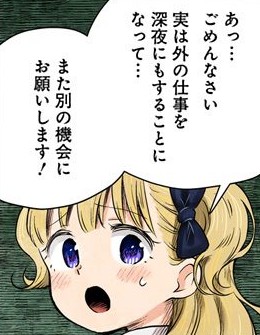
Kate says she wants to study together with Emiriko before bedtime.
- エミリコ:
- 「あっ… ごめんなさい。実は外の仕事を深夜にもすることになって…」
- “Ah, I'm sorry. The truth is, I'm scheduled to do late-night work outside...”
- Literal: “Ah... I'm sorry. Actually, it has become the thing that I also do outside work late at night...”
- 「また別の機会にお願いします!」
- “Please ask again another time!”
Key Points
1することになって points to an assigned plan
- 外の仕事を深夜にもすることになって means Emiriko has been scheduled to work outside late at night too.
- The sentence trails off because this explains why she cannot study now.
2実は introduces the real reason
- 実は signals that she is revealing the actual scheduling conflict.
- It softens the refusal before she apologizes.
3また別の機会に politely postpones
- また別の機会に means “another time”.
- お願いします keeps the refusal deferential toward Kate.
Vocabulary
仕事 (Work)
仕事 means work, a job, or a particular task.
深夜 (Late night)
深夜 means late at night, usually after midnight.
機会 (Opportunity)
機会 means an opportunity, chance, or suitable occasion.
See Also
- Grammar: Past decision still in effect with 〜ことになっている
- Grammar: Polite style with です and ます
- Grammar: Marking the topic with は and も
- Kanji: Matters and events with 事
- Kanji: Meeting and joining with 会
シャドーハウス © its respective creators. It is used here for educational commentary.