Stop joking with 〜たまえ
Grammar Explanation: Commanding with 〜たまえ
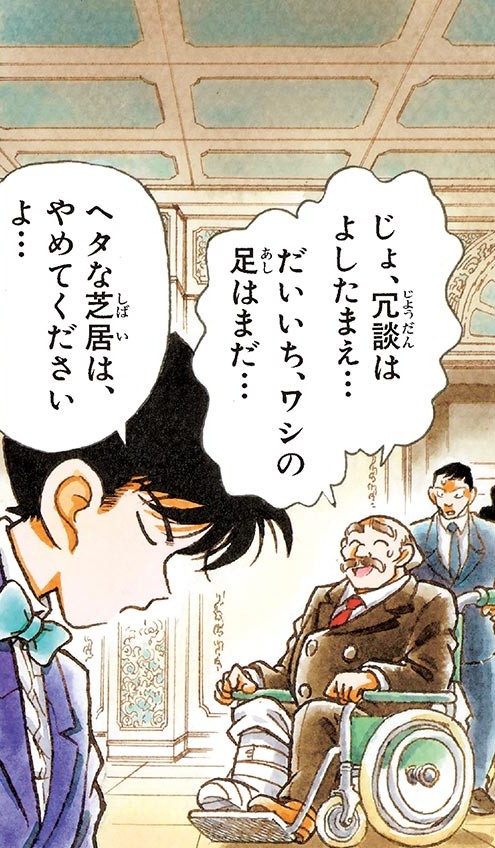
Assisting the police with a murder investigation, Shin’ichi explains how the culprit was able to move without a trace by going out a window and scaling the wall to the next window up. The victim’s husband demands to know who killed his wife, only for Shin’ichi to accuse him.
- 御主人:
- 「じょ、冗談はよしたまえ… だいいち、ワシの足はまだ…」
- “S-stop joking around.... First of all, my leg is still...”
- Literal: “S-stop the joking... First of all, my leg is still...”
- 新一:
- 「ヘタな芝居は、やめてくださいよ…」
- “Please stop with the lousy acting...”
Key Points
1よしたまえ = “stop it” as a superior-sounding command
- よしたまえ is よす “to stop (doing)” plus 〜たまえ, an imperative ending that sounds formal here.
2冗談はよしたまえ
- 冗談は marks “joking” as the thing he wants stopped.
3じょ、 shows panic before 冗談
- The broken じょ is the start of 冗談, showing he stumbles before getting the word out.
4だいいち introduces his first excuse
- だいいち means “first” or “above all” and signals that he is about to give a reason Shin’ichi’s accusation cannot be right.
- ワシの足はまだ… leaves the sentence unfinished: he is relying on the listener to infer “my leg is still not healed”.
Vocabulary
冗談 (Joke)
冗談 means a joke or something said or done in jest.
足 (Foot)
足 means foot or leg.
芝居 (Play / act)
芝居 means a play, theater, or acting. The word dates to performances watched from grassy temple and shrine grounds.
See Also
- Grammar: Commanding with 〜たまえ
- Grammar: The plain imperative
- Grammar: Marking the topic with は and も
名探偵コナン © its respective creators. It is used here for educational commentary.