Went to see a kindergarden sports day with 運動会
Kanji Explanation: Meeting and joining with 会
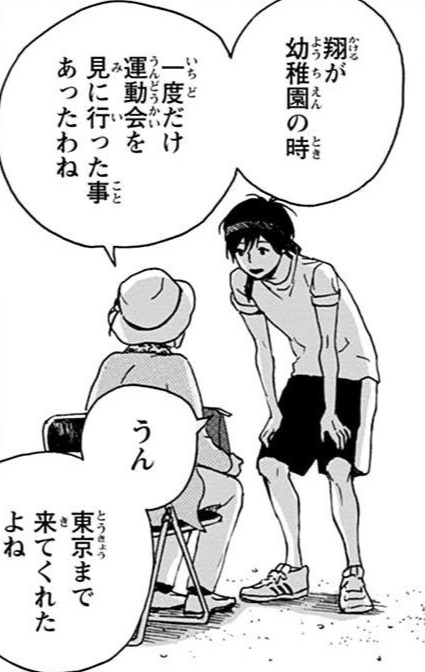
Kakeru’s grandmother unexpectedly shows up at the school sports day event.
- おばあさん:
- 「翔が幼稚園の時一度だけ運動会を見に行った事あったわね」
- “I went to see your sports day just once when you were in kindergarten, didn't I?”
- 翔:
- 「うん 東京まで来てくれたよね」
- “Yeah, you came all the way to Tokyo for me.”
Key Points
1運動会 means “school sports day”
- 運動 is exercise or athletics, and 会 is a gathering or organized event.
- Here the compound names the school’s sports day, with races and other athletic events.
2運動会を見に行った means “went to watch the sports day”
- 見に行く puts the verb stem 見 before に行く to state the purpose of going.
- 運動会を marks what Kakeru’s grandmother went to watch.
3一度だけ行った事あった means “there was just one time I went”
- 一度だけ means “only once”. だけ limits the number of visits.
- The fuller form of 行った事あった is 行った事があった. Casual speech drops が.
- The past あった recalls an occasion from an earlier period.
4東京まで来てくれた means “you came all the way to Tokyo for me”
- まで marks Tokyo as the far endpoint of the trip, giving the sense of “all the way to Tokyo” here.
- 来てくれた presents the trip as something Kakeru received and appreciated.
5わね and よね make this a shared memory
- The grandmother’s わね sounds as though she is recalling the occasion and inviting Kakeru to agree.
- Kakeru begins with うん and ends with よね, affirming her memory while asking her to confirm his added detail.
Vocabulary
時 (Time)
時 means time, a moment, or an occasion.
運動会 (Sports day)
運動会 means a school sports day or community athletic meet with races and team events.
来る (To come)
来る means to come or move toward the speaker or the place being discussed.
See Also
- Kanji: Meeting and joining with 会
- Grammar: Previous experience with 〜た+ことがある
- Grammar: Going to for a purpose with 〜に行く
- Grammar: Receiving kindness with 〜てくれる
- Grammar: Limiting with 〜だけ
- Future entry: Seeking agreement with ね
- Kanji: Enclosed grounds and gardens with 園
- Kanji: Motion and activation with 動
orange © its respective creators. It is used here for educational commentary.