Motion and activation with 動
動 means “to move”, “to work”, or “to do something”. It can refer to a change in position (movement) or being emotionally moved (being touched).
Etymology
This kanji isa phono-semantic compound comprised of 重 as the phonetic component (ドウ) and 力 (strength) as the semantic component.
Actions
行動 (Action)
行動 means action or behavior, especially something done toward a purpose.
It combines 行 (act) with 動 (move) to show movement into action.
Example 1 of 2: Strange behavior with 異様
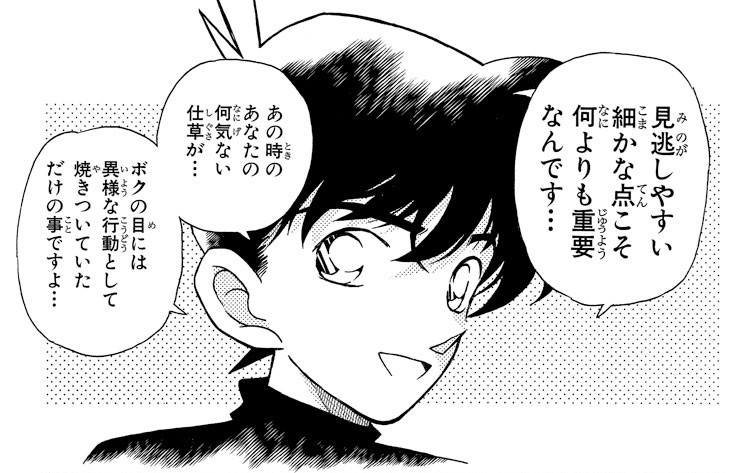
Shin’ichi reveals the details of a murder. The culprit asks how Shin’ichi discovered the hidden weapon, and he explains it was due to a specific movement the culprit made.
- 新一:
- 「見逃しやすい細かな点こそ何よりも重要なんです…」
- “It's precisely those subtle details that are easy to overlook that matter most of all...”
- 「あの時のあなたの何気ない仕草が…」
- “That casual gesture of yours back then...”
- 「僕の目には異様な行動として焼きついてただけの事ですよ…」
- “It's just that it was etched in my mind as strange behavior...”
Example 2 of 2: Wanting to photograph means with 〜たがる
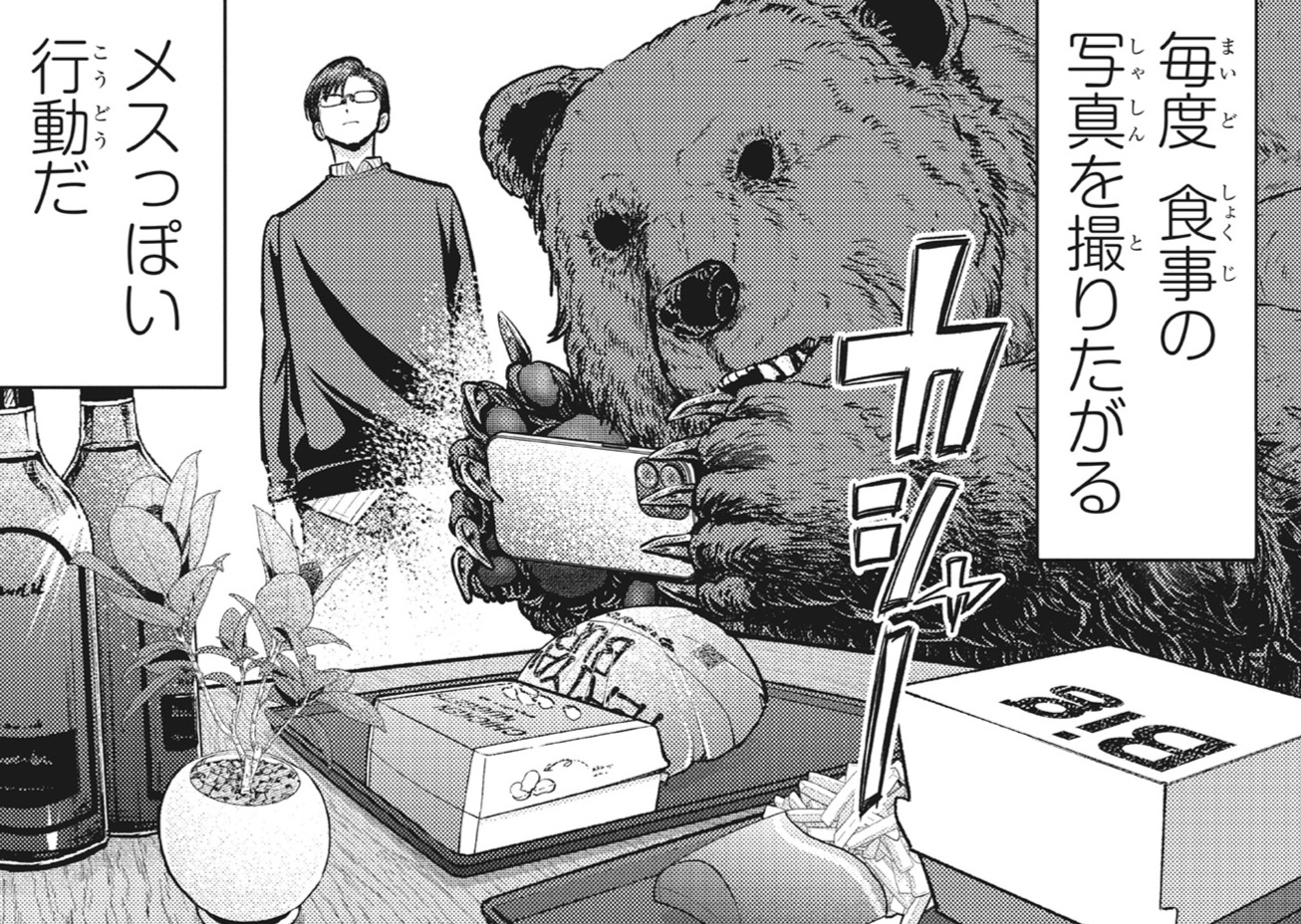
Kumada observes the bear that’s been living in his apartment for a while now, trying to determine from its personality traits whether it’s male or female.
- (熊田):
- 「毎度 食事の写真を取りたがる」
- “It always wants to take photos of its meals.”
- 「メスっぽい行動だ」
- “That's pretty feminine behavior.”
活動 (Activity)
活動 means activity or organized action toward a purpose.
It combines 活 (lively) with 動 (move) to show lively movement.
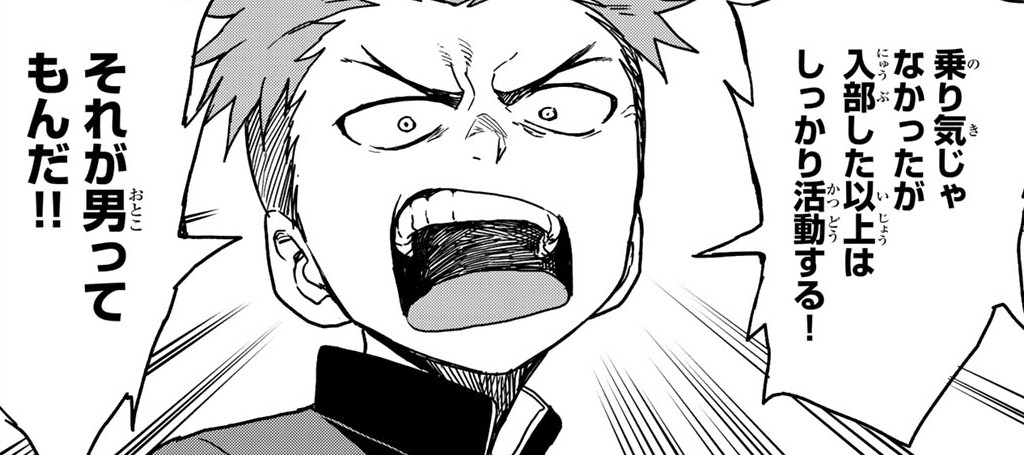
Sakurako forces Takeru to join the shogi club. When he suggests she join as well, she refuses and tells him not to go either, or else he’ll be in the way there.
- タケル:
- 「乗り気じゃなかったが入部した以上はしっかり活動する!」
- “I wasn't enthusiastic, but now that I'm in the club, I'll work hard!”
- 「それが男ってもんだ!!」
- “That's what it means to be a man!!”
Living Things
動物 (Animal)
動物 means an animal. In everyday use, it usually means a nonhuman creature.
It combines 動 (move) with 物 (thing) to show a moving living thing.
Example 1 of 3: Cost to ride the train with 電車
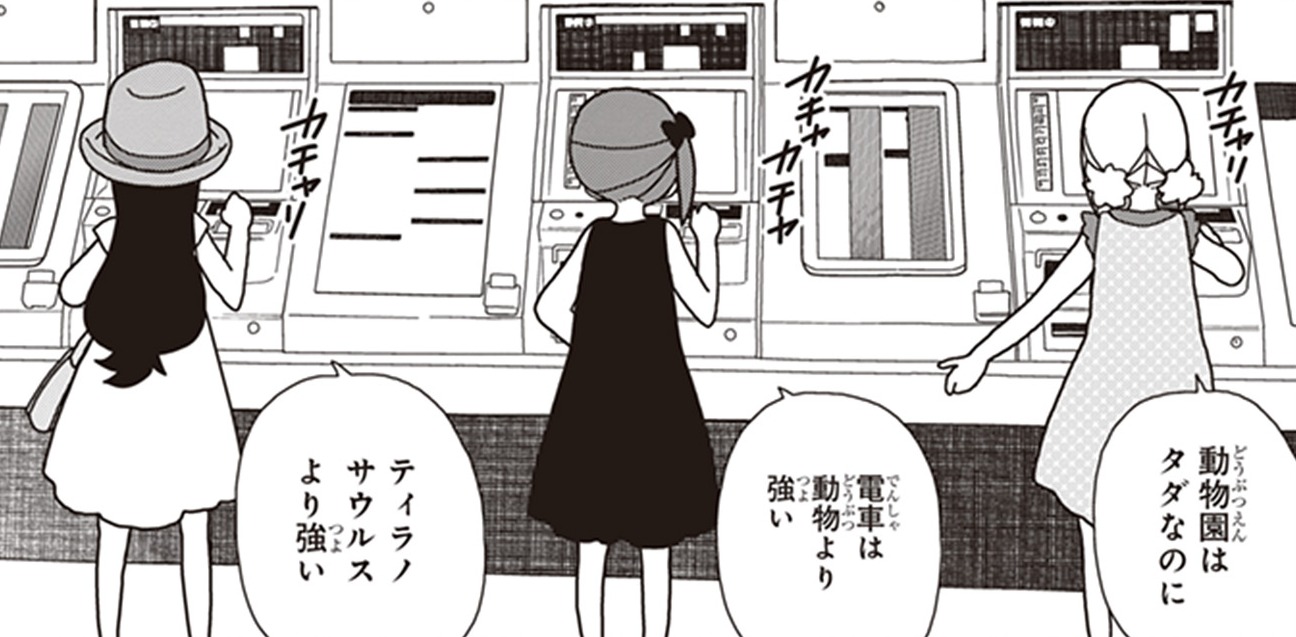
Yui and her friends get permission to ride the train to continue their search for the legendary giant robot. Tickets are listed as 70 yen for children.
- さっちゃん:
- 「動物園はタダなのに」
- “Even though the zoo is free...”
- 結衣:
- 「電車は動物より強い」
- “Trains are stronger than animals.”
- 琴葉:
- 「ティラノサウルスより強い」
- “Stronger than a Tyrannosaurus.”
Example 2 of 3: Heard about getting along with animals with 〜らしい

Chino is fascinated by the rabbit at a rival tea shop, but she keeps her distance.
- ココア:
- 「触らないの?」
- “You're not going to touch it?”
- リゼ:
- 「チノはティッピー以外の動物が懐かないらしい」
- “It seems that animals other than Tippy don't warm up to Chino.”
Example 3 of 3: Skilled clock maker with 職人
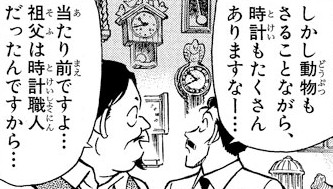
Having received a letter requesting help solving a mystery, Kogoro finds himself in a house filled with animal designs everywhere, including the doors, the chairs, and the plates. His attention turns to the clocks covering the walls.
- 小五郎:
- 「しかし動物もさることながら、時計もたくさんありますなー...」
- “But aside from the animals, there are also a lot of clocks, huh...”
- 男:
- 「当たり前ですよ... 祖父は時計職人だったんですから...」
- “Of course there are... Grandfather was a clock maker, after all...”
Physical Motion
運動会 (Sports day)
運動会 means a school sports day or community athletic meet with races and team events.
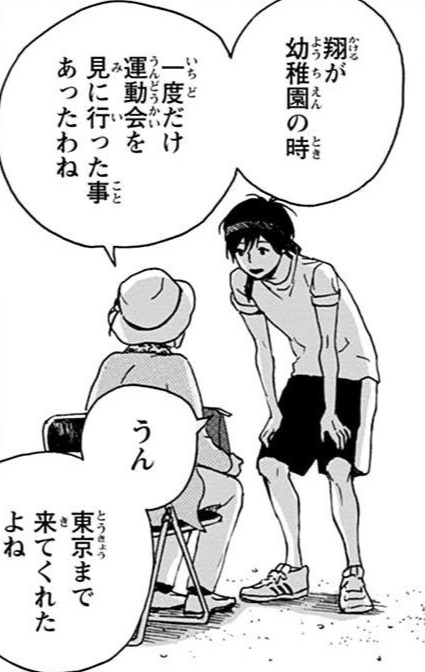
Kakeru’s grandmother unexpectedly shows up at the school sports day event.
- おばあさん:
- 「翔が幼稚園の時一度だけ運動会を見に行った事あったわね」
- “I went to see your sports day just once when you were in kindergarten, didn't I?”
- 翔:
- 「うん 東京まで来てくれたよね」
- “Yeah, you came all the way to Tokyo for me.”