Cutting off and decision with 断
断 has three main meanings: “to cut off”, “to refuse” (to decline a request or give advance notice), and “to decide” (to make a firm decision).
Etymology
The modern form 断 is the simplified form of the older 斷. The old form is a phono-semantic compound involving 斤 (axe) and a sound-bearing component that also contributed the idea of severing threads. The core image is of cutting something cleanly apart.
Judgment
断定 (Definite conclusion)
断定 means stating or judging something as definite.
It combines 断 (decide firmly) with 定 (fix) to show a firmly fixed conclusion.
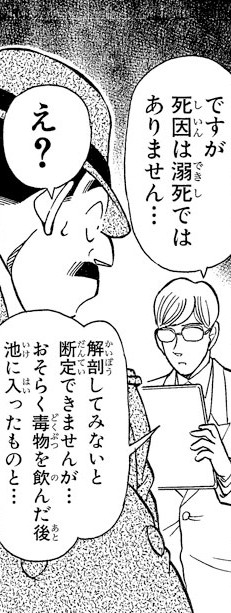
Inspector Megure suggests the murder suspect committed suicide by drowning himself. The medical examiner disagrees.
- 監察医:
- 「ですが死因は溺死ではありません…」
- “However, drowning wasn't the cause of death...”
- 目暮:
- 「え?」
- “What?”
- 監察医:
- 「解剖してみないと断定できませんが… おそらく毒物を飲んだあと池に入ったものと…」
- “I can't say for certain without an autopsy... but it's likely he took poison and then entered the pond...”
Lapses
油断 (Carelessness)
油断 means letting down one’s guard or becoming carelessly inattentive.
It combines 油 (oil) with 断 (cut off) in an idiomatic expression where the image suggests vigilance slipping away.
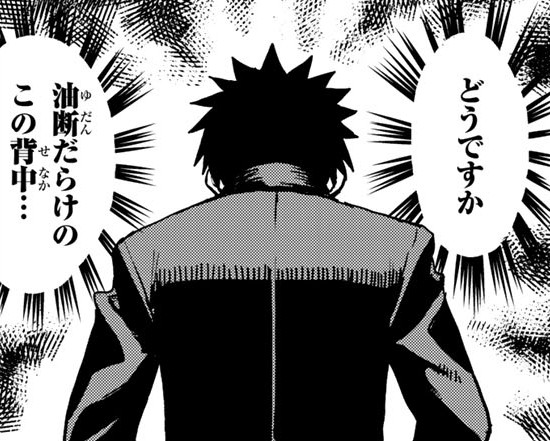
Realizing Urushi is hiding in a box to try and scare him, Ayumu sits with his back to the box.
- 歩:
- 「どうですか?油断だらけのこの背中…」
- “How is it? This back filled with carelessness.”
Permission
無断 (Without permission)
無断 means without permission or prior notice.
It combines 無 (without) with 断 (decision) to show something done without approval.
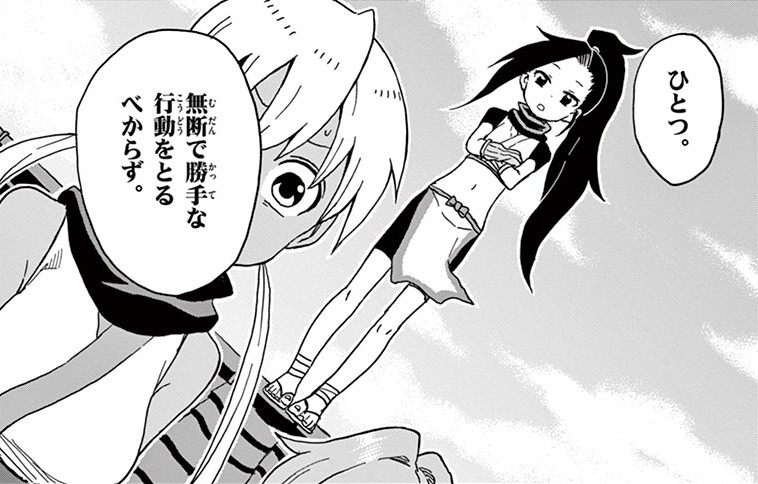
Sazanka sneaks out of class, leaving the teacher to send Asagao to bring her back. As Asagao chases Sazanka across the rooftops near the upper grade classroom, Tsubaki spots them. She meets them up on the roof and recites the school’s first rule.
- ツバキ:
- 「ひとつ。無断で勝手な行動をとるべからず。」
- “One: Doing as you please without permission is strictly forbidden.”