性 means nature, they way things are from birth; characteristic, natural qualities; or sex, the distinction between male and female. It refers to what is innate to a person or thing.
Etymology
This kanji isa phono-semantic compound comprised of 心 (mind) as the semantic component and 生 as the phonetic component (セイ、シヤウ).
Etymology Research
性 combines 心, the semantic component associated with the mind, with 生 as the phonetic component. The modern left-hand form is 忄. CUHK reproduces the Shuowen analysis identifying 生 as the sound element and displays a small-seal form. Its entry provides no oracle-bone or bronze examples, so it does not establish the character’s earliest appearance. CUHK Multi-function Chinese Character Database
Heibonsha’s Jitsu also classifies 性 as phonosemantic and connects it with inherent nature. It cites the Zuozhuan for the nature of land and Mencius for the nature of water. These received texts show that the older sense already extended beyond human temperament. Jitsu
The Analects saying 性相近し習い相遠し contrasts people’s similar natural dispositions with differences produced by habits and learning. This is an early textual use of the nature sense, not evidence for the date when the written character was invented. Kanjipedia
The Shuowen account and Jitsu agree about the phonetic component. The sources checked here do not establish a dated progression from these early meanings to every modern Japanese use, or an excavated sequence of older forms.
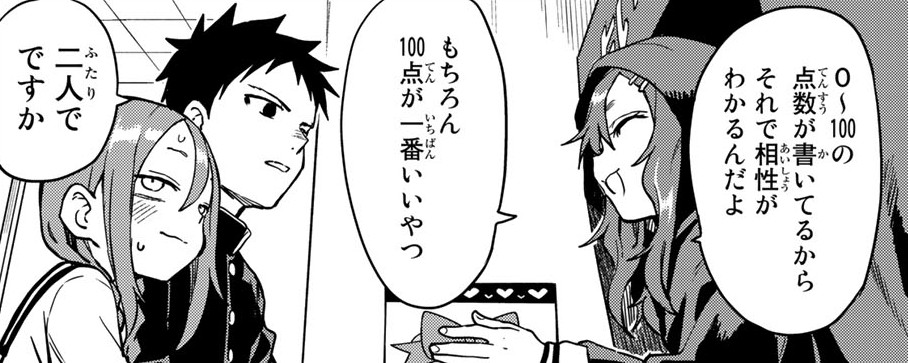
At the school festival, Ayumu and Urushi stop by the affinity fortune telling booth while Maki is on duty. Maki holds out a box with an opening on top, and says the need to pull out a single card together.
マキ:
「0〜100の点数が書いてるからそれで相性がわかるんだよ」
“Your compatibility is determined by the score written from 0 to 100.”
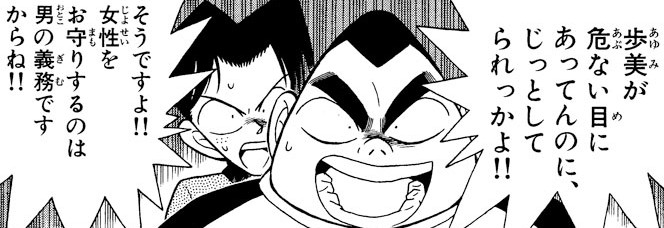
During a hide-and-seek game at the park, Ayumi hides in a car trunk and falls asleep. She wakes to find the car moving and discovers a bag of money, a slimy saw, and what seems like a severed head. Conan, tracking her via their Detective Boys badges, prepares to pursue on his electric skateboard. Genta and Mitsuhiko join him on it, but Conan urges them to stay behind due to the danger.
元太:
「歩美が危ない目にあってんのに、じっとしてられっかよ!!」
“Ayumi is in danger, so how can I just stand by and do nothing?”
光彦:
「そうですよ!! 女性をお守りするのは男の義務ですからね!!」
“That's right! It's a man's duty to protect women!”
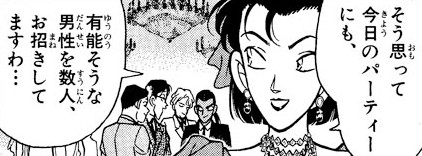
Detective Mouri is invited as a special guest to the birthday party for Reika, daughter of the Yotsui Group’s chairman. At the event, Reika announces her intent to marry.
霊化:
「そう思って今日のパーティーにも、有能そうな男性を数人、お招きしてますわ…」
“With that in mind, I've invited several promising gentlemen to today's party...”
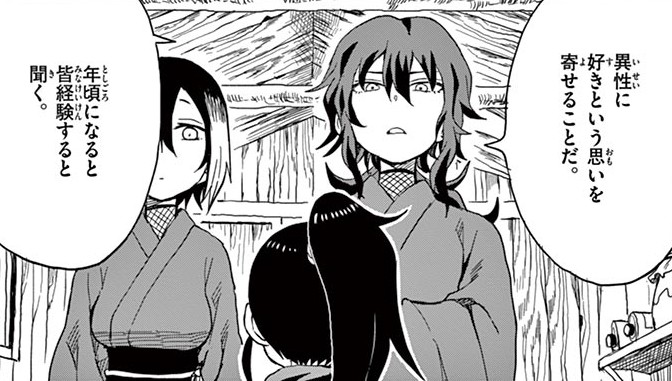
During a ninja training exercise, Tsubaki disguises herself as the teacher’s assistant in the hope of getting close enough to take the teacher’s mask. When the teacher unknowingly reveals that keeping boys and girls separate has been aided by lying to the female ninjas about men being scary, Tsubaki accidentally drops her disguise. The teacher has no choice but to take Tsubaki into her confidence and explain the reason for the separation, starting with the word “love”, of which Tsubaki is unfamiliar.
ハナ先生:
「異性に好きという思いを寄せることだ。」
“It means harboring feelings of affection for someone of the opposite sex.”
「年頃になると皆経験すると聞く。」
“I hear that everyone goes through this when they reach a certain age.”