Mutuality and appearance with 相
相 is a kanji meaning to observe or look closely in Japanese.
From the idea of carefully looking and judging what you see, 相 extends to appearance and aspect (the “way something looks”). In compounds, it is also widely used for mutual relationships (like “with each other”) and for ministers or high officials .
Etymology
This kanji is an ideogrammic compound comprised of 木 (tree ) and 目 (eye ). It depicts an eye looking at a tree , expressing the idea of examining something by sight: to see , to observe , and to judge .
From that concrete act of seeing comes the more abstract sense of appearance or aspect : what is visible on the surface, or the “state of things” as it presents itself. By extension and borrowing in Sino-Japanese vocabulary , 相 is also used in words for mutual actions (doing something “to each other”) and in titles like 首相( しゅしょう ) where it means a minister .
Alignment
相当 (Corresponding)相当( そうとう ) means suitable or equivalent to a standard. As an adverb, it means considerably or quite.
It combines 相 (mutual ) with 当 (appropriate ) to show mutually appropriate .
Example 1 of 2: A pretty clean room with 相当 Example 1 of 2
たいようのいえ »
Volume 1 » Page 87
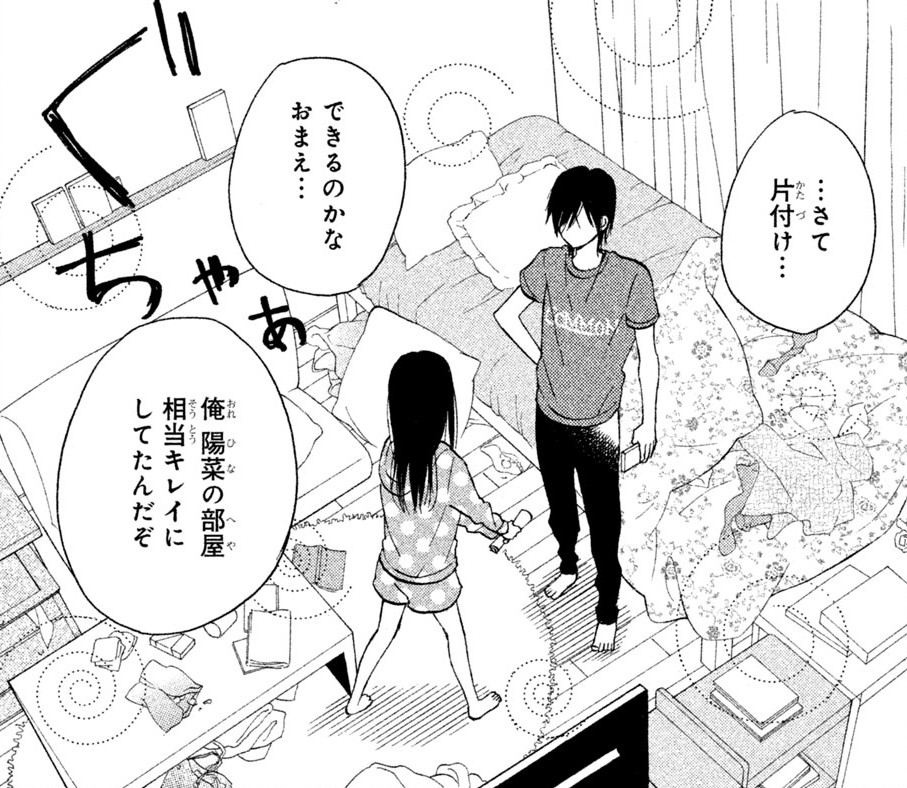
Hiro lets Mao move into his sister’s bedroom, as Hina is living with relatives. After, he comes up with a list of rules that Mao needs to follow if she’s to keep living there.
基( ひろ ) :「…さて 片付( かたづ ) け…」
“Now then, cleaning...”
「できるのかな おまえ…」
“I wonder if you can do it.”
「俺( おれ ) 陽菜( ひな ) の部屋( へや ) 相当( そうとう )
“I kept Hina's room pretty clean, you know.”
Challenge Yourself
Show translation
Challenge
What concern does Hiro raise about Mao using Hina's room?
Clues
片付( かたづ ) け…できるのかな おまえ…Hiro wonders whether Mao will be able to keep things tidy
陽菜( ひな ) の部屋( へや ) 相当( そうとう ) キレイにしてたんだぞ"I kept Hina's room quite clean, you know," stressing the standard he maintained.
What does the speaker mean?
He doubts whether Mao can keep the room as clean as he did.
Hiro questions whether Mao can manage 片付( かたづ ) け, then emphasizes that he kept the room 相当( そうとう ) キレイ.
He thinks Mao has already cleaned the room better than he did.
Hiro describes his own past care of the room and questions Mao's ability. He does not praise her cleaning.
He wants Mao to move into a different room because Hina's is dirty.
He says he kept Hina's room quite clean. The concern is whether Mao can maintain it.
He wonders whether Mao knows where the cleaning supplies are.
The line questions her ability to tidy up generally, not her knowledge of supplies.
He plans to clean the room for Mao every day.
Hiro points to the standard he maintained before Mao moved in. He does not promise to keep doing the work for her.
He believes the room is too clean for anyone to live in.
相当( そうとう ) キレイ describes degree, but Hiro treats cleanliness as a standard to preserve, not a problem.
Hiro wonders whether Mao can handle the cleaning. He then stresses that he had kept Hina’s room 相当( そうとう ) キレイ, quite clean, setting the standard he expects Mao to maintain.
View Full Example
Example 2 of 2: Corresponding letters of the alphabet with 相当 Example 2 of 2
名探偵コナン »
Volume 7 » Page 80
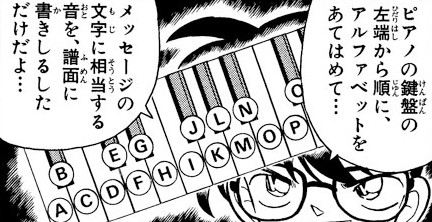
Following a series of murders, Conan discovers a message hidden in sheet music. He explains it to Ran.
コナン:
「ピアノの鍵盤( けんばん ) の左端( ひだりはし ) から順( じゅん ) に、アルファベットをあてはめて…」
“Starting from the leftmost key on the piano keyboard, I assigned each key a letter...”
「メッセージの文字( もじ ) に相当( そうとう ) 音( おと ) を、譜面( ふめん ) に書( か ) きしるしただけだよ…」
“I simply wrote down the notes corresponding to the letters of the message on the sheet music...”
Challenge Yourself
Show translation
Challenge
What did Conan write on the musical score?
Clues
メッセージの文字( もじ ) に相当( そうとう ) する音( おと )
the notes corresponding to the message's letters
譜面( ふめん ) に書( か ) きしるしたwrote them down on the score
What does the speaker mean?
The piano notes corresponding to the message's letters.
に相当( そうとう ) する links each message letter to its matching note.
The alphabet in its ordinary order with no notes.
Conan first maps letters to keys, then records the corresponding sounds as notation.
A list of every key on the piano.
He writes only the notes needed for the letters in the message.
The murderer's spoken confession.
The hidden message is encoded through letter-to-note correspondence, not copied speech.
Instructions for tuning the piano.
The notes carry a message rather than maintenance directions.
A melody unrelated to the alphabet.
Conan explains that each sound corresponds to a particular letter.
Conan assigned alphabet letters to the piano keys and wrote the notes corresponding to the message’s letters on the score.
View Full Example
相性 (Compatibility)相性( あいしょう ) means compatibility between people or things, whether their qualities work well together.
It combines 相 (mutual ) with 性 (nature ) to show the nature between two things (their compatibility).
それでも歩は寄せてくる »
Volume 15 » Page 17
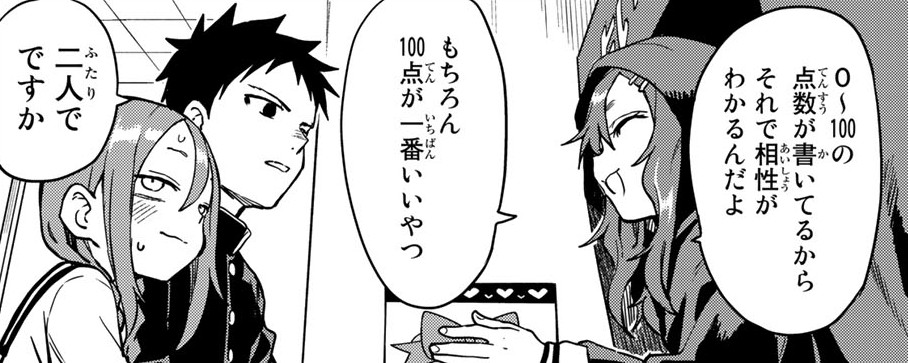
At the school festival, Ayumu and Urushi stop by the affinity fortune telling booth while Maki is on duty. Maki holds out a box with an opening on top, and says the need to pull out a single card together.
マキ:
「0〜100の点数( てんすう ) が書( か ) いてるからそれで相性( あいしょう )
“Your compatibility is determined by the score written from 0 to 100.”
「もちろん100点( てん ) が一番( いちばん ) いいやつ」
“Of course, 100 points is the best score.”
歩( あゆむ ) :「二人( ふたり ) でですか?」
“Together?”
Challenge Yourself
Show translation
Challenge
How does Maki's compatibility fortune work?
Clues
0〜100の点数( てんすう ) が書( か ) いてるから
a score from 0 to 100 is written on the card
それで相性( あいしょう ) がわかる
"You can tell your compatibility from that score."
もちろん100点( てん ) が一番( いちばん ) いい
"Of course, 100 points is the best."
What does the speaker mean?
A card gives a score from 0 to 100, with 100 showing the best match.
The written 点数( てんすう ) measures their 相性( あいしょう ) , and Maki states that 100 points is best.
Each person draws a separate card, and the lower score wins.
Ayumu checks that they draw together, and Maki says 100 is the best score, not the lowest.
The card predicts how many years they will remain friends.
The number measures 相性( あいしょう ) , compatibility, not a number of years.
They write their own score after answering questions.
Maki says the score is already written on the card.
Only a score of exactly zero reveals compatibility.
The scale runs from 0 to 100, and Maki identifies 100 as the best result.
The booth compares their individual shogi rankings.
The score concerns how well the two people fit together, not their shogi ability.
Ayumu and Urushi draw a card together. Its number from 0 to 100 represents their 相性( あいしょう ) , and a score of 100 is the best possible match.
View Full Example
Aspects
真相 (Truth)真相( しんそう ) means the truth or actual facts behind an event, beyond appearances and rumors.
It combines 真 (true ) with 相 (aspect ) to show the true aspect of something.
名探偵コナン »
Volume 15 » Page 35
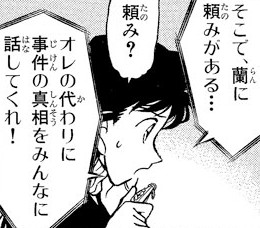
Conan determines the culprit in a series of murders. However, thre’s no one around he can use as a conduit for revealing his reasoning. When Ran scolds Conan for wandering around, he accidentally drops an item Professor Agasa made for him, a wireless phone in the form of a large earring. As Ran picks it up, Conan hides and using his bowtie voice changer to sound like Shin’ichi as he calls Ran on the earring phone. He explains that Conan filled him in on the details.
新一( しんいち ) :「そこで、蘭( らん ) に頼( たの ) みがある…」
“So with that, I have a favor to ask of you...”
蘭:
「頼( たの ) み?」
“A favor?”
新一:
「オレの代( か ) わりに事件( じけん ) の真相( しんそう ) 話( はな ) してくれ!」
“In my place, tell everyone the truth of the situation!”
Challenge Yourself
Show translation
Challenge
What favor does Shin'ichi ask of Ran?
Clues
オレの代( か ) わりに
in my place
事件( じけん ) の真相( しんそう ) をみんなに話( はな ) してくれtell everyone the truth behind the case
What does the speaker mean?
Tell everyone the truth of the case in his place.
代( か ) わりに makes Ran Shin'ichi's stand-in for explaining the 真相( しんそう ) .
Discover the culprit without using his reasoning.
Shin'ichi has already reached the truth and wants Ran to relay it.
Keep every detail of the case secret.
He asks her to 話( はな ) す, tell it to everyone.
Ask Conan to leave the investigation.
The favor concerns presenting the case's truth, not removing Conan.
Tell everyone that Shin'ichi was the culprit.
真相( しんそう ) means the actual facts behind the case, not a false accusation.
Wait until Shin'ichi can appear in person.
He needs Ran to act in his place now.
Shin’ichi asks Ran to explain the truth behind the murders to everyone on his behalf. オレの代( か ) わりに assigns her that stand-in role.
View Full Example
Interaction
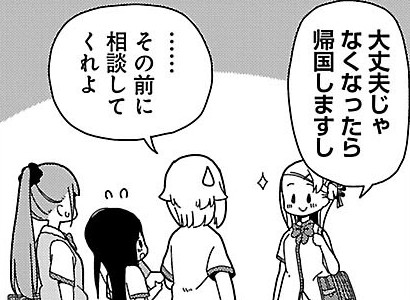
相談 (Consultation)相談( そうだん ) means consulting someone or discussing a problem to seek advice and decide what to do.
It combines 相 (mutual ) with 談 (talk ) to show talking something over together .
ひとりぼっちの○○生活 »
Volume 2 » Page 52
While staying in Japan, Sotoka lives alone in the apartment building her parents own. Aru asks if Sotoka isn’t lonely living alone, but Sotoka says it’s all right.
ソトカ:
「大丈夫( だいじょうぶ ) じゃなくなったら帰国( きこく ) しますし」
“If it gets bad, I'll return to my home country.”
なこ:
「……その前( まえ ) に相談( そうだん )
“Before that, consult us first!”
Challenge Yourself
Show translation
Challenge
What does Nako want Sotoka to do before returning home?
Clues
その前( まえ ) に
before the return to her home country that Sotoka just mentioned
相談( そうだん ) してくれよa direct request for Sotoka to consult them or talk it over with them
What does the speaker mean?
Talk to her friends about the problem first.
その前( まえ ) に places the request before Sotoka's return, and 相談( そうだん ) してくれ asks her to consult them.
Return home as soon as living alone becomes difficult.
Sotoka has already proposed returning home. Nako asks her to consult her friends before taking that step.
Ask her parents whether she may keep living alone.
The request is to consult Nako and the others. Parents and permission are not mentioned in the line.
Tell her friends only after she has returned home.
その前( まえ ) に means before that, so Nako wants the conversation to happen before Sotoka leaves.
Promise that living alone will never bother her.
Nako does not ask for a promise. She wants Sotoka to seek support if things stop being okay.
Invite her friends to move into the apartment.
相談( そうだん ) する means to talk something over or seek advice. It does not mean asking someone to move in.
Nako does not want Sotoka to decide on her own that she must return home. She asks Sotoka to talk to her friends first if living alone becomes too difficult.
View Full Example